



Question: As a public speaker, you will face ethical issues at every stage of the speech making process-from the initial decision to speak through the final
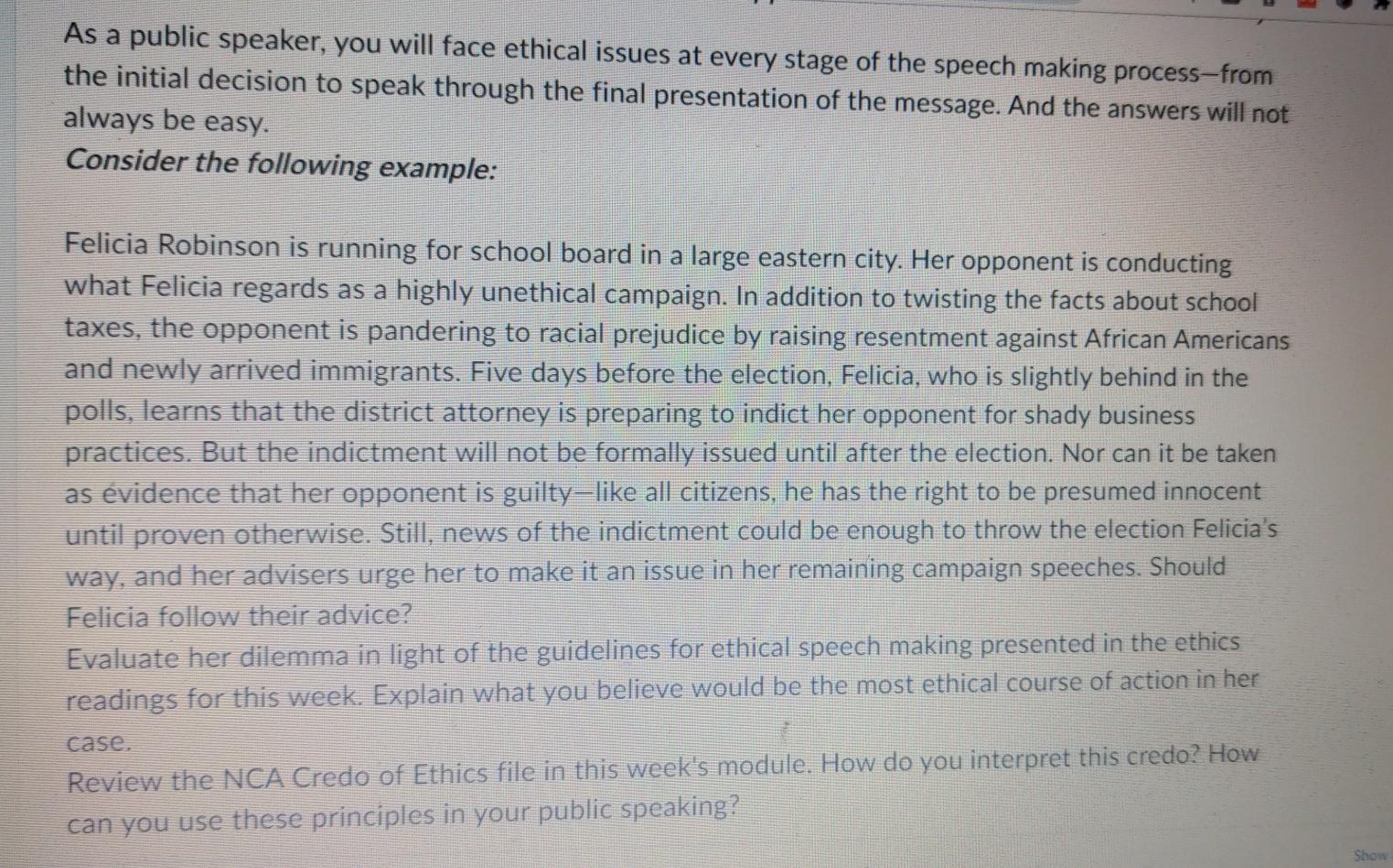
As a public speaker, you will face ethical issues at every stage of the speech making process-from the initial decision to speak through the final presentation of the message. And the answers will not always be easy. Consider the following example: Felicia Robinson is running for school board in a large eastern city. Her opponent is conducting what Felicia regards as a highly unethical campaign. In addition to twisting the facts about school taxes, the opponent is pandering to racial prejudice by raising resentment against African Americans and newly arrived immigrants. Five days before the election, Felicia, who is slightly behind in the polls, learns that the district attorney is preparing to indict her opponent for shady business practices. But the indictment will not be formally issued until after the election. Nor can it be taken as vidence that her opponent is guilty-like all citizens, he has the right to be presumed innocent until proven otherwise. Still, news of the indictment could be enough to throw the election Felicia's way, and her advisers urge her to make it an issue in her remaining campaign speeches. Should Felicia follow their advice? Evaluate her dilemma in light of the guidelines for ethical speech making presented in the ethics readings for this week. Explain what you believe would be the most ethical course of action in her case. Review the NCA Credo of Ethics file in this week's module. How do you interpret this credo? How can you use these principles in your public speaking? Show
Step by Step Solution
There are 3 Steps involved in it
1 Expert Approved Answer
Step: 1 Unlock

Question Has Been Solved by an Expert!
Get step-by-step solutions from verified subject matter experts
Step: 2 Unlock
Step: 3 Unlock