







Question: As you begin to think about developing you own approach to ethical decision-making, what are your key takeaways from Part I? What approaches are most
As you begin to think about developing you own approach to ethical decision-making, what are your key takeaways from Part I? What approaches are most attractive to you, and why? What approaches seemed least useful (and, again, why)? What do you think will be your greatest challenges as you develop your own decision-making approach?
Reference: Beyond Bumper Sticker Ethics by Steve Wilkins.
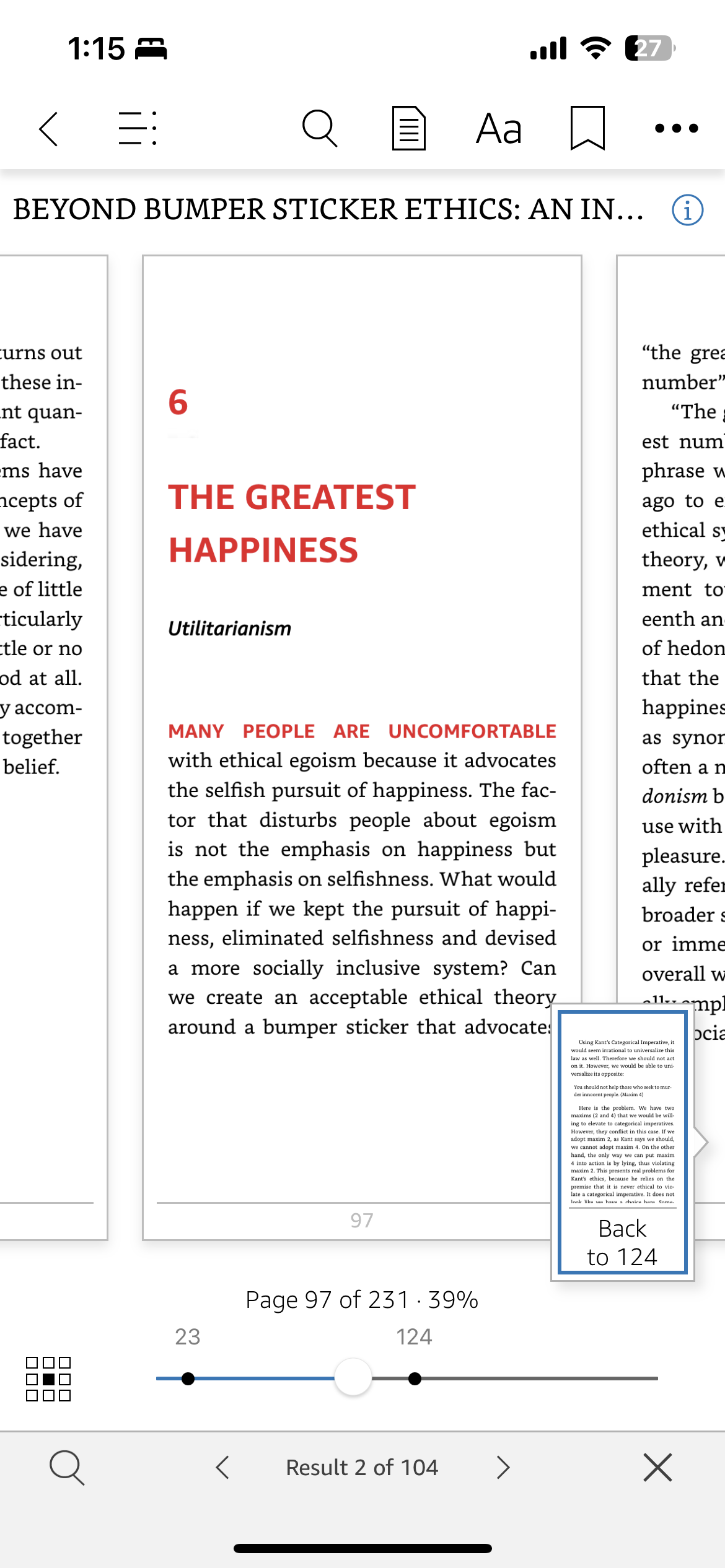
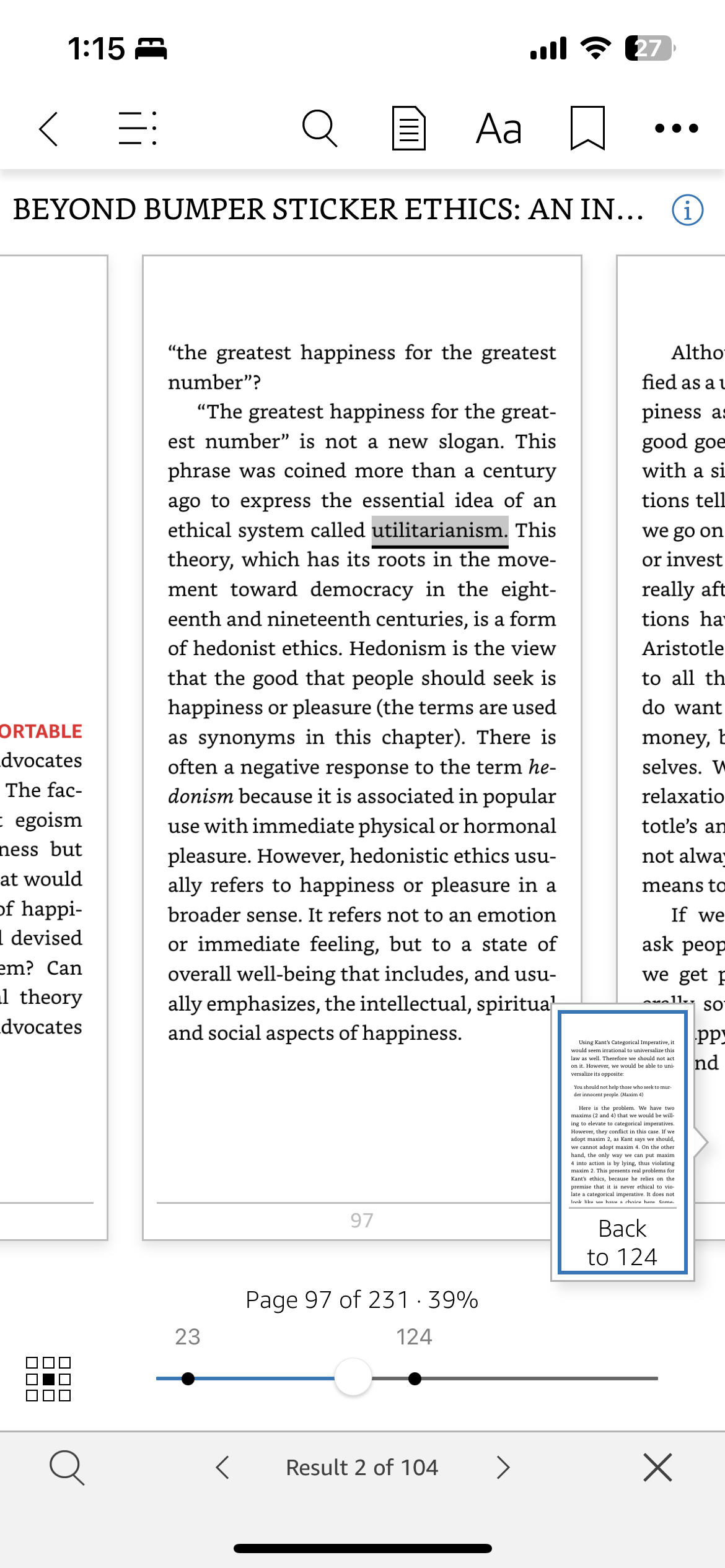
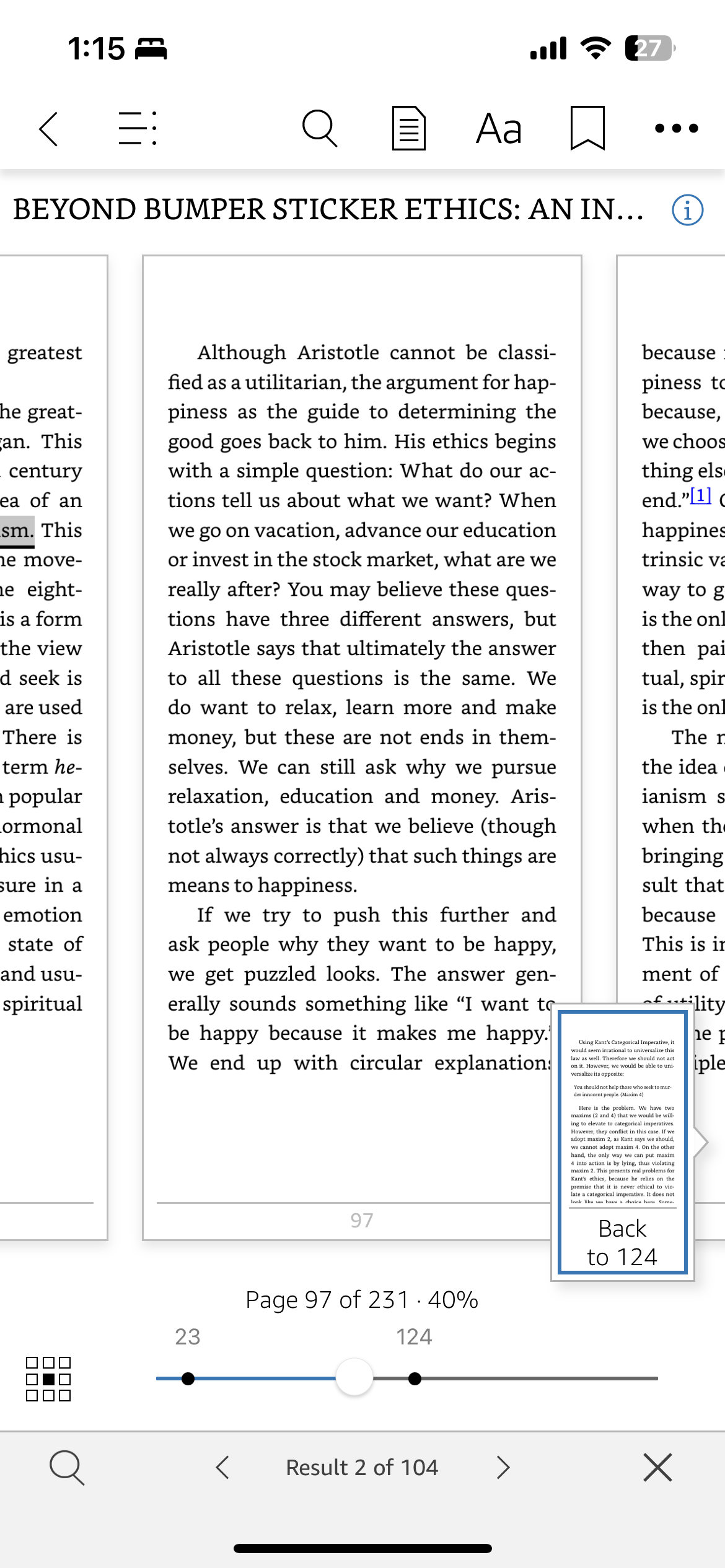
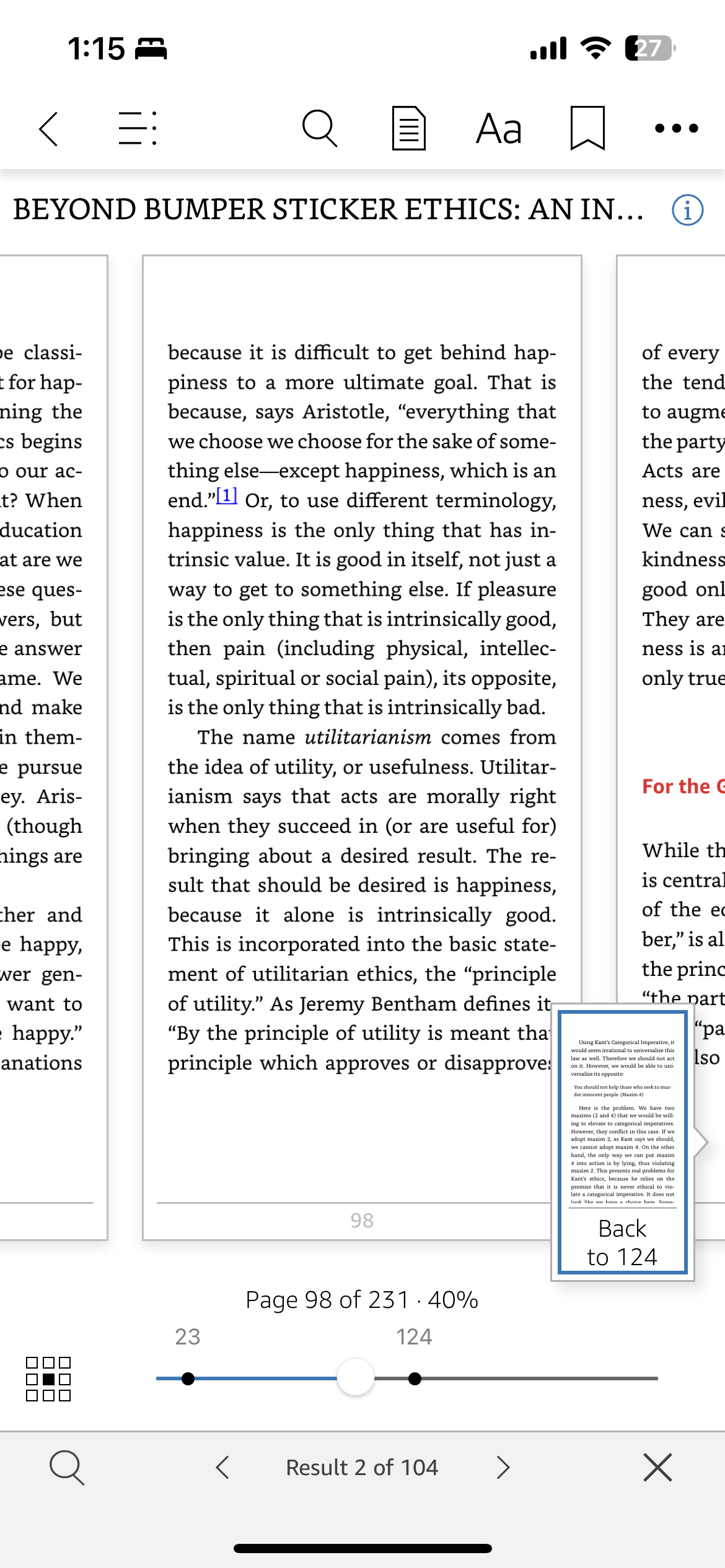
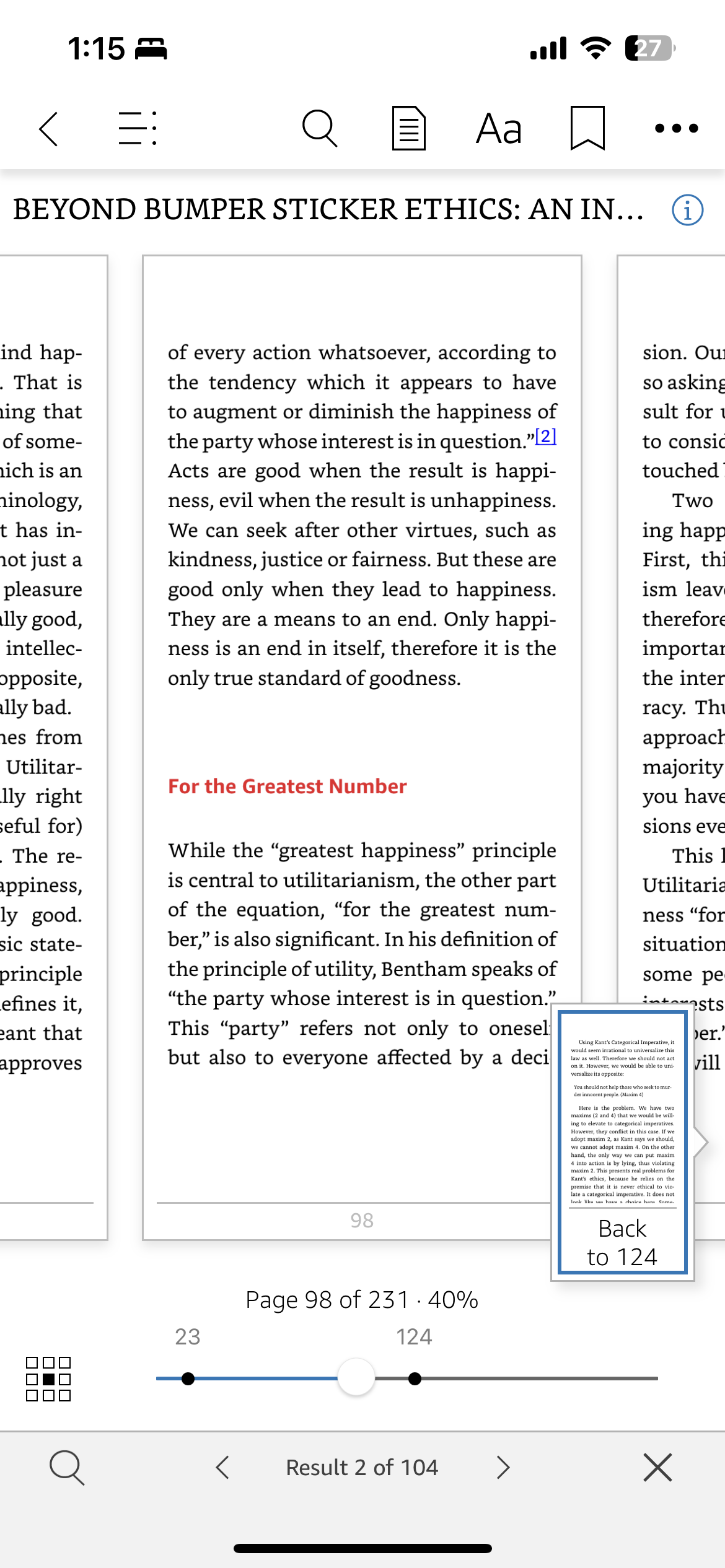
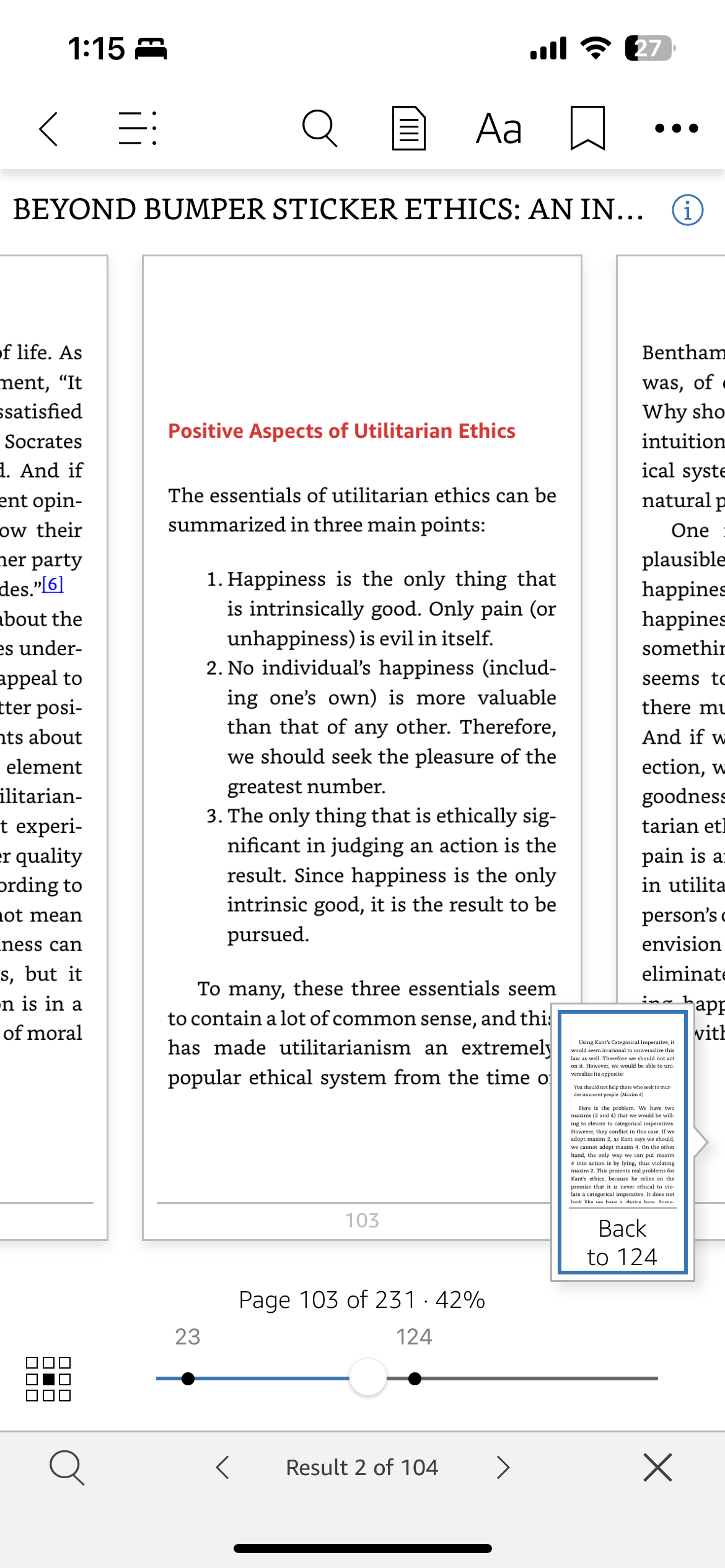
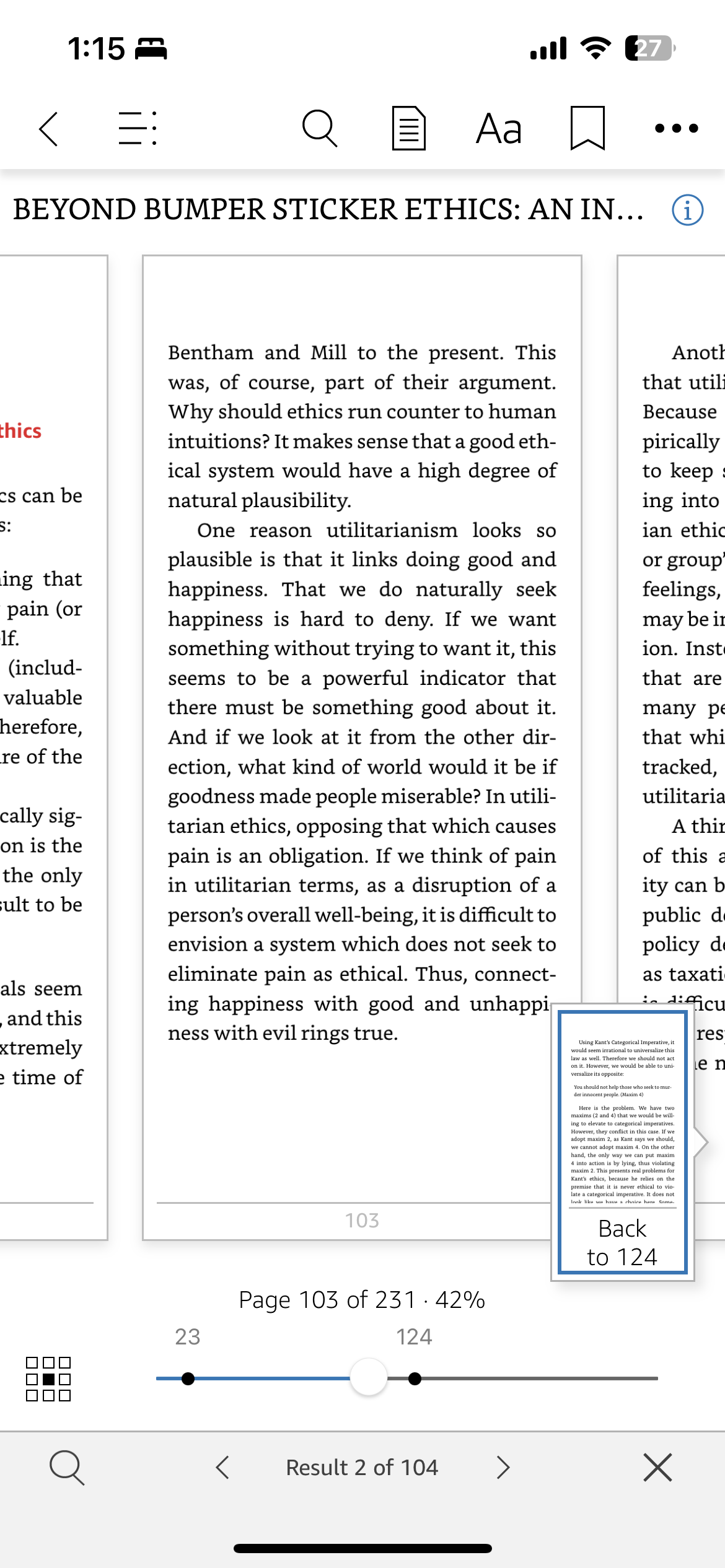
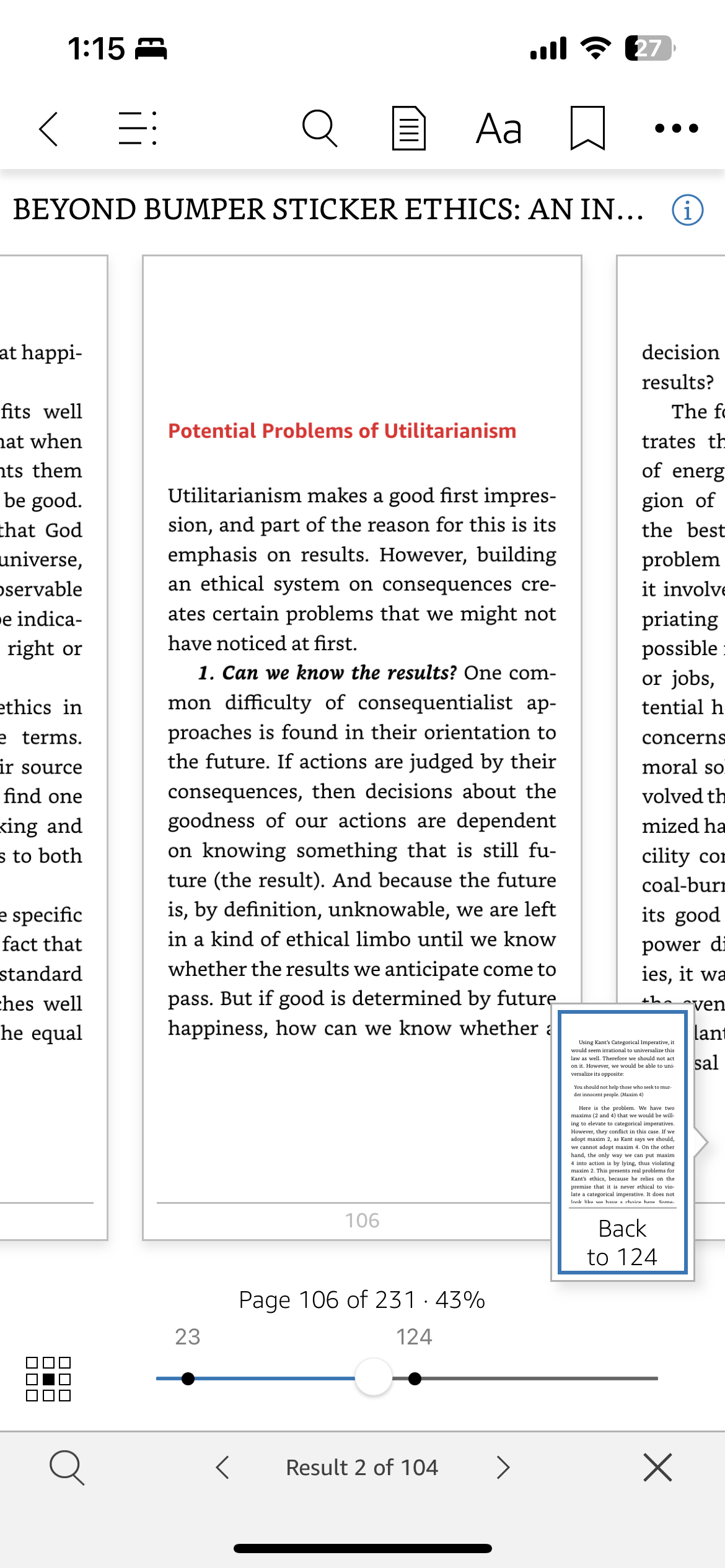
1:15 m 27 Q Aa . . . BEYOND BUMPER STICKER ETHICS: AN IN... urns out "the gre these in- number' nt quan- 6 "The fact. est num ms have phrase w acepts of THE GREATEST ago to e we have ethical s sidering, HAPPINESS theory, v e of little ment to ticularly Utilitarianism eenth an tle or no of hedon od at all. that the y accom- happines together MANY PEOPLE ARE UNCOMFORTABLE as synor belief. with ethical egoism because it advocates often a n the selfish pursuit of happiness. The fac- donism b tor that disturbs people about egoism use with is not the emphasis on happiness but pleasure. the emphasis on selfishness. What would ally refer happen if we kept the pursuit of happi- broader ness, eliminated selfishness and devised or imme a more socially inclusive system? Can overall w we create an acceptable ethical theory all-~ ~mp around a bumper sticker that advocate: pci Using Kant's Categorical Imperative, it would seem irrational to universalize this law as well. Therefore we should not get on it . However , we would be able to uni- versalize its opposite. You should not help those who seek to mur. der innocent people. (Maxim 4) Here is the problem. We have two maxims (2 and 4) that we would he will ing to elevate to categorical imperativ However, they conflict in this case. If we adopt maxim 2, as Kant says we should, we cannot adopt maxim 4. On the other hand, the only way we can put maxim 4 into action is by lying, thus violating maxim 2. This presents real problems for Kant's ethics, because he relies on the premise that it is never ethical to vio- late a categorical imperative. It does not look like we have a chairs here Sama. 97 Back to 124 Page 97 of 231 . 39% 23 124 Q Result 2 of 104 X1:15 m 27 Q Aa . . . BEYOND BUMPER STICKER ETHICS: AN IN... "the greatest happiness for the greatest Altho number"? fied as a "The greatest happiness for the great- piness a est number" is not a new slogan. This good goe phrase was coined more than a century with a si ago to express the essential idea of an tions tell ethical system called utilitarianism. This we go on theory, which has its roots in the move- or invest ment toward democracy in the eight- really aft eenth and nineteenth centuries, is a form tions ha of hedonist ethics. Hedonism is the view Aristotle that the good that people should seek is to all th happiness or pleasure (the terms are used do want ORTABLE as synonyms in this chapter). There is money, dvocates often a negative response to the term he- selves. W The fac- donism because it is associated in popular relaxation egoism use with immediate physical or hormonal totle's an ness but pleasure. However, hedonistic ethics usu- not alwa at would ally refers to happiness or pleasure in a means to of happi- broader sense. It refers not to an emotion If we devised or immediate feeling, but to a state of ask peop em? Can overall well-being that includes, and usu- we get 1 theory ally emphasizes, the intellectual, spiritual dvocates and social aspects of happiness. Using Kant's Categorical Imperative, it PP would seem irrational to universalize this law as well. Therefore we should not act on it . However , we would be able to uni- versalize its opposite. and You should not help those who seek to mur. der innocent people. (Maxim 4) Here is the problem. We have two maxims (2 and 4) that we would he will ing to elevate to categorical imperativ However, they conflict in this case. If we adopt maxim 2, as Kant says we should, we cannot adopt maxim 4. On the other hand, the only way we can put maxim 4 into action is by lying, thus violating maxim 2. This presents real problems for Kant's ethics, because he relies on the premise that it is never ethical to vio- late a categorical imperative. It does not bond like use have a chaise here Sama. 97 Back to 124 Page 97 of 231 . 39% 23 124 Q Result 2 of 104 X\f\f\f1:15 m 27 Q Aa . . . BEYOND BUMPER STICKER ETHICS: AN IN... f life. As Bentham ment, "It was, of satisfied Why sho Socrates Positive Aspects of Utilitarian Ethics intuition And if ical syste ent opin- The essentials of utilitarian ethics can be natural p ow their summarized in three main points: One her party plausible des."6] 1. Happiness is the only thing that happines bout the is intrinsically good. Only pain (or happines s under- unhappiness) is evil in itself. somethin ppeal to 2. No individual's happiness (includ seems to tter posi- ing one's own) is more valuable there mu its about than that of any other. Therefore, And if w element we should seek the pleasure of the ection, w ilitarian- greatest number. goodness t experi- 3. The only thing that is ethically sig- tarian et r quality nificant in judging an action is the pain is a ording to result. Since happiness is the only in utilita ot mean intrinsic good, it is the result to be person's ness can pursued. envision s, but it eliminat To many, these three essentials seem n is in a in ~ Lap of moral to contain a lot of common sense, and this has made utilitarianism an extremely Using Kant's Categorical Imperative, it wit las as well. Therefore we should not get on it. However , we would be able to uni- popular ethical system from the time o versalize its opposite. You should not help those who seek to mur. der innocent people. (Maxim 4) Here is the problem. We have two maxims (2 and 4) that we would be will ing to elevate to categorical imperativ However, they conflict in this case. If we adopt maxim 2, as Kant says we should, cannot adopt maxim 4. On the other hand, the only way we can put maxim 4 into action is by lying, thus violating maxim 2. This presents real problems for Kant's ethics, because he relies on the premise that it is never ethical to vio- late a categorical imperative. It does not bound like we have a chaise here fama. 103 Back to 124 Page 103 of 231 . 42% 23 124 Q Result 2 of 104 X1:15 m 27 Q Aa . . . BEYOND BUMPER STICKER ETHICS: AN IN... Bentham and Mill to the present. This Anot was, of course, part of their argument. that utili Why should ethics run counter to human Because thics intuitions? It makes sense that a good eth- pirically ical system would have a high degree of to keep cs can be natural plausibility. ing into S: One reason utilitarianism looks so ian ethic plausible is that it links doing good and or group ing that happiness. That we do naturally seek feelings, pain (or happiness is hard to deny. If we want may be il If. something without trying to want it, this ion. Inst (includ seems to be a powerful indicator that that are valuable there must be something good about it. many p herefore, And if we look at it from the other dir- that whi re of the ection, what kind of world would it be if tracked, goodness made people miserable? In utili- utilitaria cally sig- tarian ethics, opposing that which causes A thi on is the pain is an obligation. If we think of pain of this the only in utilitarian terms, as a disruption of a ity can b ult to be person's overall well-being, it is difficult to public d envision a system which does not seek to policy d eliminate pain as ethical. Thus, connect- as taxati als seem and this ing happiness with good and unhappi xtremely ness with evil rings true. Using Kant's Categorical Imperative, it res would seem irrational to universalize this law as well. Therefore we should not get on it . However , we would be able to uni- le n time of versalize its opposite You should not help those who seek to mur. der innocent people. (Maxim 4) Here is the problem. We have two maxims (2 and 4) that we would he will ing to elevate to categorical imperat However, they conflict in this case. If we adopt maxim 2, as Kant says we should, we cannot adopt maxim 4. On the other hand, the only way we can put maxim 4 into action is by lying, thus violating maxim 2. This presents real problems for Kant's ethics, because he relies on the premise that it is never ethical to vio- late a categorical imperative. It does not bound like we have a chaise here Sama. 103 Back to 124 Page 103 of 231 . 42% 23 124 Q Result 2 of 104 X\f\f1:15 m 27 Q Aa . . . BEYOND BUMPER STICKER ETHICS: AN IN... know the after an alternative plant was constructed ism can at a much higher cost (that is, greater future w ase illus- unhappiness) than a nuclear plant, break- was a go h a lack throughs in technology solved the prob- nuclear your re- lems associated with nuclear power gen- a way to etermine eration. do we kn m. This Usually we would say that no wrong The next because was done, because there was no way to years? N (appro- know when or whether such problems dangerou people), would be successfully resolved. But that we have n homes is just the point. Utilitarianism cannot es- before w to po- cape responsibility for present decisions 2. Ho r ethical on the basis that we cannot know how we make ism, the things will turn out in the future. There is and othe that in- no standard of judgment other than con- certainty nd maxi- sequences, and every consequence occurs out had power fa- after the decision. Thus, because our is impor nuclear, choice did not result in "the greatest good est (as ir ted) had for the greatest number," don't we have to tive term nuclear say that our decision not to build the nu- compare categor- clear generating plant was morally infer- in two o of risk in ior? evaluate mage to This case points out the very practical ar waste difficulty of basing decisions on future re k Using Kant's Categorical Imperative, it would seem irrational to universalize this ne year events. It also illustrates that utilitarian law as well. Therefore we should not act on it . However , we would be able to uni- cho versalize its opposite. You should not help those who seek to mur. der innocent people. (Maxim 4) Here is the problem. We have two maxims (2 and 4) that we would be will ing to elevate to categorical imperativ However, they conflict in this case. If we adopt maxim 2, as Kant says we should, we cannot adopt maxim 4. On the other hand, the only way we can put maxim 4 into action is by lying, thus violating maxim 2. This presents real problems for Kant's ethics, because he relies on the premise that it is never ethical to vio- late a categorical imperative. It does not bound like we have a chairs here Sama. 106 Back to 124 Page 106 of 231 . 44% 23 124 Q Result 2 of 104 X1:16 m 27 Q Aa . . . BEYOND BUMPER STICKER ETHICS: AN IN... as-ure of intuition presente 7 enough the othe quittal. IT'S YOUR DUTY Neith want to ing mor Kantian Ethics guilty v displeas courthou AT THE COMMAND OF HIS CAPTAIN, a defendar young soldier attacks an enemy gun posi- ever, both tion at the top of the hill. He is part of want is i the first wave and faces withering gun- regardles fire. There are no illusions; he knows that portant t he stands a good chance of becoming a The casualty. seems ap A woman sits in a jury room. The de- ations. F fendant has a long criminal record. All her tractive instincts tell her that the man is guilty associate and would continue to terrorize innocent begins to people if he was released. However, the judge's instructions stated that cases are Using Kant's Categorical Imperative, it nitr to be decided on the basis of evidence, no law as well. Therefore we should not get on it . However , we would be able to uni- son versalize its opposite. You should not help those who seek to mur- der innocent people. (Maxim 4) Here is the problem. We have two maxims (2 and 4) that we would be will ing to elevate to categorical imperativ However, they conflict in this case. If we adopt maxim 2, as Kant says we should, we cannot adopt maxim 4. On the other hand, the only way we can put maxim 4 into action is by lying, thus violating maxim 2. This presents real problems for Kant's ethics, because he relies on the premise that it is never ethical to vio- late a categorical imperative. It does not bound like we have a chairs here fama. 113 Back to 124 Page 113 of 231 . 46% 23 124 Q Result 2 of 104 X\f\f\f\f\f\f\f\f\f\f\f\f\f\f
Step by Step Solution
There are 3 Steps involved in it

Get step-by-step solutions from verified subject matter experts
 Study Help