







Question: ASSIGNMENT: ETHICS & SOP WRITING ACTIVITY ( PLEASE ANSWER IT ON A TEXT FORMAT) 1. From the lesson above. Create 2 SOPs and answer the
ASSIGNMENT: ETHICS & SOP WRITING ACTIVITY (PLEASE ANSWER IT ON A TEXT FORMAT)
1. From the lesson above. Create 2 SOPs and answer the questions from the scenarios that follow
Scenario A: After some years of professional work, you have saved a substantial amount of money. You have decided to open your own community pharmacy that advocates Antimicrobial Resistance. You want to practice your ethical responsibilities as a pharmacist to the best possible extent. Among the basic procedures to plan to is your order-taking process from a patient.
Task A: Create 2 Standard Operating Procedures (simple steps format only) of order taking.
SOP 1 is for a patient without a prescription.
SOP 2 is for a patient with a prescription.
Keep in mind that Antibiotics require a prescription prior to dispensing. How will this affect your SOP writing?
---
Scenario B: A 72-year old male patient purchasing his anti-TB drug (Rifampicin + Isoniazid tablets) comes to your pharmacy. Upon asking where his prescription is, he reported that he lost it. He remembers though that he will only take it for one more week. He comes from a distant subdivision of about 2 kilometers from your pharmacy. He lives alone and only depends on an SSS pension for his day-to-day expenses. He only walks to save up his money for food and medicine.
Question: Will you dispense his medication? Why or why not? Defend your answer by citing one principle found in the pharmacy code of ethics and expound it.
---
Scenario C:
You observed that people in your area are self-medicating. Self-medication is the act or process of medicating oneself especially without the advice of a physician. Most people are purchasing antibiotics, but due to your loyalty to the Antimicrobial Resistance campaign, you kept on refusing to dispense what they are asking for. After some months of operating, your sales barely keep up meeting your expenses, putting your pharmacy in the verge of bankruptcy.
Question:
Will you stop implementing your Antimicrobial Resistance campaign to boost your sales and save the pharmacy business from bankruptcy? Why or why not? What creative solutions will you employ to uphold the campaign and save your pharmacy from bankruptcy?
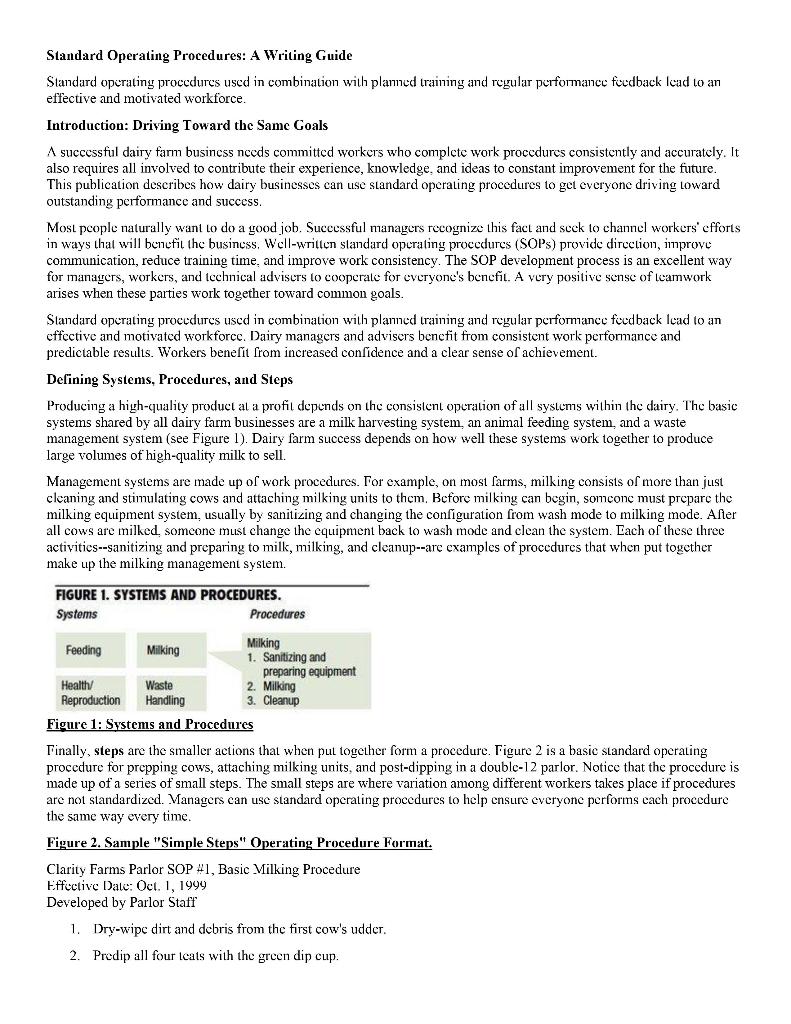
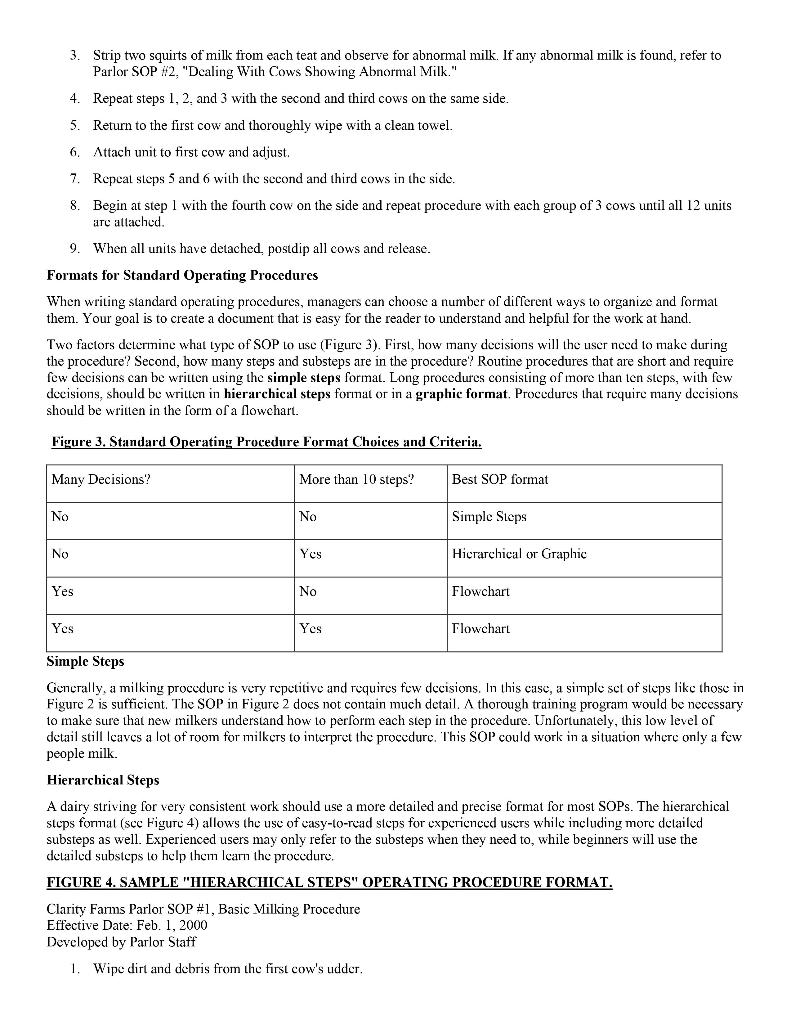
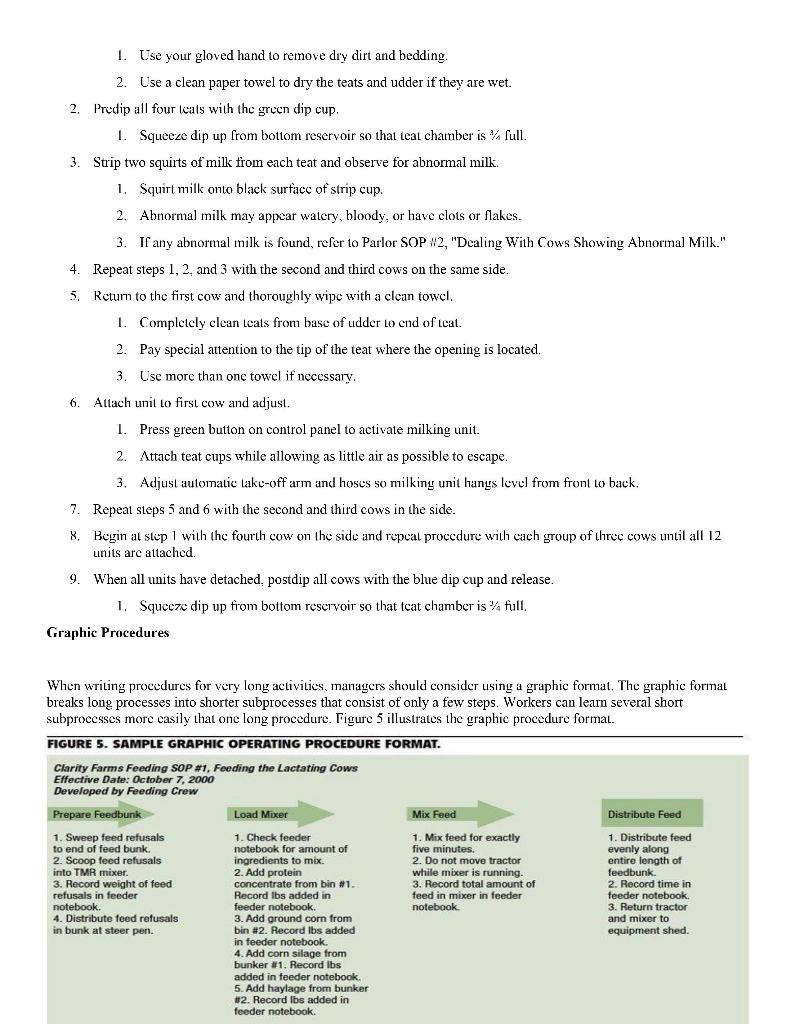
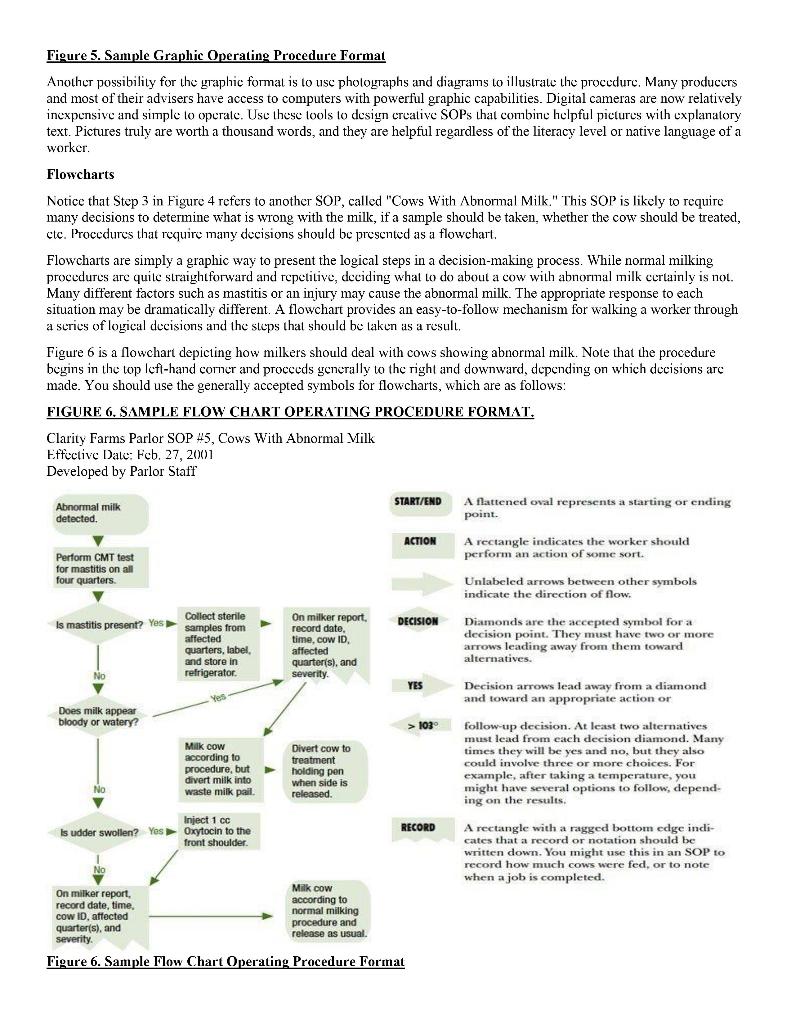
Standard Operating Procedures: A Writing Guide Standard operating procedures used in combination with planned training and regular performance feedback lead to an effective and motivated workforce. Introduction: Driving Toward the Same Goals A successful dairy farm business needs committed workers who complete work procedures consistently and accurately. It also requires all involved to contribute their experience, knowledge, and ideas to constant improvement for the future. This publication describes how dairy businesses can use standard operating procedures to get everyone driving toward outstanding performance and success. Most people naturally want to do a good job. Successful managers recognize this fact and scck to channel workers' efforts in ways that will benefit the business, Well-written standard operating procedures (SOPs) provide direction, improve communication, reduce training time, and improve work consistency. The SOP development process is an excellent way for managers, workers, and technical advisers to coopcrale for everyone's bencfil. A very positive sense of teamwork arises when these parties work together toward common goals. Standard operating procedures used in combination with planned training and regular performance feedback lead to an effective and motivated workforce. Dairy managers and advisers benefit from consistent work performance and predictable results. Workers benefit from increased confidence and a clear sense of achievement. Defining Systems, Procedures, and Steps Producing a high-quality product al a profil depends on the consistent operation of all systems within the dairy. The basic systems shared by all dairy farm businesses are a milk harvesting system, an animal feeding system, and a waste management system (see Figure 1). Dairy farm success depends on how well these systems work together to produce large volumes of high-quality milk to sell. Management systems are made up of work procedures. For example, on most farms, milking consists of more than just cleaning and stimulating cows and attaching milking units to them. Before milking can begin, somcone must prepare the milking equipment system, usually by sanitizing and changing the configuration from wash mode to milking mode. After all cows are milked somcone must change the equipment back to wash mode and clean the system. Each of these three activities--sanitizing and preparing to milk, milking, and cleanup--are examples of procedures that when put together make up the milking management system. FIGURE 1. SYSTEMS AND PROCEDURES. Systems Procedures Waste Milking Feeding Milking 1. Sanitizing and preparing equipment Health 2. Milking Reproduction Handling 3. Cleanup Figure 1: Systems and Procedures Tinally, steps are the smaller actions that when put together form a procedure. Figure 2 is a basic standard operating procedure for prepping cows, attaching milking units, and post-dipping in a double-12 parlor. Notice that the procedure is made up of a series of small steps. The small steps are where variation among different workers takes place if procedures are not standardized. Managers can use standard operating procedures to help ensure everyonc performs cach procedure the same way every time. Figure 2. Sample "Simple Steps" Operating Procedure Format. Clarity Farms Parlor SOP 41, Basic Milking Procedure Effective Date: Oct. 1, 1999 Developed by Parlor Staff 1. Dry-wipe dirt and debris from the first cow's udder, 2. Predip all four cats with the green dip cup. 5. 3. Strip two squirts of milk from each teat and observe for abnormal milk. If any abnormal milk is found, refer to Parlor SOP #2, "Dealing with Cows Showing Abnormal Milk." 4. Repeat steps 1, 2 and 3 with the second and third cows on the same side. Return to the first cow and thoroughly wipe with a clean towel. 6. Attach unit to first cow and adjust. 7. Repeal steps 5 and 6 with the second and third cows in the sido. 8. Begin at step 1 with the fourth cow on the side and repeat procedure with each group of 3 cows until all 12 units are attached. 9. When all units have detached, postdip all cows and release. Formats for Standard Operating Procedures When writing standard operating procedures, managers can choose a number of different ways to organize and format them. Your goal is to create a document that is easy for the reader to understand and helpful for the work at hand. Two factors determine what type of SOP lo usc (Figure 3). First, how many decisions will the user need to make during the procedure? Second, how many steps and substeps are in the procedure? Routine procedures that are short and require few decisions can be written using the simple steps format. Long procedures consisting of more than ten steps, with few decisions, should be wrillen in hierarchical steps format or in a graphic format. Procedures that require many decisions should be written in the form of a flowchart. Figure 3. Standard Operating Procedure Format Choices and Criteria, Many Decisions? More than 10 steps? Best SOP format No No Simple Steps No Yes Hicrarchical or Graphic Yes No Flowchart Yes Yes Flowchart Simple Steps Generally, a milking procedure is very repetitive and requires few decisions. In this case, a simple sct of steps like those in Figure 2 is sufficient. The SOP in Figure 2 does not contain much detail. A thorough training program would be necessary to make sure that new milkers understand how to perform each step in the procedure. Unfortunately, this low level of detail still caves a lot of room for milkers to interpret the procedure. This SOP could work in a situation where only a few people milk. Hierarchical Steps A dairy striving for very consistent work should use a more detailed and precise format for most SOPs. The hierarchical steps formal (scc Figure 4) allows the use of casy-to-read steps for expericnced users while including more detailed substeps as well. Experienced users may only refer to the substeps when they need to, while beginners will use the detailed substeps to help them learn the proceduru. FIGURE 4. SAMPLE "HIERARCHICAL STEPS" OPERATING PROCEDURE FORMAT. Clarity Farms Parlor SOP #1, Basic Milking Procedure Effective Date: Feb. 1, 2000 Developed by Parlor Staff 1. Wipe dirt and debris from the first cow's udder. 1. Use your gloved hand to remove dry dirt and bedding. 2. Use a clean paper towel to dry the teats and udder if they are wet. 2. Predip all four Icals with the green dip cup. 1. Squeeze dip up from bottom reservoir so that leal chamber is full. 3. Strip two squirts of milk from each teat and observe for abnormal milk. 1. Squirt milk onto black surface of strip cup. 2. Abnormal milk may appear watery, bloody, or have clots or flakes. 3. If any abnormal milk is found, refer to Parlor SOP #2, "Dealing With Cows Showing Abnormal Milk." 4. Repeat steps 1, 2 and 3 with the second and third cows on the same side. 5. Return to the first cow and thoroughly wipe with a clean towel. 1. Completely clean eats from base of udder to end of leat. 2. Pay special attention to the tip of the teat where the opening is located. 3. Use more than one towel if necessary. Attach unit to first cow and adjust. 1. Press green button on control panel to activate milking unit. 2. Attach teat cups while allowing as little air as possible to escape. 3. Adjust automatic take-off arm and hoses so milking unit hanys level from front to back, 7. Repeat steps 5 and 6 with the second and third cows in the side. 8. Begin al slup 1 with the fourth cow on the side and repcal procedure with each group of three cows until all 12 units are attached 9 When all units have detached. postdip all cows with the blue dip cup and release. 1. Squeeze dip up from bottom reservoir so that tcat chamber is % full, Graphic Procedures 6. When writing procedures for very long activities, managers should consider using a graphic format. The graphic format breaks long processes into shorter subprocesses that consist of only a few steps. Workers can learn several short subprocesses more casily that one long procedure. Figure 5 illustrates the graphic procedure format. FIGURE 5. SAMPLE GRAPHIC OPERATING PROCEDURE FORMAT. Mix Feed Distribute Feed Clarity Farms Feeding SOP #1. Feeding the Lactating Cows Effective Date: October 7, 2000 Developed by Feeding Crew Prepare Feedbunk Load Mixer 1. Sweep feed refusals 1. Check feeder to end of feed bunk. notebook for amount of 2. Scoop feed refusals ingredients to mix into TMR mixer 2. Add protein 3. Record weight of feed concentrate from bin #1 refusals in feeder Record lbs added in notebook feeder notebook. 4. Distribute feed refusals 3. Add ground corn from in bunk at steer pen. bin #2. Record lbs added in feeder notebook. 4. Add corn silage from bunker #1. Record lbs added in feeder notebook 5. Add haylage from bunker #2. Record lbs added in feeder notebook 1. Mix feed for exactly five minutes 2. Do not move tractor while mixer is running. 3. Record total amount of feed in mixer in feeder notebook 1. Distribute feed evenly along entire length of feedbunk 2. Record time in feeder notebook 3. Return tractor and mixer to equipment shed Figure 5. Sample Graphic Operating Procedure Format Another possibility for the graphic formal is to use photographs and diagrams to illustrale the procedure. Many producers and most of their advisers have access to computers with powerful graphic capabilities. Digital cameras are now relatively inexpensive and simple to operate. Use these tools to design creative SOPs that combine helpful pictures with explanatory text. Pictures truly are worth a thousand words, and they are helpful regardless of the literacy level or native language of a worker Flowcharts Notice that Step 3 in Figure 4 refers to another SOP, called "Cows With Abnormal Milk." This SOP is likely to require many decisions to determine what is wrong with the milk, if a sample should be taken, whether the cow should be treated, ctc. Procedures that require many decisions should be presented as a flowchart, Flowcharts are simply a graphic way to present the logical steps in a decision-making process. While normal milking procedures are quite straightforward and repetitive, deciding what to do about a cow with abnormal milk certainly is not. Many different factors such as mastitis or an injury may cause the abnormal milk. The appropriate response to each situation may be dramatically different. A flowchart provides an easy-to-follow mechanism for walking a worker through a series of logical decisions and the steps that should be taken as a result, Figure 6 is a flowchart depicting how milkers should deal with cows showing abnormal milk. Note that the procedure begins in the top left-hand corner and proceeds generally to the right and downward, depending on which decisions are made. You should use the generally accepted symbols for flowcharts, which are as follows: FIGURE 6, SAMPLE FLOW CHART OPERATING PROCEDURE FORMAT. Clarity Farms Parlor SOP 45, Cows With Abnormal Milk Effective Date: Feb. 27, 2001 Developed by Parlor Staff START/END Abnormal milik detected. A flattened oval represents a starting or ending point. . ACTION A rectangle indicates the worker should perform an action of some sort. Perform CMT test for mastitis on all four quarters DECISION Collect sterile Is mastitis present? Yes samples from affected quarters, label and store in No refrigerator On milker report record date. time, cow ID, affected quarters), and severity Unlabeled arrows between other symbols indicate the direction of flow. Diamonds are the accepted symbol for a decision point. They must have two or more arrows leading away from them toward alternatives. YES Decision arrows lead away from a diamond and toward an appropriate action or Ves Does milk appear bloody or watery? > 103 Milk cow according to procedure, but divert milk into waste milk pail. Divert cow to treatment holding pen when side is released follow-up decision. At least two alternatives must lead from each decision diamond. Many times they will be yes and no, but they also could involve three or more choices. For example, after taking a temperature, you might have several options to follow, depend ing on the results, No Inject 1 cc Is udder swollen? Yos Oxytocin to the front shoulder RECORD A rectangle with a ragged bottom edge indi- cates that a record or notation should be written down. You might use this in an SOP to record how much cows were fed, or to note when a job is completed. No On milker report, Milk Cow record date, time, according to cow ID, affected normal milking quarter(s), and procedure and severity release as usual Figure 6. Sample Flow Chart Operating Procedure Format Regardless of the SOP format that you choose to use, there are a few elements of information that should be included with cvery SOP. These include a clear and descriptive lille; the name of the author or person responsible for the SOP; and the date on which the SOP or revision becomes effective. Businesses that use many SOPs should adopt a logical numbering scheme for filing and to keep track of revisions. In addition, some SOPs should include lists of materials or tools needed to complete the job. All SOPs that involve hazardous working conditions should include a list of safety precautions. Developing and Implementing the SOP: People Support What They Help Create The SOP development process is critical to successful implementation of SOPs. It should be an inclusive process that considers the input of everyone with an interest in the procedure's success. Managers who write procedures without input from workers or technical advisers run the risk of upsetting workers and producing a poorly written SOP, Managers who enlist the talents of workers and technical advisers will increase buy-in and produce better SOPs. Most importantly, they will take advantage of an important opportunity to foster teamwork among workers, managers, and advisers. Iluman nature dictates that people support what they help create. The following seven steps describe a method that will produce excellent procedures and generate maximum buy-in from the workforce. All of the steps are important 1. Plan for Results Plan with the business goal in mind. The goal of a milking SOP is not to ensure that everyone milks the same way. The goal is to quickly and efficiently harvest high-quality milk and climinate the spread of mastitis organisms. Standard operating procedures work best when they are designed to achieve specific results. Decide what business goals will be achieved through better management with SOPs and how those goals will be measured. For example, in the parlor, you might measure the pounds of milk harvested per milker per hour and the rate of new mastitis infections per month. These measures would indicate how efficiently cows are milked and how effective the procedures at preventing the spread of mastitis. You then can use this information to adjust procedures and provide feedback to workers about their performance. Many benchmarks exist in the industry to help mcasure quality and efficiency in specific arcas. Ask your advisers for help identifying benchmarks that will help you improve your business. In some cases, you might need to come up with measures on your own that will help track progress over time, 2. First Draft Select a format for the procedure. If you choose to use simple steps, hierarchical steps, or the graphic format, first make a detailed list of the steps in the order that they are done. A simple way to get started is to observe someone performing the process as it now exists and write down everything that they do. This list now a draft of the procedure. If the procedure needs to appear as a flowchart, start with the most reasonable beginning point. Draw the decisions that a worker will need to make and the actions that follow cach decision, Don't try to be perfect with the first draft, because it is very likely that you will need to make many revisions. 3. Internal Review Provide cach worker who performs the procedure with a copy of the draft SOP. Ask them to review and suggest changes Thal arc casier to understand, more accurate, or will improve performance. Assure the workers that their input is important and will be used. People are much more likely to accept and use the SOP if they feel a sense of ownership in it. Workers will feel ownership and commitment to an SOP if they believe that management used, or at least fairly considered their ideas during development. The chance of success is reduced when workers fuel that management is imposing SOPs without regard to worker input. Another excellent reason to involve the workers is that they are likely to have good ideas. Highly successful managers actively engage their work teams in a continual quest to become more efficient, increase cost effectiveness, and improve quality. 4. External Review Dairy managers increasingly rely on the advice of trusted advisers outside their own organization. The SOP writing process is an excellent way to tap the expertise of your technical advisers such as the veterinarian, nutritionist, or extension agent. They can give you advice that draws on thcir scientific knowledge and broad experience with other dairy businesses Provide your advisors with a copy of the SOP draf. Ask them to suggest any changes that will make it clearer and more effective. Dairy managers often see dramatic performance improvements after their technical advisers help them with SOPs. In many cases, the procedure writing process takes communication with advisers to much more productive levels than ever before. Revise the procedure as necessary to incorporate input from your technical advisers. 5. Testing For procedures to be effective, they must perform in the workplace. There is only one way to be absolutely certain that a procedure is well wrillen and performs as expected. Have somcone test the procedure by performing cach step exactly as it is described while the procedure writer watches. Have a person not familiar with the work follow the procedure. Any steps that cause confusion or hesitation for the test worker should be revised. 6. Post Make a final draft of the procedure and post it in the appropriate locations. The workplace is one essential location. A master SOP file should be kept in a central location so workers can review little-used SOPs when necessary. Another possibility is to include SOPs with employce handbook materials. In cach case, it is essential to keep SOPs up to date. Preferably, the workplace copy of the procedure should be printed in text large enough for workers to review while completing their work. Many copy centers have he ability to make enlargements. In addition, it may be helpful to laminate the workplace copy so that it will hold up under difficult conditions. 7. Train The last step in the SOP writing process is often the most neglected. Train or retrain everyone as necessary to follow the procedure exactly. Even with very detailed steps, it is necessary to train all workers. Otherwise, individuals will interpret the meaning of procedures in different ways, leading to inconsistency in work routines and performance. When training workers, share the reasons why procedures must be performed correctly--not just what to do or how to do it. People are much more likely to follow procedures exactly when they understand why they are important. In addition, sharing "why" demonstrates that you care about the worker and his or her success. It also helps develop the worker's job knowledge and enhances his or her ability to contribute to fulure procedure improvements. An effective SOP training program first will make the worker aware of what training activities will take place and what the trainer will be able to do when training is complete. The trainer will cxplain and demonstrate both why and how cach step in the SOP is performed and then give the learner a chance to practice. The trainer will provide positive feedback as the learner masters parts of the procedure and patiently revisits those parts that need improvement. Effective Writing Standard Operating Procedures are instructions that should be understandable to cycryone who uses them. Writers should always try to write procedures as simply as possible while communicating well. A complete discussion of grammar and writing is beyond the scope of this paper. For more information, refer to the book Procedure Writing: Principles and Practices by Douglas Wieringa (see "References"). Write steps as short sentences. Long sentences are harder to understand and tend to include more than one step. Several short sentences usually are easier to understand. Note the following examples: Long: Use your gloved hand to wipe dry dirt and debris from the first cow's uddur, or dry with a clean paper towel if the udder is wet. Short: Wipe dirt and debris from the first cow's udder. 1. Use your gloved hand to remove dry dirt and bedding 2. Use a clean paper towel to dry the teats and udder if they are wet. . Note that the short sentences in the example above are organized in the hierarchical format. Both examples convey the samc mcaning, but the long sentence is much more difficult to understand. In this cxample, we have one step to complete, but two different ways of completing it, depending on the condition of the cow's udder. It is very awkward to convey all this information in one sentence. Write steps in SOPs as imperative sentences. Imperative sentences are in the form of a command and are easy to understand. They usually begin with an action verb. Consider the following examples from an SOP for feeding cows: Unclear: The weight of feed refusals should be recorded in the feeder notebook. Clear: Record the weight of feed refusals in the feeder notebook. In this example, the manager wants to know how much feed the cows refuse to cal so she can accurately determine dry maller intake. The clear example directs the person doing the feeding to record this information. The unclear example is subject to interpretation--docs mean that the feeder should record this information, or just that someone should? Communicate well in as few words as possible. Mark Twain once said he didn't have time to write a short story, so hc wrote a long one instead. Writers tend to use long sentences and paragraphs because it is easier than thinking of the exact, most incaningful words. Procedure writers must use short, direct sentences so readers can quickly understand and memorize the steps in the procedure. Consider the following examples from an SOP for feeding calves: Rambling: Make sure that you clean out all of the old grain from the calf pails before you put new grain in them. Concise: Emply all old grain from calf pails before feeding new grain. The two sentences communicate the same idea, but the concise sentence is more direct and easier to understand. The reward for clear and concise writing is better understanding by readers. Use acronyms and abbreviations sparingly. For example, "The cow developed an LDA after exhibiting reduced DMI brought on by BVD or IBR. She had not yet received supplemental bST." Many people involved in dairy management will recognize all of the acronyms in these sentences, but many others will not. Use acronyms only when they are commonly understood, not just to shorten your writing. For example, most people understand the meaning of the abbreviation "BVD" more quickly than if they read "bovinc viral diarrhea." On the other hand, most will stumble on the acronym DMI, but even those with only a passing interest in nutrition will recognize the words "dry matter intake." Example: Adjust ATO arm and hoses so that milking unit hanys level from front lo back, In this example, "ATO" stands for automatic take-off. There is no advantage to using "ATO" in place of the actual words. The writer would help most milkers to understand by avoiding this uncommon acronym. Level of Detail The level of detail to include in standard operating procedures onc of the most difficult decisions to make. Procedures definitely should include all steps that are essential and that should be performed the same way by all workers. Omitting any of these essential steps may Icad to confusion for the reader or performance variation among different workers. On the other hand, procedures should not be so detailed that they are cumbersome and impractical for everyday use. Highly detailed procedures cannot take the place of training. Recognizing this, procedure writers should not attempt to answer all possible questions that a worker might have. SOPs should complement and serve as a basis for introductory training. Excessive detail also is likely to cause resentment from experienced workers. They might feel that management is using the SOP to micromanage every aspect of their work performance. Procedure writers must ensure that they include enough detail to eliminate significant variation among workers. In Figure 2, Step 2 says to "Predip all four Icals with the groun dip cup." Experience shows that dipping mcans different things to different people. Some workers will start with a minimal amount of dip in the cup so that only the tip of the teat is covered. Others will first fill the cup full so a great deal of dip is wasted when the cow is dipped. In Figure 4. a substep, "Squeeze dip up from bottom reservoir so that teat chamber is /4 full" follows the main predip step. This additional level of detail helps ensure that cach leat is sufficiently covered while minimizing dip wastage. Be aware that a weakness of the flowchart format is that the level of detail must be low. Attempting to use an excessive number of detailed steps leads to a very long, messy, and hard-lo-follow flowchart. Flowcharts are best used to provide an overview of a procedure, while paying special attention to logical decisions. Actions within a lowchart that require . detailed steps should refer to another SOP. For example, in Figure 6, an action block calls for the worker to take a sterile sample of milk. The steps needed to complete this action should be covered in another SOP and through training. Some writers overcome this weakness of flowcharts by using a hybrid of simple steps in combination with the flowchart. In the hybrid, several steps may be included inside or next the appropriate flowchart shape. Conclusion Standard operating procedures are powerful tools for scizing control of work procedures. They define the subtle details that make the difference between success and failure in today's dairy economy. In addition, well-written SOPs act as cffective communication tools that contribute to worker understanding and job satisfaction. The SOP development process, while demanding, can provide significant performance improvements. When properly and fully carried out, the development process brings workers, managers, and advisers together in a collaborative way. As a result, everyone focuses their abilities on doing the best job possible with the farm's resourcesStep by Step Solution
There are 3 Steps involved in it

Get step-by-step solutions from verified subject matter experts
 Study Help