Question: Assignment: Read Chapter 2 Digital Communication and Professionalism. Post 3-5 recommendations for behaviors that will constitute our workplace professionalism rubric for the semester and why
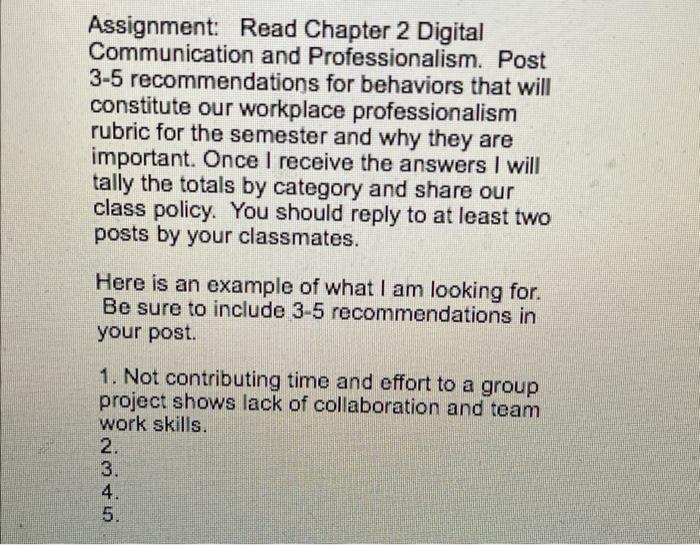
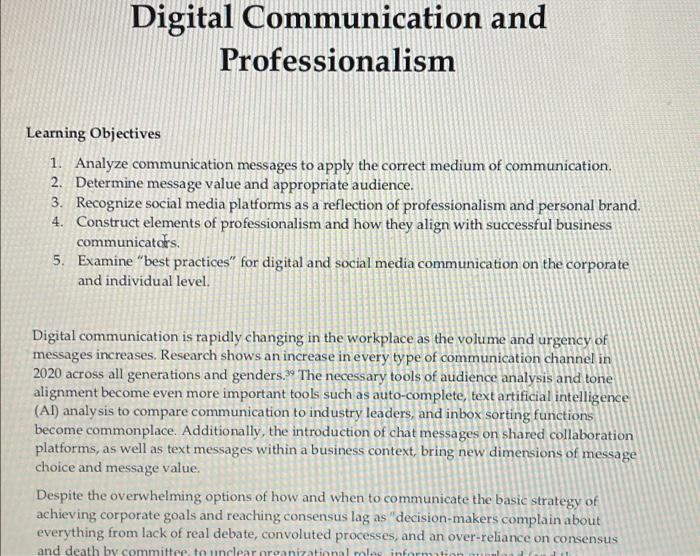
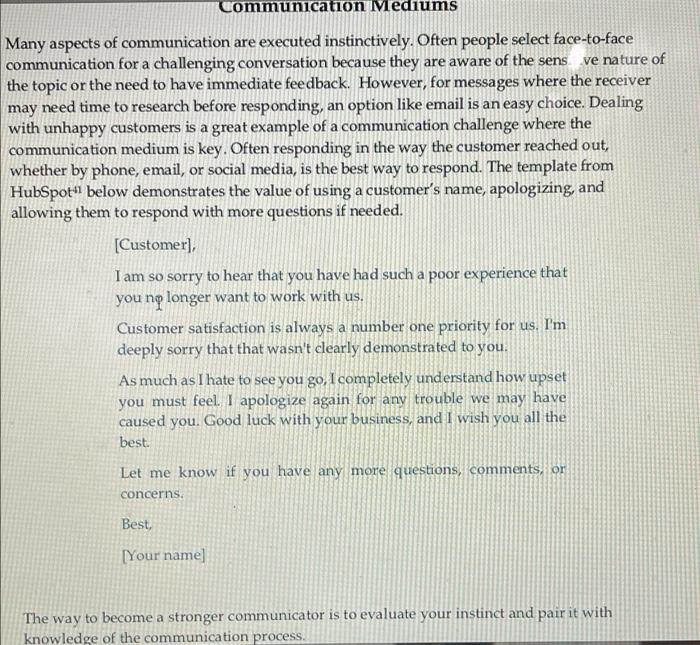
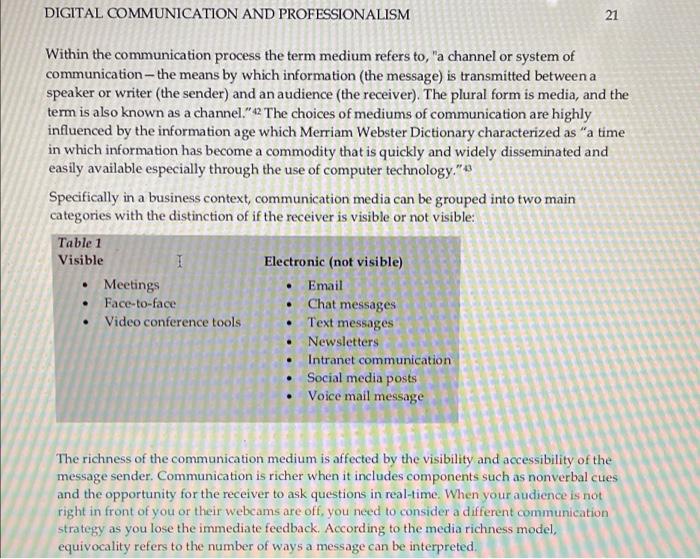
Assignment: Read Chapter 2 Digital Communication and Professionalism. Post 3-5 recommendations for behaviors that will constitute our workplace professionalism rubric for the semester and why they are important. Once I receive the answers I will tally the totals by category and share our class policy. You should reply to at least two posts by your classmates. Here is an example of what I am looking for. Be sure to include 3-5 recommendations in your post. 1. Not contributing time and effort to a group project shows lack of collaboration and team work skills. 2. 3. 4. 5. i Digital Communication and Professionalism Learning Objectives 1. Analyze communication messages to apply the correct medium of communication. 2. Determine message value and appropriate audience. 3. Recognize social media platforms as a reflection of professionalism and personal brand. 4. Construct elements of professionalism and how they align with successful business communicators. 5. Examine "best practices" for digital and social media communication on the corporate and individual level. Digital communication is rapidly changing in the workplace as the volume and urgency of messages increases. Research shows an increase in every type of communication channel in 2020 across all generations and genders. The necessary tools of audience analysis and tone alignment become even more important tools such as auto-complete, text artificial intelligence (AI) analysis to compare communication to industry leaders, and inbox sorting functions become commonplace. Additionally, the introduction of chat messages on shared collaboration platforms, as well as text messages within a business context, bring new dimensions of message choice and message value. Despite the overwhelming options of how and when to communicate the basie strategy of achieving corporate goals and reaching consensus lag as "decision-makers complain about everything from lack of real debate, convoluted processes, and an over-reliance on consensus and death by committee to unclear organizational les info Communication Mediums Many aspects of communication are executed instinctively. Often people select face-to-face communication for a challenging conversation because they are aware of the sens ve nature of the topic or the need to have immediate feedback. However, for messages where the receiver may need time to research before responding, an option like email is an easy choice. Dealing with unhappy customers is a great example of a communication challenge where the communication medium is key. Often responding in the way the customer reached out, whether by phone, email, or social media, is the best way to respond. The template from HubSpot" below demonstrates the value of using a customer's name, apologizing, and allowing them to respond with more questions if needed. [Customer) I am so sorry to hear that you have had such a poor experience that you no longer want to work with us. Customer satisfaction is always a number one priority for us. I'm deeply sorry that that wasn't clearly demonstrated to you. As much as I hate to see you go, I completely understand how upset you must feel. I apologize again for any trouble we may have caused you. Good luck with your business, and I wish you all the best. Let me know if you have any more questions, comments, or concerns. Best, [Your name The way to become a stronger communicator is to evaluate your instinct and pair it with knowledge of the communication process. DIGITAL COMMUNICATION AND PROFESSIONALISM 21 Within the communication process the term medium refers to, "a channel or system of communication, the means by which information (the message) is transmitted between a speaker or writer (the sender) and an audience (the receiver). The plural form is media, and the term is also known as a channel." 42 The choices of mediums of communication are highly influenced by the information age which Merriam Webster Dictionary characterized as "a time in which information has become a commodity that is quickly and widely disseminated and easily available especially through the use of computer technology." Specifically in a business context, communication media can be grouped into two main categories with the distinction of if the receiver is visible or not visible: Table 1 Visible I Electronic (not visible) Meetings Email Face-to-face Chat messages Video conference tools Text messages Newsletters Intranet communication Social media posts Voice mail message . . The richness of the communication medium is affected by the visibility and accessibility of the message sender. Communication is richer when it includes components such as nonverbal cues and the opportunity for the receiver to ask questions in real-time. When your audience is not right in front of you or their webcams are off, you need to consider a different communication strategy as you lose the immediate feedback. According to the media richness model, equivocality refers to the number of ways a message can be interpreted. Message Value Glassdoor, a company that provides insights on various jobs and companies, has an interesting interview question that provides insight into message value. They ask candidates, "If you woke up and had 2,000 unread emails and could only answer 300 of them, how would you choose which ones to answer?"#4 The inherent bias in this question is that some messages are more valuable to the reader than others and for an employee to succeed they must have a strategy to unravel the important from the peripheral. Within business, there are four main directions of communication channels that can provide input for message value. Downward communication is directed from a higher level to a lower level. Upward communication is directed from a lower level to a higher level, and in most cases demonstrates a healthy organization that provides opportunities for employees to provide feedback to management. Lateral or horizontal communication is within teams or departments, Diagonal communication is between separate teams or departments housed within an organization. The directions of communication listed are all examples of internal communication









 Study Help