



Question: Australia's decision Low tariffs High tariffs . Australia gains . Australia gains Low . New $10 billion . New $20 billion tariffs Zealand Zealand New
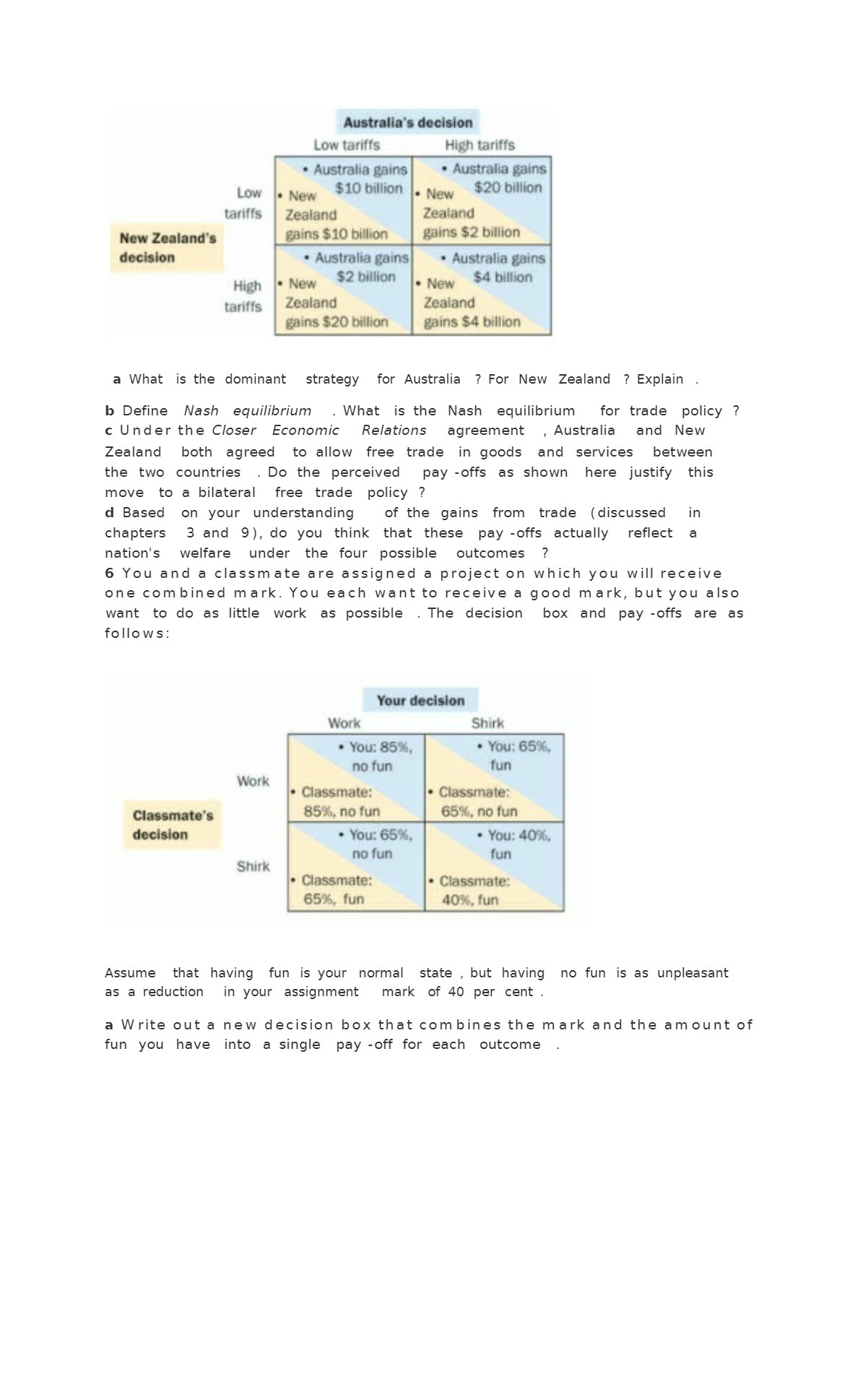
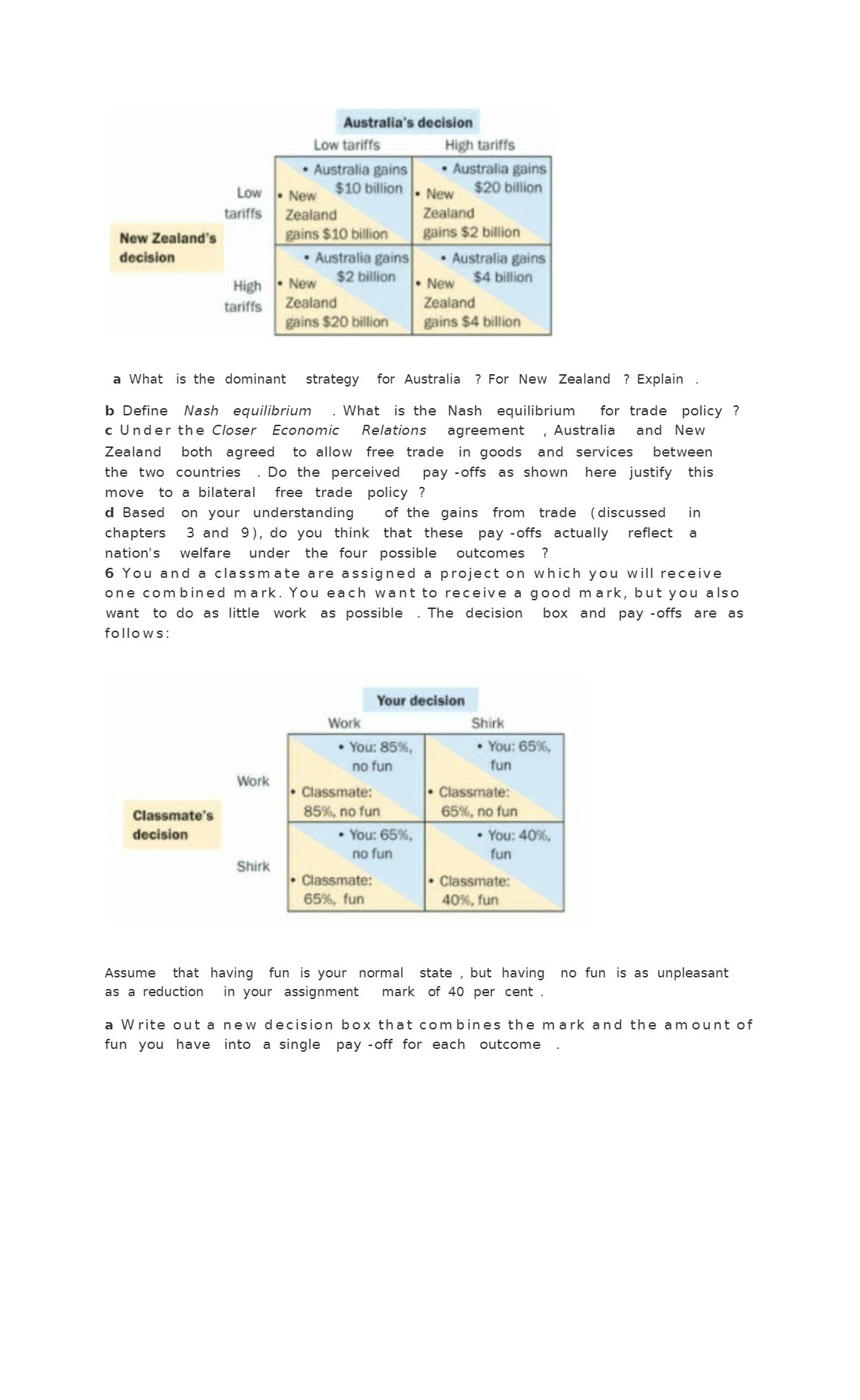
Australia's decision Low tariffs High tariffs . Australia gains . Australia gains Low . New $10 billion . New $20 billion tariffs Zealand Zealand New Zealand's gains $10 billion gains $2 billion decision . Australia gains . Australia gains High . New $2 billion . New $4 billion tariffs Zealand Zealand gains $20 billion gains $4 billion a What is the dominant strategy for Australia ? For New Zealand ? Explain b Define Nash equilibrium . What is the Nash equilibrium for trade policy ? c Under the Closer Economic Relations agreement , Australia and New Zealand both agreed to allow free trade in goods and services between the two countries . Do the perceived pay -offs as shown here justify this move to a bilateral free trade policy ? d Based on your understanding of the gains from trade ( discussed in chapters 3 and 9), do you think that these pay -offs actually reflect a nation's welfare under the four possible outcomes 6 You and a classmate are assigned a project on which you will receive one combined mark. You each want to receive a good mark, but you also want to do as little work as possible . The decision box and pay -offs are as follows: Your decision Work Shirk . You: 85%, . You: 65%, no fun fun Work Classmate: Classmate: Classmate's 85%, no fun 65%, no fun decision . You: 65%, . You: 40%. no fun fun Shirk Classmate: Classmate: 65%, fun 40%, fun Assume that having fun is your normal state , but having no fun is as unpleasant as a reduction in your assignment mark of 40 per cent a Write out a new decision box that combines the mark and the amount of fun you have into a single pay -off for each outcome
Step by Step Solution
There are 3 Steps involved in it

Get step-by-step solutions from verified subject matter experts