







Question: (b) Write a super macro that varies the constraint limit from 0.5 to 1.5 using increments of 0.1 (i.e. the constraint should be 0.5, then
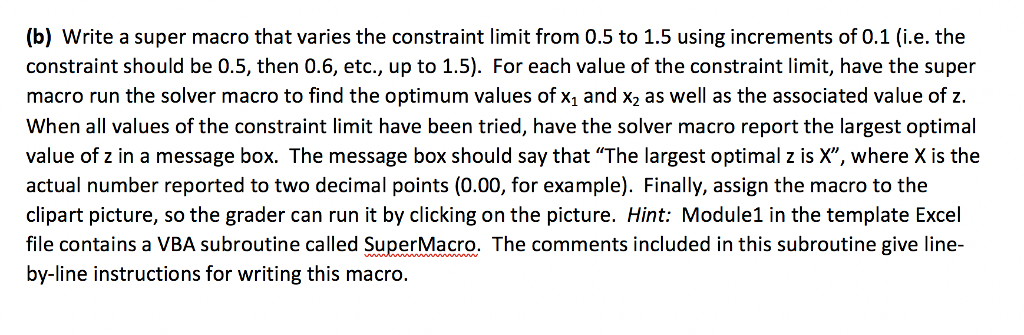
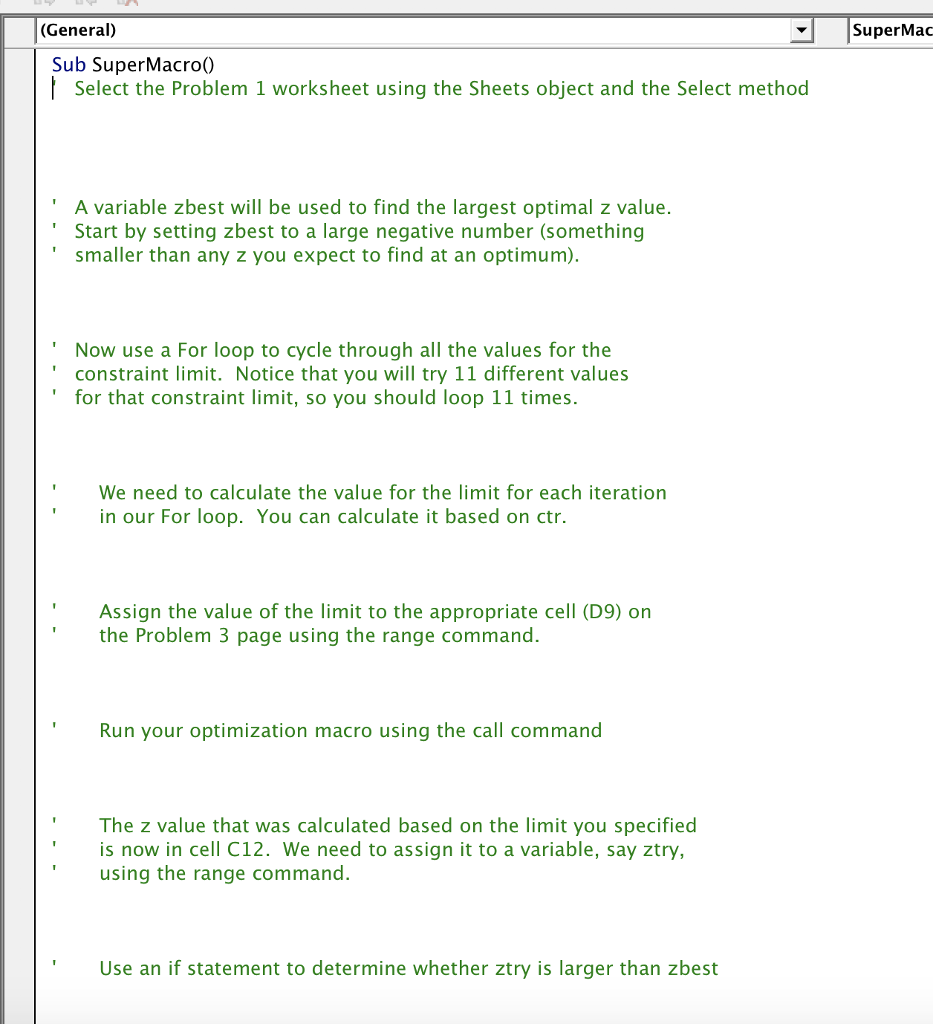
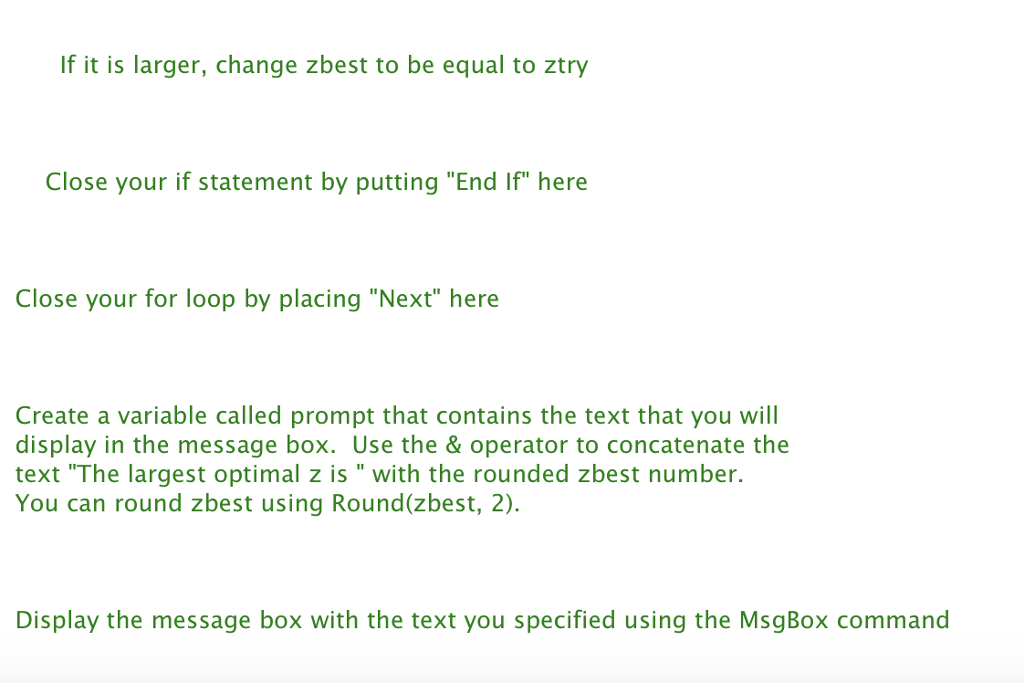
(b) Write a super macro that varies the constraint limit from 0.5 to 1.5 using increments of 0.1 (i.e. the constraint should be 0.5, then 0.6, etc., up to 1.5). For each value of the constraint limit, have the super macro run the solver macro to find the optimum values of x and x2 as well as the associated value of z. When all values of the constraint limit have been tried, have the solver macro report the largest optimal value of z in a message box. The message box should say that "The largest optimal z is X", where X is the actual number reported to two decimal points (0.00, for example). Finally, assign the macro to the clipart picture, so the grader can run it by clicking on the picture. Hint: Module1 in the template Excel file contains a VBA subroutine called SuperMacro. The comments included in this subroutine give line- by-line instructions for writing this macro. (b) Write a super macro that varies the constraint limit from 0.5 to 1.5 using increments of 0.1 (i.e. the constraint should be 0.5, then 0.6, etc., up to 1.5). For each value of the constraint limit, have the super macro run the solver macro to find the optimum values of x and x2 as well as the associated value of z. When all values of the constraint limit have been tried, have the solver macro report the largest optimal value of z in a message box. The message box should say that "The largest optimal z is X", where X is the actual number reported to two decimal points (0.00, for example). Finally, assign the macro to the clipart picture, so the grader can run it by clicking on the picture. Hint: Module1 in the template Excel file contains a VBA subroutine called SuperMacro. The comments included in this subroutine give line- by-line instructions for writing this macro
Step by Step Solution
There are 3 Steps involved in it

Get step-by-step solutions from verified subject matter experts
 Study Help