







Question: Below are two parallel conducting plates, each carrying an equal quantity of excess charge of opposite type. The plates are separated by 2.0 m. (
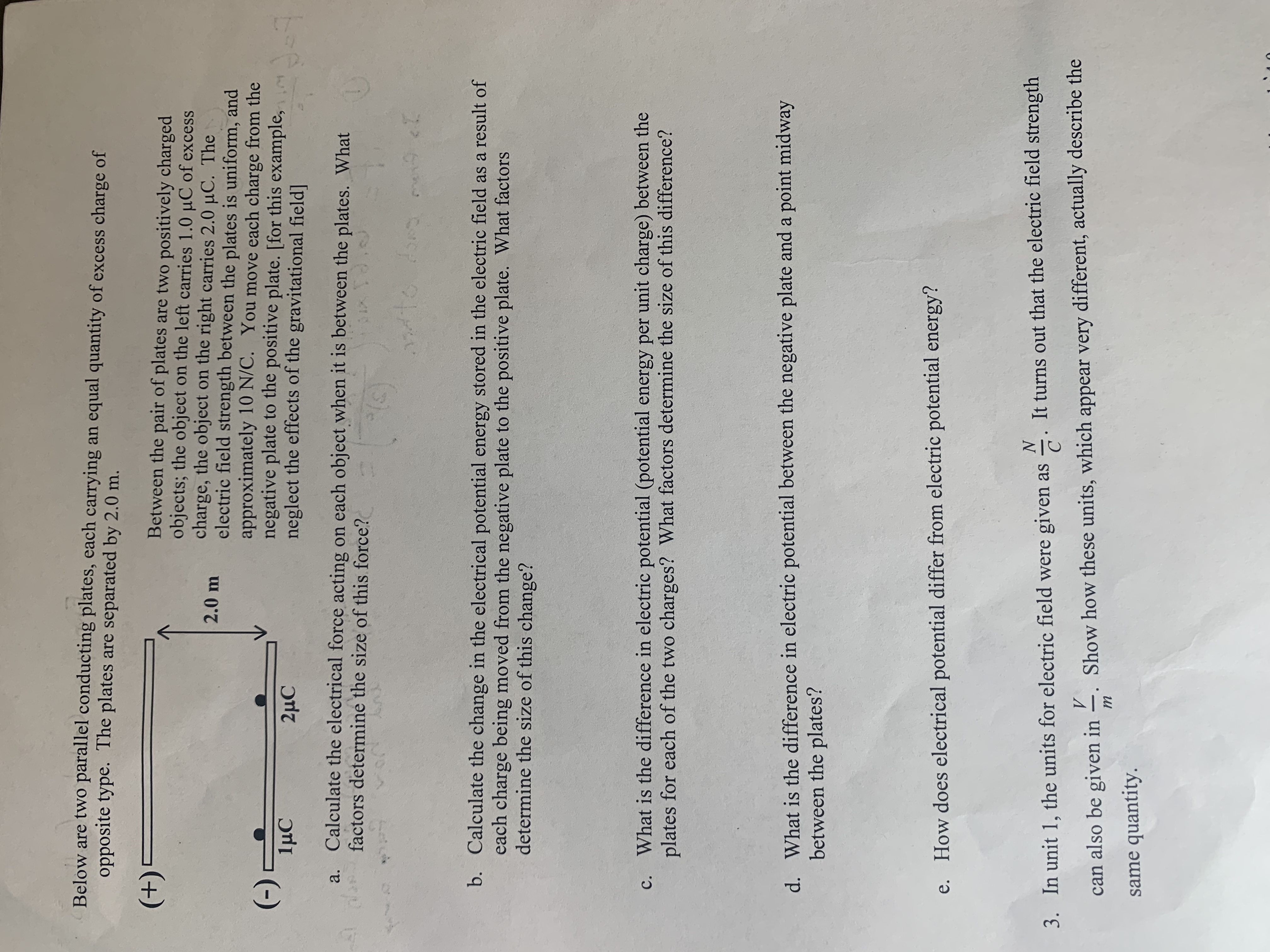
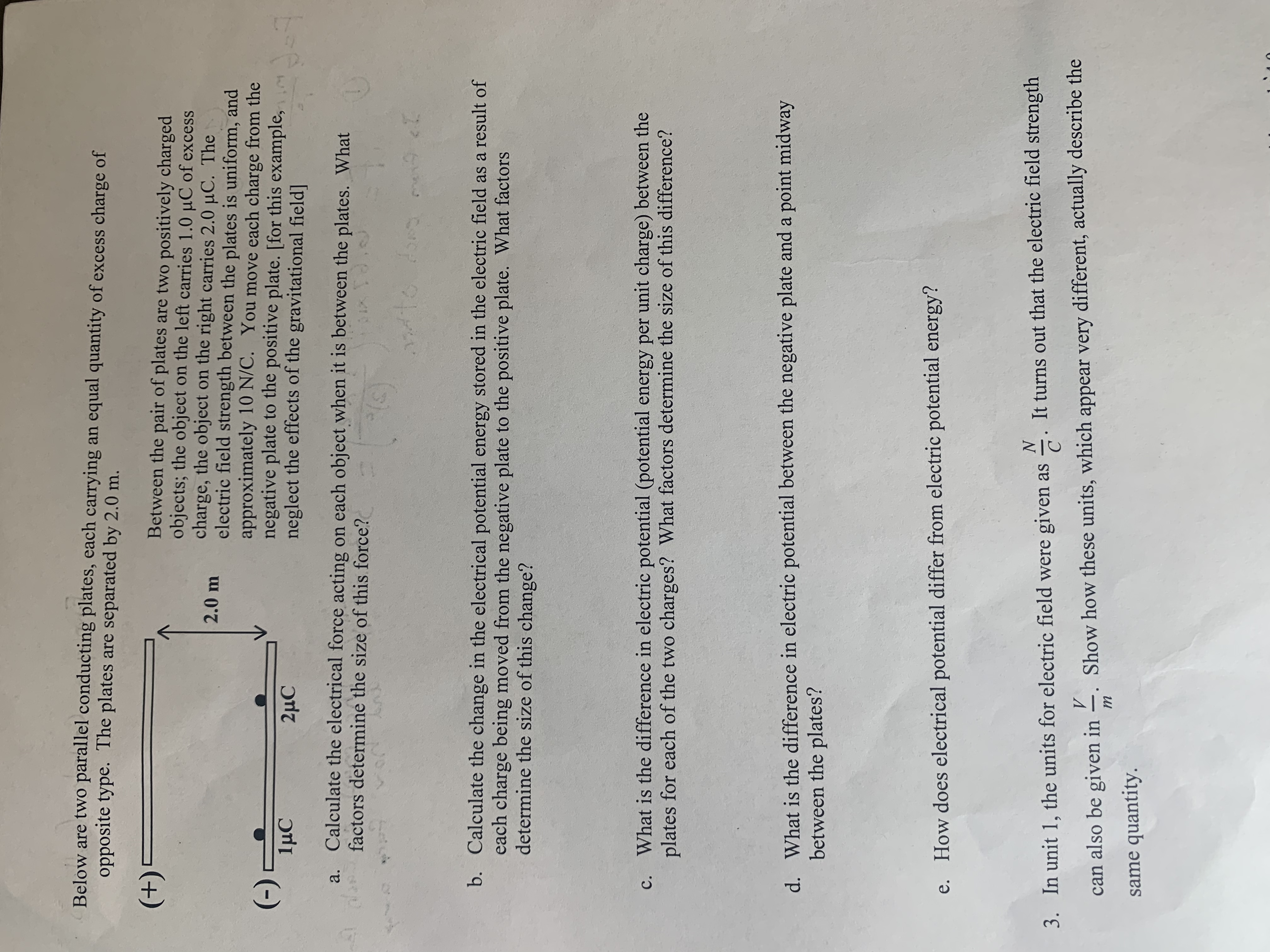
Below are two parallel conducting plates, each carrying an equal quantity of excess charge of opposite type. The plates are separated by 2.0 m. ( + ) Between the pair of plates are two positively charged objects; the object on the left carries 1.0 uC of excess 2.0 m charge, the object on the right carries 2.0 MC. The electric field strength between the plates is uniform, and approximately 10 N/C. You move each charge from the (-) negative plate to the positive plate. [for this example, luc 2uC neglect the effects of the gravitational field] a. Calculate the electrical force acting on each object when it is between the plates. What factors determine the size of this force? " ( S ) b. Calculate the change in the electrical potential energy stored in the electric field as a result of each charge being moved from the negative plate to the positive plate. What factors determine the size of this change? c. What is the difference in electric potential (potential energy per unit charge) between the plates for each of the two charges? What factors determine the size of this difference? d. What is the difference in electric potential between the negative plate and a point midway between the plates? e. How does electrical potential differ from electric potential energy? 3. In unit 1, the units for electric field were given as - . It turns out that the electric field strength can also be given in -. Show how these units, which appear very different, actually describe the m same quantity
Step by Step Solution
There are 3 Steps involved in it

Get step-by-step solutions from verified subject matter experts
 Study Help