







Question: Case 5 The last paragraph the question. Please be as elaborate as possible, this is a Strategic Management university paper. Identify the problems and give
Case 5
The last paragraph the question. Please be as elaborate as possible, this is a Strategic Management university paper.
Identify the problems and give solutions. Give a complete SWOT and PESTEL analysis of the Case study (SWOT and PESTEL). What is their competitive advantage over the market? What are your recommendations?
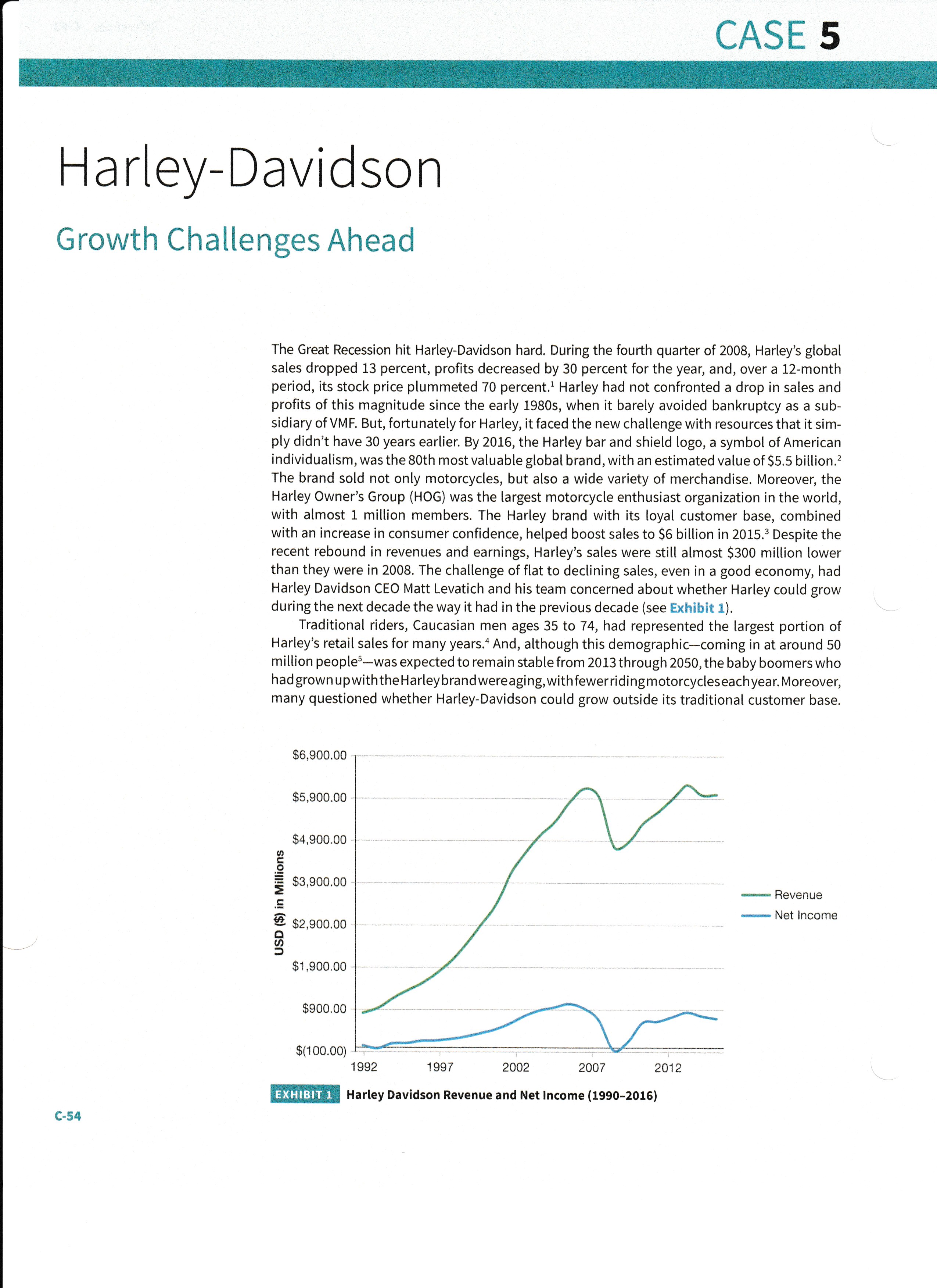
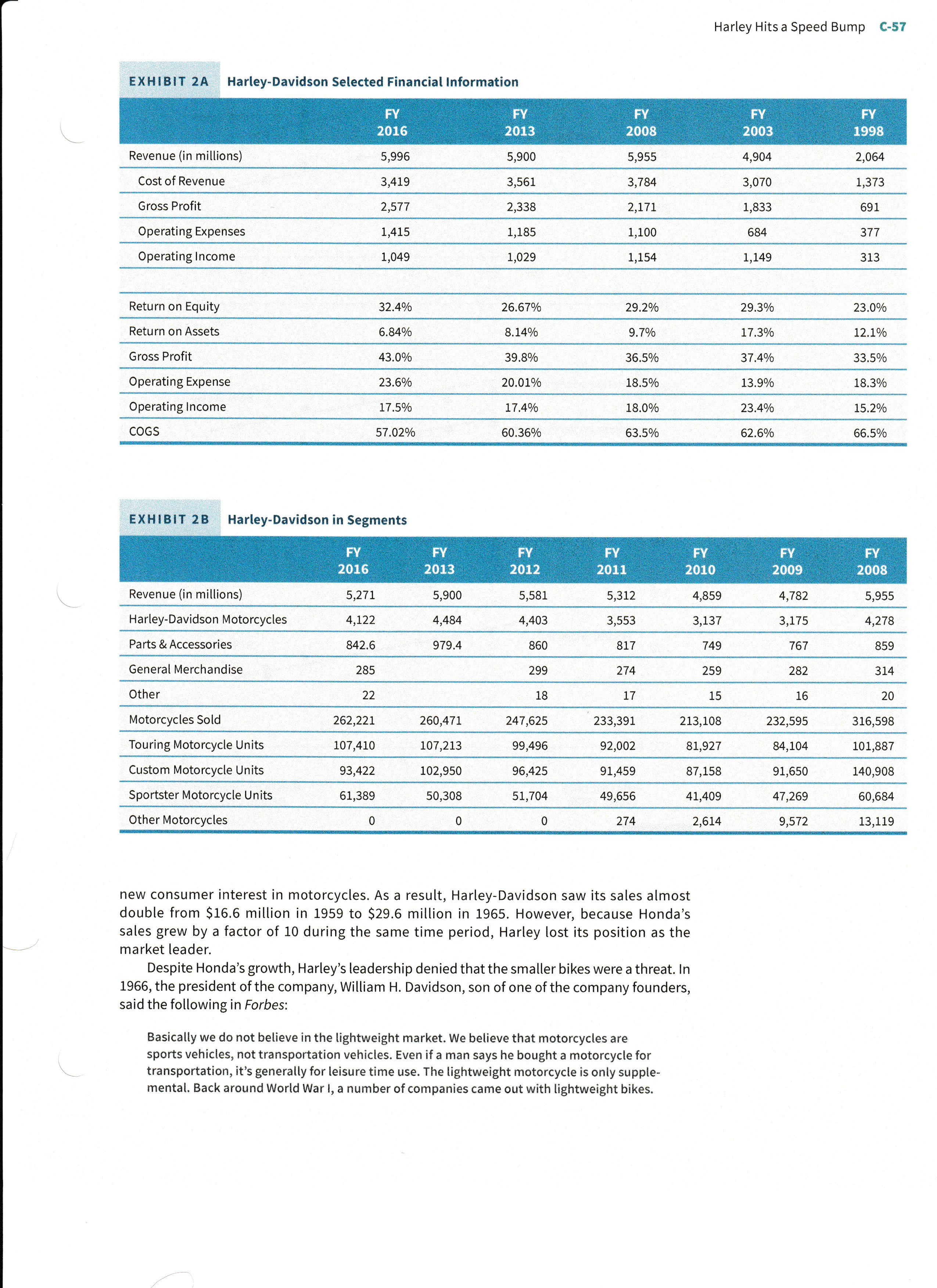
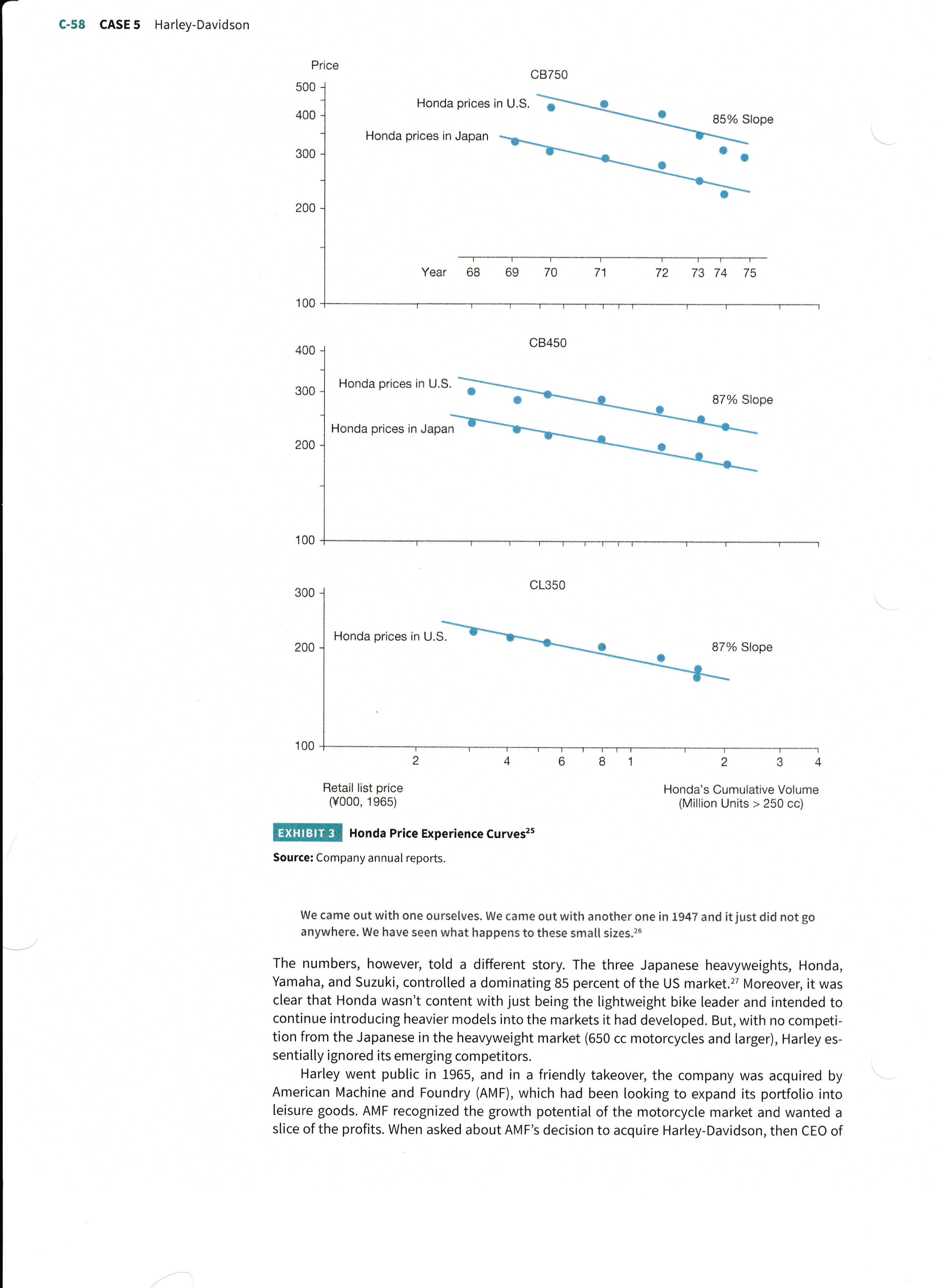
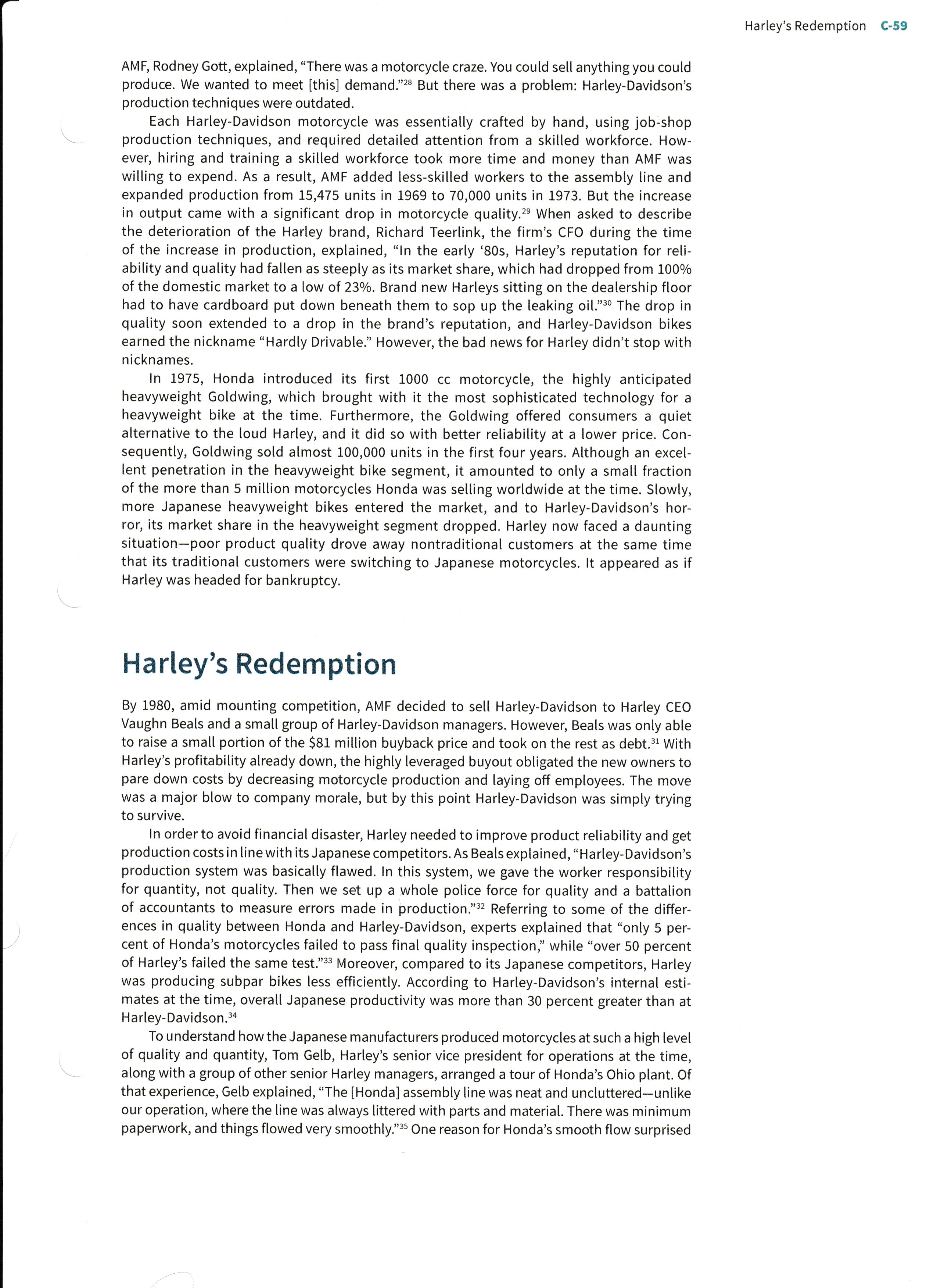
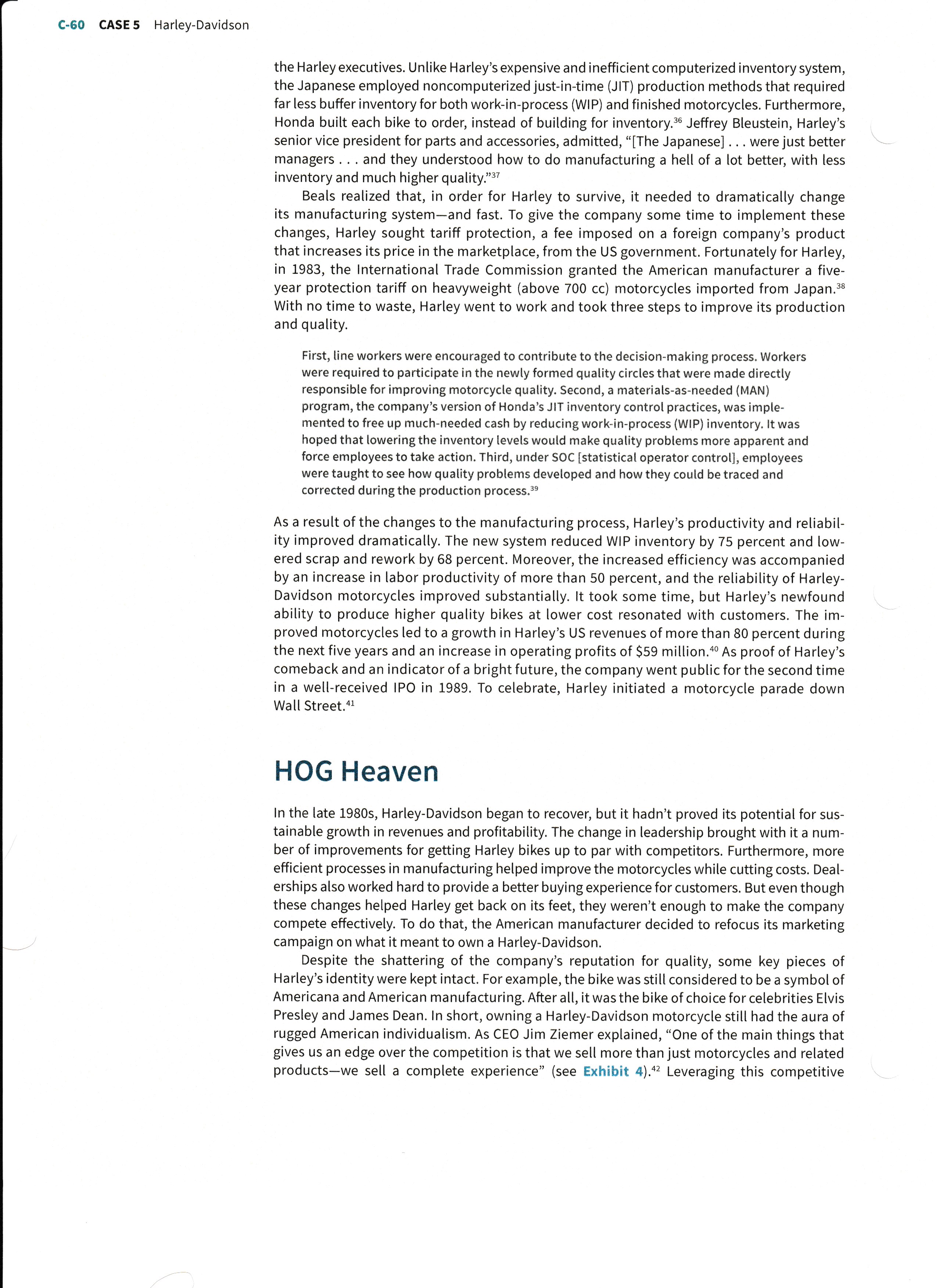
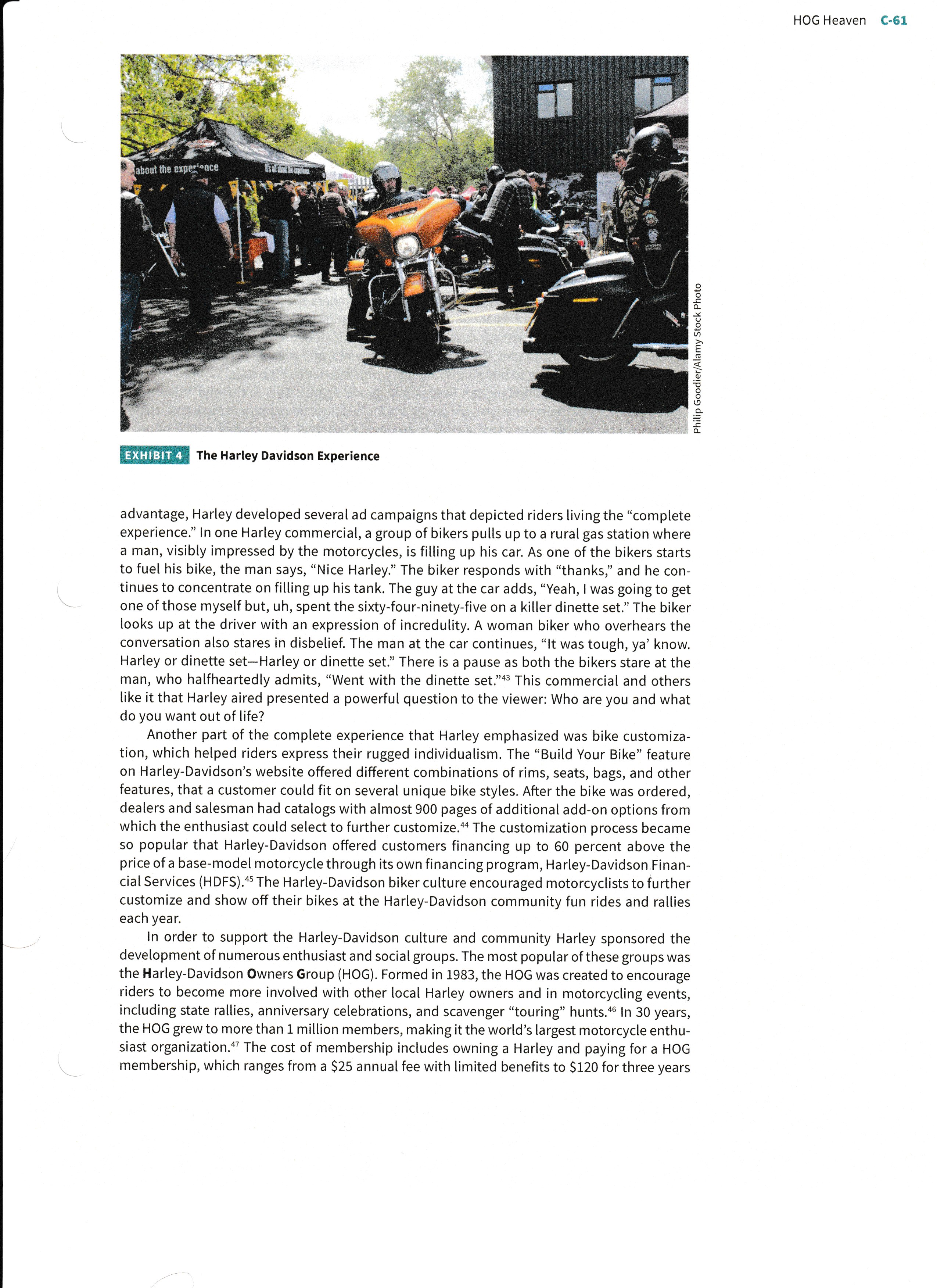

Harley-Davidson Growth Challenges Ahead The Great Recession hit Harley-Davidson hard. During the fourth quarter of 2008, Harley's global sales dropped 13 percent, profits decreased by 30 percent for the year, and, over a 12-month period, its stock price plummeted 70 percent. 1 Harley had not confronted a drop in sales and profits of this magnitude since the early 1980 s, when it barely avoided bankruptcy as a subsidiary of VMF. But, fortunately for Harley, it faced the new challenge with resources that it simply didn't have 30 years earlier. By 2016, the Harley bar and shield logo, a symbol of American individualism, was the 80th most valuable global brand, with an estimated value of $5.5 billion. 2 The brand sold not only motorcycles, but also a wide variety of merchandise. Moreover, the Harley Owner's Group (HOG) was the largest motorcycle enthusiast organization in the world, with almost 1 million members. The Harley brand with its loyal customer base, combined with an increase in consumer confidence, helped boost sales to $6 billion in 2015.3 Despite the recent rebound in revenues and earnings, Harley's sales were still almost $300 million lower than they were in 2008. The challenge of flat to declining sales, even in a good economy, had Harley Davidson CEO Matt Levatich and his team concerned about whether Harley could grow during the next decade the way it had in the previous decade (see Exhibit 1). Traditional riders, Caucasian men ages 35 to 74 , had represented the largest portion of Harley's retail sales for many years. 4 And, although this demographic-coming in at around 50 million people 5-was expected to remain stable from 2013 through 2050 , the baby boomers who hadgrown up with theHarleybrand wereaging, withfewerridingmotorcycleseachyear. Moreover, many questioned whether Harley-Davidson could grow outside its traditional customer base. Harley had struggled for decades trying to sell to nontraditional riders, including young adults (ages 18-35), women, Hispanics, and African Americans-four groups that together are three times larger than the number of traditional riders. 6 A survey done by Harley-Davidson revealed that young adults found the dealership experience intimidating and tended to have sticker shock when seeing the price of a Harley. 7 Furthermore, some critics blamed the bike's reputation and size (average weight between 450 to 800 pounds) for Harley's lack of popularity among women. 8 Investors were looking for continued growth, so they wanted to know what Harley was going to do to expand into other demographics. 9 Likewise, they wanted to know if the American motorcycle could improve sales in international markets. History: Born in a Shed and Raised on a Race Track In 1901, William Harley completed his blueprint drawing of "an engine designed to fit into a bicycle." 10 Two years later, the first Harley-Davidson motorcycle emerged from a 10-by15-foot wooden shed, and William and his colleague, Arthur Davidson, started selling the Harley-Davidson "bikes" to the public. The first Harley-Davidson motorcycle was built for speed and designed to be a racer to compete with Hendee Manufacturing Company's 1.75 horsepower, single-cylinder motorcycle, which had to that point dominated both the emerging motorcycle market and motorcycle racing sport. 11 On July 4, 1905, a Harley-Davidson motorcycle won its first race (a distance of 15 miles) in Chicago with a time of 19:02 minutes. 12 Other victories on Harley bikes quickly followed, and they became popular in the budding racing community. Harley-Davidson officially entered motorcycle racing as a company in 1914, with engineer and cofounder William Harley as its first racer. 13 William, who was a passionate competitor, was determined to win every race and so made racing performance the company's primary objective. Consequently, William and Arthur invested heavily in research and development (R\&D), which allowed the company to develop new and superior features, including their own electric starter, front brakes, and standardized parts.. 14 The company pioneered several early industry breakthroughs, including the V-twin engine, clutch, and internal expanding rear brake. 15 Not surprisingly, as Harley-Davidson's motorcycles continued to improve, the company's racing team began to fulfill William's ambition to win every race in which it competed. Immediately following each win, the team traditionally took its mascot, a pig, on a victory lap. The victory routine was popular with the racing community, and, as a result, Harley-Davidson bikes were nicknamed "Hogs" after their mascot. 16 The nickname was immediately embraced, and the "Hog" label is still used to describe Harley-Davidson motorcycles. Harley Becomes a Rebel In 1921, Harley was the first motorcycle to win a race with an average speed of more than 100 mph and was the go-to-bike for daredevils wanting to break land-speed records. 17 But, as its reputation for power and speed became more widespread, Harley-Davidson began to attract a different kind of customer-the rebel. Harley's speed set itself apart from the competition, and it began to attract customers outside of racing who also needed the fastest bikes on the market. For example, the US armed forces contracted the motorcycle manufacturer to produce motorcycles for the war effort during World War II. 18 Additionally, highway patrol officers road the motorcycles during high-speed chases, and notorious biker gangs used the bike to elude police. By the 1950s, Harley's racer reputation was increasingly being replaced by the "tough guy" image associated with its most iconic riders. Actors James Dean and Marlon Brando, two of Hollywood's bad boys, were Harley riders on and off the set. The Hog even became the bike of choice for the King of Rock and Roll, Elvis Presley. In 1953, the film The Wild Ones glorified Harley riders as aggressive members of biker gangs. Several years later, in the 1969 film Easy Rider, the Harley was the motorcycle for two counterculture bikers traveling from Los Angeles to New Orleans. This shift in consumer perception came with a new demand for more rugged customized bikes such as the chopper-style motorcycle, which Harley-Davidson was happy to supply. Consequently, Harley inadvertently solidified itself as a symbol of independence and rugged individualism. Harley Hits a Speed Bump By 1931, the US motorcycle industry had consolidated and was dominated by Harley-Davidson, Indian, and British Triumph. By the mid-1950s, Harley had a commanding 60 percent share of the market,,19 was the only American manufacturer of motorcycles, and dominated the motorcycle racing world. But the competition was about to hit the throttle. Honda Motor Company had successfully broken away from its competitors Yamaha, Kawasaki, and Suzuki, after producing the incredibly successful 50cc lightweight delivery motorcycle, which sold 3,000 units per month only six months after being introduced to the market. 20 After investing in a 30,000-unit-per-month manufacturing plant, a capacity 10 times in excess of demand at the time of construction, Honda looked to the United States for growth opportunities. In 1959, Honda Motor Company, already the largest motorcycle producer in the world, entered the American motorcycle market. Starting on the west coast of the United States, Honda moved eastward region by region, developing the market. It concentrated its marketing efforts on the middle-class consumer and branded itself as the family-friendly bike. The ad campaign, "You meet the nicest people on a Honda," was a direct contrast to the rough, aggressive, and loud image of the American Harley-Davidson. Honda's growth pattern was subtle. When entering a new market, Honda did so with its lightweight 50 cc bikes, which weighed 150-200 pounds and sold for less than $250 retail, a significant drop in weight and price compared to Harley motorcycles, which weighed between 450 and 800 pounds and retailed between $1,000 and $1,500.21 Not only were the bikes smaller, quieter, and more fuel-efficient than the heavyweight Harleys, but they also required little or no maintenance because of Honda's large and standardized production process. As a result, Honda was able to offer a better-built motorcycle at a fraction of the cost. A study done by the Boston Consulting Group in 1975 showed that Harley's prices were dropping by roughly 15 percent with each doubling of volume (see Exhibit 2A and Exhibit 2B)..22 Initially, Harley's CEO and company leaders cheered the arrival of the Japanese motorcycle company, thinking it was exactly what the industry needed. 23 New customers could enter the market with the purchase of an inexpensive Japanese bike and eventually graduate to a heavier, more expensive and powerful Harley. But this wasn't what Honda had in mind. As demand for Honda's smaller motorcycles in the United States increased, Honda gradually introduced its heavier and more powerful models, including the 100cc,150cc, and 250cc bikes. The market responded positively, and buyers who couldn't afford the pricier Hogs and those who struggled to muscle the heavyweight Harleys around steep curves gladly purchased a Japanese bike. As a result, Honda's US sales increased from $500,000 in 1960 to $77 million in five years (see Exhibit 3). 24 This transformation in the motorcycle market was both good and bad for HarleyDavidson. As predicted by Harley leadership, Honda's entrance in the US market spurred "Cubic centimeters (cc), as applied to an internal combustion engine, is a measure of the engine size or combustion space in the cylinders. Harley Hits a Speed Bump C57 EXHIBIT 2A Harley-Davidson Selected Financial Information Harley-Davidson in Segments new consumer interest in motorcycles. As a result, Harley-Davidson saw its sales almost double from $16.6 million in 1959 to $29.6 million in 1965 . However, because Honda's sales grew by a factor of 10 during the same time period, Harley lost its position as the market leader. Despite Honda's growth, Harley's leadership denied that the smaller bikes were a threat. In 1966, the president of the company, William H. Davidson, son of one of the company founders, said the following in Forbes: Basically we do not believe in the lightweight market. We believe that motorcycles are sports vehicles, not transportation vehicles. Even if a man says he bought a motorcycle for transportation, it's generally for leisure time use. The lightweight motorcycle is only supplemental. Back around World War I, a number of companies came out with lightweight bikes. C-58 CASE 5 Harley-Davidson EXHIBIT 3 Honda Price Experience Curves 25 Source: Company annual reports. We came out with one ourselves. We came out with another one in 1947 and it just did not go anywhere. We have seen what happens to these small sizes. 26 The numbers, however, told a different story. The three Japanese heavyweights, Honda, Yamaha, and Suzuki, controlled a dominating 85 percent of the US market. 27 Moreover, it was clear that Honda wasn't content with just being the lightweight bike leader and intended to continue introducing heavier models into the markets it had developed. But, with no competition from the Japanese in the heavyweight market (650 cc motorcycles and larger), Harley essentially ignored its emerging competitors. Harley went public in 1965, and in a friendly takeover, the company was acquired by American Machine and Foundry (AMF), which had been looking to expand its portfolio into leisure goods. AMF recognized the growth potential of the motorcycle market and wanted a slice of the profits. When asked about AMF's decision to acquire Harley-Davidson, then CEO of AMF, Rodney Gott, explained, "There was a motorcycle craze. You could sell anything you could produce. We wanted to meet [this] demand." .28 But there was a problem: Harley-Davidson's production techniques were outdated. Each Harley-Davidson motorcycle was essentially crafted by hand, using job-shop production techniques, and required detailed attention from a skilled workforce. However, hiring and training a skilled workforce took more time and money than AMF was willing to expend. As a result, AMF added less-skilled workers to the assembly line and expanded production from 15,475 units in 1969 to 70,000 units in 1973. But the increase in output came with a significant drop in motorcycle quality. 29 When asked to describe the deterioration of the Harley brand, Richard Teerlink, the firm's CFO during the time of the increase in production, explained, "In the early '80s, Harley's reputation for reliability and quality had fallen as steeply as its market share, which had dropped from 100% of the domestic market to a low of 23%. Brand new Harleys sitting on the dealership floor had to have cardboard put down beneath them to sop up the leaking oil." 30 The drop in quality soon extended to a drop in the brand's reputation, and Harley-Davidson bikes earned the nickname "Hardly Drivable." However, the bad news for Harley didn't stop with nicknames. In 1975, Honda introduced its first 1000 cc motorcycle, the highly anticipated heavyweight Goldwing, which brought with it the most sophisticated technology for a heavyweight bike at the time. Furthermore, the Goldwing offered consumers a quiet alternative to the loud Harley, and it did so with better reliability at a lower price. Consequently, Goldwing sold almost 100,000 units in the first four years. Although an excellent penetration in the heavyweight bike segment, it amounted to only a small fraction of the more than 5 million motorcycles Honda was selling worldwide at the time. Slowly, more Japanese heavyweight bikes entered the market, and to Harley-Davidson's horror, its market share in the heavyweight segment dropped. Harley now faced a daunting situation-poor product quality drove away nontraditional customers at the same time that its traditional customers were switching to Japanese motorcycles. It appeared as if Harley was headed for bankruptcy. Harley's Redemption By 1980, amid mounting competition, AMF decided to sell Harley-Davidson to Harley CEO Vaughn Beals and a small group of Harley-Davidson managers. However, Beals was only able to raise a small portion of the $81 million buyback price and took on the rest as debt. 31 With Harley's profitability already down, the highly leveraged buyout obligated the new owners to pare down costs by decreasing motorcycle production and laying off employees. The move was a major blow to company morale, but by this point Harley-Davidson was simply trying to survive. In order to avoid financial disaster, Harley needed to improve product reliability and get production costs in line with its Japanese competitors. As Beals explained, "Harley-Davidson's production system was basically flawed. In this system, we gave the worker responsibility for quantity, not quality. Then we set up a whole police force for quality and a battalion of accountants to measure errors made in production." 32 Referring to some of the differences in quality between Honda and Harley-Davidson, experts explained that "only 5 percent of Honda's motorcycles failed to pass final quality inspection," while "over 50 percent of Harley's failed the same test." 33 Moreover, compared to its Japanese competitors, Harley was producing subpar bikes less efficiently. According to Harley-Davidson's internal estimates at the time, overall Japanese productivity was more than 30 percent greater than at Harley-Davidson. 34 To understand how the Japanese manufacturers produced motorcycles at such a high level of quality and quantity, Tom Gelb, Harley's senior vice president for operations at the time, along with a group of other senior Harley managers, arranged a tour of Honda's Ohio plant. Of that experience, Gelb explained, "The [Honda] assembly line was neat and uncluttered-unlike our operation, where the line was always littered with parts and material. There was minimum paperwork, and things flowed very smoothly." 35 One reason for Honda's smooth flow surprised EXHIBIT 4 The Harley Davidson Experience advantage, Harley developed several ad campaigns that depicted riders living the "complete experience." In one Harley commercial, a group of bikers pulls up to a rural gas station where a man, visibly impressed by the motorcycles, is filling up his car. As one of the bikers starts to fuel his bike, the man says, "Nice Harley." The biker responds with "thanks," and he continues to concentrate on filling up his tank. The guy at the car adds, "Yeah, I was going to get one of those myself but, uh, spent the sixty-four-ninety-five on a killer dinette set." The biker looks up at the driver with an expression of incredulity. A woman biker who overhears the conversation also stares in disbelief. The man at the car continues, "It was tough, ya' know. Harley or dinette set-Harley or dinette set." There is a pause as both the bikers stare at the man, who halfheartedly admits, "Went with the dinette set." 43 This commercial and others like it that Harley aired presented a powerful question to the viewer: Who are you and what do you want out of life? Another part of the complete experience that Harley emphasized was bike customization, which helped riders express their rugged individualism. The "Build Your Bike" feature on Harley-Davidson's website offered different combinations of rims, seats, bags, and other features, that a customer could fit on several unique bike styles. After the bike was ordered, dealers and salesman had catalogs with almost 900 pages of additional add-on options from which the enthusiast could select to further customize. 44 The customization process became so popular that Harley-Davidson offered customers financing up to 60 percent above the price of a base-model motorcycle through its own financing program, Harley-Davidson Financial Services (HDFS). 45 The Harley-Davidson biker culture encouraged motorcyclists to further customize and show off their bikes at the Harley-Davidson community fun rides and rallies each year. In order to support the Harley-Davidson culture and community Harley sponsored the development of numerous enthusiast and social groups. The most popular of these groups was the Harley-Davidson Owners Group (HOG). Formed in 1983, the HOG was created to encourage riders to become more involved with other local Harley owners and in motorcycling events, including state rallies, anniversary celebrations, and scavenger "touring" hunts. 46 In 30 years, the HOG grew to more than 1 million members, making it the world's largest motorcycle enthusiast organization. 47 The cost of membership includes owning a Harley and paying for a HOG membership, which ranges from a $25 annual fee with limited benefits to $120 for three years C-64 CASE 5 Harley-Davidson biker with a subtle grin uses the thumb-operated joystick to toggle from "Answer" to "Ignore" and goes back to his joy ride. That scene, taken from a Harley-Davidson commercial, is part of the largest newmodel launch in Harley-Davidson's history: "Project Rushmore." 58 The launch involved eight new motorcycles with dramatic shifts in both technology and feel-areas that traditional Harley riders might consider sacrilege to change. But to Harley, these changes were far overdue. Critics claimed that Harley was too dependent on older white males and wasn't diversifying its owner base quickly enough. Nor was Harley keeping up with Asian competitors, such as Honda and Kawasaki, in quality or productivity. 59As part of the transformation, the new bikes were designed to vibrate less and included gadgets more technologically advanced than those on any bike Harley had previously produced. 60 Beyond Project Rushmore, in early 2017 CEO Matt Levatich announced that Harley had plans to offer 50 new models in the next five years in order to drive sales. "The success we saw with the launch of the Milwaukee-Eight engine is a sign of the innovation we have in place. We are confident our 2018 line will also help sales," said Levatich. "I have never been more excited about the products in our pipeline.".61 Despite Levatich's optimism, many analysts questioned whether more new models would be enough to help Harley overcome the challenges the company faced, such as attracting nontraditional riders and growing in international markets. Would higher quality and more technologically advanced motorcycles open new doors to future growth? Was it a good idea for Harley to focus more on product attributes such as quality and technology, areas where competitors had historically been stronger? Moreover, could the Harley brand and product transcend US culture to connect with new customers in international markets? Was it worth the investment? Finally, had Harley maximized its opportunities to grow by licensing its brand to merchandisers? Or could the company grow by expanding into other product categories beyond motorcycles? These questions, and others, faced Levatich and his team as they looked for ways to keep Harley growing. References 'B. Tuttle, "The Harley-Davidson Surprises: Touchscreens, Voice Control and Women Bikers," Time Business \& Money (September 3, 2013), http://business.time.com/2013/09/03/the-harley-davidson-surprises/. "Interbrand, "Best Global Brands 2013," Interbrand, http://www .interbrand.com/en/best-global-brands/2013/Harley-Davidson. 3 Harley-Davidson, Inc., 10-K Annual Report, 2012. "Harley-Davidson, "Investor Relations: Demographics," Harley-Davidson USA (2013), http://investor.harley-davidson.com/phoenix.zhtml?c=87981 &p= irol-demographics. 5bid. 'Ibid. 7 Harley-Davidson internal research, September 2007. 8 R. L. Nolan and S. Kotha, Harley-Davidson: Preparing for the Next Century (Cambridge, MA: Harvard Business School, 2006), p. 3. 9A. Taylor III, "The Hurdles at Harley-Davidson," CNN Money (October 3, 2012). 10 Harley-Davidson, "H-D Timeline," Harley-Davidson Museum, http:// www.harley-davidson.com/en_US/Content/Pages/HD_Museum/explore /hd-timeline.html. 11ibid. 12lbid. 13lbid. 14 Nolan and Kotha, p. 2 15 Ibid. 16 Harley-Davidson, "H-D Timeline." 17Ibid. 18 Ibid. 19 Nolan and Kotha, p. 2. 20E. T. Christiansen and R. T. Pascale, Honda (A) (Cambridge, MA: Harvard Business School, 1983), p. 1. 21 Ibid., p. 2. 22Ibid., p. 3. 23 Advertising Age (December 2, 1965). 24Christiansen and Pascale, p. 2. 25Christiansen and Pascale, p. 7. 26 Forbes (September 15, 1966). 27 Christiansen and Pascale, p. 2. 28P. C. Reid, Well Made in America: Lessons from Harley-Davidson on Being the Best (New York, NY: McGraw-Hill, 1990), p. 6. 29 Nolan and Kotha, p. 4. 30 Reid, p. 6. 31 Nolan and Kotha, p. 5. 32 Reid, p. 18. 33 Nolan and Kotha, p. 5. 34Ibid. 35 Reid, p. 4. 36 Nolan and Kotha, p. 5. 37 Reid, p. 15. 38 Harley-Davidson, "H-D Timeline." 39 Nolan and Kotha, p. 6. 40 Statistics quoted from Reid. 41 Nolan and Kotha, p. 6. 42 Harley-Davidson Company, Code of Business Conduct, p. 26. 43 Harley-Davidson. "Dinette Set." Television advertisement. Carmichael Lynch, directed by Tom De Cerchio, 2004. 44 Harley-Davidson Company, Harley-Davidson Genuine Motor Parts \& Accessories 2014, 2014. 45 Interview with Rick Story, Dealer Manager at Harley Davidson's Lindon, Utah, dealership. 46 Harley-Davidson, "H-D timeline." 47C. Denove and J. D. Power IV, Satisfaction: How Every Great Company Listens to the Voice of the Customer (2007), p. 195. "88"Cult Brands," BusinessWeek (August 1, 2004). 49G. Rifkin, "How Harley Davidson Revs Its Brand," Strategy+Business (October 1,1997 ). 50 R. Clifton, J. Simmons, and S. Ahmad, Brands and Branding; The Economist Series 2nd Edition (New York, NY: Bloomberg Press, 2004). 51 A. Taylor III, "The Hurdles at Harley-Davidson," CNN Money (October 3, 2012). 52P. M. Miller, "Harley-Davidson in China," China Business Review (January 1,2012 ). 53K. Inoue, ed., "Harley-Davidson in China Encounters Barriers of Entry for Two Wheels: Cars," Bloomberg News (September 18, 2011). 54 Ibid. 55 lbid. 56J. Harper, "China Has Harley-Davidson Fever, Thanks to Gov. Scott Walker," The Washington Times (May 17, 2013). "57. M. Miller, "Harley-Davidson in China," China Business Review (January 1,2012 ). 58J. Fogelson, "Project RUSHMORE: 2014 Harley-Davidson Motorcycles," Forbes (September 3, 2013). 59 Taylor. 60"Rushmore Bikes Lead to Positive Q3 for Harley-Davidson," Powersports Business (October 22, 2013). 61http ://www.bizjournals.com/milwaukeeews/2017/01/31/harley -davidson-plans-50-new-models-over-next-five.html
Step by Step Solution
There are 3 Steps involved in it

Get step-by-step solutions from verified subject matter experts
 Study Help