Question: CASE INCIDENT 2 Can You Read Emotions from Faces? We mentioned previously that some researchers--the psy around the upper cheeks and eyes--if the person's eyes
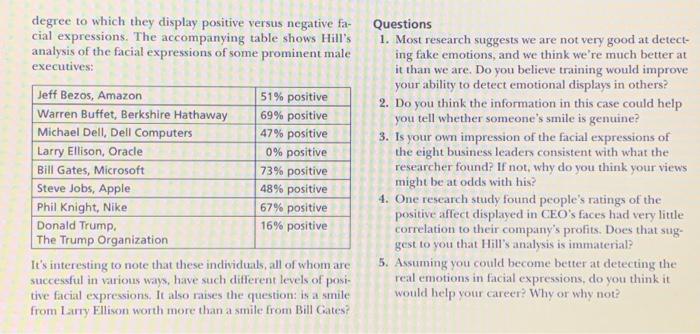
CASE INCIDENT 2 Can You Read Emotions from Faces? We mentioned previously that some researchers--the psy around the upper cheeks and eyes--if the person's eyes are chologist Paul Ekman is the best known-have studied smiling or twinkling, the smile is genuine. Ekman and his whether facial expressions reveal true emotions. These associates have developed similar methods to detect other researchers have distinguished real smiles (so-called emotions, such as anger, disgust, and distress. According to Duchenne smiles, named after French physician Guillaume Ekman, the key to identifying real emotions is to focus on Duchenne) from "fake" smiles. Duchenne found genuine micro-expressions, or those facial muscles we cannot easily smiles raised not only the corners of the mouth (easily manipulate. faked) but also cheek and eye muscles (much more diffi- Dan Hill has used these techniques to study the fa- cult to fake). So, one way to determine whether someone cial expressions of CEOs and found they vary dramati- is genuinely happy or amused is to look at the muscles cally not only in their Duchenne smiles but also in the degree to which they display positive versus negative fa- cial expressions. The accompanying table shows Hill's analysis of the facial expressions of some prominent male executives: Jeff Bezos, Amazon 51% positive Warren Buffet, Berkshire Hathaway 69% positive Michael Dell Dell Computers 47% positive Larry Ellison, Oracle 0% positive Bill Gates, Microsoft 73% positive Steve Jobs, Apple 48% positive Phil Knight, Nike 67% positive Donald Trump, 16% positive The Trump Organization It's interesting to note that these individuals, all of whom are successful in various ways, have such different levels of posi- tive facial expressions. It also raises the question: is a smile from Larry Ellison worth more than a smile from Bill Gates? Questions 1. Most research suggests we are not very good at detect- ing fake emotions, and we think we're much better at it than we are. Do you believe training would improve your ability to detect emotional displays in others? 2. Do you think the information in this case could help you tell whether someone's smile is genuine? 3. Is your own impression of the facial expressions of the eight business leaders consistent with what the researcher found? If not, why do you think your views might be at odds with his? 4. One research study found people's ratings of the positive affect displayed in CEO's faces had very little correlation to their company's profits. Does that sug. gest to you that Hill's analysis is immaterial? 5. Assuming you could become better at detecting the real emotions in facial expressions, do you think it would help your career? Why or why not