Question: Case Study 2 Starbucks Tea is the second most consumed beverage in the world after water, but Starbucks Corporation, the coffee company and coffeehouse chain
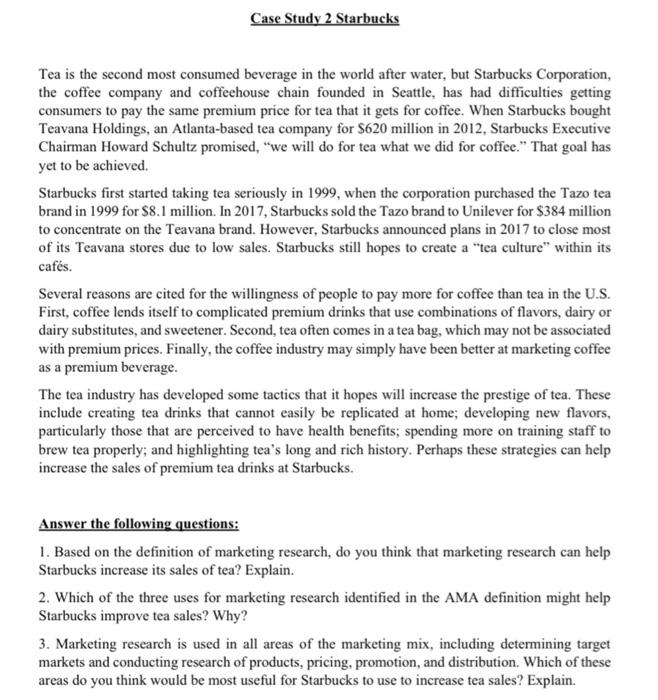
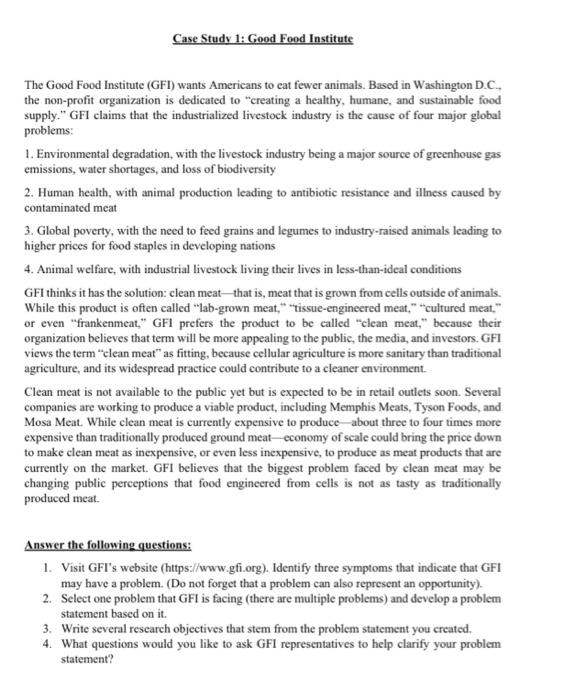
Case Study 2 Starbucks Tea is the second most consumed beverage in the world after water, but Starbucks Corporation, the coffee company and coffeehouse chain founded in Seattle, has had difficulties getting consumers to pay the same premium price for tea that it gets for coffee. When Starbucks bought Teavana Holdings, an Atlanta-based tea company for $620 million in 2012, Starbucks Executive Chairman Howard Schultz promised, we will do for tea what we did for coffee." That goal has yet to be achieved. Starbucks first started taking tea seriously in 1999, when the corporation purchased the Tazo tea brand in 1999 for $8.1 million. In 2017, Starbucks sold the Tazo brand to Unilever for $384 million to concentrate on the Teavana brand. However, Starbucks announced plans in 2017 to close most of its Teavana stores due to low sales. Starbucks still hopes to create a "tea culture" within its cafs. Several reasons are cited for the willingness of people to pay more for coffee than tea in the U.S. First, coffee lends itself to complicated premium drinks that use combinations of flavors, dairy or dairy substitutes, and sweetener. Second, tea often comes in a tea bag, which may not be associated with premium prices. Finally, the coffee industry may simply have been better at marketing coffee as a premium beverage. The tea industry has developed some tactics that it hopes will increase the prestige of tea. These include creating tea drinks that cannot easily be replicated at home; developing new flavors, particularly those that are perceived to have health benefits; spending more on training staff to brew tea properly; and highlighting tea's long and rich history. Perhaps these strategies can help increase the sales of premium tea drinks at Starbucks. Answer the following questions: 1. Based on the definition of marketing research, do you think that marketing research can help Starbucks increase its sales of tea? Explain. 2. Which of the three uses for marketing research identified in the AMA definition might help Starbucks improve tea sales? Why? 3. Marketing research is used in all areas of the marketing mix, including determining target markets and conducting research of products, pricing, promotion, and distribution. Which of these areas do you think would be most useful for Starbucks to use to increase tea sales? Explain. Case Study 1: Good Food Institute The Good Food Institute (GFI) wants Americans to eat fewer animals. Based in Washington D.C.. the non-profit organization is dedicated to creating a healthy, humane, and sustainable food supply." GFI claims that the industrialized livestock industry is the cause of four major global problems: 1. Environmental degradation, with the livestock industry being a major source of greenhouse gas emissions, water shortages, and loss of biodiversity 2. Human health, with animal production leading to antibiotic resistance and illness caused by contaminated meat 3. Global poverty, with the need to feed grains and legumes to industry-raised animals leading to higher prices for food staples in developing nations 4. Animal welfare, with industrial livestock living their lives in less-than-ideal conditions GFI thinks it has the solution: clean meat-that is, meat that is grown from cells outside of animals. While this product is often called "lab-grown meat," "tissue-engineered meat," "cultured meat," or even "frankenmeat," GFI prefers the product to be called "clean meat," because their organization believes that term will be more appealing to the public, the media, and investors. GFI views the term "clean meat" as fitting, because cellular agriculture is more sanitary than traditional agriculture, and its widespread practice could contribute to a cleaner environment. Clean meat is not available to the public yet but is expected to be in retail outlets soon. Several companies are working to produce a viable product, including Memphis Meats, Tyson Foods, and Mosa Meat. While clean meat is currently expensive to produce about three to four times more expensive than traditionally produced ground meat-economy of scale could bring the price down to make clean meat as inexpensive, or even less inexpensive, to produce as meat products that are currently on the market. GFI believes that the biggest problem faced by clean meat may be changing public perceptions that food engineered from cells is not as tasty as traditionally produced meat. Answer the following questions: 1. Visit GFI's website (https://www.gfi.org). Identify three symptoms that indicate that GFI may have a problem. (Do not forget that a problem can also represent an opportunity) 2. Select one problem that GFI is facing (there are multiple problems) and develop a problem statement based on it. 3. Write several research objectives that stem from the problem statement you created. 4. What questions would you like to ask GFI representatives to help clarify your problem statement









 Study Help