Question: case study this is a experiment q1- case study Objective....... Method......... Sample......... Result......... Discussion..... bq2- What does the results obtained from studies mean? q qq3-
case study this is a experiment
q1- case study
Objective.......
Method.........
Sample.........
Result.........
Discussion.....
bq2- What does the results obtained from studies mean?
q
qq3- How to explain these results?
case study this is a experiment
q1- case study
Objective.......
Method.........
Sample.........
Result.........
Discussion.....
bq2- What does the results obtained from studies mean?
q3- How to explain these results?
case study this is a experiment and do analysis
q1- case study
Objective.......
Method.........
Sample.........
Result.........
Discussion.....
bq2- What does the results obtained from studies mean?
q
qq3- How to explain these results?
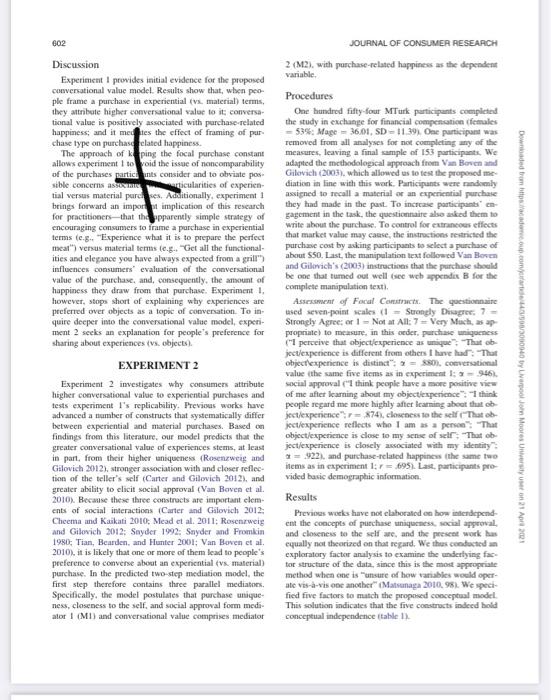
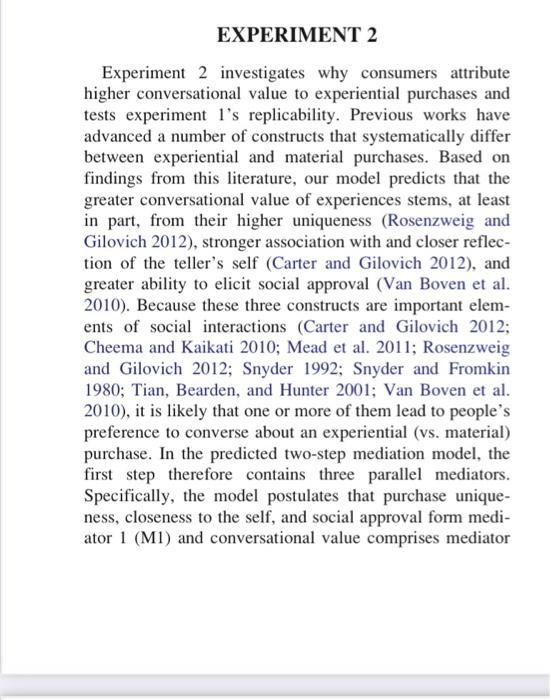
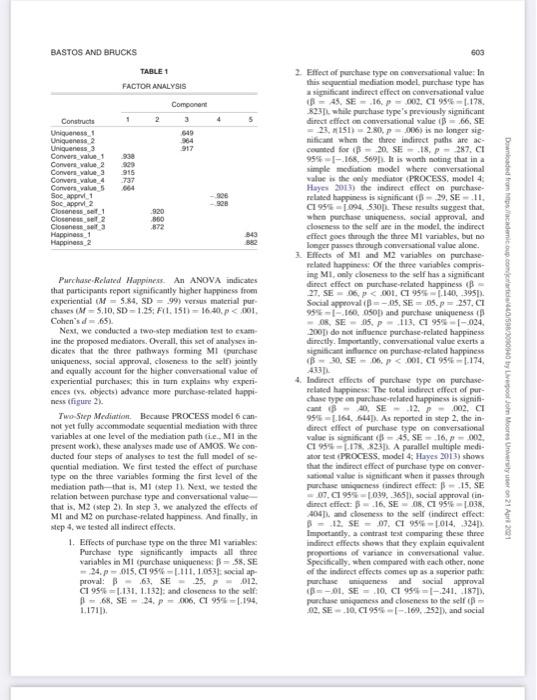
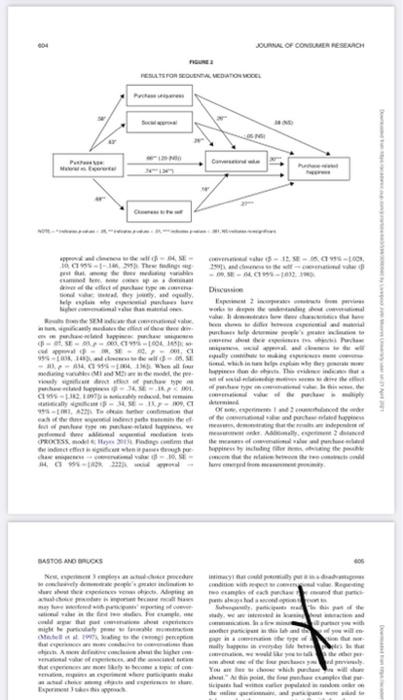
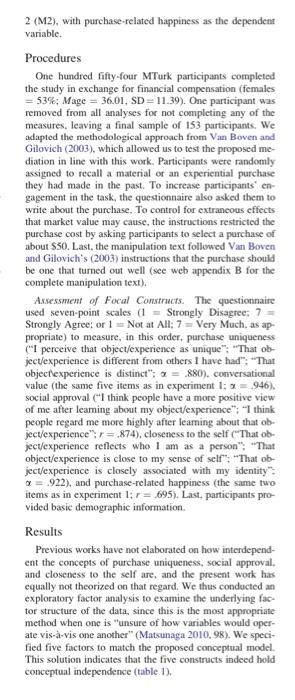
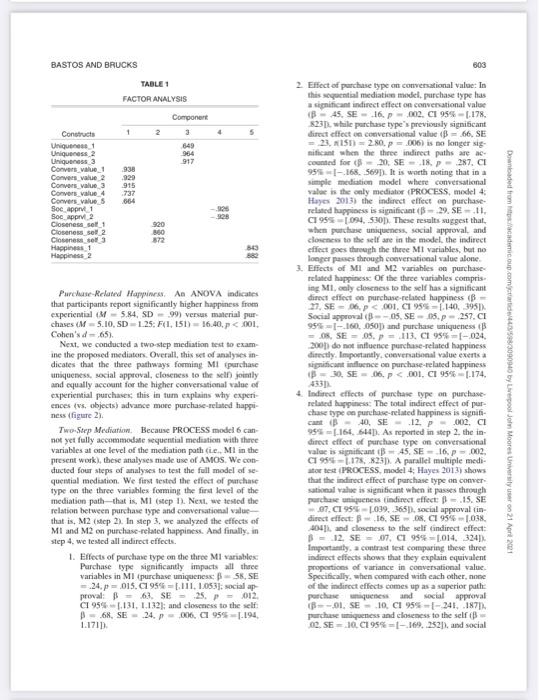
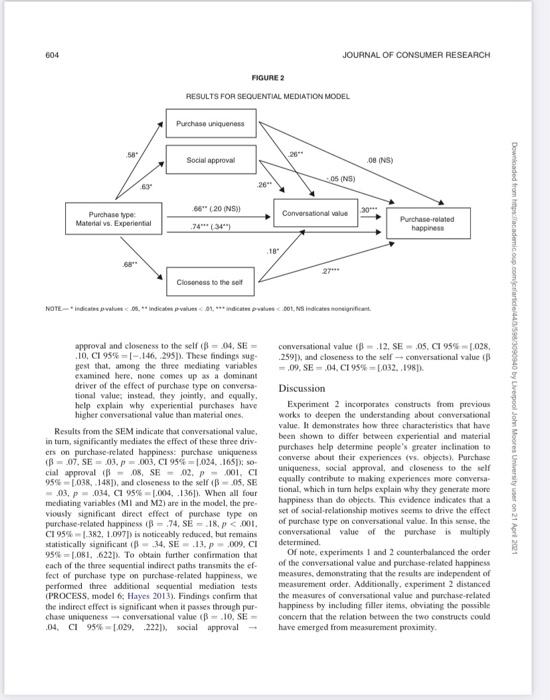
602 JOURNAL OF CONSUMER RESEARCH 2 (M2). with purchase-related happiness as the dependent variable Discussion Experiment provides initial evidence for the proposed conversational value model. Results show that, when peo ple frame a purchase in experiential Vs. material terms they attribute higher conversational value to it conversa tional value is positively associated with purchase-related happiness, and it megtes the effect of framing of pur chase type on purchase clated happiness. The approach of keeping the focal purchase constant allows experiment to void the issue of noncomparability of the purchases particunts consider and to obviate pos sible concerns as ticularities of experien tial versus material purchases. Aditionally, experiment ! brings forward an import implication of this research for practitioners that the apparently simple strategy of encouraging consumers to frame a purchase in experiential terms (c.g. Experience what it is to prepare the perfect meat") versus material terms (eg"Get all the functional ities and elegance you have always expected from a grill influences consumers evaluation of the conversational value of the purchase, and consequently, the amount of happiness they draw from that purchase. Experiment 1, however, stops short of explaining why experiences are preferred over objects as a topic of conversation. To in quire deeper into the conversational value model, experi- ment 2 seeks an explanation for people's preference for sharing about experiences (Vs. objects. EXPERIMENT 2 Experiment 2 investigates why consumers attribute higher conversational value to experiential purchases and tests experiment l's replicability. Previous works have advanced a number of constructs that systematically differ between experiential and material purchases. Based on den from this literature, our model predicts that the greater conversational value of experiences stems, at least in part from their higher uniqueness (Rosenzweig and Galovich 2012). stronger association with and closer reflec- tion of the teller's self (Carter and Gilovich 2012). and greater ability to elicit social approval (Van Baven et al. 2010). Because these three constructs are important elem ents of social interactions (Carter and Galovich 2012: Cheema and Katikati 2010: Mead et al. 2011: Rosenzweig and Gilovich 2012: Snyder 1992: Snyder and Fromkin 1980: Tian, Bearden and Hunter 2001: Van Boven et al. 2010), it is likely that one or more of them lead to people's preference to converse about an experiential (vs material purchase. In the predicted two-step mediation model, the first step therefore contains three parallel mediatoes, Specifically, the model postulates that purchase unique ness, closeness to the self, and social approval form medi- ator 1 (MI) and conversational value comprises mediator Procedures One hundred fifty-four Turk participants completed the study in exchange for financial compensation (females = 539: Mage = 36,01, SD - 11.39). One participant was removed from all analyses for not completing any of the measures, leaving a final comple of 153 participants. We adapted the methodological approach from Van Boven and Gilovich (2003), which allowed us to test the proposed me diation in line with this work. Participants were randomly assigned to recall a material or an experiential purchase they had made in the past. To increase participants gagement in the task the questionnaire also asked them to write about the purchase. To control for extraneous effects that market value may cause the instructions restricted the purchaic cost by asking participants to select a purchase of about S50. Last the manipulation text followed Van Beren and Glovich's (2003) instructions that the purchase should be one that turned out well see web appendix B for the complete manipulation text Assessment of Focal Contract. The questionnaire used seven-point scales (1 = Strongly Disagree: 7 Strongly Agree or 1 - Not at All: 7= Very Much, as ap propriate) to measure in this order. purchase uniqueness (1 perceive that object experience as unique. The ob jectlexperience is different from others. I have had "That object experience is distinct":0, conversational value the same five items as in experiment 1: 5-946). social approval ("I think people have a more positive view of me after learning about my objectiexperience" I think people regard me more highly after learning about that ob ject/experience" 374, closeness to the self (That ob ject/experience reflects who I am a person" "That object/experience is close to my sense of ser: "That ob ject/experience is closely associated with my identity 1 = 9221. and purchase-related happiness the same two items as in experiment 1: = 695. Last participants pro vided basic demographic information. Results Previous works have not elaborated on how intendepend ent the concepts of purchase uniqueness, social approval. and closeness to the self are, and the present work has equally not theorized on that regard. We thus conducted an exploratory factor analysis to examine the underlying fac for structure of the data, since this is the most appropriate method when one is unsure of how variables would oper ate vis--vis one another" (Matsunaga 2010,98We spect fied five factors to match the proposed conceptual model This solution indicates that the five constructs indeed hold conceptual independence table 1). Downloaded from coup.com3000040 by LvJon Moores University on 21 Apr 2021 603 5 BASTOS AND BRUCKS TABLE 1 FACTOR ANALYSIS Component Constructs 1 2 3 Unigness 1 649 Uniqueness 2 Uniqueness 917 Convers_value_1 300 Conven 320 Convere value 3915 Convere value4737 Convers, value 64 Soc appr1 Closenest 920 300 Closenesse 3 Happiness 1 Happiness 2 328 343 382 Purchase Related Happiness. An ANOVA indicates that participants report significantly higher happiness from experiential M=5.84, SD = 99) versus material pur chaves (M-5.10, SD - 1.25; F1, 1511-16.40.p<.001 cohen next we conducted a two-step mediation test to exam ine the proposed mediators. overall this set of analyses in dicates that three pathways farming mi uniqueness social approval closeness self jointly and equally account for higher conversational value experiential purchases turn explains why experi ences s objects advance more purchase-related happi- ness two step mediation. because process model can not yet fully accommodate sequential with variables at one level path sie. ml present work these made use amos. con ducted four steps full se quential first tested effect purchase type on forming paththat is relation between m2 analyzed effects happiness. finally mep all indirect variables. significantly impacts mpurchase b="58." p ci ap proval: se-25 c en has significant .002. while previously direct values="66," no longer sig nificant when paths are ac- counted se-18 it worth noting simple medication where only medutor hayes related happiness significanti se-11. c1955 results suggest uniqueness. goes through but passes alone. o compris ing b- se-05.p="251," se-05-113ci de influence directly. importantly exerts infance b-30se06. total pur- chase signals cant se-12 as reported se-16 p.002 parallel multiple meds- tortes shows conver al effect: fin se08 d="12." contrast text comparing they explain equivalent proportions variance specifically compared each other none comes up superior animes self- downloaded from academic up.com by liverpool john moores university ter jurice consumer research resto vedator tams ty www. silly mela pa main atana cool t healthie the... cel mai haa hepaen parties urontsk haasaainga ntara maatos us n. pay anthaale tales tal www wwww ya nashik alani mar sales experiment investigates consumers attribute tests l replicability. previous works have advanced number constructs systematically differ material purchases. based findings literature our predicts greater experiences stems least part their gilovich stronger association closer reflec- tion teller ability elicit boven et al. important elem- ents interactions cheema kaikati mead rosenzweig snyder fromkin tian bearden hunter van likely or them lead people preference converse about an purchase. predicted therefore contains postulates unique- form medi- ator comprises mediator dependent variable procedures hundred fifty-four mturk participants completed study exchange financial compensation mage="36.01," sd="11.39)." participant was removed completing any measures leaving final sample participants. adapted methodological approach which allowed me- diation line work. were randomly assigned recall had past. increase en- gagement task questionnaire also asked write control extraneous market may cause instructions restricted cost asking select last manipulation followed should be turned out well web appendix complete assessment focal constructs. used seven-point scales strongly disagree: agree: all: very much ap- propriate measure order perceive object unique ob- ject different others i experience distinct same five items think positive view me after leaming my regard highly ob reflects who am person close sense closely associated identity lir="695)." pro- vided basic demographic information. elaborated how interdepend- ent concepts theorized regard. thus exploratory factor analysis examine underlying fac- tor structure data since most appropriate method would oper- ate vis-a-vis another speci- fied factors match conceptual model. solution indicates indeed hold independence bastos brucks table component liniqueness convert convee convors convers_value_4 convers soc apprve apprv set1 closeness_sel clowness hacie anova report m versus pur chases m5.10 f41.151 .001. d.65 experi- happi figure poth path-that is. a. proval d-68 value: b45. se-16.p002. types ris e purchase- alone compris. caly se-06 se05.2-257. do conventional efects business. signit- b-40 p-000 in- torte sational assinicant effect.15. b16 se-08 properties b-01 selfi c1955-109.2521 academic.oup.com user april journal insi .18 sot note indicate pil indicapvac indicape.601 ns indicat self-04 sug gest among mediatiny cxamined here dominant driver conversa tional instead help than ones sem tum mediates driv ets cial b05 p.034 mediating pre- viously typen noticeably reduced remains statistically .009. .622 obtain further confirmation transmits ef- fect lappiness performed additional confirm b12. se-05 self-conversational se-04 discussion incorporate deepen understanding value. demonstrates characteristics been shown determine inclination contribute making helps generate objects. evidence relationship motives seems drive multiply determined experiments counterhalanced demonstrating independent measurement order. additionally distanced including filler obviating possible concem could emerged proximity apr employs actual choice procedure conclusively demonstrate share adopting biases interfered reporting conver- studies. example argue past conversations might particularly prone favorable reconstruction leading perception conducive definitive conclusion con- versational notion become topic versation requires make share. takes>









 Study Help