







Question: Cash flows Project A Project B Co -$110 -$110 C1 42 53 C2 42 53 42 42 53 C3 CA a. If the opportunity
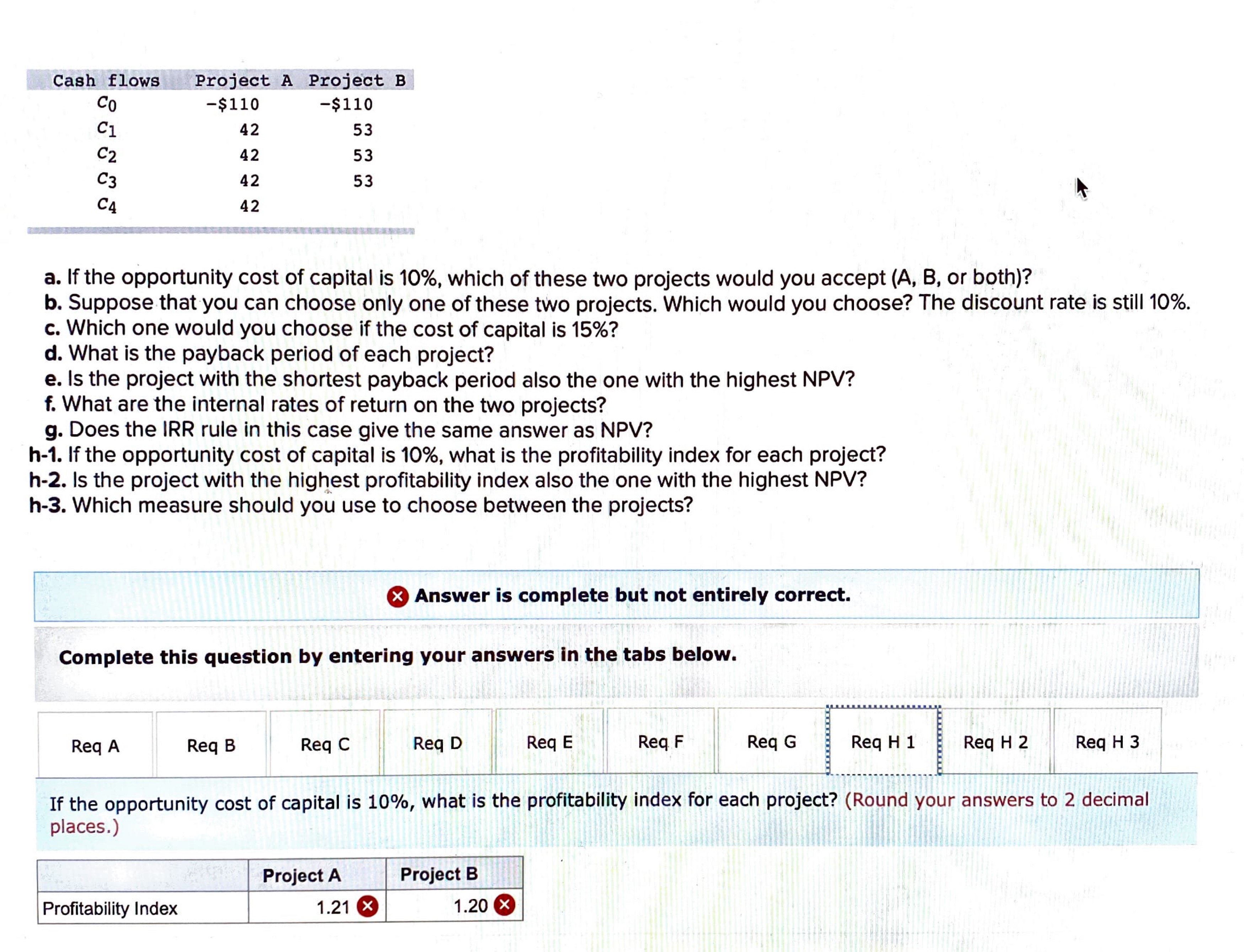
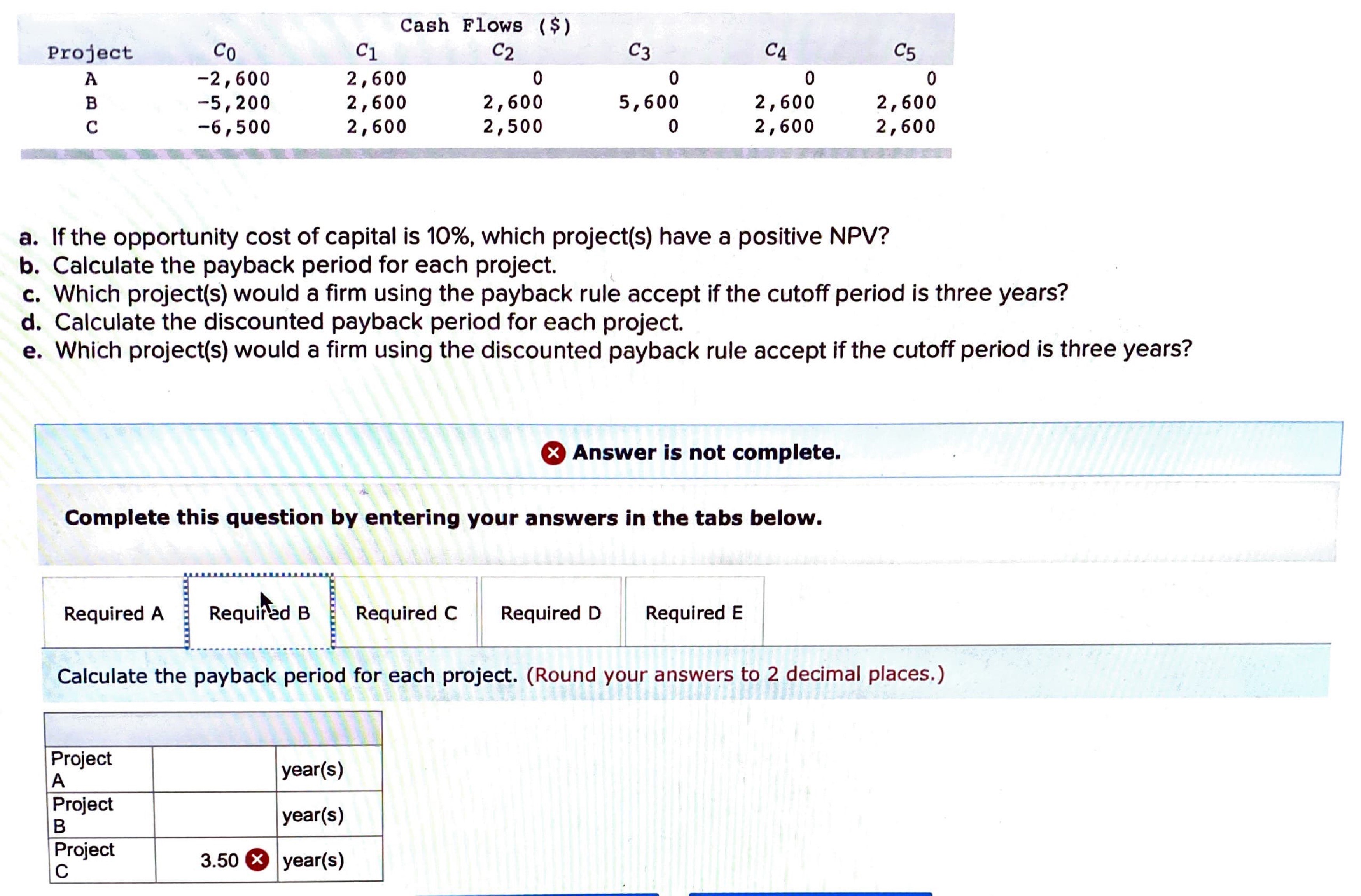
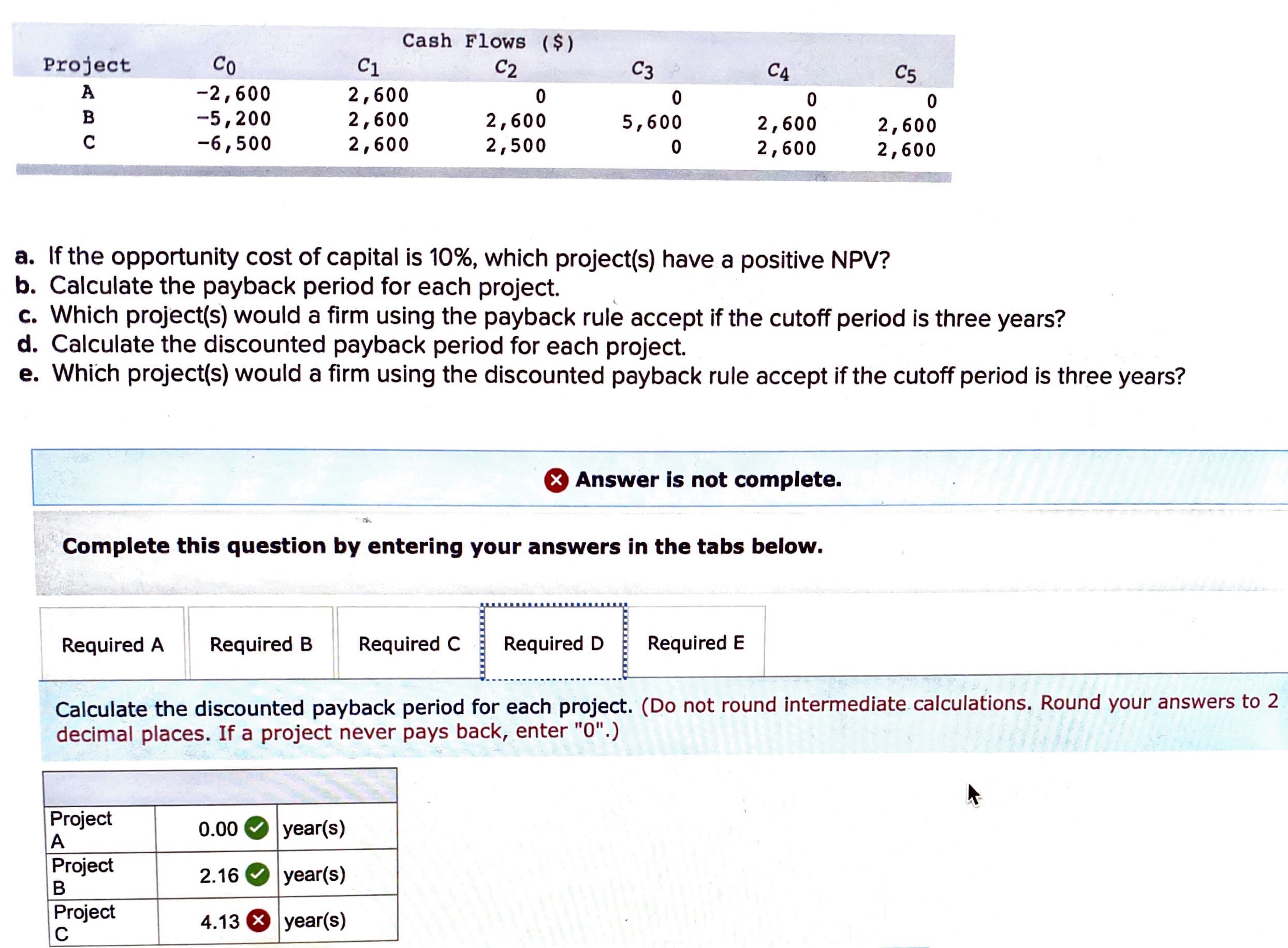
Cash flows Project A Project B Co -$110 -$110 C1 42 53 C2 42 53 42 42 53 C3 CA a. If the opportunity cost of capital is 10%, which of these two projects would you accept (A, B, or both)? b. Suppose that you can choose only one of these two projects. Which would you choose? The discount rate is still 10%. c. Which one would you choose if the cost of capital is 15%? d. What is the payback period of each project? e. Is the project with the shortest payback period also the one with the highest NPV? f. What are the internal rates of return on the two projects? g. Does the IRR rule in this case give the same answer as NPV? h-1. If the opportunity cost of capital is 10%, what is the profitability index for each project? h-2. Is the project with the highest profitability index also the one with the highest NPV? h-3. Which measure should you use to choose between the projects? Answer is complete but not entirely correct. Complete this question by entering your answers in the tabs below. Req A Req B Req C Req D Req E Req F Req G Req H 1 Req H 2 Req H 3 If the opportunity cost of capital is 10%, what is the profitability index for each project? (Round your answers to 2 decimal places.) Project A Project B Profitability Index 1.21 x 1.20 X Cash Flows ($) Project Co C1 C2 C3 CA C5 A -2,600 2,600 0 0 0 0 B -5,200 2,600 2,600 5,600 2,600 2,600 C -6,500 2,600 2,500 0 2,600 2,600 a. If the opportunity cost of capital is 10%, which project(s) have a positive NPV? b. Calculate the payback period for each project. c. Which project(s) would a firm using the payback rule accept if the cutoff period is three years? d. Calculate the discounted payback period for each project. e. Which project(s) would a firm using the discounted payback rule accept if the cutoff period is three years? Answer is not complete. Complete this question by entering your answers in the tabs below. Required A Required B Required C Required D Required E Calculate the payback period for each project. (Round your answers to 2 decimal places.) Project year(s) A Project year(s) B Project 3.50 year(s) C Cash Flows ($) Project ABC Co -2,600 C1 C2 C3 C4 C5 2,600 0 0 0 -5,200 2,600 2,600 5,600 2,600 0 2,600 -6,500 2,600 2,500 0 2,600 2,600 a. If the opportunity cost of capital is 10%, which project(s) have a positive NPV? b. Calculate the payback period for each project. c. Which project(s) would a firm using the payback rule accept if the cutoff period is three years? d. Calculate the discounted payback period for each project. e. Which project(s) would a firm using the discounted payback rule accept if the cutoff period is three years? Answer is not complete. Complete this question by entering your answers in the tabs below. Required A Required B Required C Required D Required E Calculate the discounted payback period for each project. (Do not round intermediate calculations. Round your answers to 2 decimal places. If a project never pays back, enter "0".) Project A 0.00 year(s) Project 2.16 year(s) B Project 4.13 year(s) C
Step by Step Solution
There are 3 Steps involved in it

Get step-by-step solutions from verified subject matter experts
 Study Help