



Question: Change Management Plan Executive Summary Change management is an important aspect of every organization because it aims to change systems, bring new ideas, and enhance
Change Management Plan
Executive Summary
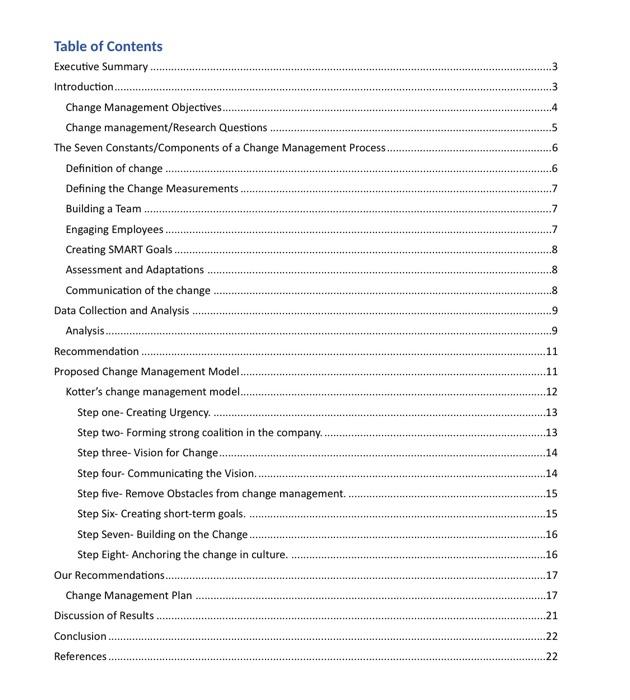
Change management is an important aspect of every organization because it aims to change systems, bring new ideas, and enhance the overall company. This research report focuses on using a primary data collection approach and explore a dedicated change management strategy. The report draws mostly on public sector organizations in the UAE and their change management strategies for introducing innovation within the company. Using Kotters Change Management Framework, the report has combined primary data findings through a survey for recommending a change management plan for public sector companies in UAE. The findings of the study highlight several aspects which are important during such change initiatives. This includes different types of aspects such as leadership, organizational change vision, team management, and necessary resources for change. This is followed by identifying different challenges/obstacles during change management practices and strategies for resolving them.
Introduction
Today's corporate climate is causing unprecedented levels of change. The speed of technological change, in particularly, is increasing, necessitating continuous oversight of migrations to new systems and practices by organizations. When such changes necessitate structural rather than project-level modifications, firms must execute organizational transformation. Organizational development management is intended to mitigate the negative consequences of any broad, structural reforms in a firm. Change management, in particular, works from both the regional and global level. Whether that's asking employees to learn new abilities, redistributing duties and objectives, or invest in infrastructure technologies or systems, the organizational change process takes a top-down model of change. Although change at the design stage is essential, it does not typically transcend beyond the project's bounds. Such that, project-level change might have an individual or specialized impact. Organizational change, on the other hand, impacts all employees in a given firm, encompassing individuals and teams operating on diverse projects. One may argue that organizational transformation includes project-level change. As a result, organizational change likely to also be experienced more deeply and over a longer length of time. This report also focuses on a similar and dynamic organization in the UAE.
The report aims to target public sector organizations, including different companies in UAE. The scope of this plan is to introduce a change management strategy for implementing innovative technologies. This includes integration of different devices, even for the most basic functions. For example, automated systems can help employee keep track of their time schedule. This type of system enables employees to use dedicated chips and scanners. Innovation within the organization involves change of different systems and processes. This helps the company to improve its overall standings in the market and with competitors. The report aims to document this change and provide a feasible and implementable change management model. The model is inspired using Kotters eight change management steps to provide a cohesive strategy.
Change Management Objectives
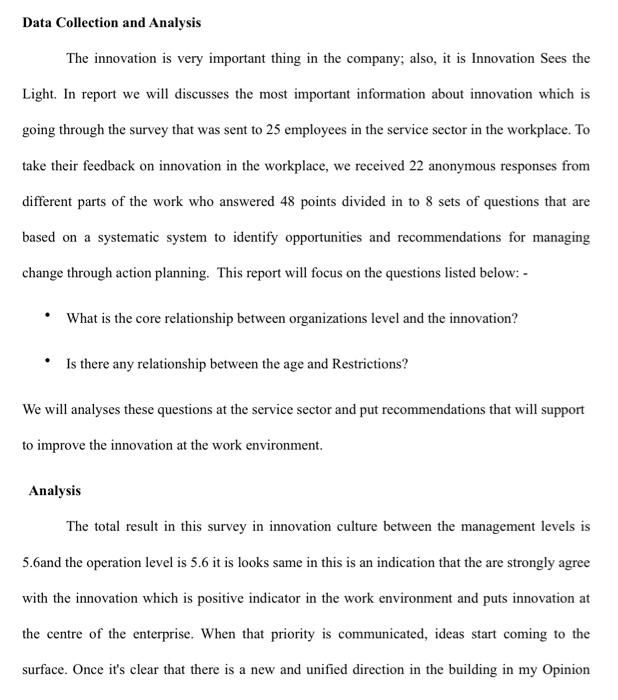
The report aims to analyze a local UAE company, Inflexion, and provide a change management process that can help the company. This includes understanding the change management model and determining the impacts of this provided change. The report, hence aims to achieve the following objectives:
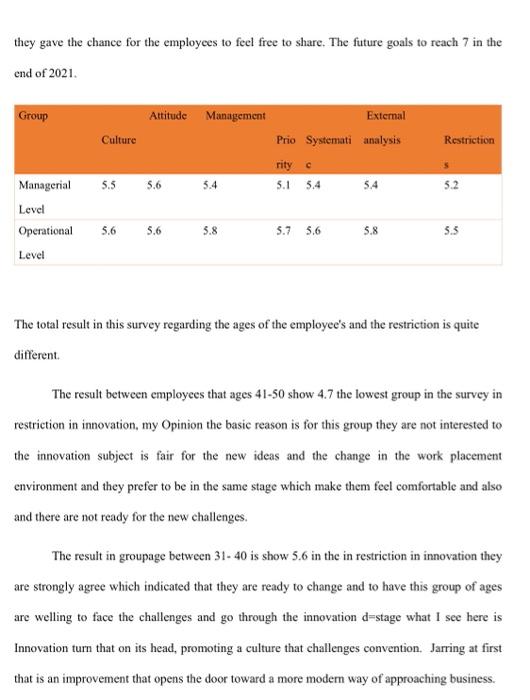
- To identify the core relationship between organizational level and innovation.
- To determine the relationship between age and restrictions
- To identify relevant change management model applicable for the selected organizations
- To determine appropriate change management steps to implement the selected change in the organizations
- To identify relevant bottlenecks/challenges in terms of implementing the change in the selected organizations
- To provide recommendations for improving the change management plan for the selected organizations
Change management/Research Questions
As identified above, the report has a multiple tier of objectives/aims to determine an appropriate change management process for the selected company. This change management plan will also help to answer the following research questions:
- What is the core relationship between organisations level and the innovation?
- Is there any relationship between the age and Restrictions?
Change Management process
Definition of change
This has been the most critical stage in putting an effective change management plan in place. As a change seeker, businesses need to be able to communicate their visiondefining the problem, their remedy, as well as the outcomes that will occur after the change is implemented.
Defining the Change Measurements
Now that the goal has been established, it is crucial to reflect on the details. Managers must be incredibly clear on the questions asked at this juncture.
Building a Team
After carefully crafting the vision, companies must go on to what the most challenging step is typically: assembling a core team.
Engaging Employees
The next step of the process requires managers and companies to on-board employees with the required changes. Employees in the business who feel a feeling of ownership and connection assist to establish a cohesive team and assure success.
Creating SMART Goals
It is critical to begin the work of defining minor goals that may be completed quickly in an efficient change management approach. These "little successes" assist to get the ball moving.
Assessment and Adaptations
The next stage after creating the goals is assessment and adaptation towards these goals within the organizational environment. This assessment defines understanding how these goals and objectives can navigate the company during this change.
Communication of the change
Employees should be informed in advance of any changes which will take place inside the business. Open and efficient communications with everyone, not just those directly involved, aids in a smoother experience into the "transformed" phase.

Proposed Change Management Model
Although definitions differ, change management typically focuses on how individuals and organizations execute organizational change.
Kotters change management model
The world is changing as new innovations and technologies replace previous ways and practices. Organizational change, on the other hand, is frequently greeted with opposition, particularly in long-standing companies. However, because adaptation is a requirement for long-term economic success. The eight-step model presents sequential steps that help to navigate the change process.
Step one- Creating Urgency.
The concept that a change is required for the organization performance may be highly strong. Argument for transformation is likely to expand if managers can establish an atmosphere in which people are aware of an ongoing problem and therefore can understand a potential solution.
Step two- Form a powerful coalition
It will be difficult to manage the entire transformation process upon on basis of a single management alone. Therefore, it is critical to establish a coalition to assist managers in directing others.
Step three- create a Vision for Change
The transformation vision and strategy paint a picture for the organization of what the world will look like when the change is accomplished.
Step four- Communicating the Vision.
Developing the concept is not enough to get acceptance; it must also be shared throughout the business.
Step five- Remove Obstacles from change management.
Obstacles are some of the most imminent parts of a change management plan and strategy because they can result in several other issues. These obstacles are either classified as human or technology-related.
Step Six- Creating short-term goals.
Change processes sometimes take time to bear fruit, which can lead support to dwindle if people believe their efforts have been in vain. As a result, it is critical to show the benefits of the new approach by achieving some short-term successes.
Step Seven- Building on the Change
Many change procedures fail because complacency sets in at the end, and projects are not completed correctly. As a result, Kotter contends that it is critical to sustain and consolidate the change even once it has been achieved.
Step Eight- Anchoring the change in culture.
Simply altering workers' behaviors and practices is not necessarily enough to instill a cultural shift throughout the organization. To have a long-term impact, the adjustments should become a component of the organization's core.
Our Recommendations
Change Management Plan
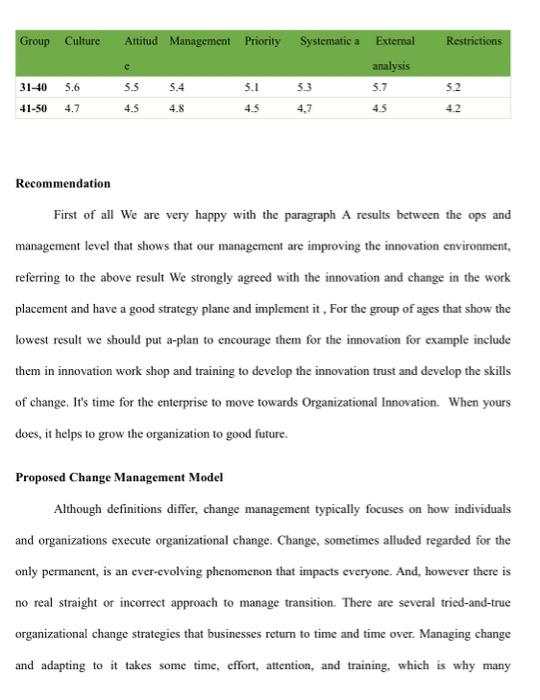
Using primary data collection, the report has identified several variables related to innovative change. The findings of the survey have helped to identify people who are willing and ready for change. The change management plan is divided into different sections to assist people for creating a cohesive strategy. All of these steps are motivated from Kotters Eight Step Model.
Step 1
The first step of the model describes building an urgency around the overall change and laying down the actual requirements.
Step 2
The second step of the change management process according to Kotters overall theory is to create a team.
Step 3
The organizations then need to create strategic initiatives and vision of the change in reference of what it will achieve.
Step 4
The fourth step of the change management process will require the company to communicate all of its desired changes with the employees.
Step 6
The sixth step, according to the Kotters framework is to create several types of short-term goals for the employees.
Step 7
The seventh step of the change management process is building on the change and actually implementing the planned objectives.
Step 8
The last step of the change management process in monitoring and evaluating the overall change in the company.
Discussion of Results
For many businesses, innovation is a critical driver of funding and a crucial factor of strategic edge. As a result, organizational formation is critical to the idea generation. Organizational and technical advancements are inextricably linked.
Conclusion
This plan's purpose is to develop a change management approach for deploying innovative technology. The purpose of this report is to record this change and to propose a realistic and implementable change management approach. To offer a cohesive approach, the model is influenced by Kotter's eight change management phases. Knowing the change management plan and assessing the effects of the supplied change are part of this.
Questions:
- What is the construct that you used on final project ?
- What steps or drivers that you found in final project?
- What is the main activities or main steps you used?
- What is the main result you obtained?
(please type the answers)
Step by Step Solution
There are 3 Steps involved in it

Get step-by-step solutions from verified subject matter experts