



Question: CHAPTER 1 : Managing Human Resources 2 7 MANAGING TALENT Frito - Lay to Employees: You're Going Places If you hear PepsiCo and think of
CHAPTER : Managing Human Resources
MANAGING TALENT
FritoLay to Employees: You're "Going Places"
If you hear "PepsiCo" and think of salty snacks, you must know that one of the softdrink company's key businesses is FritoLay, owner of brands including Cheetos, Doritos, and Ruffles. FritoLay North America, headquartered in Plano, Texas, operates more than manufacturing facilities in North America, along with more than distribution centers, from which truck drivers deliver snacks directly to stores. PepsiCo's largest product line by volume is soft drinks, but the largest share of its profits comes from FritoLay snacks. Snacks also are posting faster growth than soft drinks.
FritoLay's strategy for attracting and retaining talent includes being known as a desirable company to work for. FritoLay has developed an "employee value proposition," a short description of the value a worker receives by working for the company. Its latest version of the proposition is We are going places." To develop this tagline, the company gathered feedback from its employees and learned that they are particularly motivated by a sense of belonging, drive to excel, and pride in their work. The tagline is intended to express that FritoLay offers such experiences. The company has been gathering stories from employees to share on its website and social media as examples of "going places."
FritoLay's chief HR officer, Patrick McLaughlin, sees the employee value proposition as a necessary part of the company's strategy for success. Companies have struggled to find and keep enough qualified employees for several reasons. A relatively large share of workers have been retiring in recent years, and the numbers of new workers entering the workforce have not made up for them. The COVID pandemic intensified the challenge, and as the pandemic eased, the United States saw a sudden surge in spending that FritoLay, like other employers, struggled to keep up with.
According to McLaughlin, these challenges have especially hit the trucking industry, where wages rose an average of in alone as the growth in the number of drivers lagged behind the demand for them. FritoLay employs almost truckers, making it one of the largest privately owned fleets in the United States. The company, which says its retention rate of drivers exceeds that of the industry, is working to remain an "employer of choice." It sets up routes so that most workers can complete most trips within the same day, claiming
that it leads the industry for the amount of time drivers have at home. The company meets or exceeds market pay and offers new hires a signon bonus. Employees also are eligible for such benefits as retirement savings plans, health insurance, mentalhealth services, and assistance with vocational and college tuition. McLaughlin notes that mental health is an especially important consideration, given the stresses of economic and health uncertainties in recent years.
To fill jobs with qualified drivers, FritoLay has gotten creative about recruitment. The company has its own apprenticeship program for truck drivers, combined with a strategy to promote from within. It also has contributed to funding a community program called BridgeBuilders, which provides driver education in South Dallas. FritoLay sees this support as socially responsible but also a practical way to increase the pool of workers licensed to drive commercial vehicles.
Recently, however, PepsiCo has become concerned that it needs to prepare for an economic slowdown. Inflation initially resulted in consumers spending more for its products, but as it has persisted, consumers are expected to switch away from the company's brands to lowerpriced alternatives. PepsiCo announced that it needed to "simplify" the organization to make it more efficient and so would be eliminating hundreds of jobs. The cuts were expected to be concentrated in the beverage division, with a smaller number at FritoLay. McLaughlin and his team will have to reconcile the company's ongoing need to produce and deliver snacks with the pressure to keep costs low.
Questions
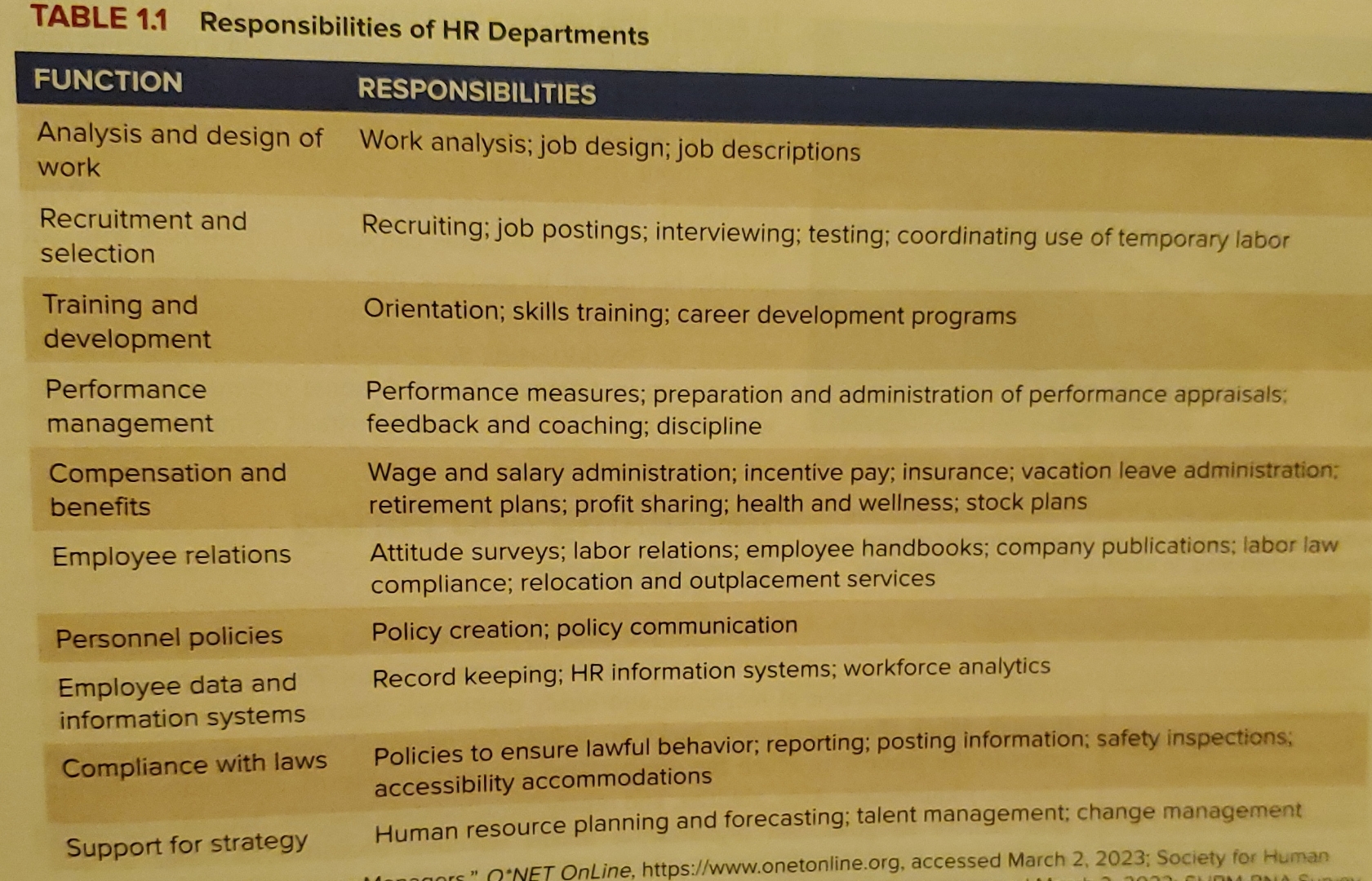
Which HR functions see Table should come into play for addressing issues described in this case?
Do you think FritoLay's recent layoffs signal that the company needs to change its employee value proposition again? Why or why not?
Step by Step Solution
There are 3 Steps involved in it
1 Expert Approved Answer
Step: 1 Unlock

Question Has Been Solved by an Expert!
Get step-by-step solutions from verified subject matter experts
Step: 2 Unlock
Step: 3 Unlock