







Question: Complete five (5) different resource file entries that you will then compile and submit at the end of the course in one Word document. Each
Complete five (5) different resource file entries that you will then compile and submit at the end of the course in one Word document. Each entry should be 5 length and should adhere to the format presented in the Sample Resource File.
You need a resource file for each type of book below:
1.ABC
2.Counting
3.Concept
4.Participation
5.Information
As you read and select a book for each entry, think about the scaffolded learning approach, what children would enjoy, and how they could be drawn into a deeper appreciation of the characters, plot, illustrations, or language.
Format
Plot
Characters
Illustrations
Language
Introduction
Extension activities
example:
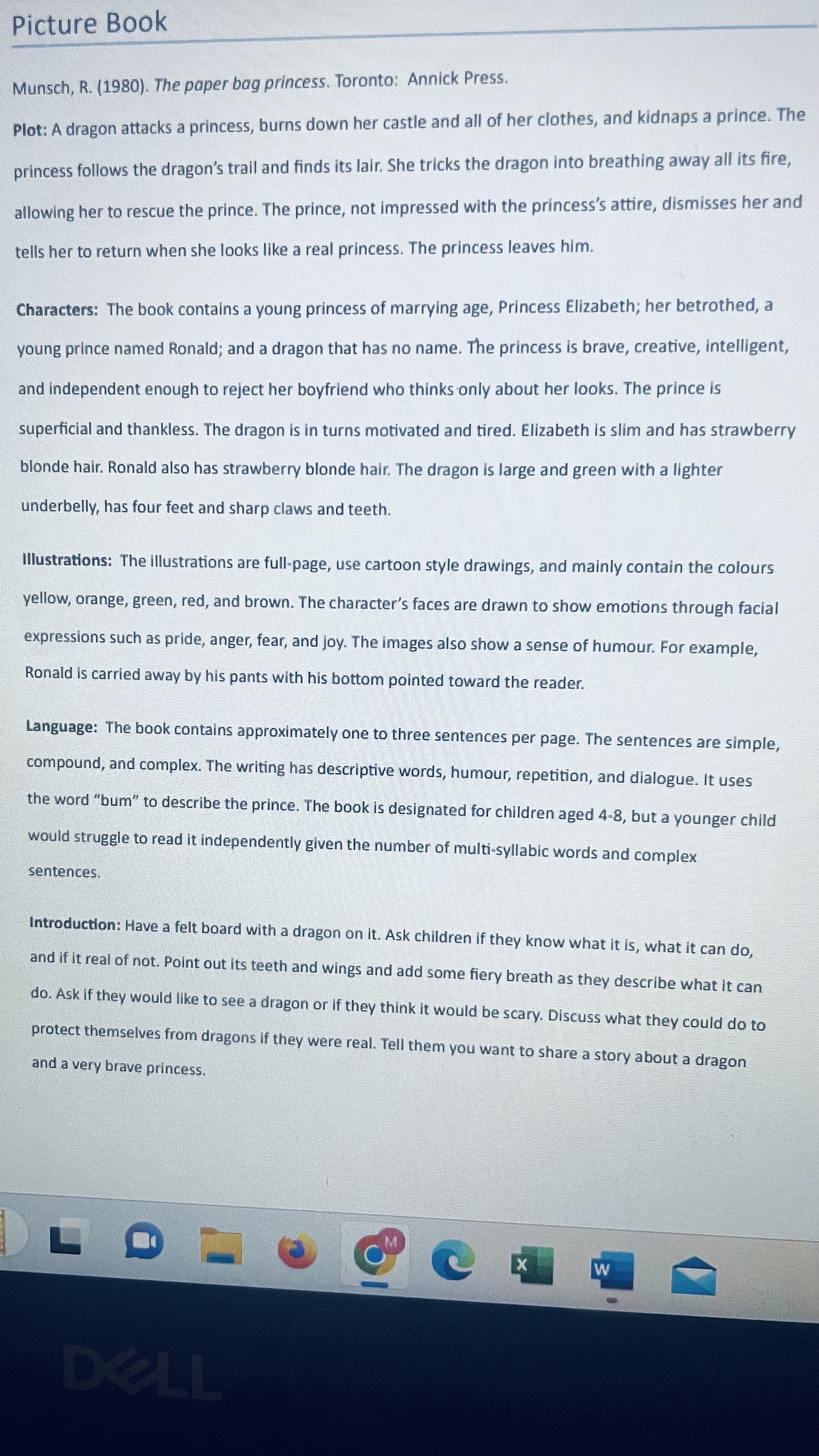
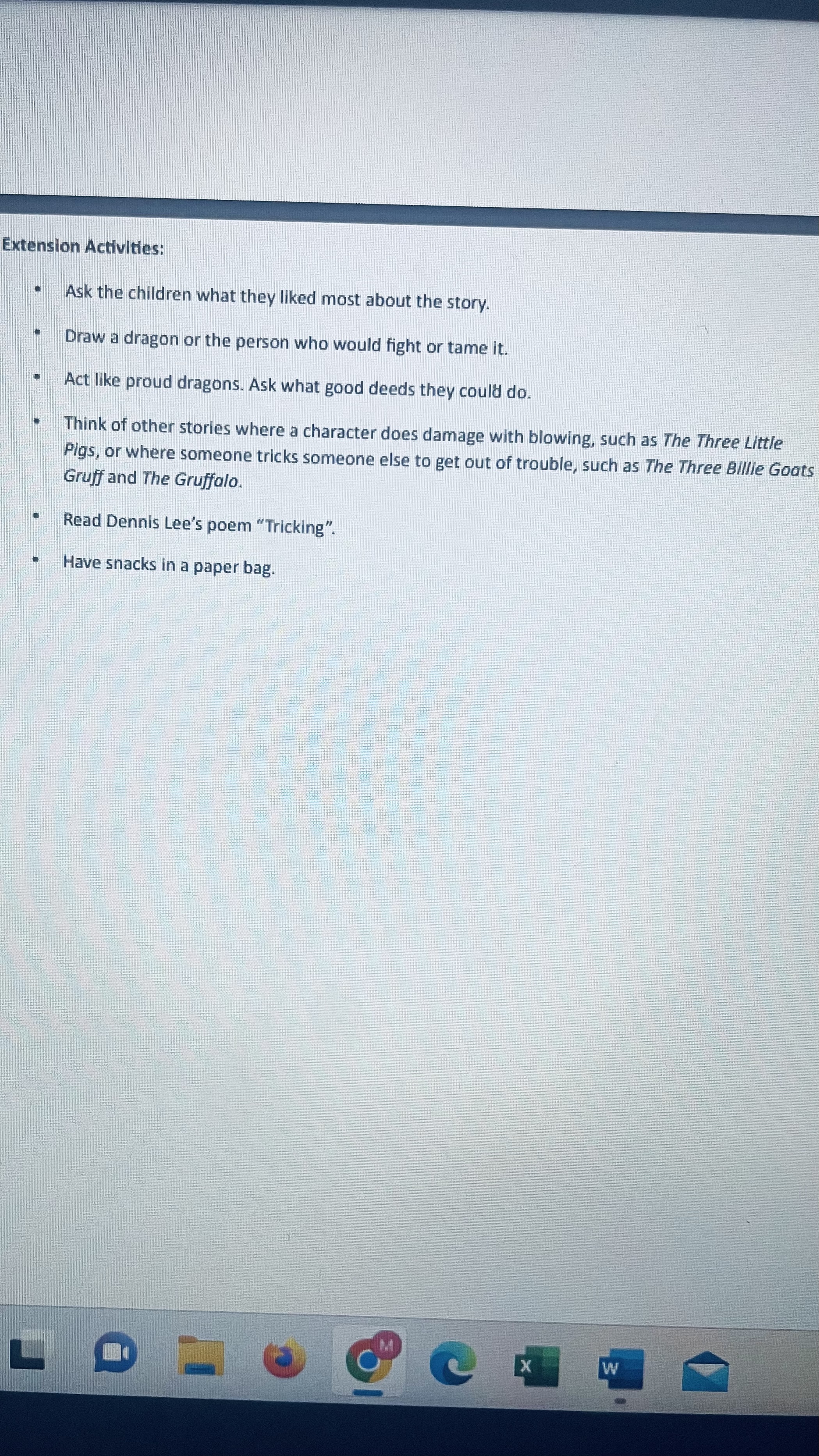
Picture Book Munsch, R. (1980). The paper bag princess. Toronto: Annick Press. Plot: A dragon attacks a princess, burns down her castle and all of her clothes, and kidnaps a prince. The princess follows the dragon's trail and finds its lair. She tricks the dragon into breathing away all its fire, allowing her to rescue the prince. The prince, not impressed with the princess's attire, dismisses her and tells her to return when she looks like a real princess. The princess leaves him. Characters: The book contains a young princess of marrying age, Princess Elizabeth; her betrothed, a young prince named Ronald; and a dragon that has no name. The princess is brave, creative, intelligent, and independent enough to reject her boyfriend who thinks only about her looks. The prince is superficial and thankless. The dragon is in turns motivated and tired. Elizabeth is slim and has strawberry blonde hair. Ronald also has strawberry blonde hair. The dragon is large and green with a lighter underbelly, has four feet and sharp claws and teeth. Illustrations: The illustrations are full-page, use cartoon style drawings, and mainly contain the colours yellow, orange, green, red, and brown. The character's faces are drawn to show emotions through facial expressions such as pride, anger, fear, and joy. The images also show a sense of humour. For example, Ronald is carried away by his pants with his bottom pointed toward the reader. Language: The book contains approximately one to three sentences per page. The sentences are simple, compound, and complex. The writing has descriptive words, humour, repetition, and dialogue. It uses the word "bum" to describe the prince. The book is designated for children aged 4-8, but a younger child would struggle to read it independently given the number of multi-syllabic words and complex sentences. Introduction: Have a felt board with a dragon on it. Ask children if they know what it is, what it can do, and if it real of not. Point out its teeth and wings and add some fiery breath as they describe what it can do. Ask If they would like to see a dragon or if they think it would be scary. Discuss what they could do to protect themselves from dragons if they were real. Tell them you want to share a story about a dragon and a very brave princess. LO W DELLExtension Activities: Ask the children what they liked most about the story. Draw a dragon or the person who would fight or tame it. Act like proud dragons. Ask what good deeds they could do. Think of other stories where a character does damage with blowing, such as The Three Little Pigs, or where someone tricks someone else to get out of trouble, such as The Three Billie Goats Gruff and The Gruffalo. Read Dennis Lee's poem "Tricking". Have snacks in a paper bag. e X W
Step by Step Solution
There are 3 Steps involved in it

Get step-by-step solutions from verified subject matter experts
 Study Help