







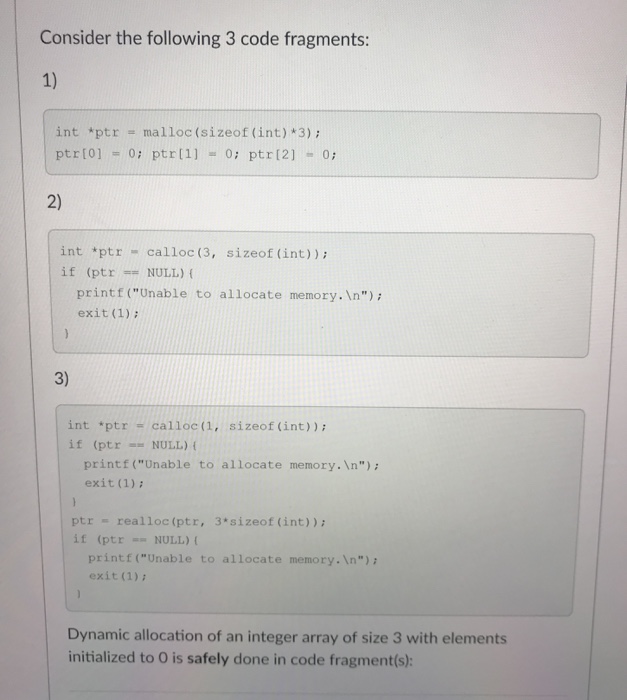
Question: Consider the following 3 code fragments: 1) int *ptr = malloc (sizeof(int)*3); ptr[0] = 0; ptr[1] 0; ptr[2] 0; 2) int ptr - calloc
![(sizeof(int)*3); ptr[0] = 0; ptr[1] 0; ptr[2] " 0; 2) int ptr](https://dsd5zvtm8ll6.cloudfront.net/si.experts.images/questions/2024/09/66e3d6a5a90cf_65366e3d6a5263e9.jpg)
Consider the following 3 code fragments: 1) int *ptr = malloc (sizeof(int)*3); ptr[0] = 0; ptr[1] 0; ptr[2] " 0; 2) int ptr - calloc (3, sizeof (int)) if (ptr== NULL){ printf ("Unable to allocate memory. In") exit (1): 3) int iptr= calloc ( 1 , sizeof (int)); if (ptr-NULL) { printf("Unable to allocate memory.In") exit (1) ptr realloc (ptr, 3 sizeof (int)) if (ptrNULL) printf("Unable to allocate memory.In") exit (1) Dynamic allocation of an integer array of size 3 with elements initialized to O is safely done in code fragment(s)
Step by Step Solution
There are 3 Steps involved in it
1 Expert Approved Answer
Step: 1 Unlock

Question Has Been Solved by an Expert!
Get step-by-step solutions from verified subject matter experts
Step: 2 Unlock
Step: 3 Unlock
 Study Help