







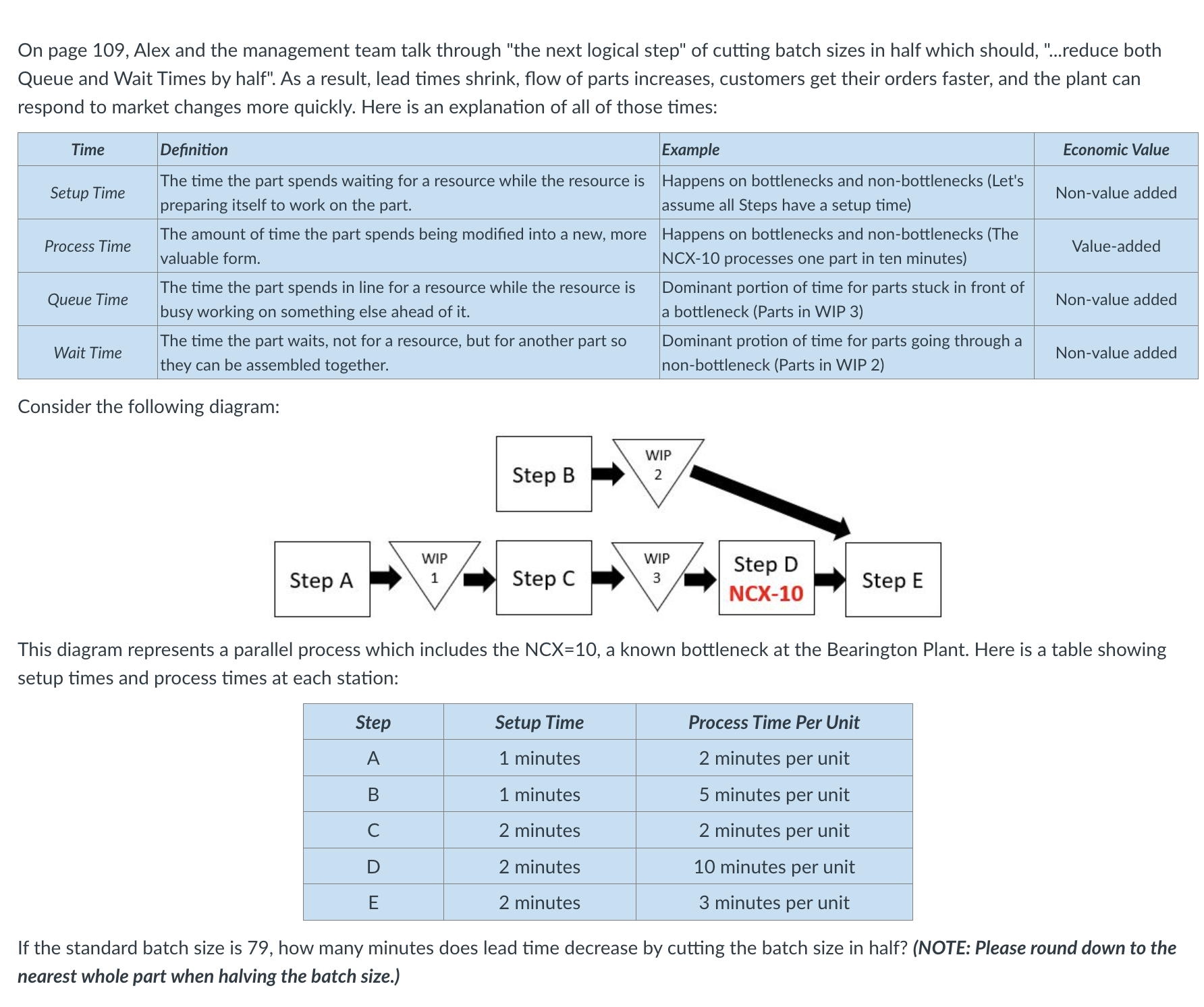
Question: Consider the following diagram: This diagram represents a parallel process which includes the ( N C X = 1 0 ) , a
Consider the following diagram:
This diagram represents a parallel process which includes the N C X a known bottleneck at the Bearington Plant. Here is a table showing setup times and process times at each station:
If the standard batch size is how many minutes does lead time decrease by cutting the batch size in half? NOTE: Please round down to the nearest whole part when halving the batch size. On page Alex and the management team talk through "the next logical step" of cutting batch sizes in half which should, reduce both Queue and Wait Times by half". As a result, lead times shrink, flow of parts increases, customers get their orders faster, and the plant can respond to market changes more quickly. Here is an explanation of all of those times:
Consider the following diagram.
This diagram represents a parallel process which includes the NCX a known bottleneck at the Bearington Plant. Here is a table showing setup times and process times at each station:
If the standard batch size is how many minutes does lead time decrease by cutting the batch size in half? NOTE: Please round down to the nearest whole part when halving the batch size.
Step by Step Solution
There are 3 Steps involved in it
1 Expert Approved Answer
Step: 1 Unlock

Question Has Been Solved by an Expert!
Get step-by-step solutions from verified subject matter experts
Step: 2 Unlock
Step: 3 Unlock
 Study Help