



Question: Consider the gaussian white noise (GWN) model it = Mi + Eit, Eit~iid N(0, o?) cov(rit, rit) = bij, cor(rit, rit) = Pij for the
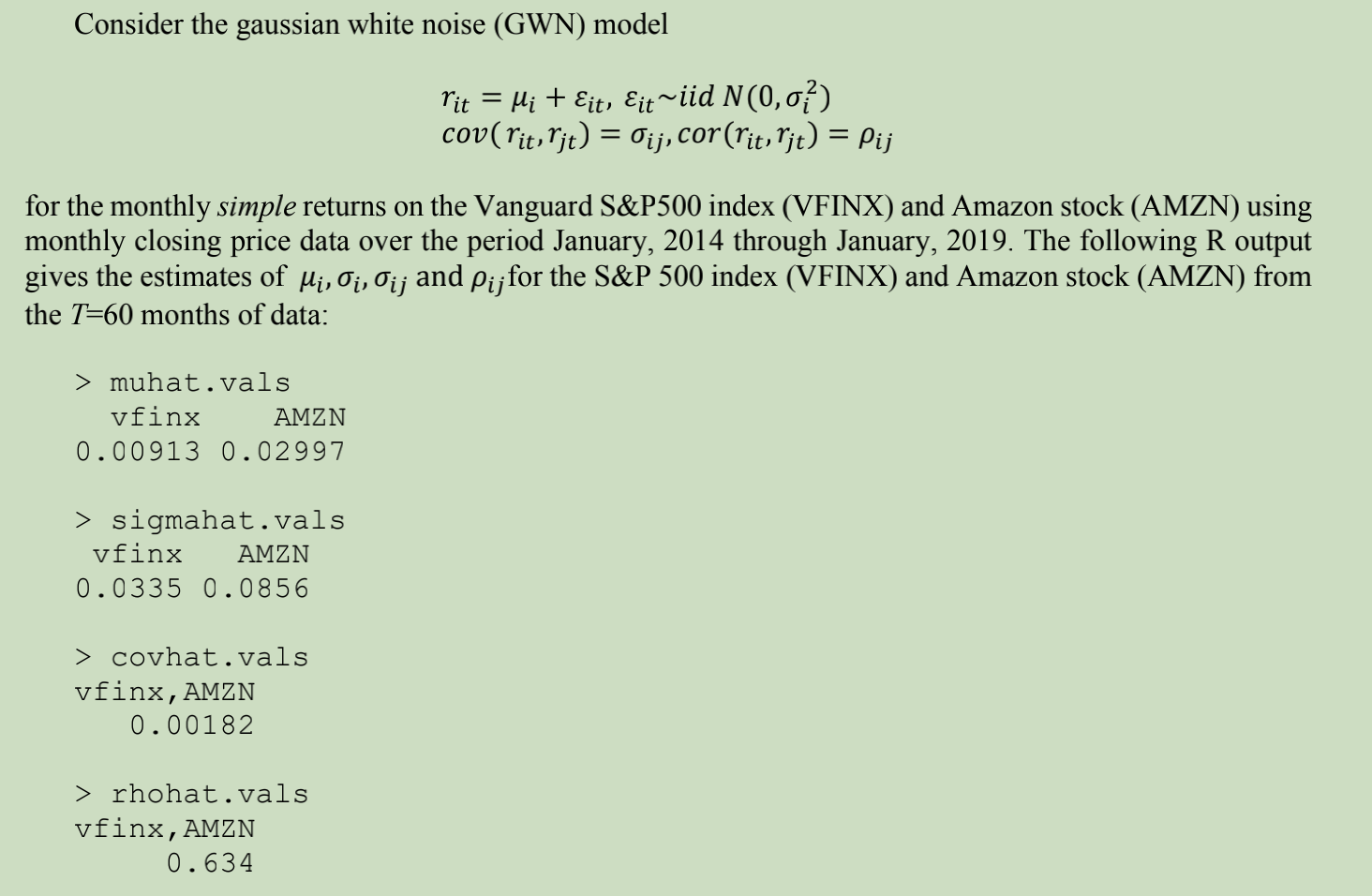
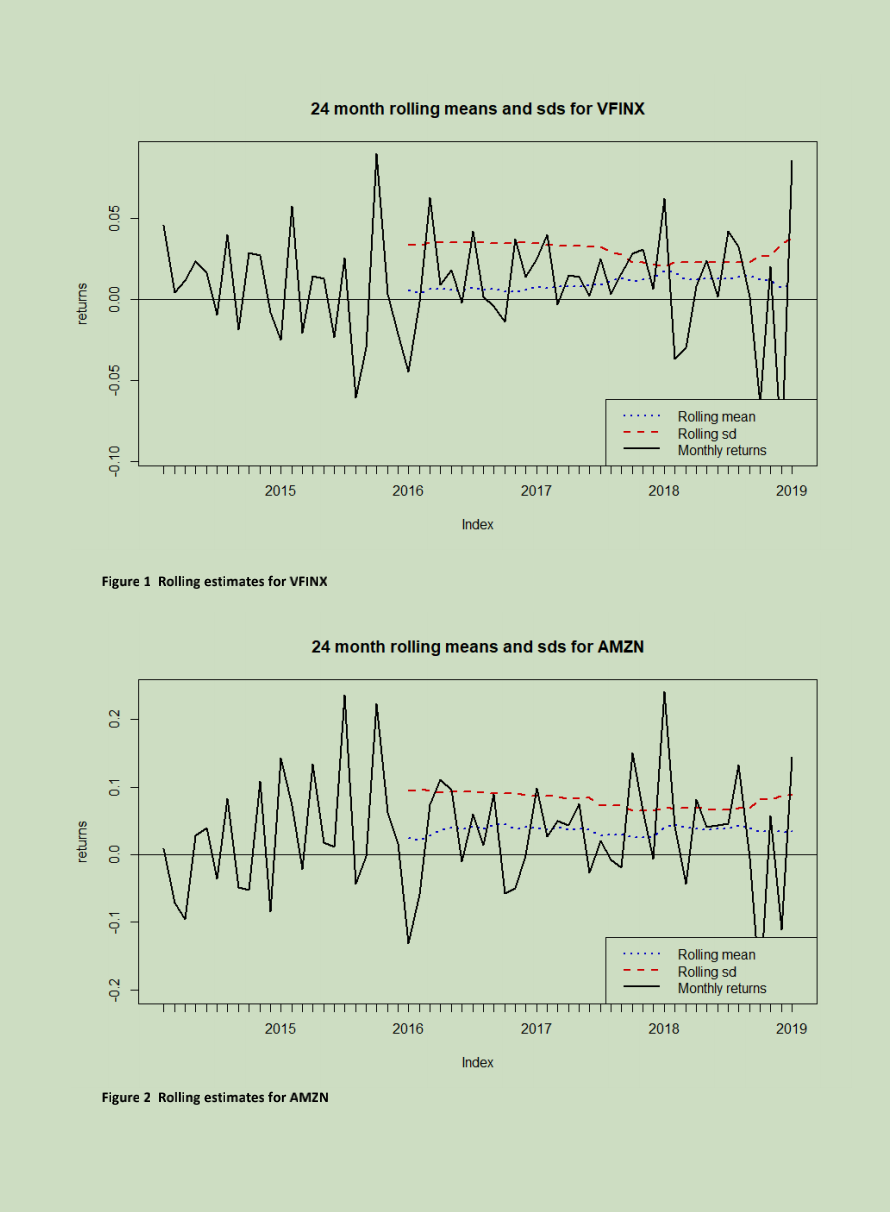
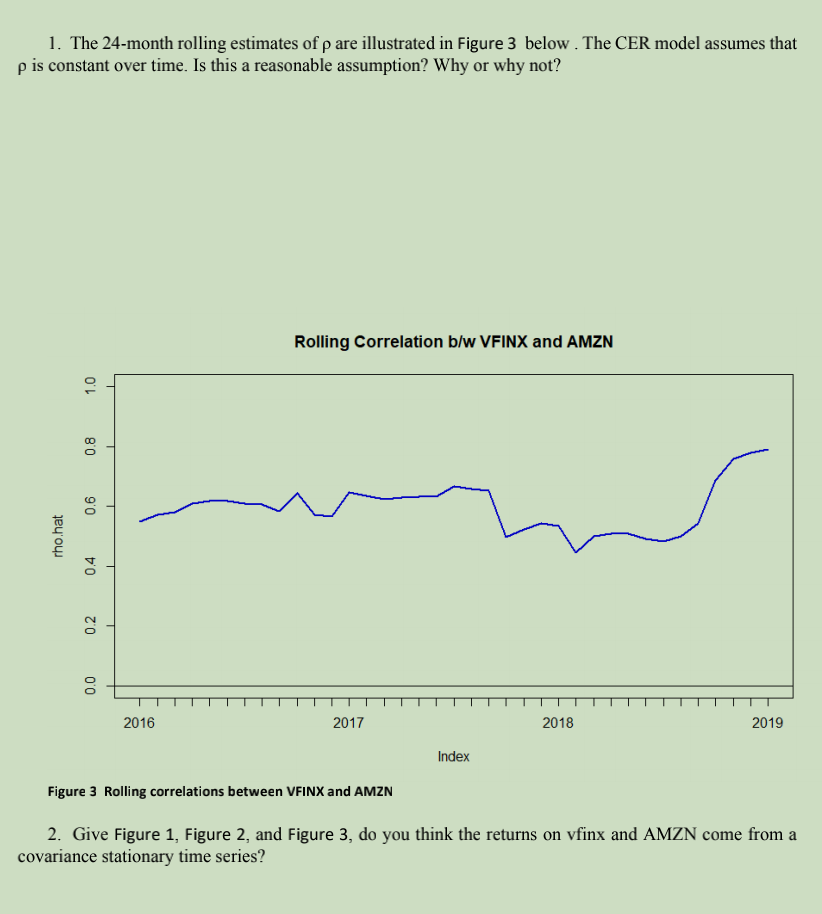
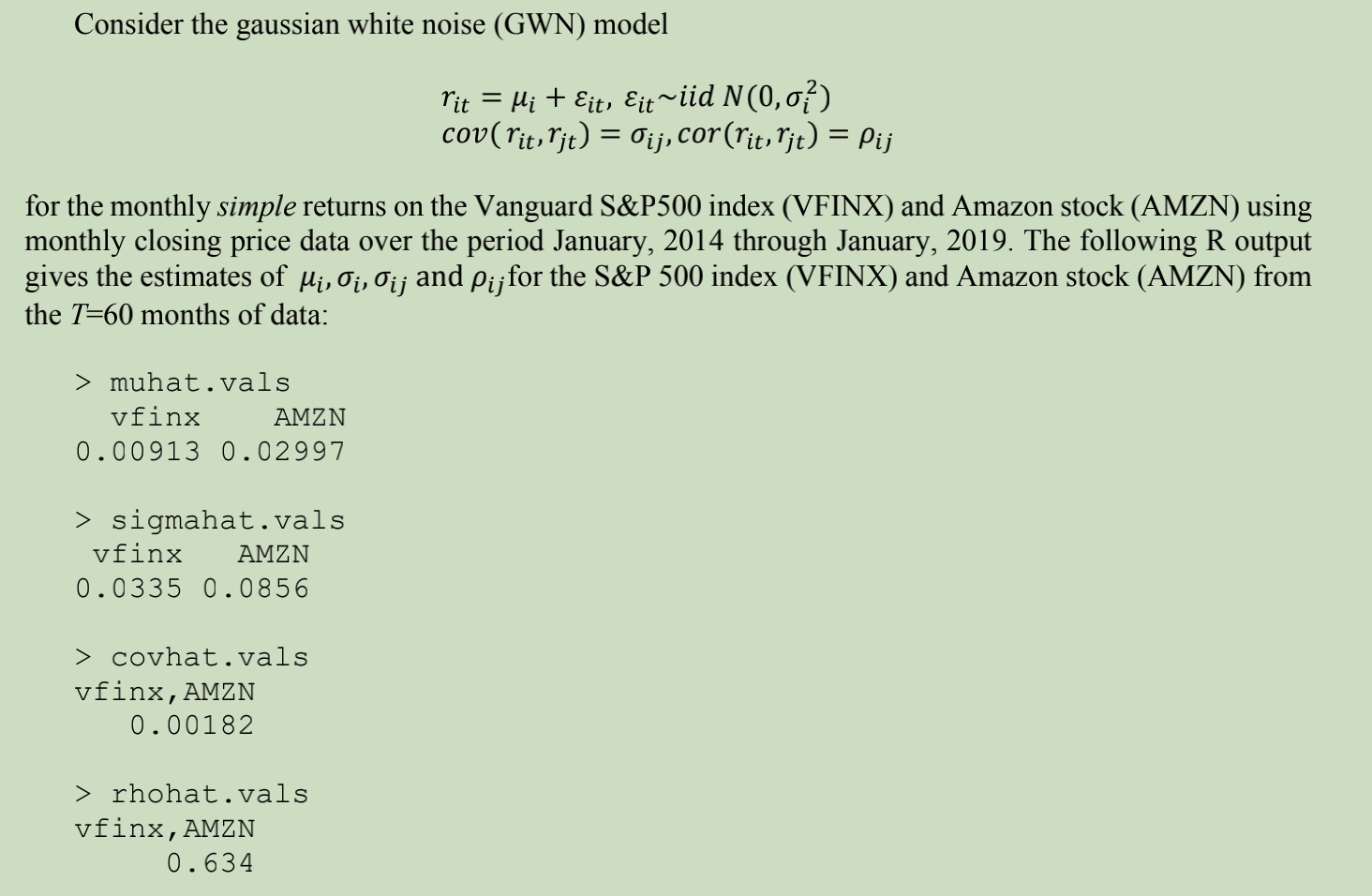
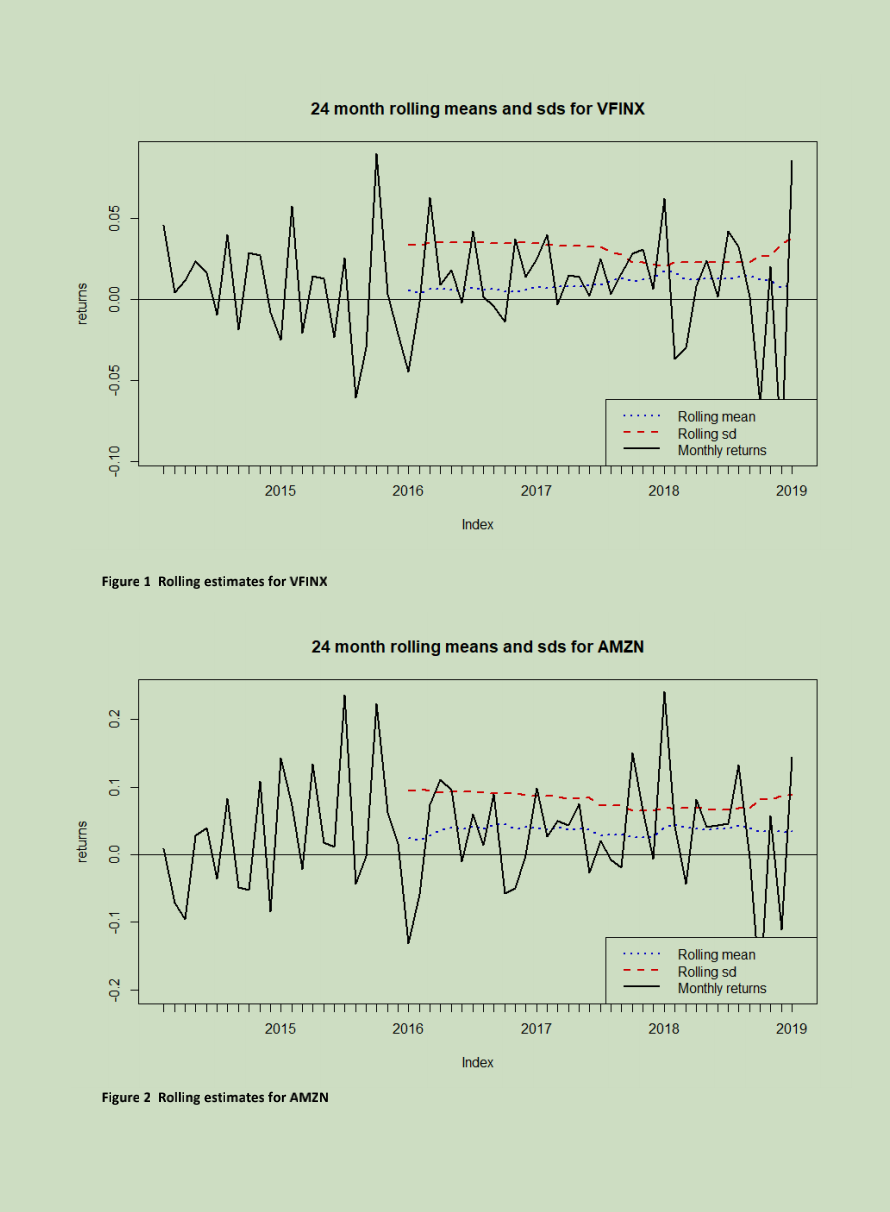
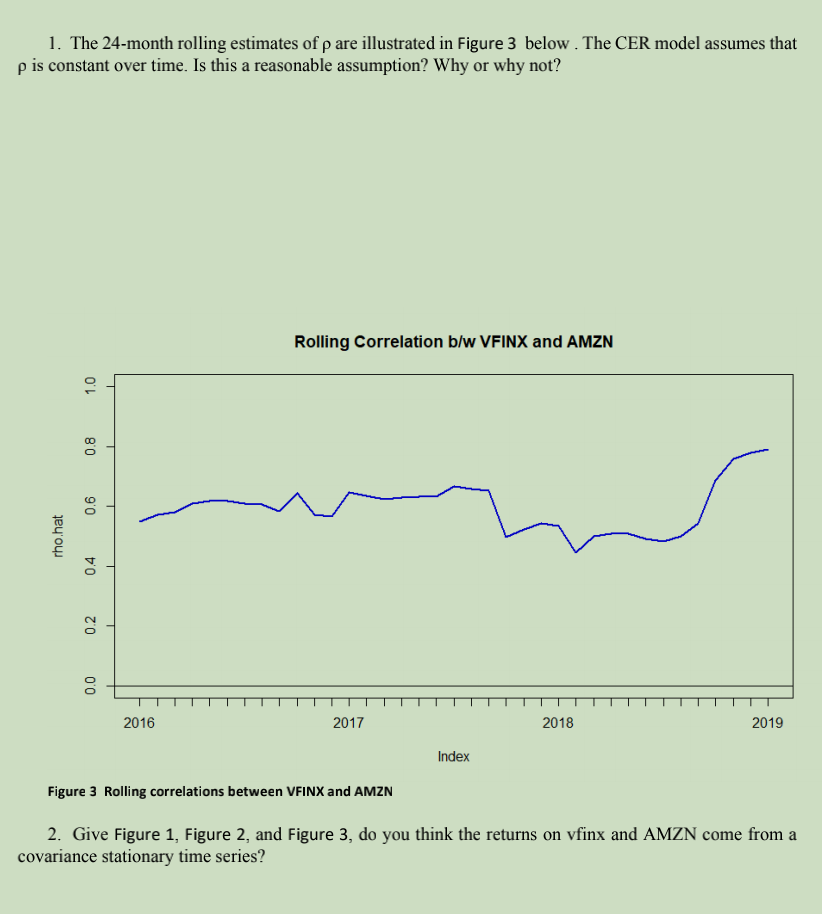
Consider the gaussian white noise (GWN) model "it = Mi + Eit, Eit~iid N(0, o?) cov(rit, rit) = bij, cor(rit, rit) = Pij for the monthly simple returns on the Vanguard S&P500 index (VFINX) and Amazon stock (AMZN) using monthly closing price data over the period January, 2014 through January, 2019. The following R output gives the estimates of Mi, i, ij and pij for the S&P 500 index (VFINX) and Amazon stock (AMZN) from the T=60 months of data: > muhat . vals vfinx AMZN 0 . 00913 0. 02997 > sigmahat . vals vfinx AMZN 0 . 0335 0 . 0856 > covhat . vals vfinx, AMZN 0 . 00182 > rhohat . vals vfinx, AMZN 0 . 63424 month rolling means and sds for VFINX 0.05 0.00 returns -0.05 . . . . . . Rolling mean - - - Rolling sd Monthly returns -0.10 2015 2016 2017 2018 2019 Index Figure 1 Rolling estimates for VFINX 24 month rolling means and sds for AMZN 0.2 returns . . . . . . Rolling mean Rolling sd Monthly returns -0.2 2015 2016 2017 2018 2019 Index Figure 2 Rolling estimates for AMZN1. The 24-month rolling estimates of p are illustrated in Figure 3 below . The CER model assumes that p is constant over time. Is this a reasonable assumption? Why or why not? Rolling Correlation b/w VFINX and AMZN 0.8 0.6 rho.hat 0.4 0.2 0.0 2016 2017 2018 2019 Index Figure 3 Rolling correlations between VFINX and AMZN 2. Give Figure 1, Figure 2, and Figure 3, do you think the returns on vfinx and AMZN come from a covariance stationary time series
Step by Step Solution
There are 3 Steps involved in it

Get step-by-step solutions from verified subject matter experts