



Question: Consider the tw&period model. The consumer's preferences over current and future consumption (c and cl) are: U (c, C!) : In (C) + In (cl)
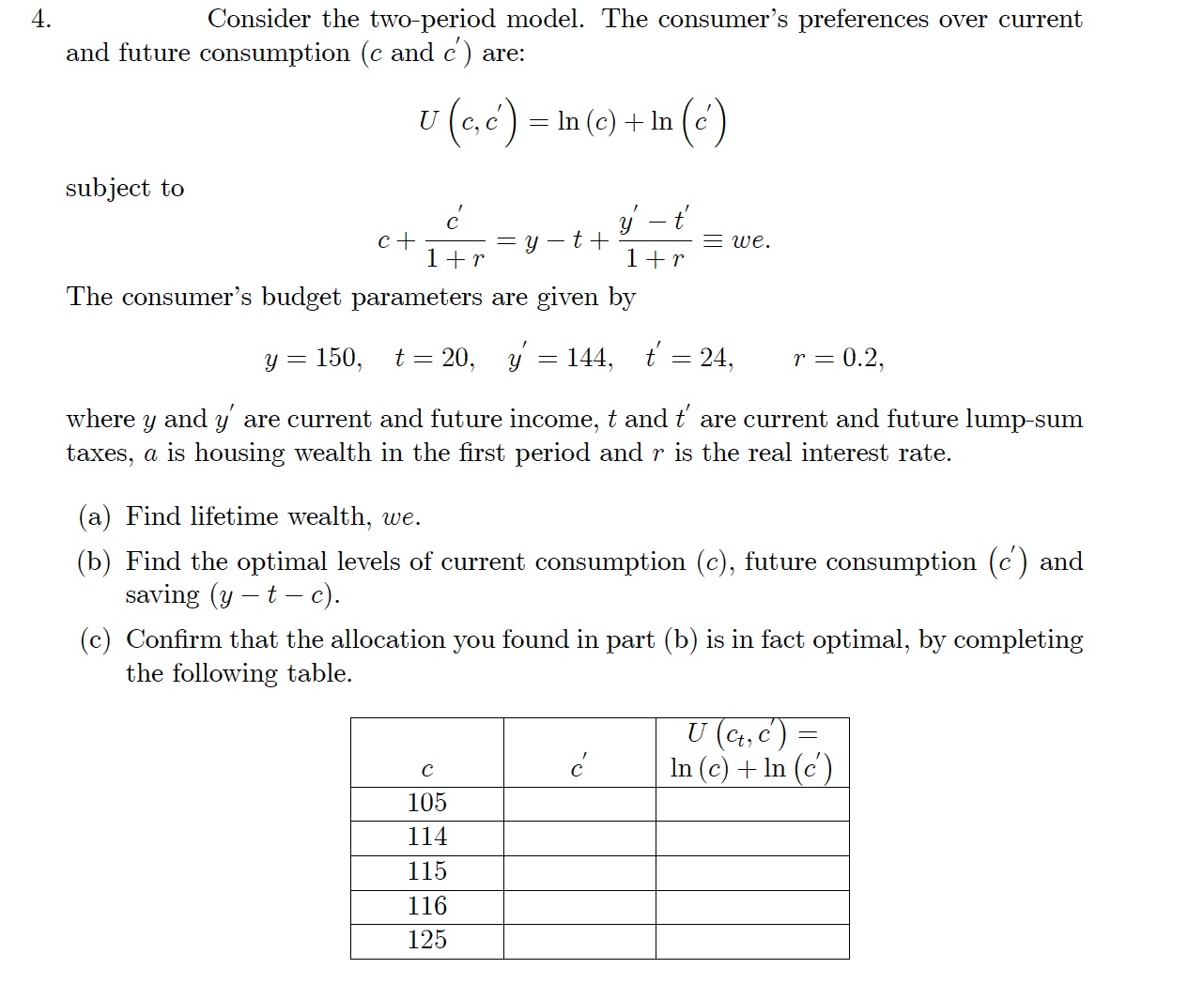
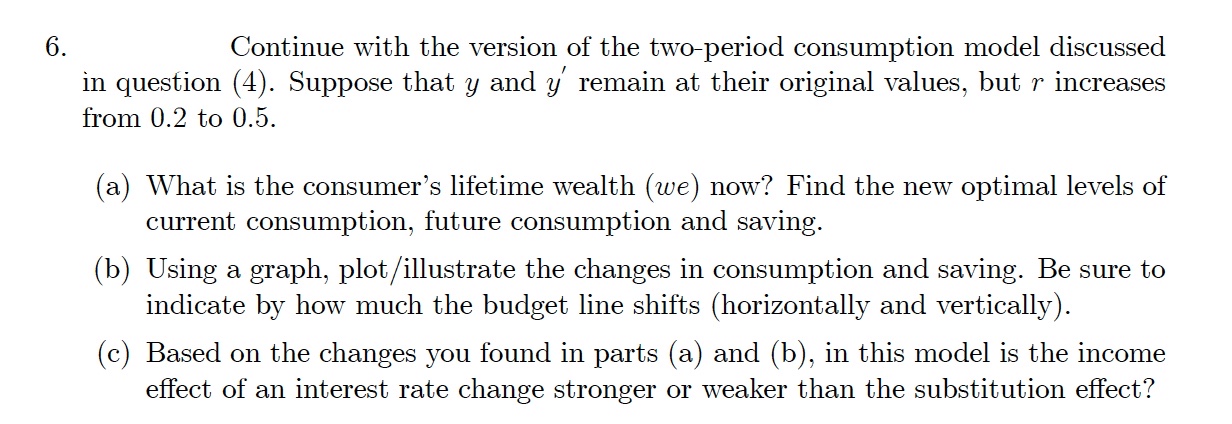
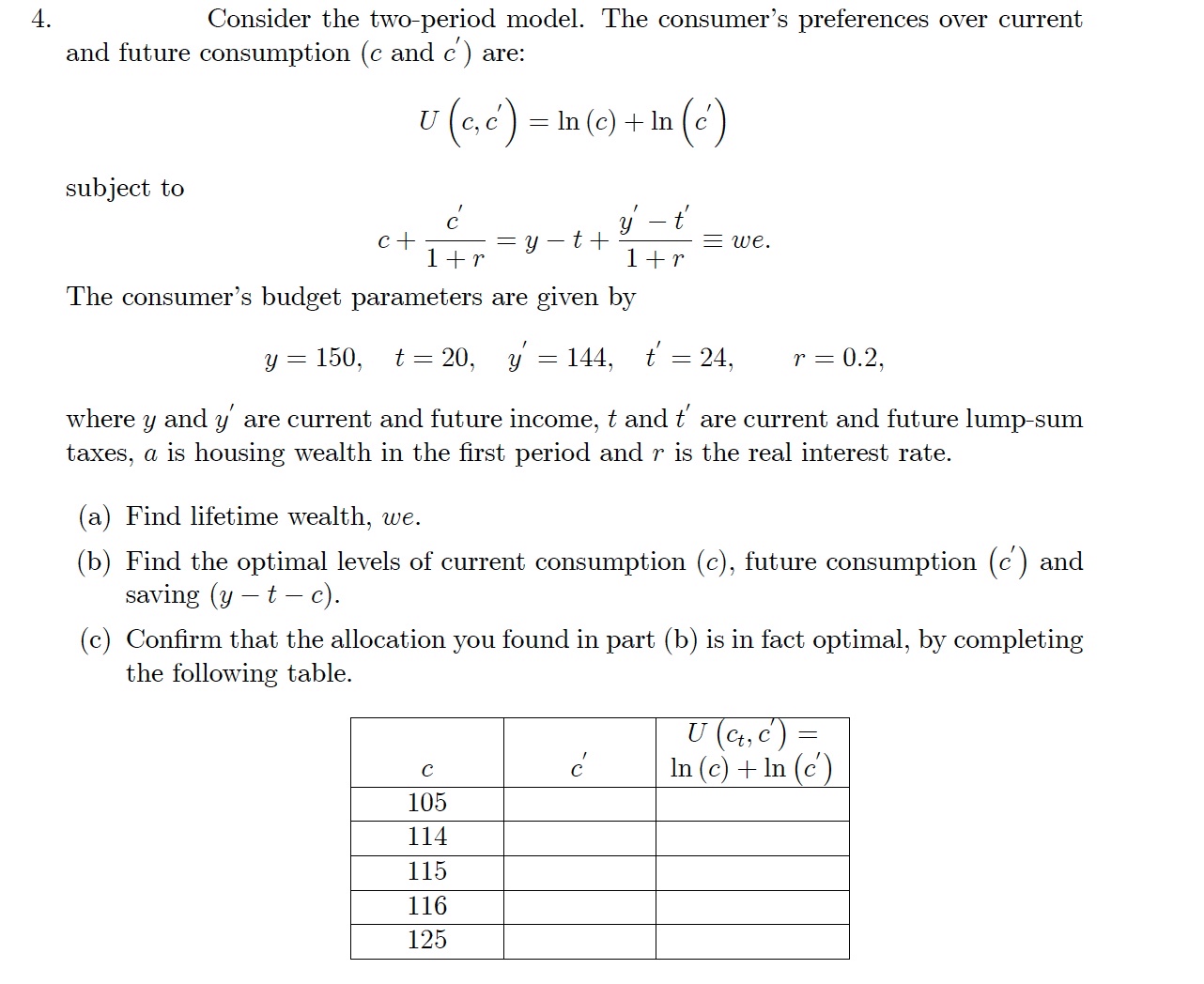
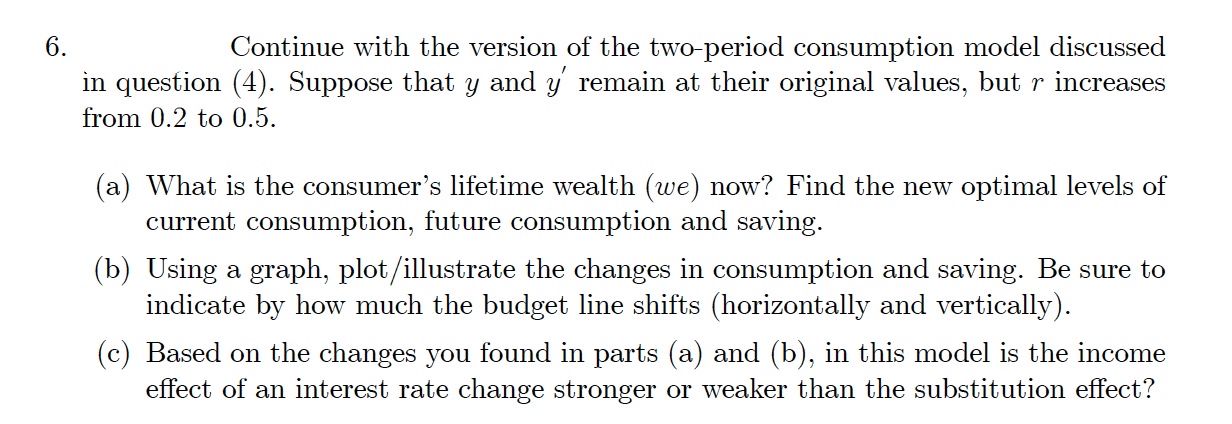
Consider the tw&period model. The consumer's preferences over current and future consumption (c and cl) are: U (c, C!) : In (C) + In (cl) subject to 4 of t I y, ti c : _ we. 1 + r y 1 + 7" The consurner's budget parameters are given by I y:150, t=20, y':144, 13:24} T:0_2 1 where y and y! are current and future income, 13 and tr are current and future lumpsurn taxes, (1 is housing wealth in the rst period and 'r is the real interest rate. (3.) Find lifetime wealth, we. (b) Find the optimal levels of current consumption ((3), future consumption (c') and saving (y t c). (0) Conrm that the allocation you found in part (b) is in fact optimal, by completing the following table. U (an a) = 0 cl In (C) + 1n (6') 105 114 115 116 125 Continue with the version of the twoeperiod consumption model discussed in question (4). Suppose that y and yI remain at their original values, but it" increases from 0.2 to 0.5. (a) What is the consumer's lifetime wealth (we) now? Find the new optimal levels of current consumption, future consumption and saving. (b) Using a graph, plot/ illustrate the changes in consumption and saving. Be sure to indicate by how much the budget line shifts (horizontally and vertically). (c) Based on the changes you found in parts (a) and (b), in this model is the income effect of an interest rate change stronger or weaker than the substitution effect
Step by Step Solution
There are 3 Steps involved in it

Get step-by-step solutions from verified subject matter experts