







Question: Consider this program: int x = 1; int p (int z) { x = x + 3; return (z * 3); } write (p
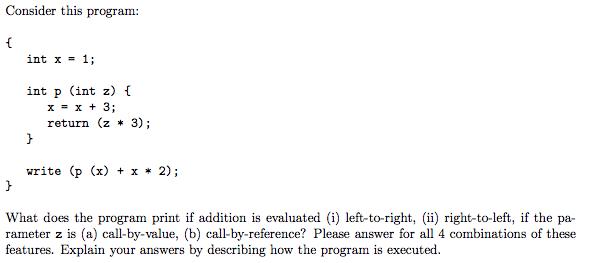
Consider this program: int x = 1; int p (int z) { x = x + 3; return (z * 3); } write (p (x) + x * 2); } What does the program print if addition is evaluated (i) left-to-right, (ii) right-to-left, if the pa- rameter z is (a) call-by-value, (b) call-by-reference? Please answer for all 4 combinations of these features. Explain your answers by describing how the program is executed.
Step by Step Solution
There are 3 Steps involved in it
1 Expert Approved Answer
Step: 1 Unlock

Question Has Been Solved by an Expert!
Get step-by-step solutions from verified subject matter experts
Step: 2 Unlock
Step: 3 Unlock
 Study Help