







Question: Consider two stocks, A and B, where A is a large cap with market capitalization of $100 billion, and B is a small cap
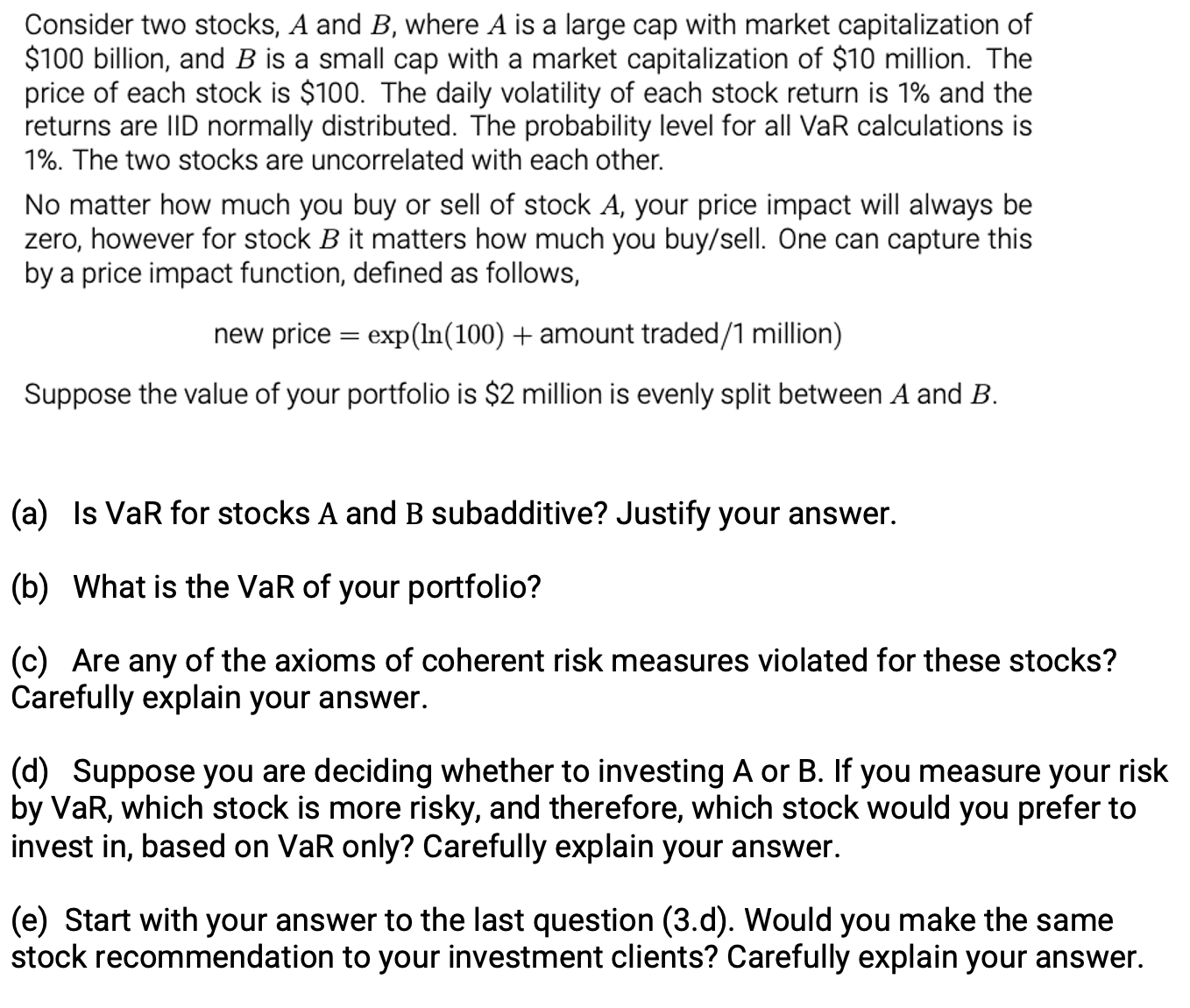
Consider two stocks, A and B, where A is a large cap with market capitalization of $100 billion, and B is a small cap with a market capitalization of $10 million. The price of each stock is $100. The daily volatility of each stock return is 1% and the returns are IID normally distributed. The probability level for all VaR calculations is 1%. The two stocks are uncorrelated with each other. No matter how much you buy or sell of stock A, your price impact will always be zero, however for stock B it matters how much you buy/sell. One can capture this by a price impact function, defined as follows, new price = exp(In(100) + amount traded/1 million) Suppose the value of your portfolio is $2 million is evenly split between A and B. (a) Is VaR for stocks A and B subadditive? Justify your answer. (b) What is the VaR of your portfolio? (c) Are any of the axioms of coherent risk measures violated for these stocks? Carefully explain your answer. (d) Suppose you are deciding whether to investing A or B. If you measure your risk by VaR, which stock is more risky, and therefore, which stock would you prefer to invest in, based on VaR only? Carefully explain your answer. (e) Start with your answer to the last question (3.d). Would you make the same stock recommendation to your investment clients? Carefully explain your answer.
Step by Step Solution
There are 3 Steps involved in it

Get step-by-step solutions from verified subject matter experts
 Study Help