







Question: Could you please write this for me as a pdf Typed, double-spaced, 12-point font & 1-inch margins around the paper also make me a cover
Could you please write this for me as a pdf Typed, double-spaced, 12-point font & 1-inch margins around the paper also make me a cover page write and send it to me my email is
c a t a d a m s 184 @ g m a i l . c o m
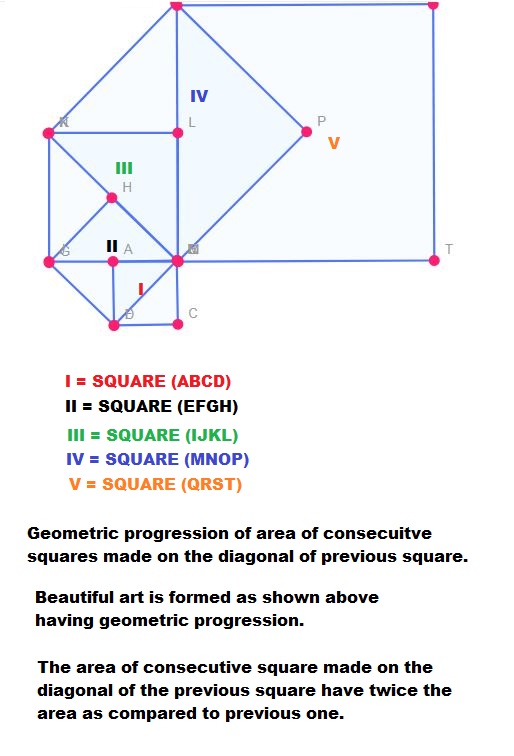
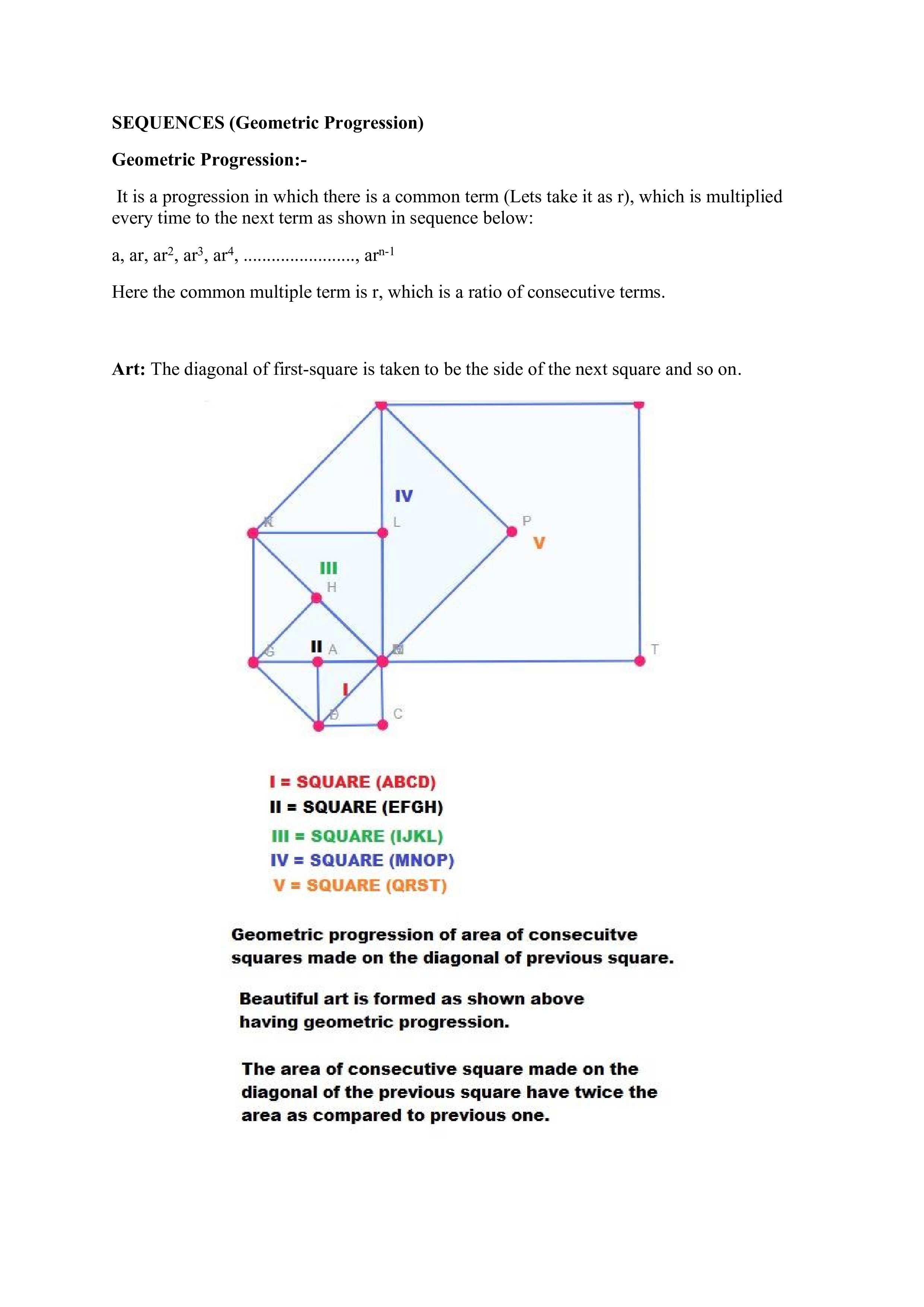
1. Introduction: (a) The art is chosen due to simple mathematical operation on the diagonal of square, which acts as a hypotenuse of the two triangles formed after dividing square into two equal halves. As we progress and making squares of the side taken to be diagonal of previous square, a very beautiful art will formed. (b) The project is come in mind when solving maths equation based on Pythagorean Theorem. When I calculate the area of the square using its diagonal then I find it interesting fact that area of square is side squared but half of the diagonal squared. This clicked my mind to create an artistic project on this unique relation. (c) The inspiration is taken from the Google wallpaper. When I changed my wallpaper of my mobile phone then I find an image similar to the shown above and it instantly connects my maths skill with wallpaper. (d) The future relevance of the above artistic math is creating architectural design. We can use this pattern design in making furniture also to make it more hard and durable. It is also used in constructing building design. 2. Methodology: (a) (1) The steps were first make a square then make another square having side equal to the length of the diagonal of the first square and making such squares and arrange them as shown in the above diagram. (a) (ii) The thinking was to make an art in which any sequence is should be there for mathematical operation. (b) The calculations performed by applying Pythagorean Theorem on the diagonal of first smallest square of side a and b, which is the side of next square made on the diagonal of smallest square. 3. Results: Option (b) (1): By altering how architectural patterns and design are used, the outcome affects the community. The design standards of community also increase. (i1) Yes, I am very much surprised by seeing the simple mathematical operation hidden in the geometrical progression art. It helps me understanding nature better and how nature uses mathematics in designing and making stunning flower patterns. (ii1) My way of thinking changed as now I will see the mathematical operation and physical laws of increasing the efficiency hidden in the natural real-world situations. Example: The patterns on the leaves to give it more strength and flexibility. 4. Conclusion: (a) This project ignites my curiosity on the design pattern rather on the colour used in an art. Thus, it may lead my decision to pursue career in architecture. (b) This project connects my two sides of my brain. It is like pouring maths in the colours of an art. Hence it blows my mind and connects math and art in a very sequential manner/ pattern. (c) The benefits are changing of my way of thinking and seeing an art. Now I am able to see patterns, mathematical operations everywhere in nature since nature itself an art. \fSEQUENCES (Geometric Progression) Geometric Progression:- It is a progression in which there is a common term (Lets take it as r), which is multiplied every time to the next term as shown in sequence below: a, ar, ar, ar', art, ....... ......, arn- Here the common multiple term is r, which is a ratio of consecutive terms. Art: The diagonal of first-square is taken to be the side of the next square and so on. IV P III I = SQUARE (ABCD) I = SQUARE (EFGH) III = SQUARE (IJKL) IV = SQUARE (MNOP) V = SQUARE (QRST) Geometric progression of area of consecuitve squares made on the diagonal of previous square. Beautiful art is formed as shown above having geometric progression. The area of consecutive square made on the diagonal of the previous square have twice the area as compared to previous one.SEQUENCES (Geometric Progression) Geometric Progression:- It is a progression in which there is a common term (Lets take it as r), which is multiplied every time to the next term as shown in sequence below: a, ar, ar, ar', art, ....... ......, arn- Here the common multiple term is r, which is a ratio of consecutive terms. Art: The diagonal of first-square is taken to be the side of the next square and so on. IV P III I = SQUARE (ABCD) I = SQUARE (EFGH) III = SQUARE (IJKL) IV = SQUARE (MNOP) V = SQUARE (QRST) Geometric progression of area of consecuitve squares made on the diagonal of previous square. Beautiful art is formed as shown above having geometric progression. The area of consecutive square made on the diagonal of the previous square have twice the area as compared to previous one
Step by Step Solution
There are 3 Steps involved in it

Get step-by-step solutions from verified subject matter experts
 Study Help