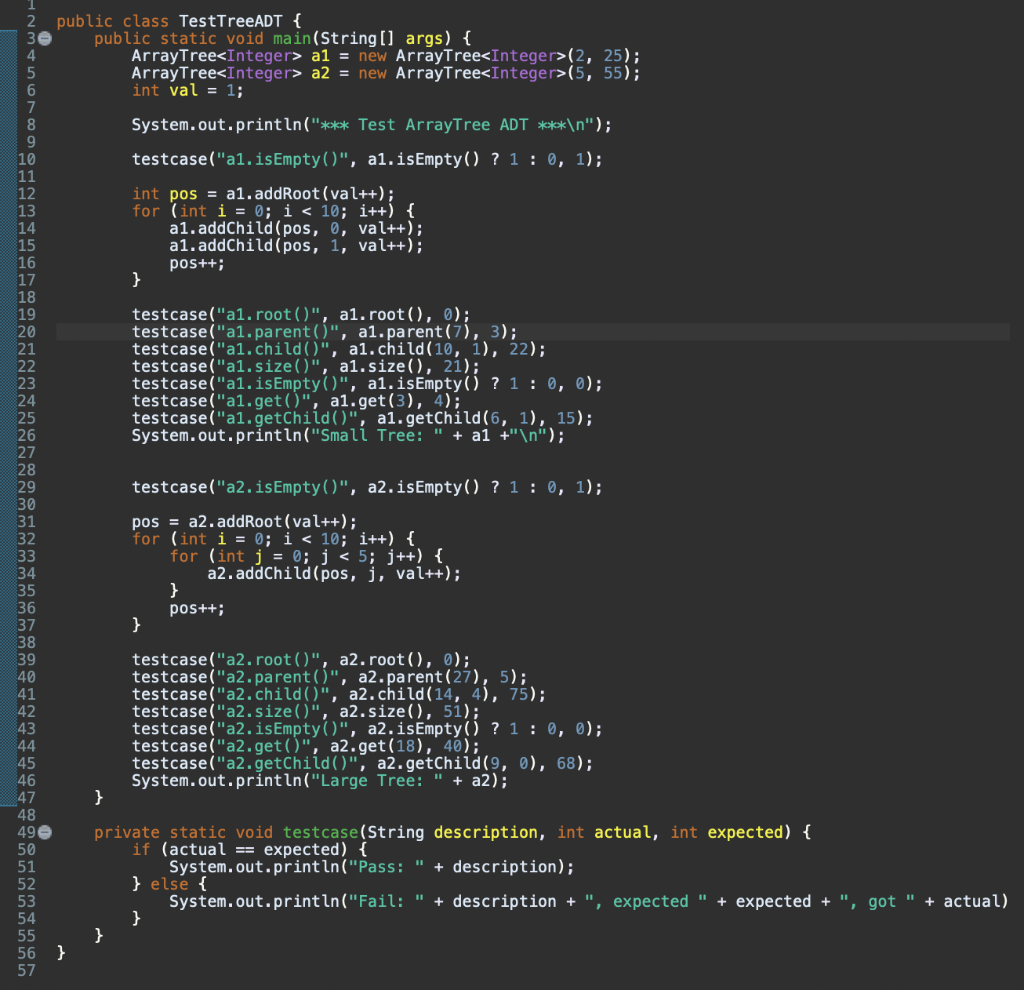
Question: Develop the TreeADT as an array-based concrete implementation. Create the Array-based Tree ADT, Run it with TestTreeADT.java to ensure it works. There is a UML
Develop the TreeADT as an array-based concrete implementation. Create the Array-based Tree ADT, Run it with TestTreeADT.java to ensure it works.
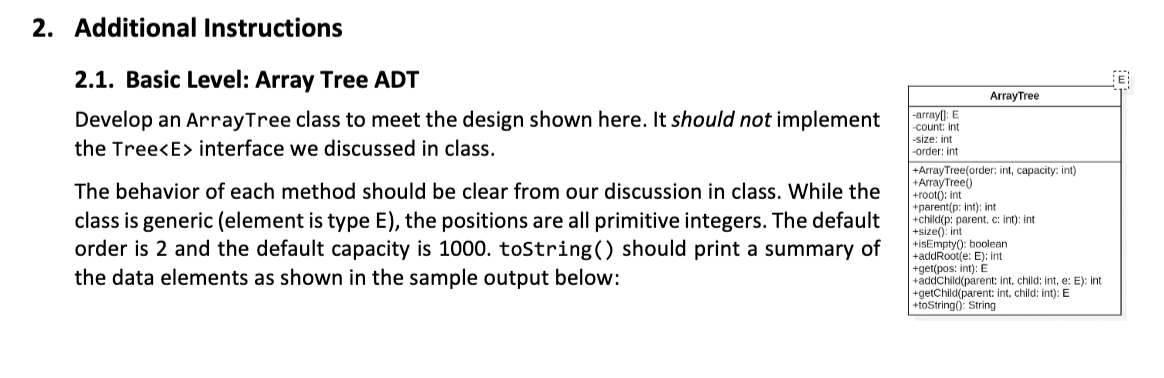
There is a UML diagram of the class you need to create on the bottom of the first page. Start by creating that empty class (no code) in Eclipse. Identified are all four of the instance attributes the class will need.
Do the constructor next. The number one job of a constructor is to initialize its instance attributes.
Then start by filling in the code for the simple methods: root, size, isEmpty, addRoot, get.
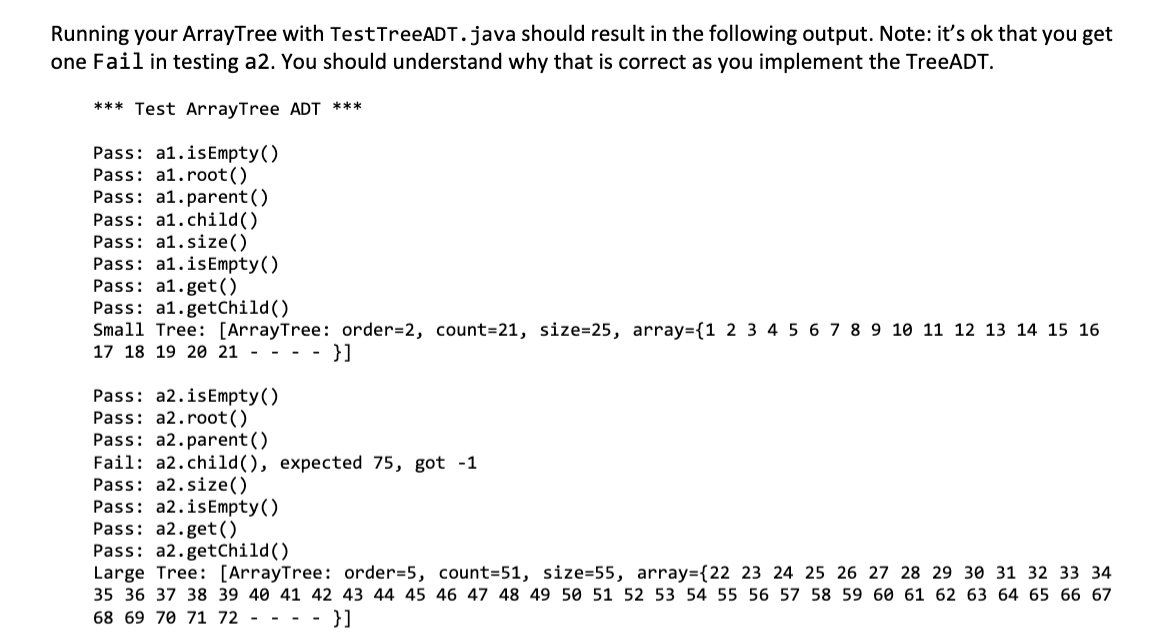
Finally, fill out the rest of the methods and test it against the TestTreeADT.java code.
TestTreeADT:
2. Additional Instructions 2.1. Basic Level: Array Tree ADT Develop an ArrayTree class to meet the design shown here. It should not implement the Tree interface we discussed in class. The behavior of each method should be clear from our discussion in class. While the class is generic (element is type E), the positions are all primitive integers. The default order is 2 and the default capacity is 1000. toString() should print a summary of the data elements as shown in the sample output below: ArrayTree -arrayl: E -count: int -size: int -order: int +ArrayTree(order: int, capacity: int) +ArrayTreel) +root: int +parent(p:int); int +child(p: parent, cint); int +size()int +isEmptyO:boolean +addRoot(e: E): int +get(pos: int): E addChild(parent: int child: Inte: E): int +getChildparent: int, child: int): E +toString(): String Running your ArrayTree with TestTreeADT.java should result in the following output. Note: it's ok that you get one Fail in testing a2. You should understand why that is correct as you implement the TreeADT. *** Test ArrayTree ADT *** Pass: a1.isEmpty() Pass: a1.root() Pass: a1.parent() Pass: a1.child() Pass: a1.size() Pass: a1.isEmpty() Pass: a1.get() Pass: a1.getChild() Small Tree: [ArrayTree: order=2, count=21, size=25, array={1 2 3 4 5 6 7 8 9 10 11 12 13 14 15 16 17 18 19 20 21 - --- }] Pass: a2.isEmpty() Pass: a2. root() Pass: a2.parent() Fail: a2.child(), expected 75, got -1 Pass: a2.size() Pass: a2.isEmpty() Pass: a2.get() Pass: a2.getChild() Large Tree: [ArrayTree: order=5, count=51, size=55, array={22 23 24 25 26 27 28 29 30 31 32 33 34 35 36 37 38 39 40 41 42 43 44 45 46 47 48 49 50 51 52 53 54 55 56 57 58 59 60 61 62 63 64 65 66 67 68 69 70 71 72 - - - - }] public class TestTreeADT { public static void main(String[] args) { ArrayTree a1 = new ArrayTree(2, 25); ArrayTree a2 = new ArrayTree(5, 55); int val = 1; 8 9 System.out.println("*** Test ArrayTree ADT *** "); testcase("a1.isEmpty()", a1.isEmpty() ? 1 : 0, 1); int pos = a1.addRoot(val++); for (int i = 0; i interface we discussed in class. The behavior of each method should be clear from our discussion in class. While the class is generic (element is type E), the positions are all primitive integers. The default order is 2 and the default capacity is 1000. toString() should print a summary of the data elements as shown in the sample output below: ArrayTree -arrayl: E -count: int -size: int -order: int +ArrayTree(order: int, capacity: int) +ArrayTreel) +root: int +parent(p:int); int +child(p: parent, cint); int +size()int +isEmptyO:boolean +addRoot(e: E): int +get(pos: int): E addChild(parent: int child: Inte: E): int +getChildparent: int, child: int): E +toString(): String Running your ArrayTree with TestTreeADT.java should result in the following output. Note: it's ok that you get one Fail in testing a2. You should understand why that is correct as you implement the TreeADT. *** Test ArrayTree ADT *** Pass: a1.isEmpty() Pass: a1.root() Pass: a1.parent() Pass: a1.child() Pass: a1.size() Pass: a1.isEmpty() Pass: a1.get() Pass: a1.getChild() Small Tree: [ArrayTree: order=2, count=21, size=25, array={1 2 3 4 5 6 7 8 9 10 11 12 13 14 15 16 17 18 19 20 21 - --- }] Pass: a2.isEmpty() Pass: a2. root() Pass: a2.parent() Fail: a2.child(), expected 75, got -1 Pass: a2.size() Pass: a2.isEmpty() Pass: a2.get() Pass: a2.getChild() Large Tree: [ArrayTree: order=5, count=51, size=55, array={22 23 24 25 26 27 28 29 30 31 32 33 34 35 36 37 38 39 40 41 42 43 44 45 46 47 48 49 50 51 52 53 54 55 56 57 58 59 60 61 62 63 64 65 66 67 68 69 70 71 72 - - - - }] public class TestTreeADT { public static void main(String[] args) { ArrayTree a1 = new ArrayTree(2, 25); ArrayTree a2 = new ArrayTree(5, 55); int val = 1; 8 9 System.out.println("*** Test ArrayTree ADT *** "); testcase("a1.isEmpty()", a1.isEmpty() ? 1 : 0, 1); int pos = a1.addRoot(val++); for (int i = 0; i









 Study Help