







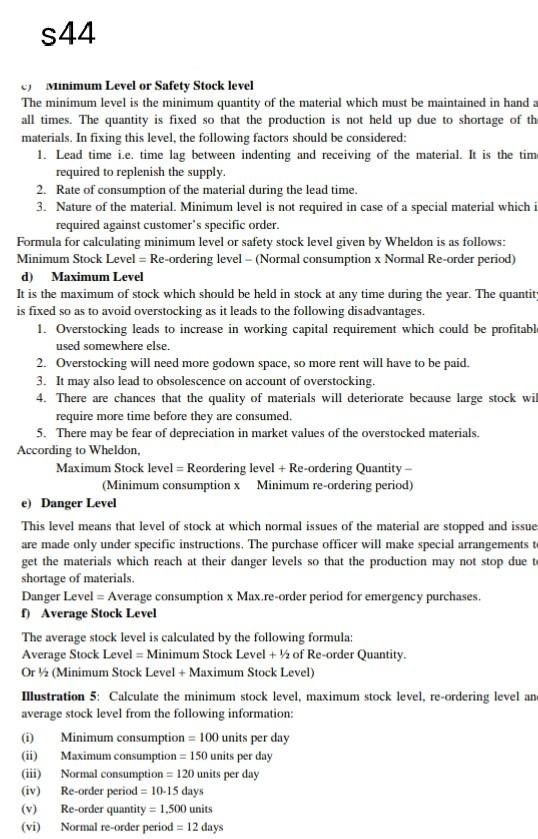
Question: do next question S44 Minimum Level or Safety Stock level The minimum level is the minimum quantity of the material which must be maintained in
do next question
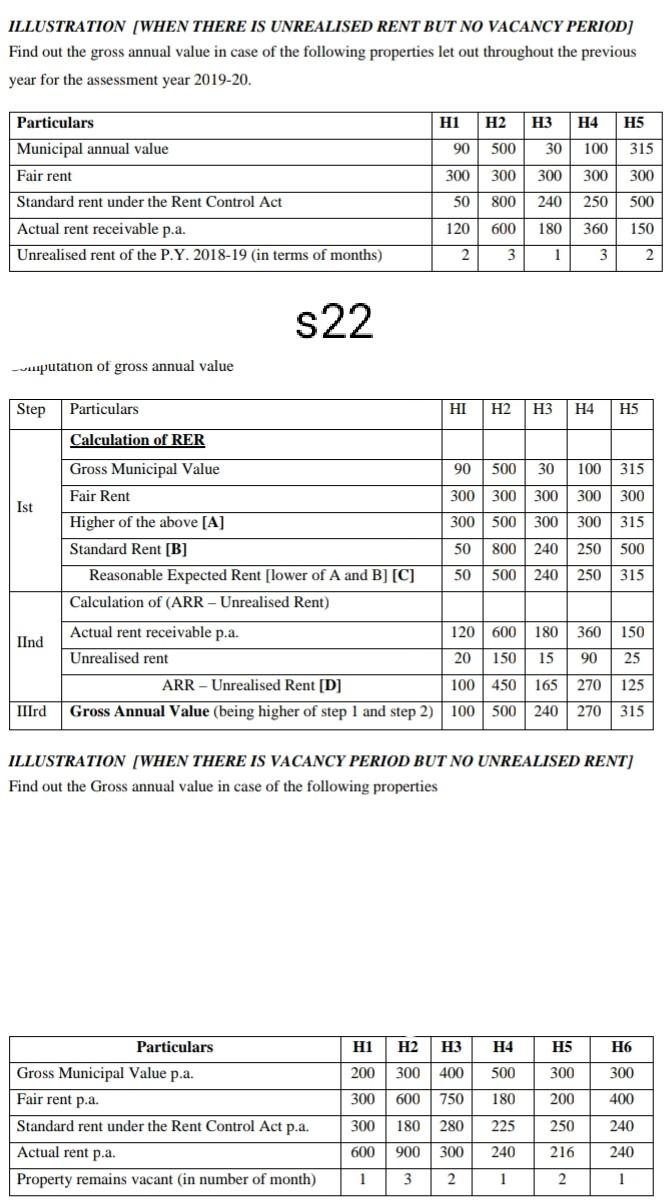
S44 Minimum Level or Safety Stock level The minimum level is the minimum quantity of the material which must be maintained in hand a all times. The quantity is fixed so that the production is not held up due to shortage of th materials. In fixing this level, the following factors should be considered: 1. Lead time i.e. time lag between indenting and receiving of the material. It is the tim required to replenish the supply. 2. Rate of consumption of the material during the lead time. 3. Nature of the material. Minimum level is not required in case of a special material which i required against customer's specific order. Formula for calculating minimum level or safety stock level given by Wheldon is as follows: Minimum Stock Level = Re-ordering level - (Normal consumption x Normal Re-order period) d) Maximum Level It is the maximum of stock which should be held in stock at any time during the year. The quantit is fixed so as to avoid overstocking as it leads to the following disadvantages. 1. Overstocking leads to increase in working capital requirement which could be profitabl used somewhere else. 2. Overstocking will need more godown space, so more rent will have to be paid. 3. It may also lead to obsolescence on account of overstocking. 4. There are chances that the quality of materials will deteriorate because large stock wil require more time before they are consumed. 5. There may be fear of depreciation in market values of the overstocked materials. According to Wheldon, Maximum Stock level = Reordering level + Re-ordering Quantity - (Minimum consumption Minimum re-ordering period) e) Danger Level This level means that level of stock at which normal issues of the material are stopped and issue are made only under specific instructions. The purchase officer will make special arrangements get the materials which reach at their danger levels so that the production may not stop duet shortage of materials. Danger Level = Average consumption x Max.re-order period for emergency purchases. Average Stock Level The average stock level is calculated by the following formula: Average Stock Level = Minimum Stock Level + 12 of Re-order Quantity. Or % (Minimum Stock Level + Maximum Stock Level) Illustration 5: Calculate the minimum stock level, maximum stock level, re-ordering level an average stock level from the following information: (1) Minimum consumption = 100 units per day (ii) Maximum consumption = 150 units per day (iii) Normal consumption = 120 units per day (iv) Re-order period = 10-15 days (v) Re-order quantity = 1,500 units (vi) Normal re-order period = 12 days ILLUSTRATION (WHEN THERE IS UNREALISED RENT BUT NO VACANCY PERIOD) Find out the gross annual value in case of the following properties let out throughout the previous year for the assessment year 2019-20. H1 H2 H3 H4 H5 Particulars Municipal annual value 90 500 30 100 315 Fair rent 300 300 300 300 300 Standard rent under the Rent Control Act 50 800 240 250 500 120 600 180 360 150 Actual rent receivable p.a. Unrealised rent of the P.Y. 2018-19 in terms of months) 2 3 1 3 2 s22 wmputation of gross annual value Step Particulars HI 12 H3 H4 H5 315 Ist 500 Calculation of RER Gross Municipal Value 90 500 30 100 Fair Rent 300 300 300 300 300 Higher of the above [A] 300 500 300 300 315 Standard Rent [B] 50 800 240 250 Reasonable Expected Rent [lower of A and B] [C] 50 500 240 250 315 Calculation of (ARR - Unrealised Rent) Actual rent receivable p.a. 120 600 180 360 150 Unrealised rent 20 | 150 15 90 25 ARR- Unrealised Rent [D] 100 450 165 270 125 Gross Annual Value (being higher of step 1 and step 2) 100 500 240 270 315 Ilnd IIIrd ILLUSTRATION (WHEN THERE IS VACANCY PERIOD BUT NO UNREALISED RENT] Find out the Gross annual value in case of the following properties Particulars H2 H3 H4 H5 H6 200 300 400 500 300 300 TT 300 600 750 180 200 Gross Municipal Value p.a. Fair rent p.a. Standard rent under the Rent Control Act p.a. Actual rent p.a. Property remains vacant (in number of month) 400 300 180 280 225 250 240 600 900 300 240 216 TTT 240 1 3 2. 1 2 1 S44 Minimum Level or Safety Stock level The minimum level is the minimum quantity of the material which must be maintained in hand a all times. The quantity is fixed so that the production is not held up due to shortage of th materials. In fixing this level, the following factors should be considered: 1. Lead time i.e. time lag between indenting and receiving of the material. It is the tim required to replenish the supply. 2. Rate of consumption of the material during the lead time. 3. Nature of the material. Minimum level is not required in case of a special material which i required against customer's specific order. Formula for calculating minimum level or safety stock level given by Wheldon is as follows: Minimum Stock Level = Re-ordering level - (Normal consumption x Normal Re-order period) d) Maximum Level It is the maximum of stock which should be held in stock at any time during the year. The quantit is fixed so as to avoid overstocking as it leads to the following disadvantages. 1. Overstocking leads to increase in working capital requirement which could be profitabl used somewhere else. 2. Overstocking will need more godown space, so more rent will have to be paid. 3. It may also lead to obsolescence on account of overstocking. 4. There are chances that the quality of materials will deteriorate because large stock wil require more time before they are consumed. 5. There may be fear of depreciation in market values of the overstocked materials. According to Wheldon, Maximum Stock level = Reordering level + Re-ordering Quantity - (Minimum consumption Minimum re-ordering period) e) Danger Level This level means that level of stock at which normal issues of the material are stopped and issue are made only under specific instructions. The purchase officer will make special arrangements get the materials which reach at their danger levels so that the production may not stop duet shortage of materials. Danger Level = Average consumption x Max.re-order period for emergency purchases. Average Stock Level The average stock level is calculated by the following formula: Average Stock Level = Minimum Stock Level + 12 of Re-order Quantity. Or % (Minimum Stock Level + Maximum Stock Level) Illustration 5: Calculate the minimum stock level, maximum stock level, re-ordering level an average stock level from the following information: (1) Minimum consumption = 100 units per day (ii) Maximum consumption = 150 units per day (iii) Normal consumption = 120 units per day (iv) Re-order period = 10-15 days (v) Re-order quantity = 1,500 units (vi) Normal re-order period = 12 days ILLUSTRATION (WHEN THERE IS UNREALISED RENT BUT NO VACANCY PERIOD) Find out the gross annual value in case of the following properties let out throughout the previous year for the assessment year 2019-20. H1 H2 H3 H4 H5 Particulars Municipal annual value 90 500 30 100 315 Fair rent 300 300 300 300 300 Standard rent under the Rent Control Act 50 800 240 250 500 120 600 180 360 150 Actual rent receivable p.a. Unrealised rent of the P.Y. 2018-19 in terms of months) 2 3 1 3 2 s22 wmputation of gross annual value Step Particulars HI 12 H3 H4 H5 315 Ist 500 Calculation of RER Gross Municipal Value 90 500 30 100 Fair Rent 300 300 300 300 300 Higher of the above [A] 300 500 300 300 315 Standard Rent [B] 50 800 240 250 Reasonable Expected Rent [lower of A and B] [C] 50 500 240 250 315 Calculation of (ARR - Unrealised Rent) Actual rent receivable p.a. 120 600 180 360 150 Unrealised rent 20 | 150 15 90 25 ARR- Unrealised Rent [D] 100 450 165 270 125 Gross Annual Value (being higher of step 1 and step 2) 100 500 240 270 315 Ilnd IIIrd ILLUSTRATION (WHEN THERE IS VACANCY PERIOD BUT NO UNREALISED RENT] Find out the Gross annual value in case of the following properties Particulars H2 H3 H4 H5 H6 200 300 400 500 300 300 TT 300 600 750 180 200 Gross Municipal Value p.a. Fair rent p.a. Standard rent under the Rent Control Act p.a. Actual rent p.a. Property remains vacant (in number of month) 400 300 180 280 225 250 240 600 900 300 240 216 TTT 240 1 3 2. 1 2 1Step by Step Solution
There are 3 Steps involved in it
1 Expert Approved Answer
Step: 1 Unlock

Question Has Been Solved by an Expert!
Get step-by-step solutions from verified subject matter experts
Step: 2 Unlock
Step: 3 Unlock
 Study Help