





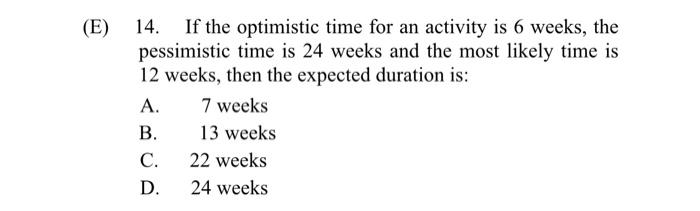
Question: (E) 14. If the optimistic time for an activity is 6 weeks, the pessimistic time is 24 weeks and the most likely time is 12
(E) 14. If the optimistic time for an activity is
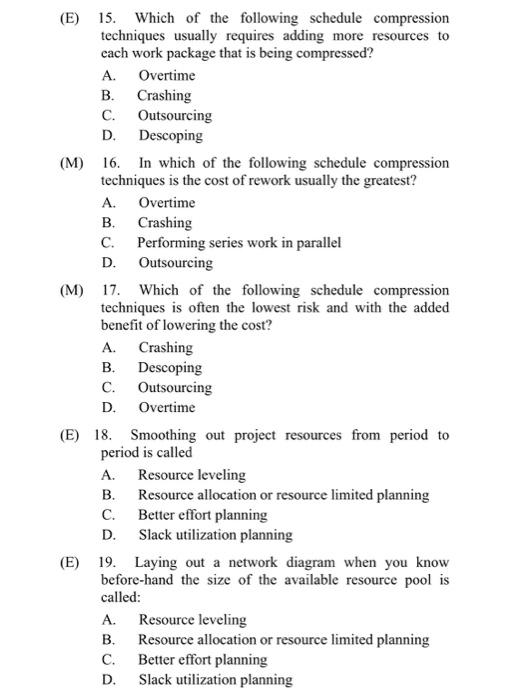
(E) 14. If the optimistic time for an activity is 6 weeks, the pessimistic time is 24 weeks and the most likely time is 12 weeks, then the expected duration is: A. 7 weeks B. 13 weeks 22 weeks D. 24 weeks C. (E) 15. Which of the following schedule compression techniques usually requires adding more resources to each work package that is being compressed? A. Overtime B. Crashing C. Outsourcing D. Descoping (M) 16. In which of the following schedule compression techniques is the cost of rework usually the greatest? A. Overtime B. Crashing C. Performing series work in parallel D. Outsourcing (M) 17. Which of the following schedule compression techniques is often the lowest risk and with the added benefit of lowering the cost? A. Crashing B. Descoping C. Outsourcing D. Overtime (E) 18. Smoothing out project resources from period to period is called A. Resource leveling B. Resource allocation or resource limited planning C. Better effort planning D. Slack utilization planning (E) 19. Laying out a network diagram when you know before-hand the size of the available resource pool is called: A. Resource leveling B. Resource allocation or resource limited planning C. Better effort planning D. Slack utilization planning

Step by Step Solution

There are 3 Steps involved in it

1 Expert Approved Answer
Step: 1 Unlock blur-text-image

Question Has Been Solved by an Expert!

Get step-by-step solutions from verified subject matter experts

Step: 2 Unlock
Step: 3 Unlock

Students Have Also Explored These Related General Management Questions!