







Question: (e) Determine whether a(t) is an increasing function. Is it positive? is it concave up or down? Use this information to sketch the function. (f)
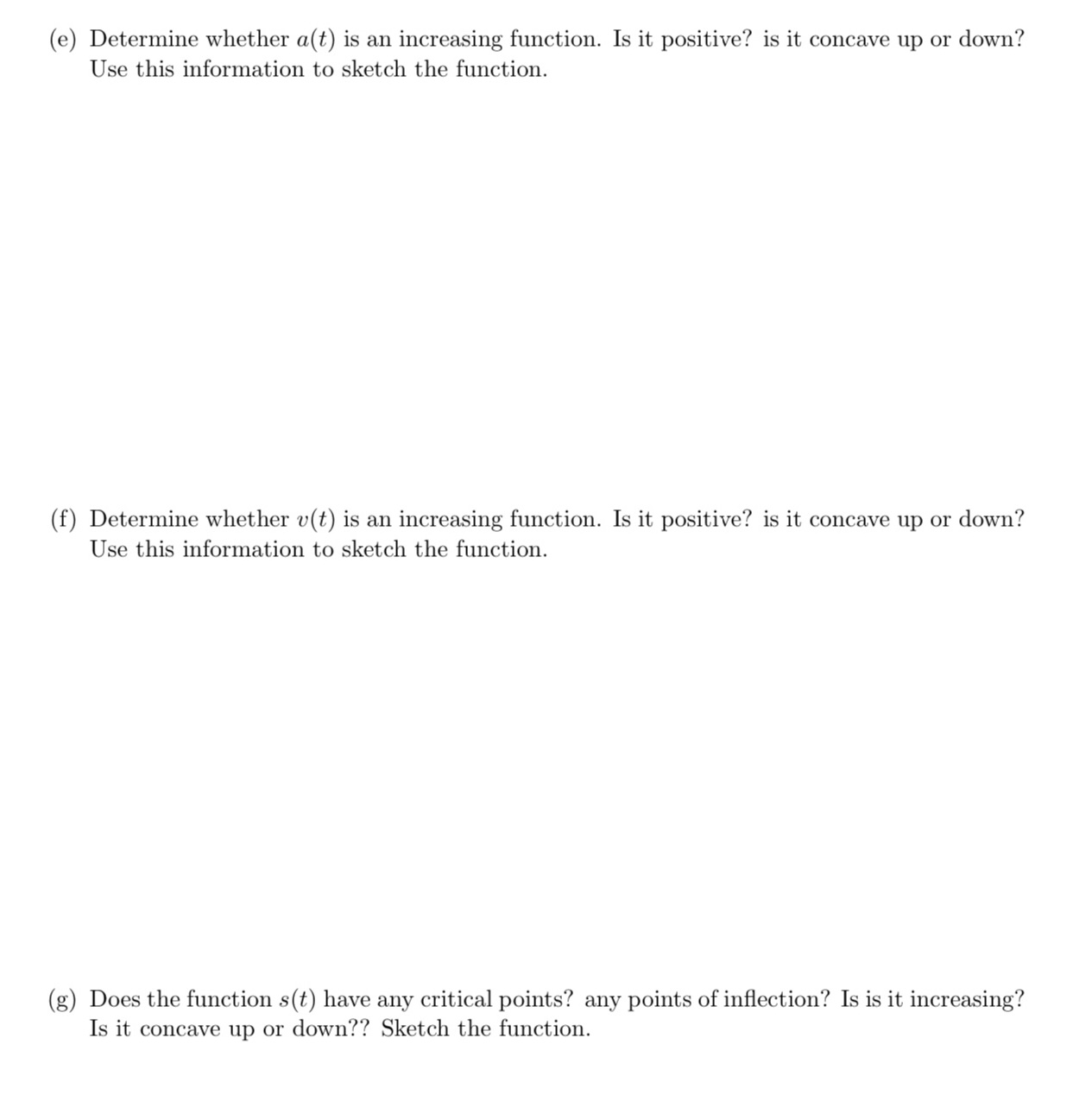
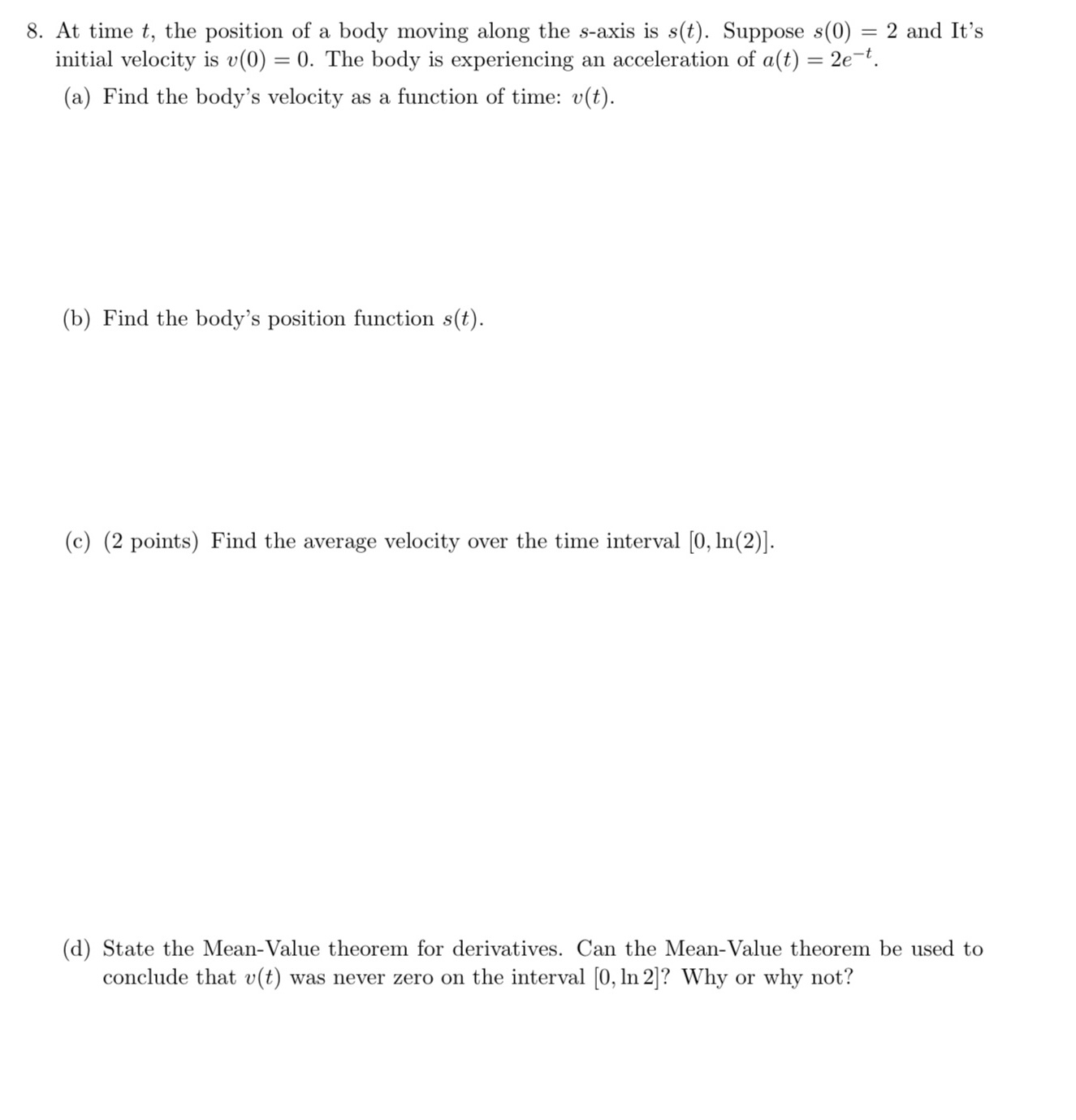
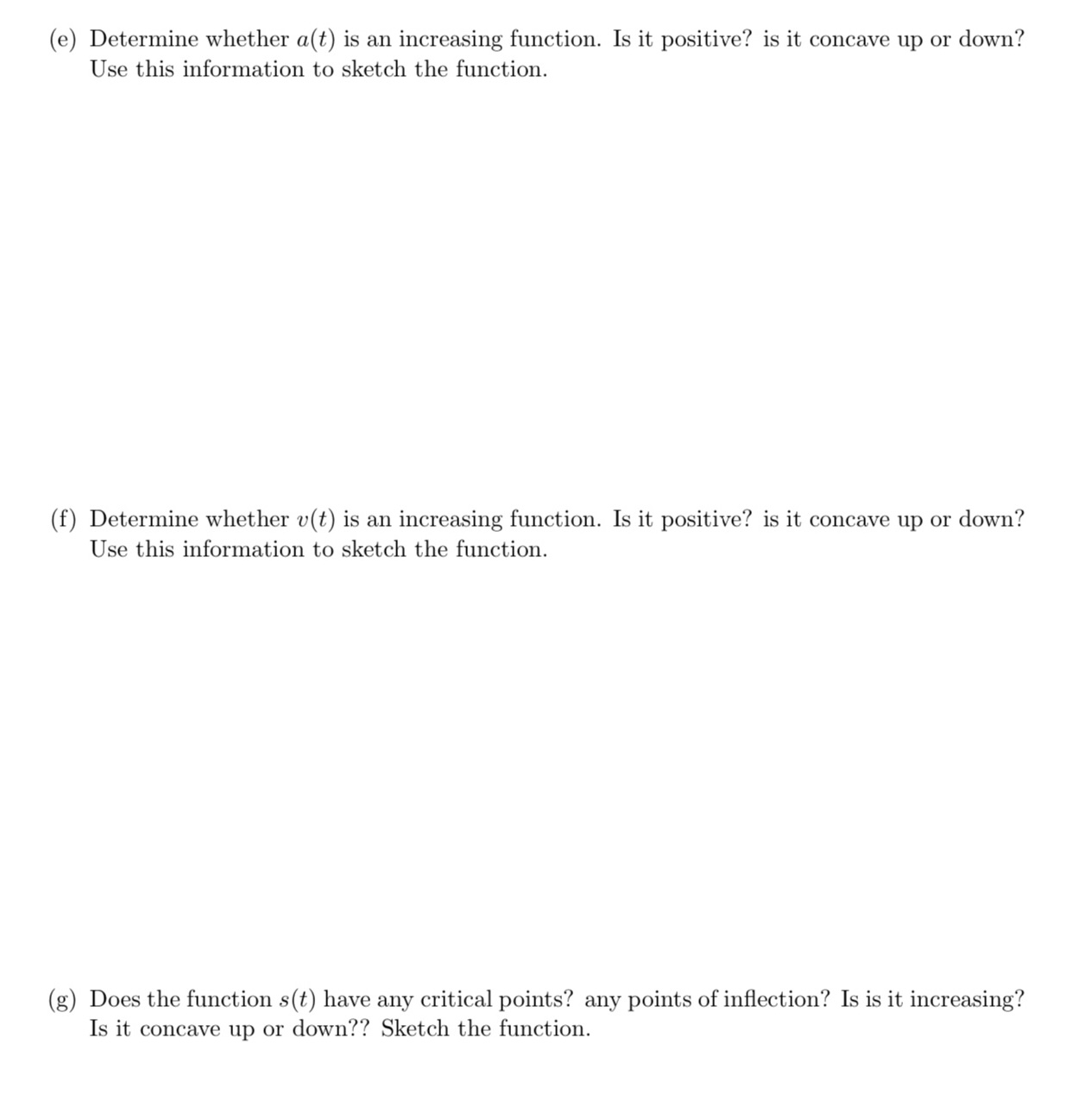
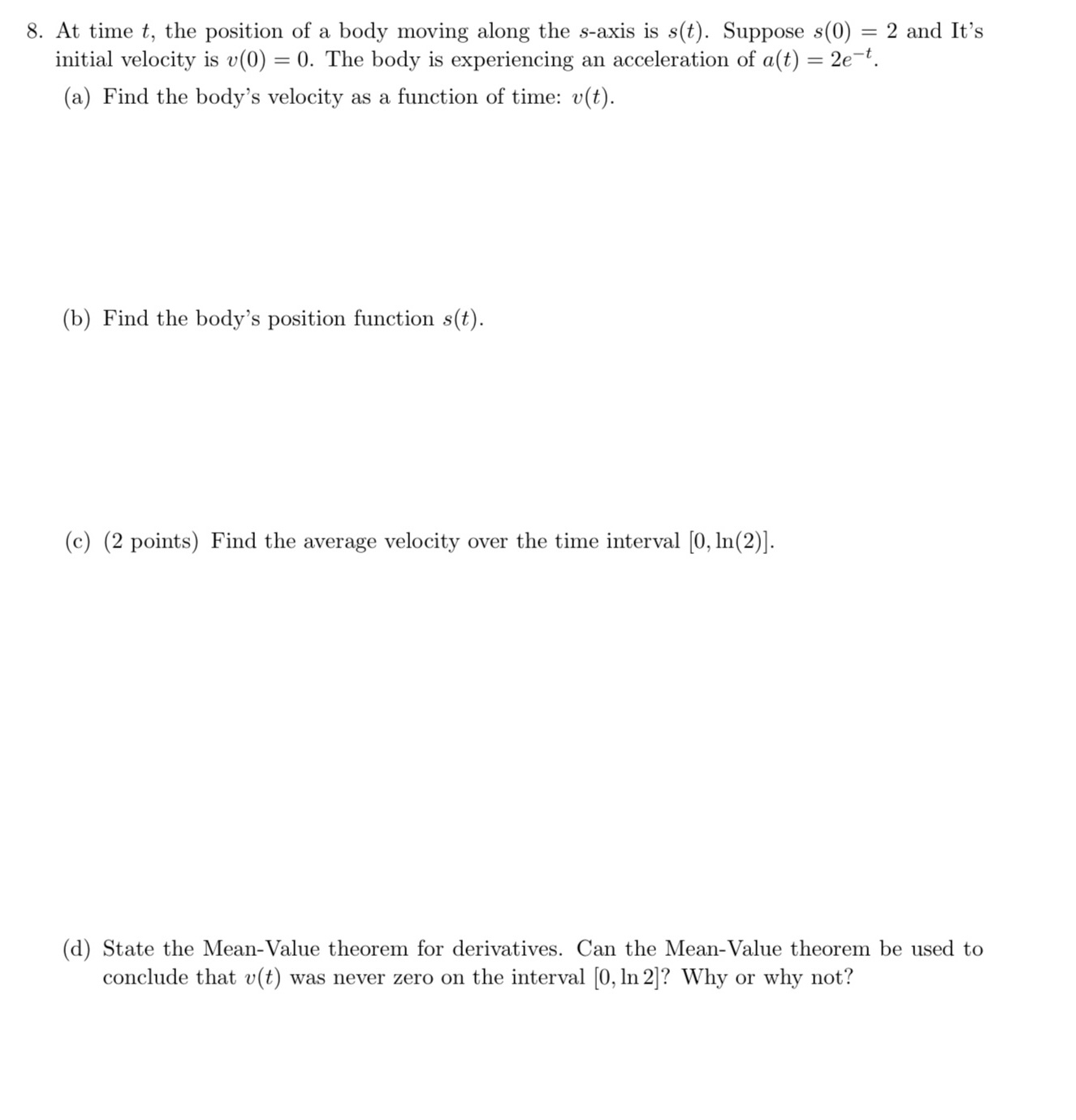
(e) Determine whether a(t) is an increasing function. Is it positive? is it concave up or down? Use this information to sketch the function. (f) Determine whether 'u(t) is an increasing function. Is it positive? is it concave up or down? Use this information to sketch the function. (g) Does the function s(t) have any critical points? any points of inection? Is is it increasing? Is it concave up or down?? Sketch the function. 8. At time t, the position of a body moving along the s-axis is 3(t). Suppose 3(0) = 2 and It's initial velocity is \"0(0) = 0. The body is experiencing an acceleration of a(t) = 2e". (a) Find the body's velocity as a function of time: v(t). (b) Find the body's position function 3(t). (c) (2 points) Find the average velocity over the time interval [0, ln(2)]. (d) State the Mean-Value theorem for derivatives. Can the Mean-Value theorem be used to conclude that v(t) was never zero on the interval [0,1112]? Why or why not
Step by Step Solution
There are 3 Steps involved in it

Get step-by-step solutions from verified subject matter experts
 Study Help