







Question: + EB A m Add Page Insert Table Chart Text Shape Media Comment B C 23. Which of the following statements is incorrect? a. If

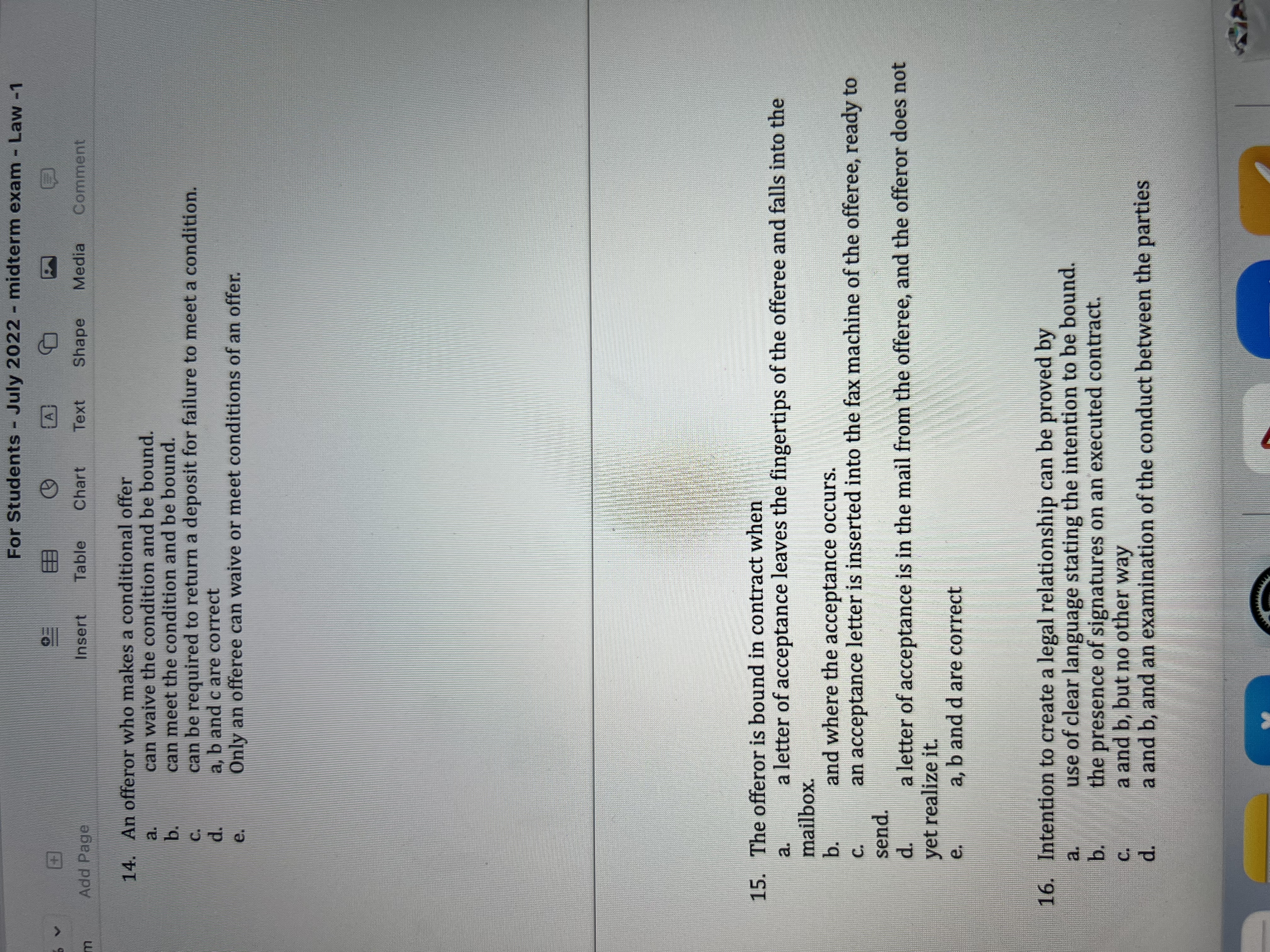
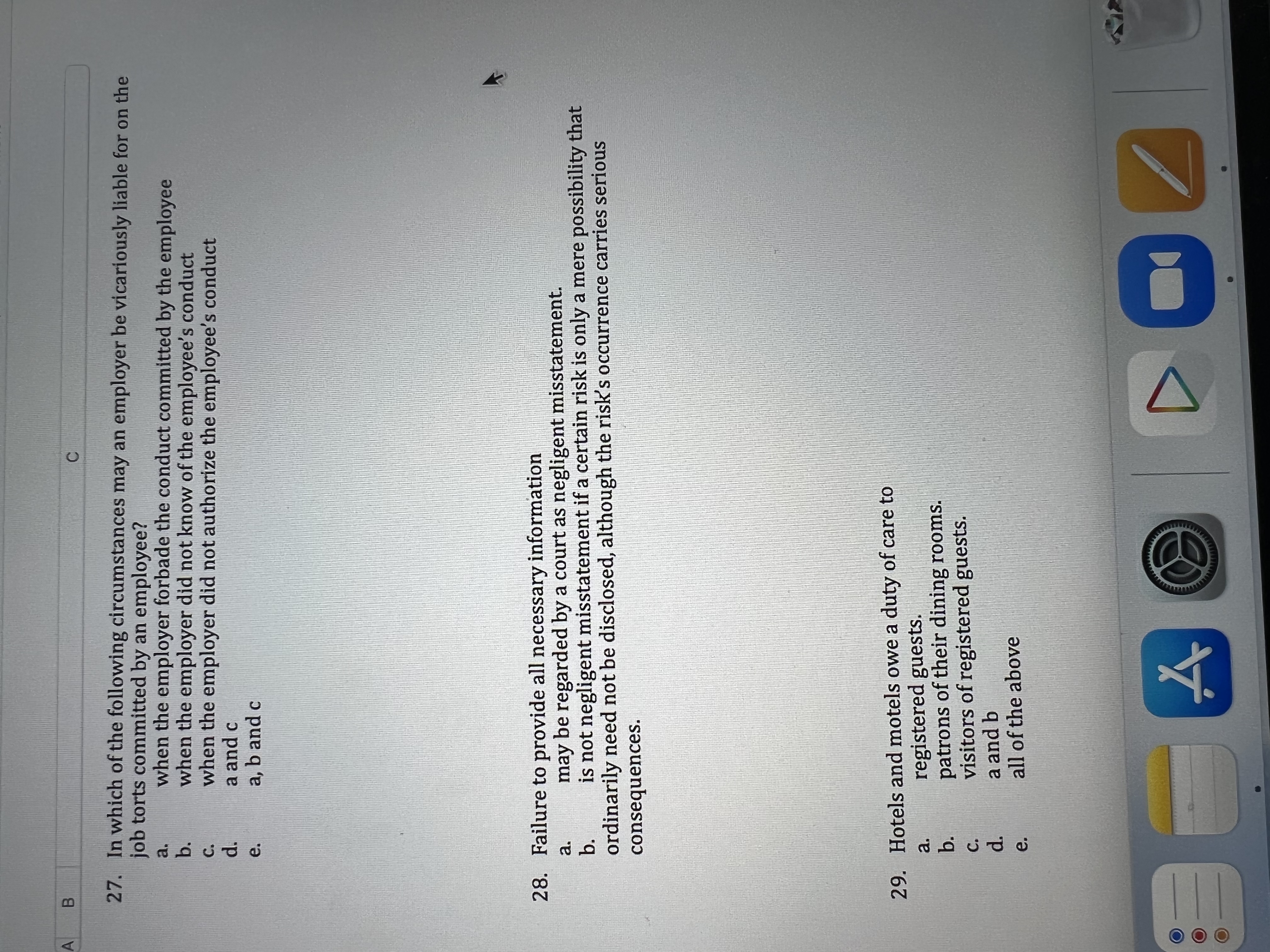


+ EB A m Add Page Insert Table Chart Text Shape Media Comment B C 23. Which of the following statements is incorrect? a. If an injury was reasonably foreseeable, the defendant will be liable for it b. If an injury was likely to occur, unless the defendant could have figured out exactly how it would occur, it will be regarded as consequence that was too remote to have been predicted. 24. In which of the following situations might the doctrine of res ipsa loquitur be applicable? a. The plaintiff was born with a weaker heart than any defendant should reasonably have been expected to anticipate. b. A plaintiff can imply from the circumstances that an injury to his foot caused by a dining room table, which fell onto the sidewalk in front of him, resulted from the negligence of either the hotel adjacent to the sidewalk, or the moving company transferring furniture into the second storey of the hotel. 25. A large quantity of dynamite was being stored in the ramshackle garage of a motel. The garage formerly housed the manager's vehicles. An explosion occurred, injuring guests. Which of the following statements is correct with respect to liability in this situation? this is a strict liability offence liability is conditional upon intention liability is conditional upon whether there was a breach of duty of care liability is conditional upon reasonable foreseeability c and d 26. Which of the following statements is incorrect? Because alcohol affects judgment, a plaintiff who is intoxicated a. may be regarded as contributorily negligent in causing his or her own injury. b. can nevertheless fully understand the nature and degree of a risk, and can therefore voluntarily assume it.For Students - July 2022 - midterm exam - Law -1 A Add Page Insert Table Chart Text Shape Media Comment 14. An offeror who makes a conditional offer a. can waive the condition and be bound. can meet the condition and be bound. can be required to return a deposit for failure to meet a condition. a, b and c are correct Only an offeree can waive or meet conditions of an offer. 15. The offeror is bound in contract when a. a letter of acceptance leaves the fingertips of the offeree and falls into the mailbox. b. and where the acceptance occurs. C. an acceptance letter is inserted into the fax machine of the offeree, ready to send d. a letter of acceptance is in the mail from the offeree, and the offeror does not yet realize it. e. a, b and d are correct 16. Intention to create a legal relationship can be proved by use of clear language stating the intention to be bound. the presence of signatures on an executed contract. a and b, but no other way a and b, and an examination of the conduct between the partiesB C 27. In which of the following circumstances may an employer be vicariously liable for on the job torts committed by an employee? a. when the employer forbade the conduct committed by the employee when the employer did not know of the employee's conduct C. when the employer did not authorize the employee's conduct d. a and c a, b and c 28. Failure to provide all necessary information a. may be regarded by a court as negligent misstatement. b. is not negligent misstatement if a certain risk is only a mere possibility that ordinarily need not be disclosed, although the risk's occurrence carries serious consequences. 29. Hotels and motels owe a duty of care to a. registered guests. patrons of their dining rooms. visitors of registered guests. a and b e . all of the above A
Step by Step Solution
There are 3 Steps involved in it

Get step-by-step solutions from verified subject matter experts
 Study Help