







Question: Evaluate how Harris has exploited the Dash opportunity. Do you think Harris has followed the right way of identifying the opportunity? Why? Explain in 2-3
Evaluate how Harris has exploited the Dash opportunity.
Do you think Harris has followed the right way of identifying the opportunity? Why? 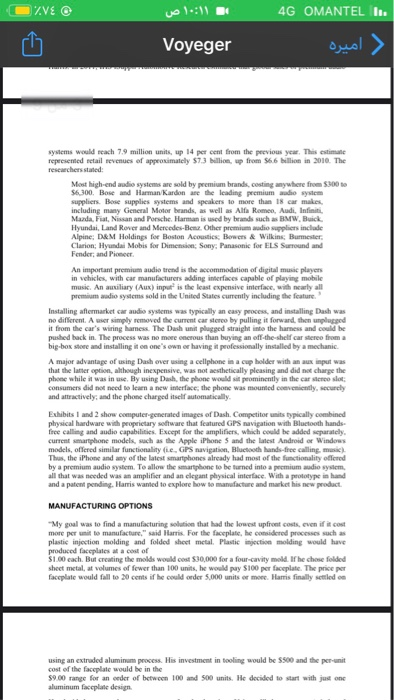
Explain in 2-3 sentences only: The geographical location of a business can increase or decrease the salariesoffered by that business
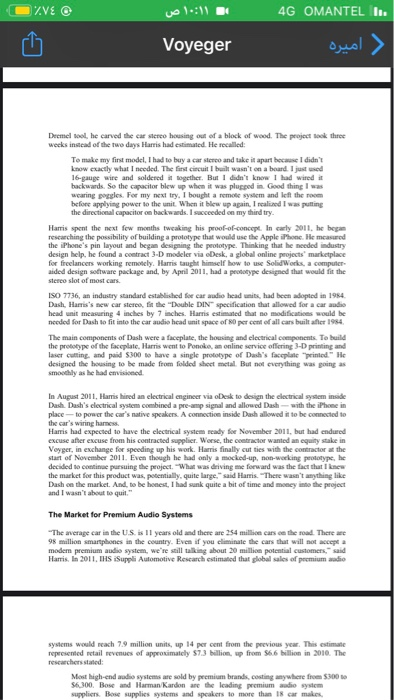
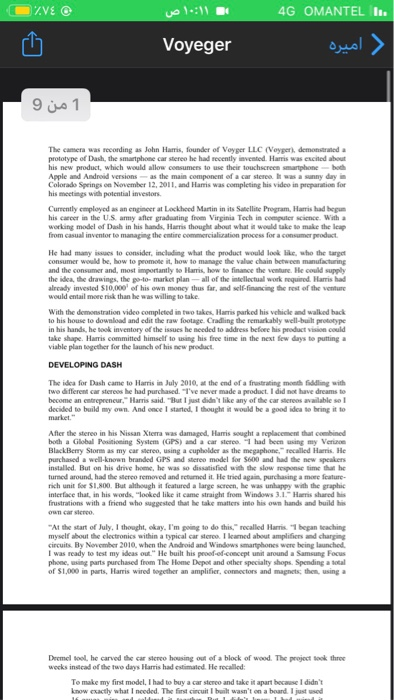
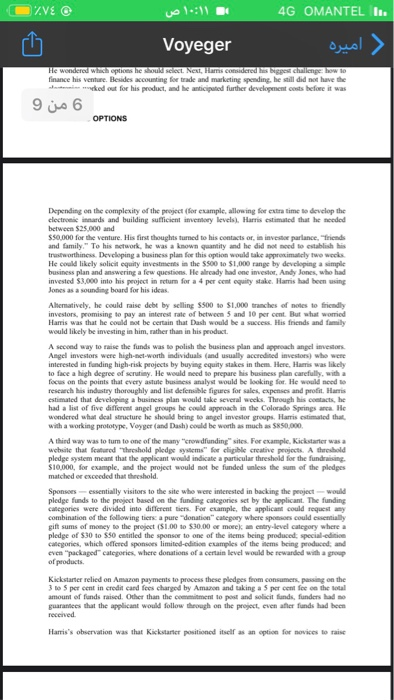
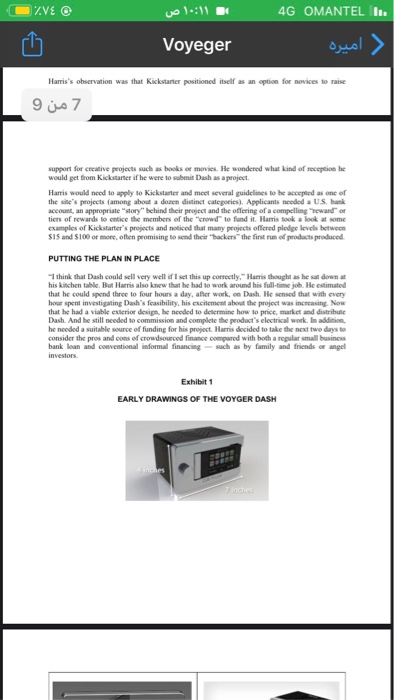
IZVE : 4G OMANTEL Is. Voyeger ( systems would reach 7.9 million units, up 14 per cent from the previous year. This estimate represented retail revenues of approximately 57.3 billion, up from $6.6 billion in 2010. The researchers stated Most high-end audio systems are sold by premium brands, costing anywhere from 300 to 56,300. Bose und Harman Kardon are the leading premium audio system suppliers. Bose supplies systems and speakers to more than 18 car makes including many General Motor brands, as well as Alfa Romeo, Audi, Infiniti Marda, Fiat, Nissan and Porsche. Harman is used by brands such as BMW Buick Hyundai, Land Rover and Mercedes-Benz. Other premium odio suppliers include Alpine: D&M Holdings for Boston Acoustics, Bowers & Wilkins; Burmester Clarion Hyundai Mobis for Dimension: Sony, Panasonic for ELS Surround and Fender, and Pioneer An important premium audio trend is the accommodation of digital music players in vehicles, with car manufacturers adding interfaces capable of playing mobile music. An auxiliary (Aux) input is the least expensive interface, with nearly all premium adio systems sold in the United States currently including the feature Installing aftermarket car audio systems was typically an easy process, and installing Dash was no different. A user simply removed the current car stereo by pulling it forward, then unplugged it from the car's wiring hamess. The Dash unit plugged straight into the harness and could be pushed back in. The process was no more onerous than buying an off-the-shelf car stereo from a big-box store and installing it on one's own or having it professionally installed by a mechanic A major advantage of using Dash over using a cellphone in a cup holder with an aux input was that the latter option, although inexpensive, was not aesthetically pleasing and did not charge the phone while it was in use. By using Dash, the phone would sit prominently in the car stereo slot consumers did not need to learn a new interface, the phone was mounted conveniently, securely and attractively, and the phone charged itself automatically Exhibits 1 and 2 show computer-generated images of Dash. Competitor units typically combined physical hardware with proprietary software that featured GPS navigation with Bluetooth hands- free calling and audio capabilities. Except for the amplifiers, which could be added separately. current smartphone models, such as the Apple iPhone and the latest Android or Windows models, offered similar functionality (ie, GPS navigation, Bluetooth hands-free calling, music) Thus, the iPhone and any of the latest smartphones already had most of the functionality offered by a premium audio system. To allow the smartphone to be turned into a premium audio system, all that was needed was an amplifier and an elegant physical interface. With a prototype in hand and a patent pending. Harris wanted to explore how to manufacture and market his new product MANUFACTURING OPTIONS "My goal was to find a manufacturing solution that had the lowest upfront costs, even if it cost more per unit to manufacture," said Harris. For the faceplate, he considered processes such as plastic injection molding and folded sheet metal Plastic injection molding would have produced faceplates at a cost of $1.00 each. But creating the molds would cost $30,000 for a four-cavity mold. If he chose folded sheet metal, at volumes of fewer than 100 units, he would pay $100 per faceplate. The price per faceplate would fall to 20 cents if he could order 5,000 units or more. Harris finally settled on using an extruded aluminum process. His investment in tooling would be $500 and the per-unit cost of the faceplate would be in the $9.00 range for an order of between 100 and 500 units. He decided to start with just one aluminum fceplate design. ZVE @ : 4G OMANTEL Is. Voyeger ( Dremel tool, he carved the car stereo housing out of a block of wood. The project took three weeks instead of the two days Harris had estimated. He recalled: To make my first model, I had to buy a car stereo and take it apart because I didn't know exactly what I needed. The first circuit built wasn't on a board. I just used 16-gauge wire and soldered together. But I didn't know I had wired it backwards. So the capacitor blew up when it was plugged in Good thing I was wearing Doggles. For my next try. I bought a remote system and left the room before applying power to the unit When it blew up again. I realized I was putting the directional capacitor on backwards. I succeeded on my third try. Harris spent the next few months tweaking his proof-of-concept. In carly 2011, he began researching the possibility of building a prototype that would use the Apple iPhone. He measured the iPhone's pin layout and began designing the prototype. Thinking that he needed industry design help, he found a contract 3-D modeler via oDesk, a global online projects' marketplace for freelancers working remotely. Harris taught himself how to use SolidWorks, a computer aided design software package and, by April 2011, had a prototype designed that would fit the stereo slot of most cars. ISO 7736, an industry standard established for car audio head units, had been adopted in 1984 Dash. Harris's new car steres, fit the "Double DIN specification that allowed for a car audio head unit measuring 4 inches by 7 inches. Harris estimated that no modifications would be needed for Dash to fit into the car audio head unit space of 80 per cent of all cars built after 1984 The main components of Dash were a faceplate, the housing and electrical components. To build the prototype of the faceplate, Harris went to Ponoke, an online service offering 3-D printing and laser cutting and paid $300 to have a single prototype of Dash's faceplate printed" He designed the housing to be made from folded sheet metal. But not everything was going as smoothly as he had envisioned In August 2011, Harris hired an electrical engineer via Desk to design the electrical system inside Dash Dash's clectrical system combined a pre-amp signal and allowed Desh -- with the iPhone in place - to power the car's native speakers. A connection inside Dash allowed it to be connected to the car's wiringhe Harris had expected to have the electrical system ready for November 2011, but had endured excuse ather excuse from his contracted supplier. Worse, the contractor wanted an equity stake in Voyger, in exchange for speeding up his work. Harris finally cut ties with the contractor at the start of November 2011. Even though he had only a mocked-up, non-working prototype, he decided to continue pursuing the project. What was driving me forward was the fact that I knew the market for this product was, potentially quite large." said Harris. "There wasn't anything like Dash on the market. And, to be honest, I had sunk quite a bit of time and money into the project and I wasn't about to quit." The Market for Premium Audio Systems "The average car in the US is 11 ycars old and there are 254 million cars on the road. There are 98 million smartphones in the country. Even if you climinate the cars that will not accepta modem premium audio system, we're still talking about 20 million potential customers," said Harris. In 2011. IHS iSuppli Automotive Research estimated that global sales of premium audio systems would reach 79 million units, up 14 per cent from the previous year. This estimate represented retail revenues of approximately 7.3 Million up from 56.6 billion in 2010. The rescarchers stated Most high-end audio systems are sold by premium brands, costing anywhere from 53000 56.300 Bose and Harman Kardon are the leading premium audio system suppliers. Bose supplies systems and speakers to more than 18 car makes ZVE @ : 4G OMANTEL I. Voyeger ( 1 9 The camera was recording as John Harris, founder of Voyger LLC (Voyper), demonstrated prototype of Dash, the smartphone car stereo he had recently invented. Harris was excited about his new product, which would allow consumers to use their touchscreen smartphone - both Apple and Android versions - as the main component of a car stereo. It was a sunny day in Colorado Springs on November 12, 2011. and Hamis was completing his video in preparation for his meetings with potential investors Currently employed as an engineer at Lockheed Martin in its Satellite Program, Harris had begun his career in the U.S. army after graduating from Virginia Tech in computer science. With a working model of Dash in his hands. Harris thought about what it would take to make the leap from casual inventor to managing the entire commercialization process for a consumer product He had many issues to consider, including what the product would look like, who the target consumer would be, how to promote it, how to manage the value chain between manufacturing and the consumer and most importantly to Harris, how to finance the venture. He could supply the idea, the drawings, the go-to-market plan -- all of the intellectual work required. Harris had already invested $10,000 of his own money thus far, and self-financing the rest of the venture would entailmore risk than he was willing to take With the demonstration video completed in two takes, Harris parked his vehicle and walked back to his house to download and edit the raw footage Cradling the remarkably well-built prototype in his hands, he took inventory of the issues he needed to address before his product vision could take shape. Harris committed himself to using his free time in the next few days to putting a viable plan together for the launch of his new product. DEVELOPING DASH The idea for Dash came to Harris in July 2010, at the end of a frustrating month fiddling with two different car stereos he had purchased. "I've never made a product. I did not have dreams to become an entrepreneur." Harris said. "But I just didn't like any of the car steres available so I decided to build my own. And once I started. I thought it would be a good idea to bring it to market" After the stereo in his Nissan Xterra was damaged. Harris sought a replacement that combined both a Global Positioning System (GPS) and a car stereo had been using my Verizon BlackBerry Storm as my car stereo, using a cupholder as the megaphone, recalled Harris. He purchased a well-known branded GPS and stereo model for $600 and had the new speakers installed. But on his drive home, he was so dissatisfied with the slow response time that he turned around, had the stereo removed and retumed it. He tried again, purchasing a mere fcature- rich unit for $1.800. But although it featured a large screen, he was unhappy with the graphic interface that in his words, "looked like it came straight from Windows 3.1." Harris shared his frustrations with a friend who suggested that he take matters into his own hands and build his own car stereo "At the start of July, I thought, okay. I'm going to do this," recalled Harris. 1 began teaching myself about the electronics within a typical car stereo. I learned about amplifiers and charging circuits. By November 2010, when the Android and Windows smartphones were being launched. I was ready to test my ideas out." He built his proof-of-concept unit around a Samsung Focus phome, using parts purchased from The Home Depot and other specialty shops. Spending a total of $1,000 in parts, Harris wired together an amplifier, connectors and magnets, then, using a Dremel tool he carved the car stereo housing out of a block of wood. The project took three weeks indicad of the two days Harris had estimated. He recalled: To make my first model, I had to buy a car stereo and take it apart because I didn't know exactly what I needed. The first circuit I built wasn't on a beard. I just used ZVE : 4G OMANTEL 11. Voyeger ( He wondered which options he should select. Next, Hamis considered his Biggest challenge: how to finance his venture. Besides accounting for trade and marketing spending, he still did not have the veked out for his product, and he anticipated further development costs before it was 9 OPTIONS 6 9 Depending on the complexity of the project (for example, allowing for extra time to develop the clectronie innards and building sufficient inventory levels). Harris estimated that he needed between $25.000 and 550.000 for the venture. His first thoughts turned to his contacts or, in investee parlance.friends and family. To his network, he was a known quantity and he did not need to establish this trustworthiness Developing a business plan for this option would take approximately two weeks He could likely solicit equity investments in the S500 to $1.000 range by developing a simple business plan and answering a few questions. He already had one investor, Andy Jones, who had invested $3,000 into his project in return for a 4 per cent equity stake. Harris had been using Jones as a sounding board for his ideas Alternatively, he could raise debt by selling $500 to $1,000 tranches of notes to friendly investors, promising to pay an interest rate of between 5 and 10 per cent. But what worried Harris was that he could not be certain that Dush would be a success. His friends and family would likely be investing in him, rather than in his product A second way to raise the funds was to polish the business plan and approach angel investors Angel investors were high-net-worth individuals and usually accredited investors) who were interested in funding high-risk projects by buying equity stakes in them. Here, Harris was likely to face a high degree of scrutiny. He would need to prepare his business plan carefully, with focus on the points that every astute business analyst would be looking for. He would need to rescarch his industry thoroughly and list defensible figures for sales, expenses and profit. Harris estimated that developing a business plan would take several weeks. Through his contacts, he had a list of five different angel groups he could approach in the Colorado Springs area. He wondered what deal structure he should bring to angel investor groups. Harris estimated that with a working prototype. Voyger (and Dash) could be worth as much as $850,000 A third way was to turn to one of the many crowdfunding sites. For example, Kickstarter was a website that featured "hreshold pledge systems for cligible creative projects. A threshold pledge system meant that the applicant would indicate a particular threshold for the fundraising $10.000, for example, and the project would not be funded unless the sum of the pledges matched or exceeded that threshold Sponsors - essentially visitors to the site who were interested in backing the project - would pledge funds to the project based on the funding Categories set by the applicant. The funding Categories were divided into different tiers. For example, the applicant could request any combination of the following tiers a pure donation" category where sponsors could essentially gift sums of money to the project ($1.00 to $30.00 or more entry-level category where a pledge of $30 to $50 entitled the sponsor to one of the items being produced special editie Categories, which offered sponses limited-edition examples of the items being producedand even "packaged" categories, where donations of a certain level would be rewarded with a group of products. Kickstarter relied on Amazon payments to process these pledges from consumers passing on the 3 to 5 per cent in credit card fees charged by Amazon and taking a 5 per cent fee on the total amount of funds raised. Other than the commitment to post and solicit funds, funders had guarantees that the applicant would follow through on the project, even after funds had been received Harris's observation was that Kickstarter positioned itself as an option for novices to raise ZVE @ : 4G OMANTEL I. Voyeger ( two month batches, expecting manufacturers to absorb shipping costs. Harris also needed to take into account the co-operative ahvertising fees - manufacturers' contributions to retailers tising accounts, which were used to pay for promotional vehicles such as radio 9 5 9 television and flyers. The fees were typically 9 per cent of the manufacturer's price Manufacturers also provided retailers with damage allowances of 3 per cent of sales. Retailers gathered damage allowances from all manufacturers into a general fund, which was used to defray the cost of goods damaged either in transit or on shell. Furthermore, retailers generally expected manufacturers to participate in and fund - various trade promotions, such as package deals where other electronics were sold in addition to the premium car audio systems. In a typical year, these trade promotions could add up to 10 per cent of the manufacturer's price. Shipping and warehousing the product could add another 5 percent of the manufacturer's price If he were to sell through retailers, Harris decided he would target high-end clectronics stores One option he considered was to use commissioned sales agents to be his representatives to retailers Commissioned sales agents typically had existing relationships with retail buyers and could already have a portfolio of products at retailers' shelves. For Harris, rather than trying to cold-call individual retail buyers, using a sales agent could be casier, but this option would cost him about 5 per cent of sales and could take several weeks to generate sales presentation. If he needed a distributor to inventory and send product to retailers, this service would cost approximately 10 per cent of sales. Harris wondered what retail price he should set for Dail, and whether he should set different prices for different retailers. Alematively, Harris could present his products to retailers at an annual products trade show, renting a booth during the four-day show. While this approach would allow him to bypass the intermediaries, the costs of preparing for and securing space for a trade show could cost $8,000, when travel and accommodation were taken into account. He could sign up a logistics provider to provide inventory and fulfillment services. Logistics providers could hold inventory on Harris's behalf, then pick, pack and ship orders as they came in from retailers. Storing product generally cost $10 per pallet a month (a pallet could hold approximately 200 items), and it would cost approximately $2 per item to pick and pack, not including the cost of shipping An alternative was for Harris to stock and sell product directly to consumers. But he had a full time job and did not have excess space in his home to store hundreds of pieces of product. He wondered whether it was feasible to outsource product fulfillment to a US or Chinese contractor Harris wondered how he would promote Dash. With limited funds, he would need to rely on word- of-mouth advertising on his own public relations efforts and ce sympathetic bloggers to spread the news. Allematively, he could invest about $5,000 for a four-month public relations (PR) campaign hiring an electronics.focused PR agency to generate buzz about his product. While they could not guarantee success, PR agencies were usually able to pamer coverage of their clients' products in prominent magazines and blogs. Another option was for Harris to purchase selected advertisements either on key technology review sites or in technology magazines. It was not unusual for magazines to charge $1,000 per issue for one-third of a page in a monthly magazine Harris reckoned that he would need to place six sach advertisements to make an impact. Hams began to collect a list of automotive and technology blogs he could target He wondered which options he should select. Next, Harris considered his biggest challenge: how to finance his venture. Besides accounting for trade and marketing spending, he still did not have the electronics worked out for his product, and he anticipated further development costs before it was completed FINANCING OPTIONS Depending on the complexity of the project (for example, allowing for extra time to develop the clectronie inards and building sufficient inventory levels), Harris estimated that he needed IZVE : 4G OMANTEL II. Voyeger ( Tople would use. Hy scale using an extruded aluminum process. His investment in tooling would be $500 and the per-unit cost of the faceplate would be in the 9.00 range for an order of between 100 and 500 units. He decided to start with just one aluminum faceplate design He decided to use the same process for the housing. Using alibaba.com an Asia-based procurement site, he located a Chinese supplier willing to work with him. With this current manufacturing process, I estimate that the total cost to produce Dash would be around $100 per unit," said Harris Shipping was approximately si per piece and was estimated at six weeks from factory door to Harris's designated warchouse. He assumed a defect rate of approximately 10 per cent for all parts produced. One of the benefits of coordinating all of Dash's value chain was that the typical product development cycle of 12 to 18 months would be reduced to three months or less. Harris was the direct contact for manufacturing and indeed, for all of the other activities. He could approve changes on the spot instead of needing to confer with clients On the other hand, his freedom to shape the project went hand in hand with his total responsibility for it. Harris needed to ensure that no design issues were overlooked prior to production. He paid $2,000 to have a high-quality 3-D printed faceplate and housing made to his exact specifications. This model would be his "prototype that he would use to raise funding for the project. Even at this stage, Harris found issues he needed to overcome: I'd always thought I would be able to oversee the process, to just hand over my ideas and pay them for the contract work. Then I'd get back a perfectly formed product. But I had to get into the nuts and bolts. I had to figure out where the connectors would fit. The design took a lot more time that I thought I would have to do. I'd give instructions, thinking they were explicit. But i'd come back different. Or they'd follow my instructions to the last word, but the result wasn't what I'd expected. And this was just the prototype I was dealing with. I knew that going to full production and relying on an overseas supplier, would result in a whole new set of issues to manage As an alternative to having direct contact with the manufacturer, Harris considered hiring a procurement firm to manage the manufacturing process on his behalf. He estimated this consulting fre to be in the range of 55.000 60 510,000 MARKETING OPTIONS Harris was aware that he was a new entrant in a competitive market. He looked at competitie systems (see Exhibit 3) and decided that his major competition would come from mid- to high- end systems. He settled on $300 as a selling price. His rationale was that high-quality competitor systems cost around $900, while an Apple iPhone cost around 5600, leaving a residual of 5300 From a fulfillment perspective, Harris wondered whether he should sell Dash direct to consumers via a website or via established retailers. Retailers of premium car audio systems typically camed gross margins of 35 per cent. Depending on the item, retailers tended to order inventory in one to two month batches, expecting manufacturers to absorb shipping costs. Harris also needed to take into account the co-operative advertising fees - manufacturers' contributions to retailers general advertising accounts, which were used to pay for promotional vehicles such as radio, television and flyers. The fees were typically per cent of the manufacturer's price Manufacturers also provided retailers with damage allowances of 3 per cent of sales. Retailers gathered damage allowances from all manufacturers into a general fund, which was used to defray the cost of goods damaged either in transitor on shell. Furthermore, retailers generally expected manufacturers to participate in and fund various trade promotions, such as ZVE : 4G OMANTEL ls. Voyeger ( 7 9 Haris's observation was that Kickstarter positioned itself as an option for novices to raise 9 7 support for creative projects such as books or movies. He wondered what kind of reception he would get from Kickstarter if he were to submit Dash as a project Hamis would need to apply to Kickstarter and meet several guidelines to be accepted as one of the site's projects (among about a dozen distinct categories). Applicants needed a US bank account, an appropriate story behind their project and the offering of a compelling reward or tiers of rewards to entice the members of the crowd to fund it. Harris took a look at some examples of Kickstarter's projects and noticed that many projects offered plodige levels between SIS and S100 or more often promising to send their backers" the first run of products produced PUTTING THE PLAN IN PLACE "I think that Dash could sell very well if I set this up correctly." Harris thought as he sat down at his kitchen table. But Harris also knew that he had to work around his full-time job. He estimated that he could spend three to four hours a day, after work on Dash. He sense that with every hour spent investigating Dash's feasibility, his excitement about the project was increasing Now that he had a viable exterior design, he needed to determine how to price, market and distribute Dash. And he still needed to commission and complete the product's electrical work. In addition he needed a suitable source of funding for his project. Harris decided to take the next two days to consider the pros and cons of crowdsourced finance compared with both a regular small business bank loan and conventional informal financing - such as by family and friends or angel investors. Exhibit 1 EARLY DRAWINGS OF THE VOYGER DASH inches
Step by Step Solution
There are 3 Steps involved in it
1 Expert Approved Answer
Step: 1 Unlock

Question Has Been Solved by an Expert!
Get step-by-step solutions from verified subject matter experts
Step: 2 Unlock
Step: 3 Unlock
 Study Help