



Question: Evolutionary theories often emphasize that humans have adapted to their physical environment. One such theory hypothesizes that people should spontaneously follow a 24-hour cycle of
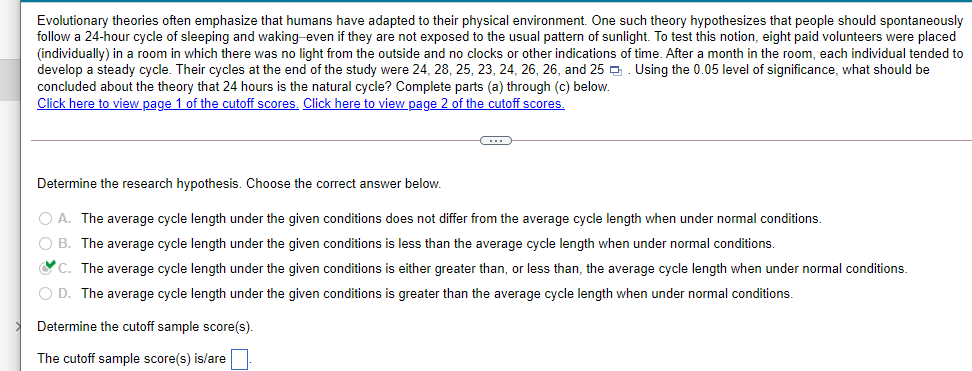
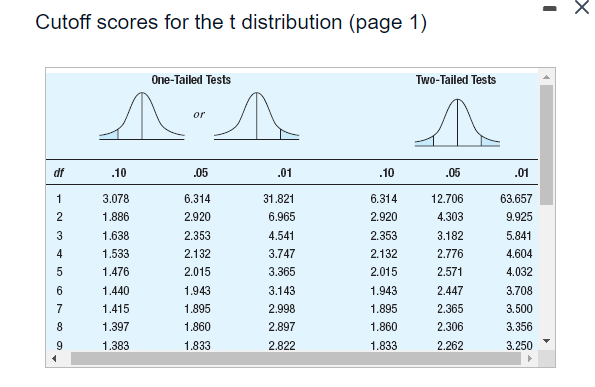
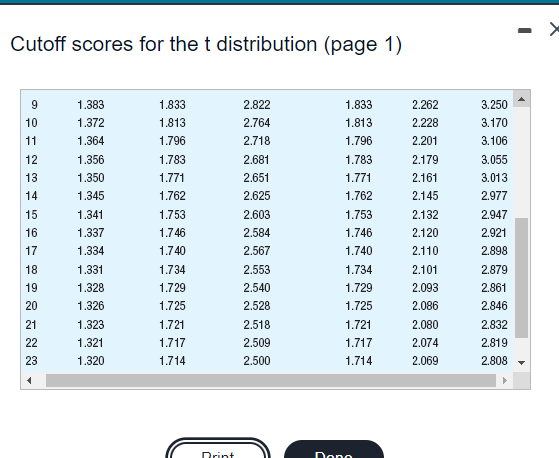
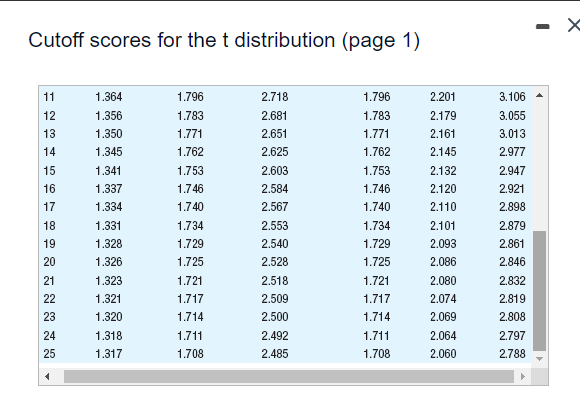
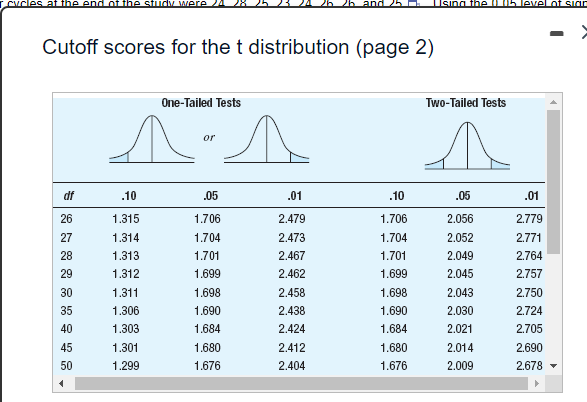
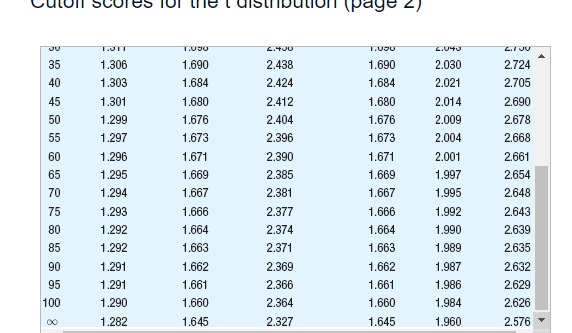
Evolutionary theories often emphasize that humans have adapted to their physical environment. One such theory hypothesizes that people should spontaneously follow a 24-hour cycle of sleeping and waking even if they are not exposed to the usual pattern of sunlight. To test this notion, eight paid volunteers were placed (individually) in a room in which there was no light from the outside and no clocks or other indications of time. After a month in the room, each individual tended to develop a steady cycle. Their cycles at the end of the study were 24, 28, 25, 23, 24, 26, 26, and 25 0 . Using the 0.05 level of significance, what should be concluded about the theory that 24 hours is the natural cycle? Complete parts (a) through (c) below. Click here to view page 1 of the cutoff scores. Click here to view page 2 of the cutoff scores. Determine the research hypothesis. Choose the correct answer below. O A. The average cycle length under the given conditions does not differ from the average cycle length when under normal conditions. O B. The average cycle length under the given conditions is less than the average cycle length when under normal conditions. C. The average cycle length under the given conditions is either greater than, or less than, the average cycle length when under normal conditions. O D. The average cycle length under the given conditions is greater than the average cycle length when under normal conditions. Determine the cutoff sample score(s). The cutoff sample score(s) is/areCutoff scores for the t distribution (page 1) X One-Tailed Tests Two-Tailed Tests or df .10 05 .01 -10 .05 .01 3.078 6.314 31.821 6.314 12.706 63.657 1.886 2.920 6.965 2.920 4.303 9.925 1.638 2.353 4.541 2.353 3.182 5.841 1.533 2.132 3.747 2.132 2.776 4.604 1.476 2.015 3.365 2.015 2.571 4.032 1.440 1.943 3.143 1.943 2.447 3.708 1.415 1.895 2.998 1.895 2.365 3.500 8 1.397 1.860 2.897 1.860 2.306 3.356 1.383 1.833 2.822 1.833 2.262 3.250Cutoff scores for the t distribution (page 1) 9 1.383 1.833 2.822 1.833 2.262 3.250 10 1.372 1.813 2.764 1.813 2.228 3.170 11 1.364 1.796 2.718 1.796 2.201 3.106 12 1.356 1.783 2.681 1.783 2.179 3.055 13 1.350 1.771 2.651 1.771 2.161 3.013 14 1.345 1.762 2.625 1.762 2.145 2.977 15 1.341 1.753 2.603 1.753 2.132 2.947 16 1.337 1.746 2.584 1.746 2.120 2.921 17 1.334 1.740 2.567 1.740 2.110 2.898 18 1.331 1.734 2.553 1.734 2.101 2.879 19 1.328 1.729 2.540 1.729 2.093 2.861 20 1.326 1.725 2.528 1.725 2.086 2.846 21 1.323 1.721 2.518 1.721 2.080 2.832 22 1.321 1.717 2.509 1.717 2.074 2.819 23 1.320 1.714 2.500 1.714 2.069 2.808\fwas at the end of The stuck were Using the Ith level of sion Cutoff scores for the t distribution (page 2) One-Tailed Tests Two-Tailed Tests or df .10 .05 .01 .10 .05 .01 26 1.315 1.706 2.479 1.706 2.056 2.779 27 1.314 1.704 2.473 1.704 2.052 2.771 28 1.313 1.701 2.467 1.701 2.049 2.764 29 1.312 1.699 2.462 1.699 2.045 2.757 30 1.311 1.698 2.458 1.698 2.043 2.750 35 1.306 1.690 2.438 1.690 2.030 2.724 40 1.303 1.684 2.424 1.684 2.021 2.705 45 1.301 1.680 2.412 1.680 2.014 2.690 50 1.299 1.676 2.404 1.676 2.009 2.678butOn SCUIES 101 tit tulsibution (page 2) 35 1.306 1.690 2.438 1.690 2.030 2.724 40 1.303 1.684 2.424 1.684 2.021 2.705 45 1.301 1.680 2.412 1.680 2.014 2.690 50 1.299 1.676 2.404 1.676 2.009 2.678 55 1.297 1.673 2.396 1.673 2.004 2.668 60 1.296 1.671 2.390 1.671 2.001 2.661 65 1.295 1.669 2.385 1.669 1.997 2.654 70 1.294 1.667 2.381 1.667 1.995 2.648 75 1.293 1.666 2.377 1.666 1.992 2.643 80 1.292 1.664 2.374 1.664 1.990 2.639 85 1.292 1.663 2.371 1.663 1.989 2.635 90 1.291 1.662 2.369 1.662 1.987 2.632 95 1.291 1.661 2.366 1.661 1.986 2.629 100 1.290 1.660 2.364 1.660 1.984 2.626 1.282 1.645 2.327 1.645 1.960 2.576
Step by Step Solution
There are 3 Steps involved in it

Get step-by-step solutions from verified subject matter experts