







Question: Extend the MIPS processor (Figure 4.17) by adding a new instruction, lbu (load byte unsigned). Clearly, show modifications to the datapath and identify new control
Extend the MIPS processor (Figure 4.17) by adding a new instruction, lbu (load byte unsigned). Clearly, show modifications to the datapath and identify new control signals and their values. Highlight the extended processor when this instruction is executed.
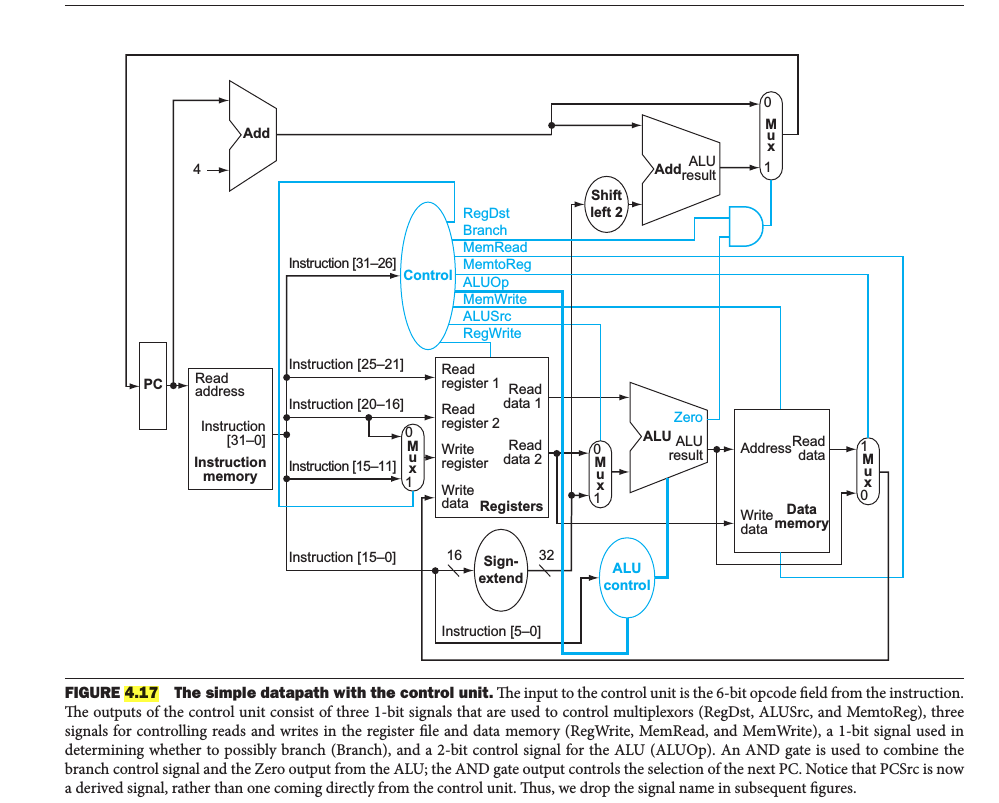
Add 4 result Shift left 2 RegDst Branch Instruction 131-26 Conto o MemRead MemtoReg 312 Cont ALUO emWrite ALUSrc RegWrite Instruction [25-21] Read PRead register 1 Read address Instruction [20-16 Read data 1 Zero ALU ALU result Instruction register 2 [31-0) Write Read register data 2 AddressRead data InstructionInstrucon 15-111 memory 1Write 0 data Registers Write Data data memo Instruction [15-0] 16 Sign- ALU control extend Instruction [5-0] FIGURE 4.17 The simple datapath with the control unit. The input to the control unit is the 6-bit opcode field from the instruction. The outputs of the control unit consist of three 1-bit signals that are used to control multiplexors (RegDst, ALUSrc, and MemtoReg), three signals for controlling reads and writes in the register file and data memory (RegWrite, MemRead, and MemWrite), a 1-bit signal used in determining whether to possibly branch (Branch), and a 2-bit control signal for the ALU (ALUOp). An AND gate is used to combine the branch control signal and the Zero output from the ALU; the AND gate output controls the selection of the next PC. Notice that PCSrc is now a derived signal, rather than one coming directly from the control unit. Thus, we drop the signal name in subsequent figures
Step by Step Solution
There are 3 Steps involved in it

Get step-by-step solutions from verified subject matter experts
 Study Help