Question: FAST ANSWER GETS LIKES Agile approaches as a development approach can be considered as A. Adaptive B. Non-Static C. With iterations D. All of the
FAST ANSWER GETS LIKES
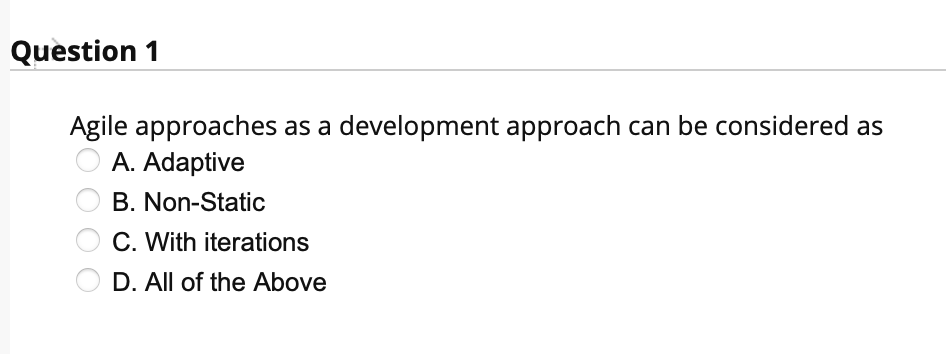
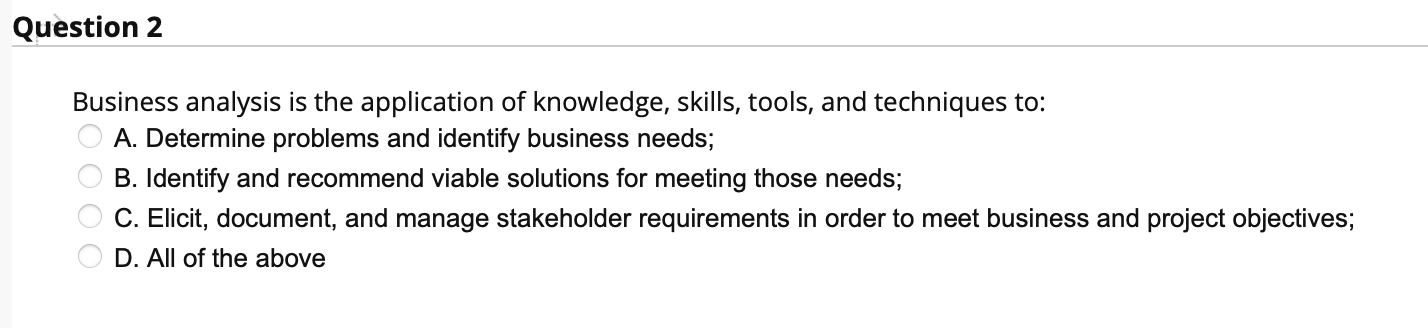
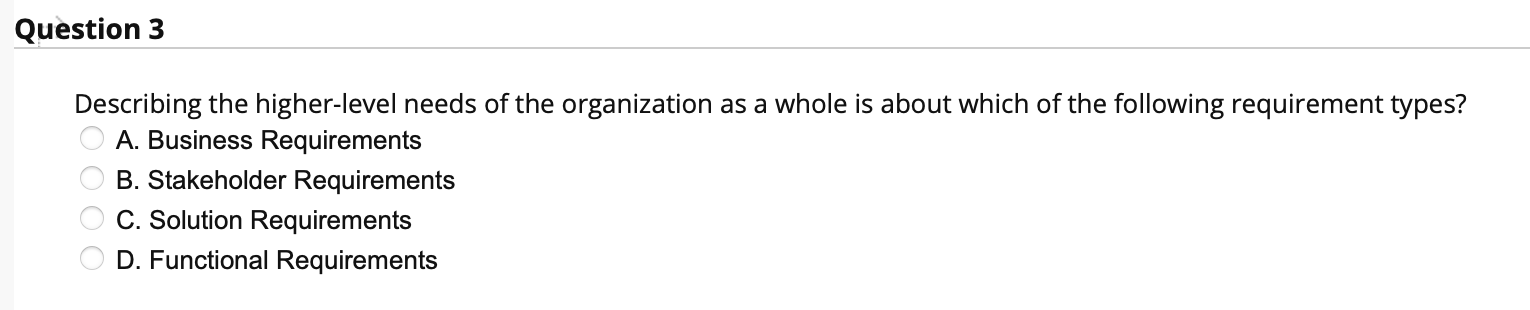
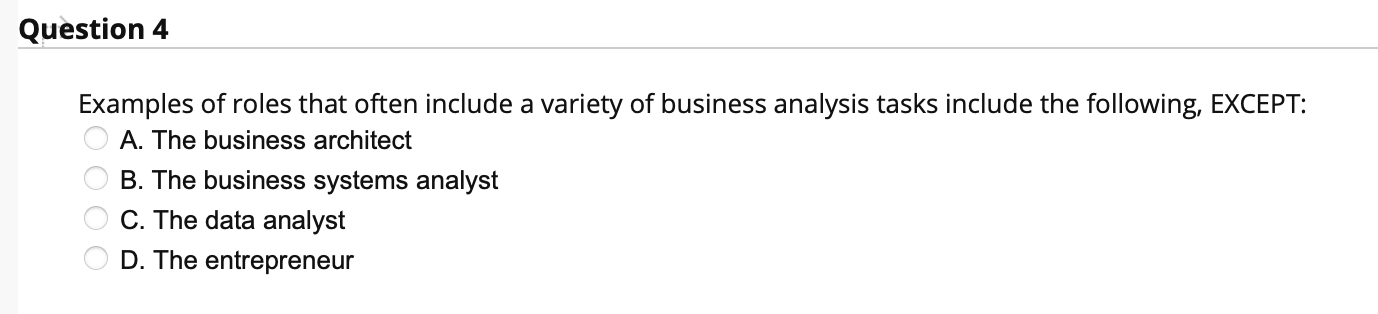
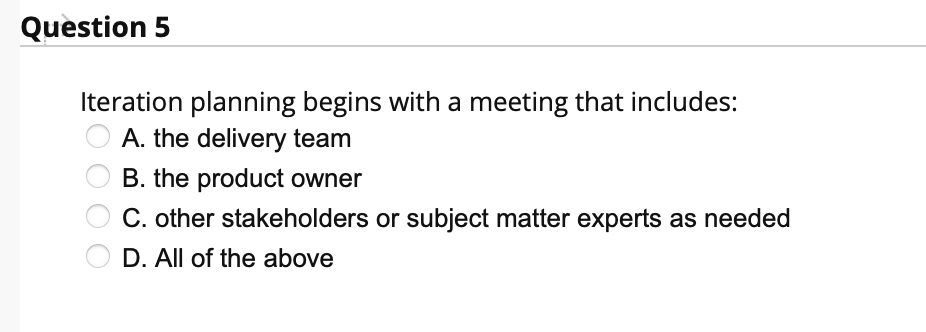
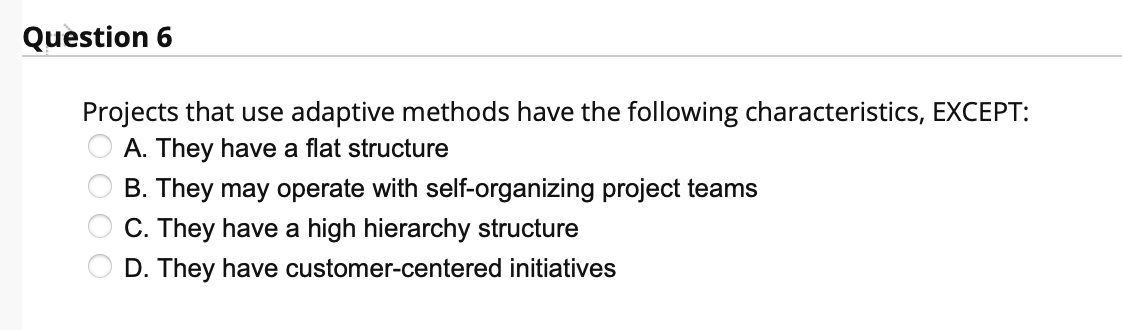

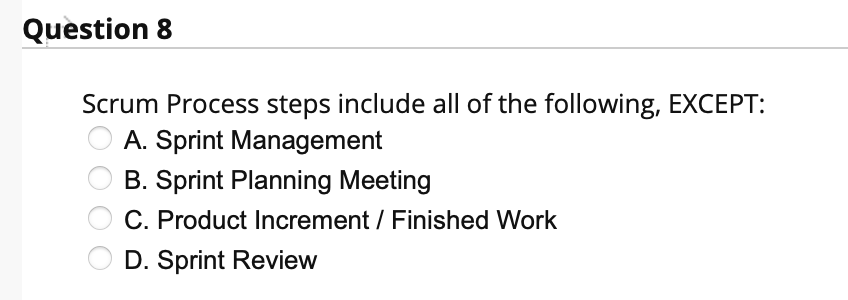

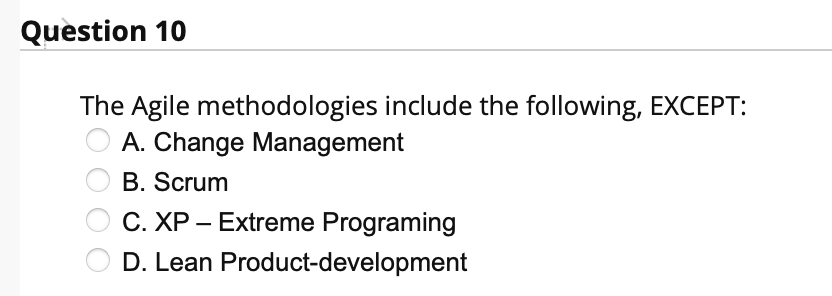
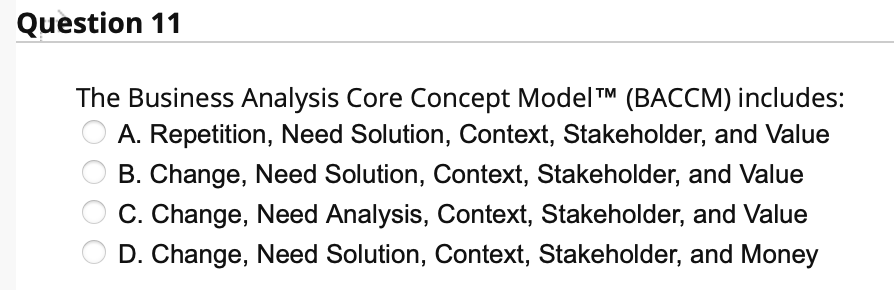
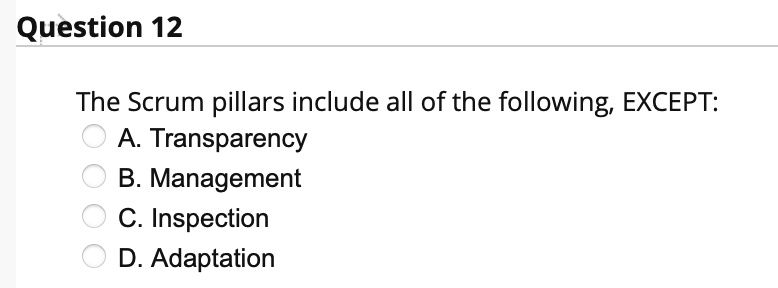
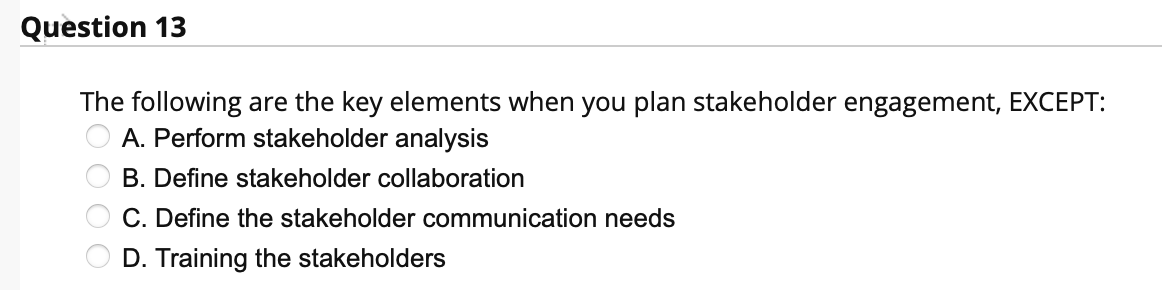
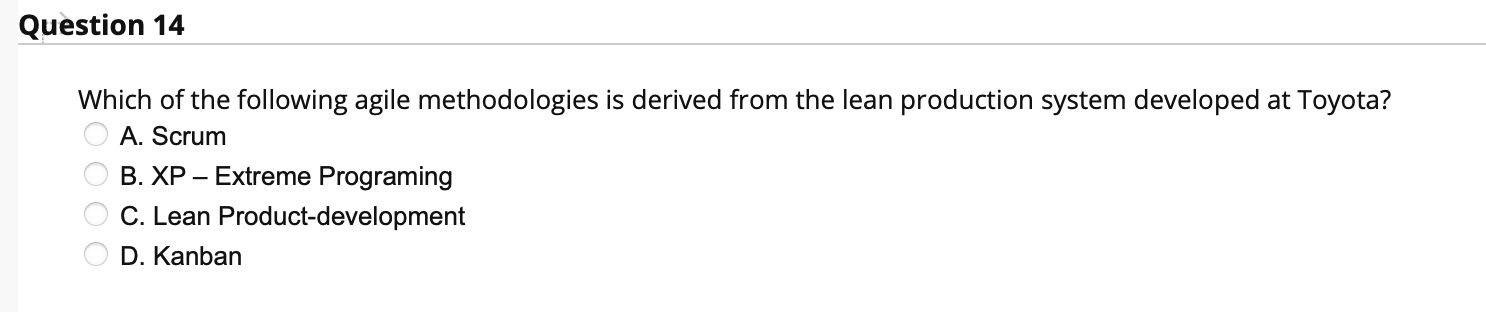
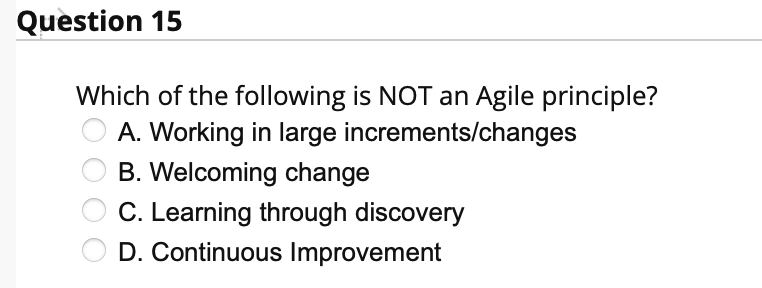
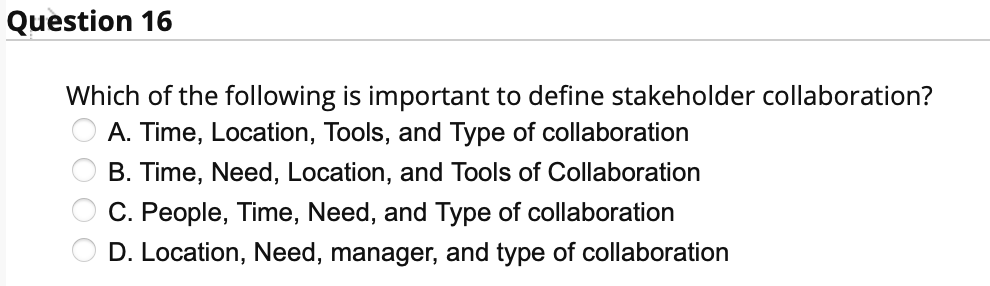
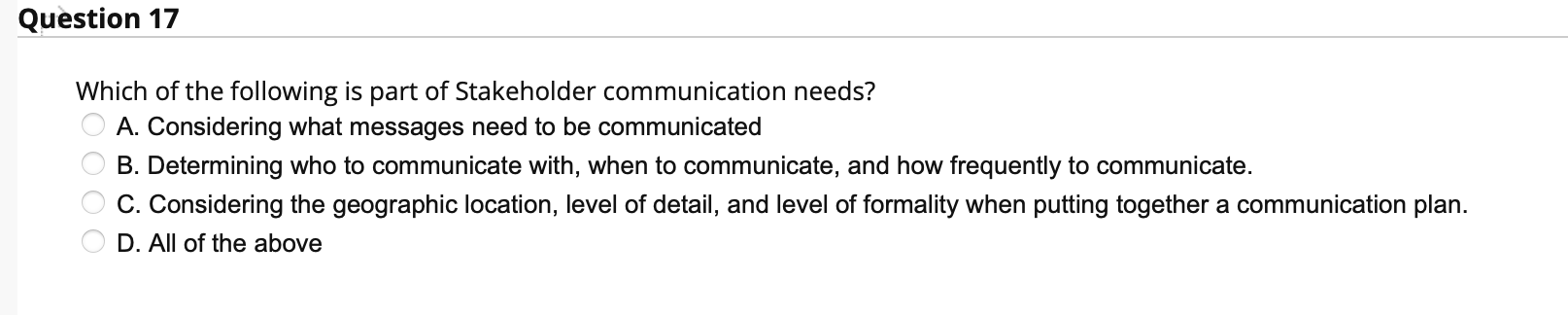
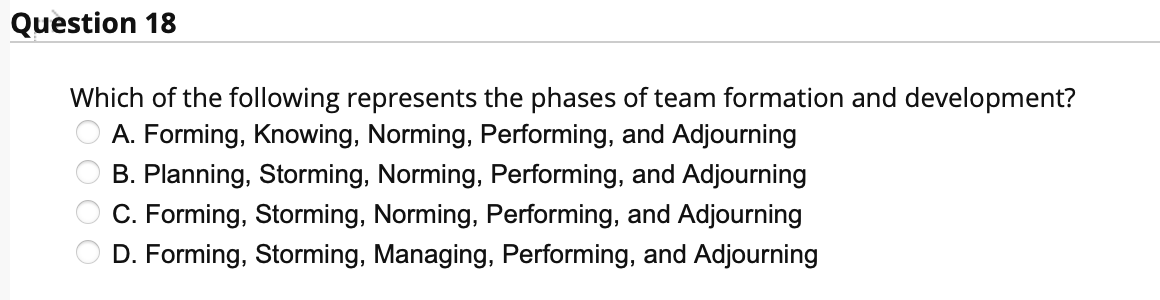

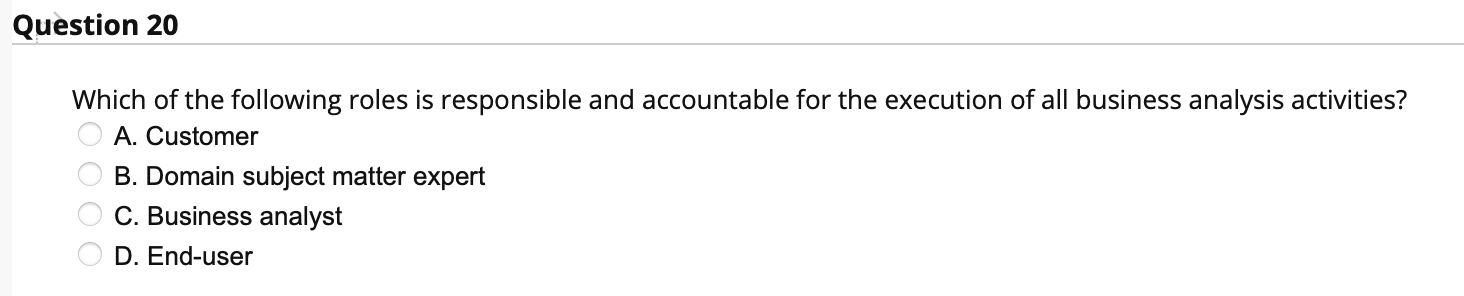
Agile approaches as a development approach can be considered as A. Adaptive B. Non-Static C. With iterations D. All of the Above Business analysis is the application of knowledge, skills, tools, and techniques to: A. Determine problems and identify business needs; B. Identify and recommend viable solutions for meeting those needs; C. Elicit, document, and manage stakeholder requirements in order to meet business and project objectives; D. All of the above Describing the higher-level needs of the organization as a whole is about which of the following requirement types? A. Business Requirements B. Stakeholder Requirements C. Solution Requirements D. Functional Requirements Examples of roles that often include a variety of business analysis tasks include the following, EXCEPT: A. The business architect B. The business systems analyst C. The data analyst D. The entrepreneur Iteration planning begins with a meeting that includes: A. the delivery team B. the product owner C. other stakeholders or subject matter experts as needed D. All of the above Projects that use adaptive methods have the following characteristics, EXCEPT: A. They have a flat structure B. They may operate with self-organizing project teams C. They have a high hierarchy structure D. They have customer-centered initiatives Reviewing the requirements with the stakeholders and receiving confirmation that the requirements are as stated is about: A. Requirement Planning B. Requirement Inclusion C. Requirement Validation D. Requirement Adaptation Scrum Process steps include all of the following, EXCEPT: A. Sprint Management B. Sprint Planning Meeting C. Product Increment / Finished Work D. Sprint Review Simplicity, communication, feedback, courage, and respect are values that manifest themselves in the practices undertaken throughout the life cycle of which Agile methodologies? A. Scrum B. XP - Extreme Programing C. Lean Product-development D. Kanban The Agile methodologies include the following, EXCEPT: A. Change Management B. Scrum C. XP - Extreme Programing D. Lean Product-development The Business Analysis Core Concept Model TM (BACCM) includes: A. Repetition, Need Solution, Context, Stakeholder, and Value B. Change, Need Solution, Context, Stakeholder, and Value C. Change, Need Analysis, Context, Stakeholder, and Value D. Change, Need Solution, Context, Stakeholder, and Money The Scrum pillars include all of the following, EXCEPT: A. Transparency B. Management C. Inspection D. Adaptation The following are the key elements when you plan stakeholder engagement, EXCEPT: A. Perform stakeholder analysis B. Define stakeholder collaboration C. Define the stakeholder communication needs D. Training the stakeholders Which of the following agile methodologies is derived from the lean production system developed at Toyota? A. Scrum B. XP - Extreme Programing C. Lean Product-development D. Kanban Which of the following is NOT an Agile principle? A. Working in large increments/changes B. Welcoming change C. Learning through discovery D. Continuous Improvement Which of the following is important to define stakeholder collaboration? A. Time, Location, Tools, and Type of collaboration B. Time, Need, Location, and Tools of Collaboration C. People, Time, Need, and Type of collaboration D. Location, Need, manager, and type of collaboration Which of the following is part of Stakeholder communication needs? A. Considering what messages need to be communicated B. Determining who to communicate with, when to communicate, and how frequently to communicate. C. Considering the geographic location, level of detail, and level of formality when putting together a communication plan. D. All of the above Which of the following represents the phases of team formation and development? A. Forming, Knowing, Norming, Performing, and Adjourning B. Planning, Storming, Norming, Performing, and Adjourning C. Forming, Storming, Norming, Performing, and Adjourning D. Forming, Storming, Managing, Performing, and Adjourning Which of the following roles is about the individual who has an in-depth knowledge of the specific topic area where a business need or solution scope is being analyzed? A. Operational support B. Implementation subject matter expert C. Project manager D. Regulator Which of the following roles is responsible and accountable for the execution of all business analysis activities? A. Customer B. Domain subject matter expert C. Business analyst D. End-user




