



Question: Figure 1 4 . 2 . Fquilibrium constants as a function of temperatureproduction of methanol according to following reaction: C O ( 8 ) +
Figure Fquilibrium constants as a function of temperatureproduction of methanol according to following reaction:
The equilibrium conversion methanol is large at but it decreases rapidly with increasing temperature. However, reaction rates becone appreciable only at higher temperatures. For a feed mixture of carbon monoxide and hydrogen in the stoichiometric proportions, answer the followings:
a What is the equilibrium mole fractions of reactants and products at bar and by assuming ideal gas?
b What is the equilibrium mole fractions of reactants and products at bar and by assuming ideal solution of gases?
c At what temperature does the equilibrium mole fraction of methanol equal for a pressure of bar, assuming the equilibrium mixture is an idea
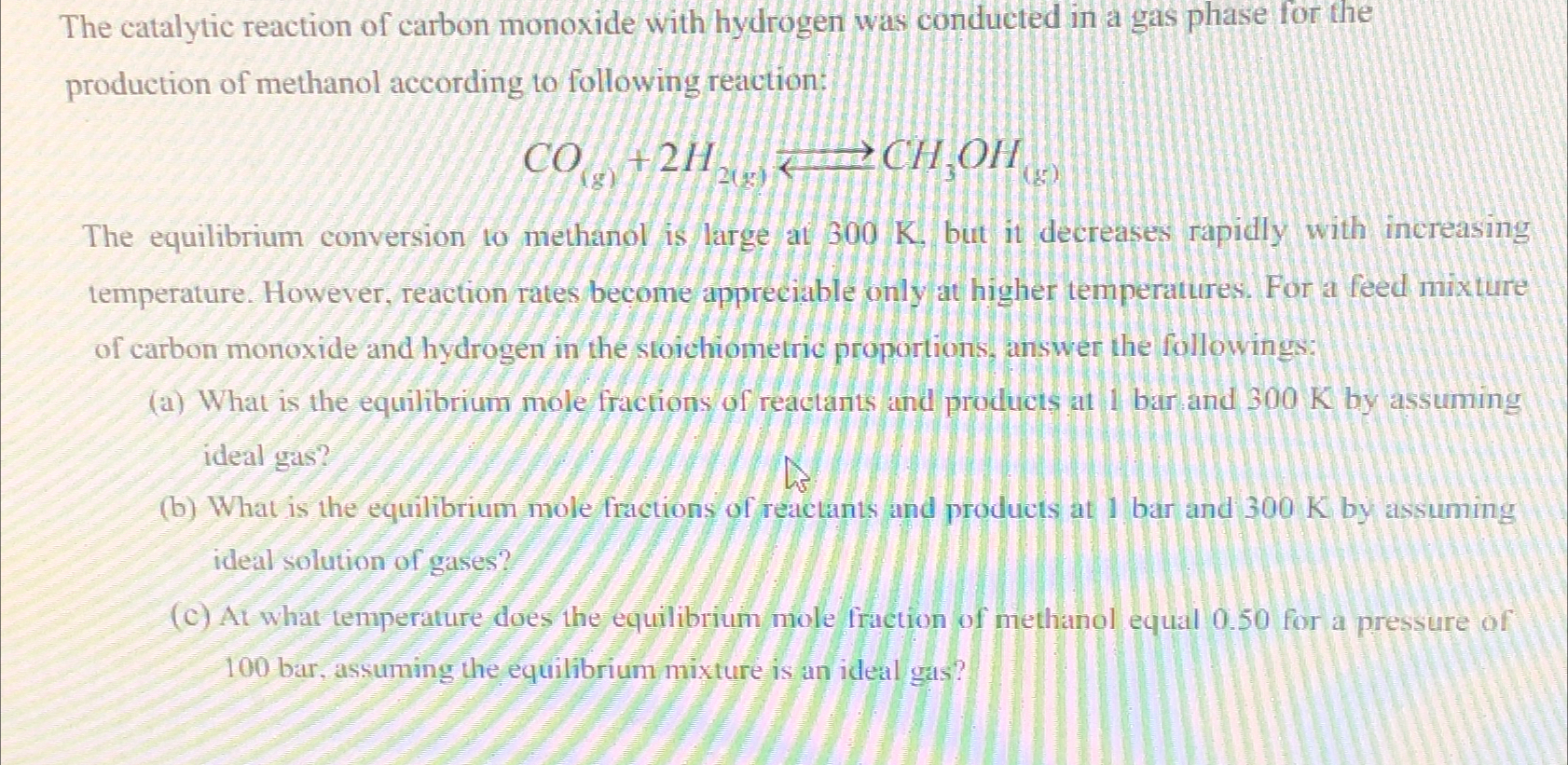
The catalytic reaction of carbon monoxide with hydrogen was conducted in a gas phase for the production of methanol according to following reaction:
The equilibrium conversion methanol is large at but it decreases rapidly with increasing temperature. However, reaction rates become appreciable only at higher temperatures. For a feed mixture of carbon monoxide and hydrogen in the stoichometric proportions, answer the followings:
a What is the equilibrium mole fractions of reactants and products at bar and by assuming ideal gas?
b What is the equilibrium mole fractions of reactants and products at bar and by assuming ideal solution of gases?
c At what temperature does the equilibrium mole fraction of methanol equal for a pressure of bar, assuming the equilibrium mixture is an ideal gas?
Step by Step Solution
There are 3 Steps involved in it
1 Expert Approved Answer
Step: 1 Unlock

Question Has Been Solved by an Expert!
Get step-by-step solutions from verified subject matter experts
Step: 2 Unlock
Step: 3 Unlock