



Question: Find answer from the page. 1. What is the technique and how does it work? 2. Bid low until the shoe is rich and then
Find answer from the page.
1. What is the technique and how does it work?
2. Bid low until the shoe is rich and then bid high?
3. When there's a plus count bid high because there's likely higher cards in the deck, and the dealer will bust and you will win?
4. Explain perception of the "honest game" and why have internal controls?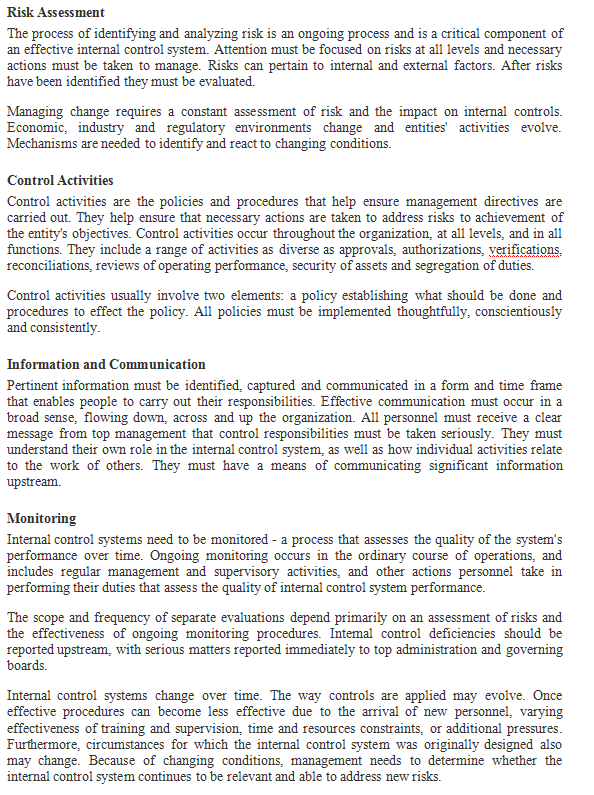
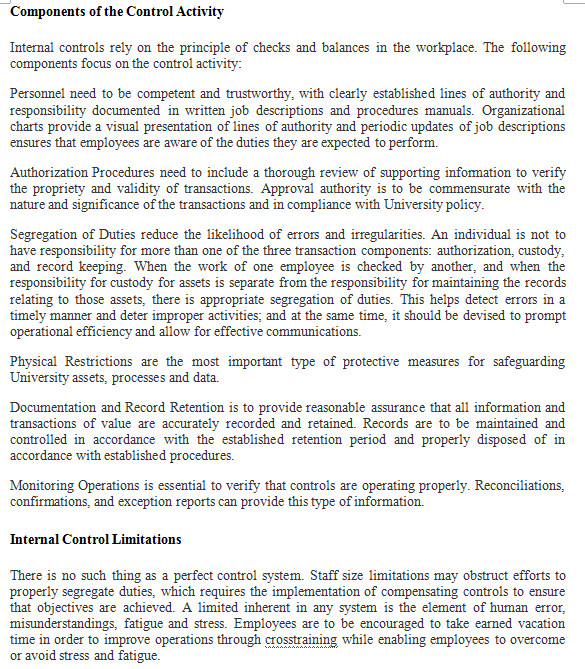
Assessment The process of identifying and analyzing risk is an ongoing process and is a critical component of an effective internal control system. Attention must be focused on risks at all levels and necessary actions must be taken to manage. Risks can pertain to internal and external factors. After risks have been identified they must be evaluated. Managing change requires a constant assessment of risk and the impact on internal controls. Economic, industry and regulatory environments change and entities' activities evolve. Mechanisms are needed to identify and react to changing conditions. Control Activities Control activities are the policies and procedures that help ensure management directives are carried out. They help ensure that necessary actions are taken to address risks to achievement of the entity's objectives. Control activities occur throughout the organization, at all levels, and in all functions. They include a range of activities as diverse as approvals, authorizations, verifications reconciliations, reviews of operating perfomance, security of assets and segregation of duties. Control activities usually involve two elements: a policy establishing what should be done and procedures to effect the policy. All policies must be implemented thoughtfully, conscientiously and consistently Information and Communication Pertinent information must be identified, captured and communicated in a form and time frame that enables people to carry out their responsibilities. Effective communication must occur in a broad sense, flowing down, across and up the organization. All personnel must receive a clear message from top management that control responsibilities must be taken seriously. They must understand their own role in the internal control system, as well as how individual activities relate to the work of others. They must have a means of communicating significant information upstream. Monitoring Internal control systems need to be monitored - a process that assesses the quality of the system's perfomance over time. Ongoing monitoring occurs in the ordinary course of operations, and includes regular management and supervisory activities, and other actions personnel take in perfoming their duties that assess the quality of internal control system performance. The scope and frequency of separate evaluations depend primarily on an assessment of risks and the effectiveness of ongoing monitoring procedures. Intemal control deficiencies should be reported upstream, with serious matters reported immediately to top administration and governing boards. Internal control systems change over time. The way controls are applied may evolve. Once effective procedures can become less effective due to the arrival of new personnel, varying effectiveness of training and supervision, time and resources constraints, or additional pressures Furthermore, circumstances for which the internal control system was originally designed also may change. Because of changing conditions, management needs to determine whether the internal control system continues to be relevant and able to address new risks
Step by Step Solution
There are 3 Steps involved in it

Get step-by-step solutions from verified subject matter experts