







Question: frames velons Intext ing more than Discussion Question plans, 5 How does a leader progress through the pipeline whether ing development? What did he do
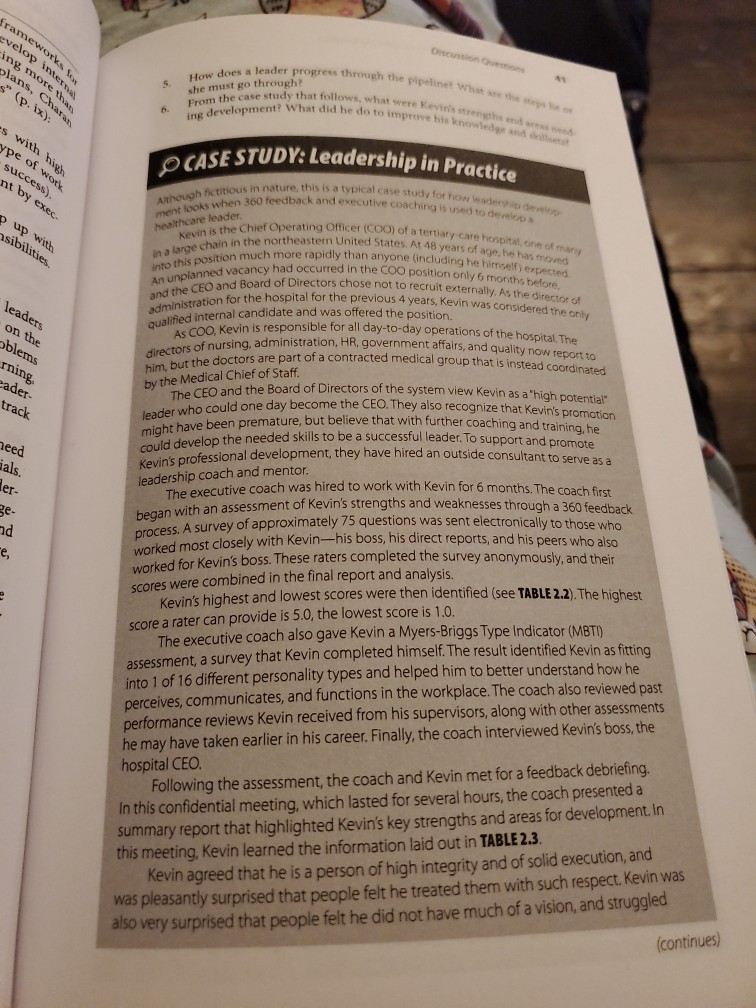
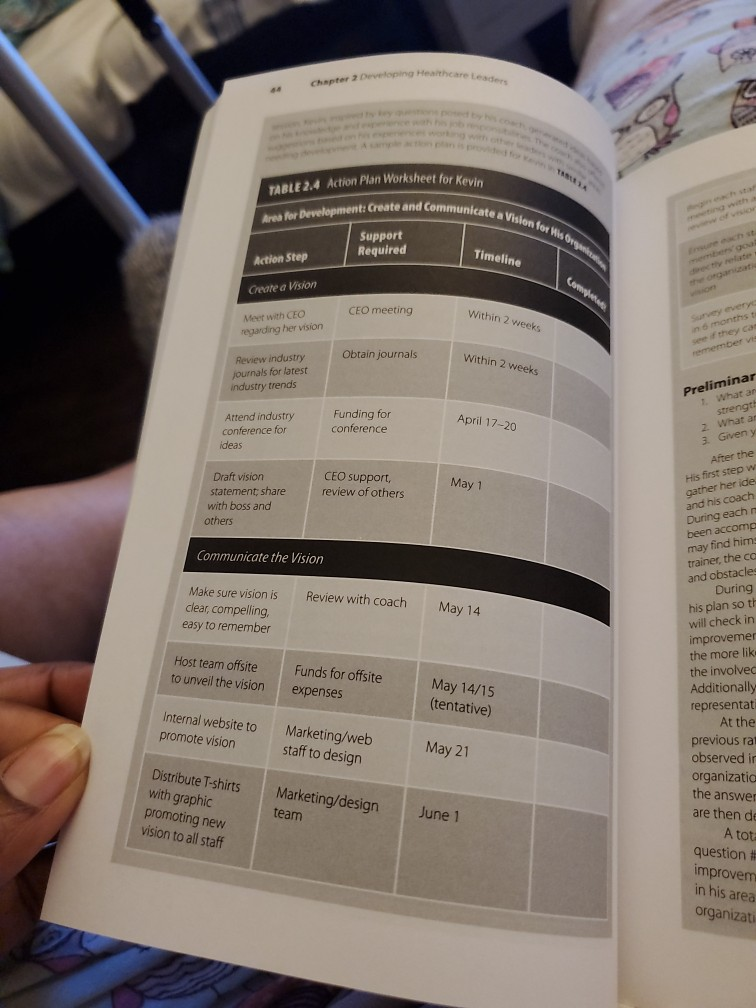
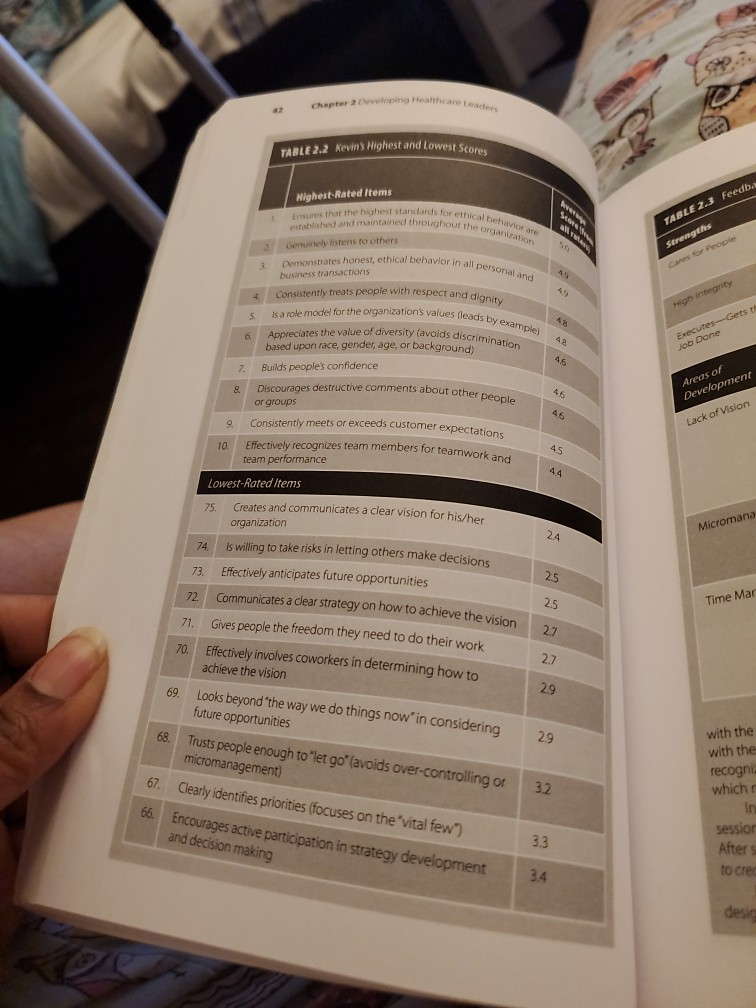
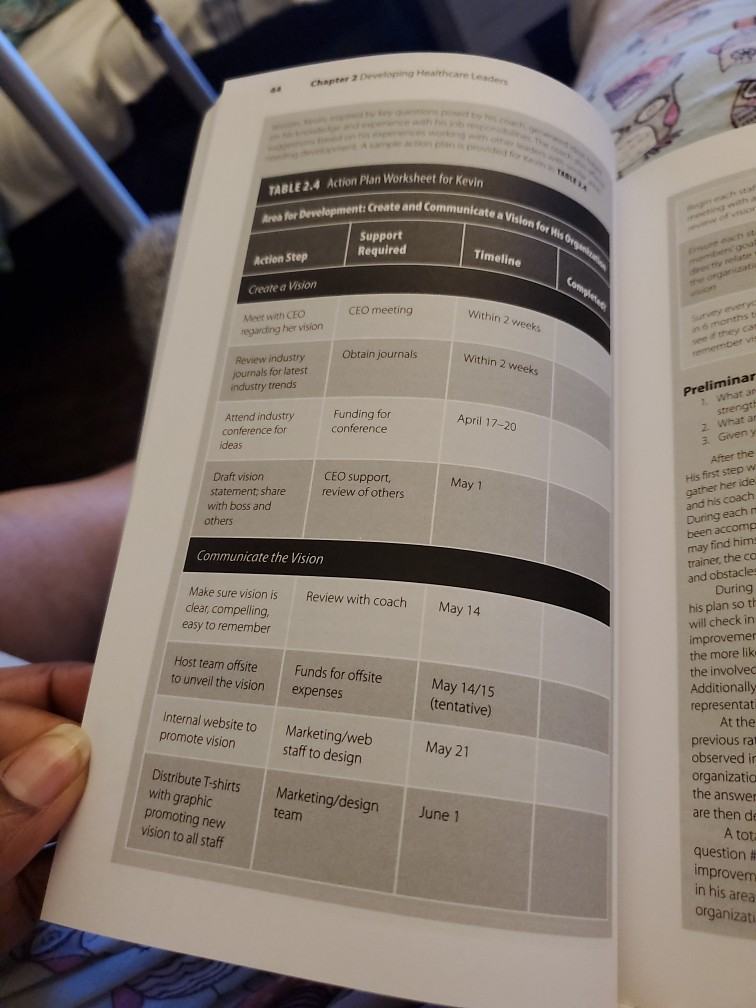
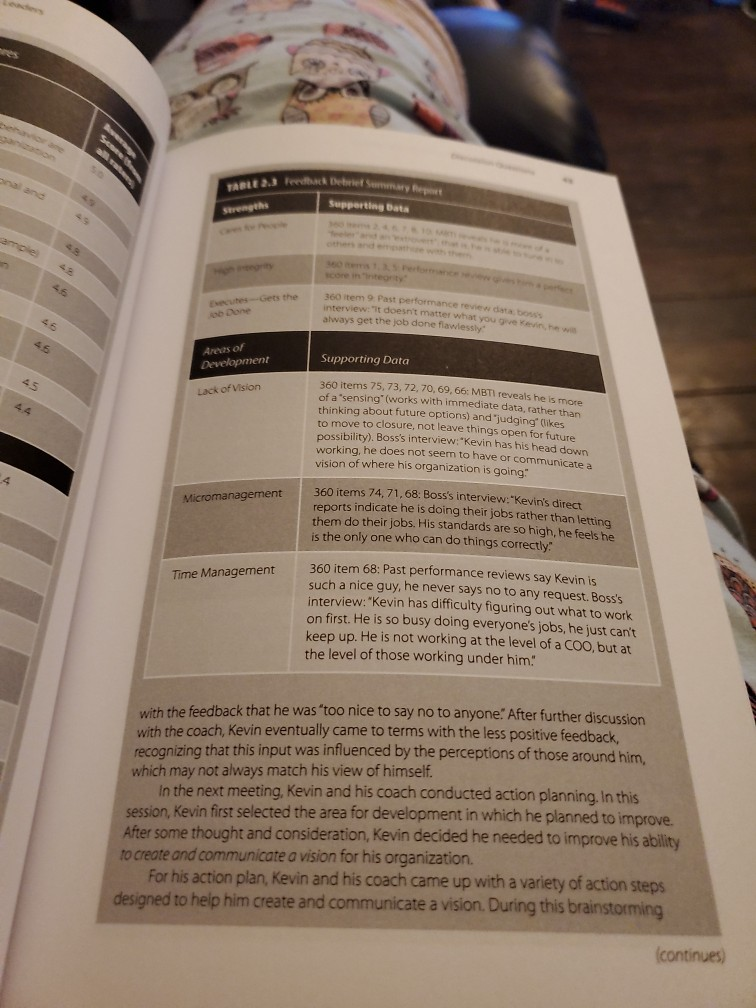
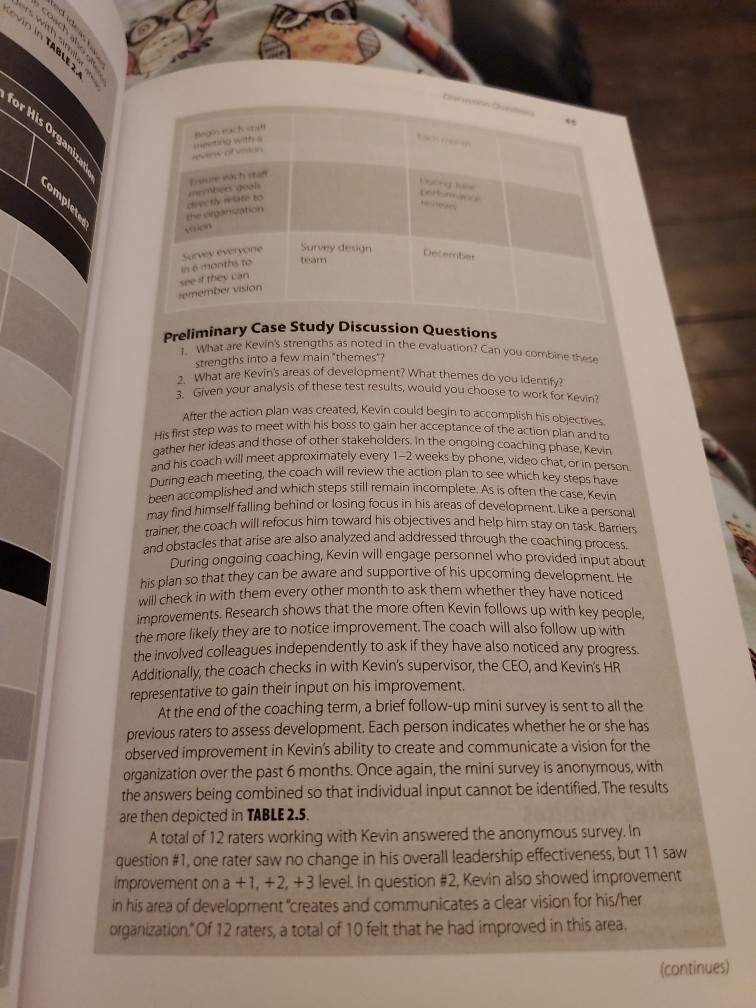
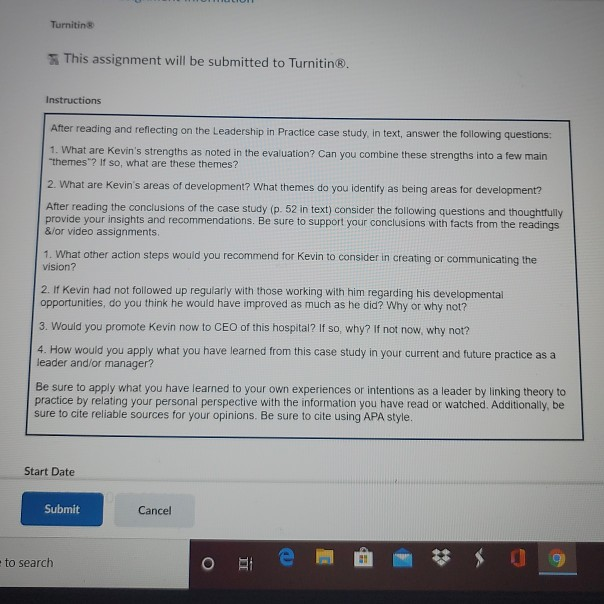
frames velons Intext ing more than Discussion Question plans, 5 How does a leader progress through the pipeline whether ing development? What did he do te improve his knowled From the case study that follows, what were Kevil's strengths s with ype of success) nt by exec O CASE STUDY: Leadership in Practice Although fictitious in nature, this is a typical case study for howleader p up with asibilities healthcare leader Kevin is the Chief Operating Officer (COO) of a tertiary care hospital, one of my in a large chain in the northeastern United States. At 48 years of age.thasoned into this position much more rapidly than anyone including he welf) expected administration for the hospital for the previous 4 years, Kevin was considered the only and the CEO and Board of Directors chose not to recruit externally. As the director of As COO, Kevin is responsible for all day-to-day operations of the hospital. The directors of nursing, administration, HR, government affairs, and quality now report to him, but the doctors are part of a contracted medical group that is instead coordinated leaders on the oblems Tning, by the Medical Chief of Staff eader- track hthe CEO and the Board of Directors of the system view Kevin as a high potential leader who could one day become the CEO. They also recognize that Kevin's promotion might have been premature, but believe that with further coaching and training, he need als. der- ge- nd ce could develop the needed skills to be a successful leader. To support and promote Kevin's professional development, they have hired an outside consultant to serve as a leadership coach and mentor. The executive coach was hired to work with Kevin for 6 months. The coach first began with an assessment of Kevin's strengths and weaknesses through a 360 feedback process. A survey of approximately 75 questions was sent electronically to those who worked most closely with Kevin--his boss, his direct reports, and his peers who also worked for Kevin's boss. These raters completed the survey anonymously, and their scores were combined in the final report and analysis. Kevin's highest and lowest scores were then identified (see TABLE 2.2). The highest score a rater can provide is 5.0, the lowest score is 1.0. The executive coach also gave Kevin a Myers-Briggs Type Indicator (MBTI) assessment, a survey that Kevin completed himself. The result identified Kevin as fitting into 1 of 16 different personality types and helped him to better understand how he perceives, communicates, and functions in the workplace. The coach also reviewed past performance reviews Kevin received from his supervisors, along with other assessments he may have taken earlier in his career. Finally, the coach interviewed Kevin's boss, the hospital CEO. Following the assessment, the coach and Kevin met for a feedback debriefing. In this confidential meeting, which lasted for several hours, the coach presented a summary report that highlighted Kevin's key strengths and areas for development. In this meeting, Kevin learned the information laid out in TABLE 2.3. Kevin agreed that he is a person of high integrity and of solid execution, and was pleasantly surprised that people felt he treated them with such respect. Kevin was also very surprised that people felt he did not have much of a vision, and struggled (continues) Chapter 2 Developing Healthcare Leaders TABLE 2.4 Action Plan Worksheet for Kevin Are for Development: Create and Communicate a Vision for Winsorge Required Action Step Timeline Create a Vision CEO meeting Within 2 weeks Meet with CEO regarding her vision no months Obtain journals Within 2 weeks remember Review industry journals for latest industry trends Attend industry conference for ideas Funding for conference April 17-20 Preliminar 1 Whar an strengt 2 What a CEO support review of others May 1 Draft vision statement, share with boss and others Communicate the Vision 3 Giveny After the His first step w gather her ide and his coach During each been accomo may find him trainer, the cc and obstacles his plan so th will check in improvemer the more like During Review with coach Make sure vision is clear, compelling easy to remember May 14 Host team offsite to unveil the vision Funds for offsite expenses May 14/15 (tentative) Internal website to promote vision Marketing/web staff to design the involved Additionally representat At the previous ra observed in organizatio May 21 Distribute T-shirts with graphic promoting new vision to all staff Marketing/design team June 1 the answer are then de A tot question 1 improvem in his area organizati Chapter 2 Developing Healthcare Leaders TABLE 2.2 Kevin Highest and Lowest Scores Highest-Rated Items established and maintained throughout the orization Ensures that the highest standards for ethical behaviotate TABLE 2.3 Feedba Genuinely listens to others Strengths Demonstrates honest, ethical behavior in all personal and Cares for People business transactions High Integrity Executes Gets Job Done 45 Consistently treats people with respect and dignity 4 is a role model for the organization's values leads by example) 5. 6 Appreciates the value of diversity (avoids discrimination based upon race, gender, age, or background) 7. Builds people's confidence Discourages destructive comments about other people & or groups Consistently meets or exceeds customer expectations Effectively recognizes team members for teamwork and team performance 46 Areas of Development 46 9 Lack of Vision 10 45 75. Lowest-Rated Items Creates and communicates a clear vision for his/her organization Micromana 24 74 Is willing to take risks in letting others make decisions Effectively anticipates future opportunities 73 25 72 2.5 Time Mar 71. Communicates a clear strategy on how to achieve the vision Gives people the freedom they need to do their work Effectively involves coworkers in determining how to achieve the vision 2.7 70 2.7 69. 2.9 Looks beyond the way we do things now in considering future opportunities 68. Trusts people enough to let go" (avoids over-controlling or micromanagement) 29 with the with the recogni which 67. Clearly identifies priorities (focuses on the vital few 3.2 66. Encourages active participation in strategy development and decision making 33 session After to cree 3.4 desic Chapter 2 Developing Healthcare Leaders TABLE 2.4 Action Plan Worksheet for Kevin Are for Development: Create and Communicate a Vision for Winsorge Required Action Step Timeline Create a Vision CEO meeting Within 2 weeks Meet with CEO regarding her vision no months Obtain journals Within 2 weeks remember Review industry journals for latest industry trends Attend industry conference for ideas Funding for conference April 17-20 Preliminar 1 Whar an strengt 2 What a CEO support review of others May 1 Draft vision statement, share with boss and others Communicate the Vision 3 Giveny After the His first step w gather her ide and his coach During each been accomo may find him trainer, the cc and obstacles his plan so th will check in improvemer the more like During Review with coach Make sure vision is clear, compelling easy to remember May 14 Host team offsite to unveil the vision Funds for offsite expenses May 14/15 (tentative) Internal website to promote vision Marketing/web staff to design the involved Additionally representat At the previous ra observed in organizatio May 21 Distribute T-shirts with graphic promoting new vision to all staff Marketing/design team June 1 the answer are then de A tot question 1 improvem in his area organizati Set TABLE 2.3 fed Detlef Set Supporting Bata Strength unes Gees the 360 item 9. Past performance review databas interview: "It doesn't matter what you give Kevin, always get the job done flawlessly 45 Areas of Development 45 Lack of Vision 44 Supporting Data 360 items 75, 73, 72, 70, 69, 66: MBTI reveals he is more of a 'sensing" (works with immediate data, rather than thinking about future options) and judging likes to move to closure, not leave things open for future possibility). Boss's interview: Kevin has his head down working, he does not seem to have or communicate a vision of where his organization is going! Micromanagement 360 items 74,71,68: Boss's interview: Kevin's direct reports indicate he is doing their jobs rather than letting them do their jobs. His standards are so high, he feels he is the only one who can do things correctly Time Management 360 item 68: Past performance reviews say Kevin is such a nice guy, he never says no to any request. Boss's interview: "Kevin has difficulty figuring out what to work on first. He is so busy doing everyone's jobs, he just can't keep up. He is not working at the level of a COO, but at the level of those working under him with the feedback that he was "too nice to say no to anyone" After further discussion with the coach, Kevin eventually came to terms with the less positive feedback, recognizing that this input was influenced by the perceptions of those around him, which may not always match his view of himself. in the next meeting, Kevin and his coach conducted action planning. In this session, Kevin first selected the area for development in which he planned to improve. After some thought and consideration, Kevin decided he needed to improve his ability to create and communicate a vision for his organization For his action plan, Kevin and his coach came up with a variety of action steps designed to help him create and communicate a vision. During this brainstorming (continues) ww for His Organiza Survey design team December Surwy everyone ino months to see if they can remember vision Preliminary Case Study Discussion Questions re What are Kevin's strength asmes in the evaluation? Can you combine these 2. What are Kevin's areas of development. What themes do you identify? 3. Given your analysis of these test results, would you choose to work for Kevin After the action plan was created, Kevin could begin to accomplish his objectives. His first step was to meet with his boss to gain her acceptance of the action plan and to and his coach will meet approximately every 1-2 weeks by phone, video chat, or in person During each meeting the coach will review the action plan to see which key steps have been accomplished and which steps still remain incomplete. As is often the case, Kevin may find himself falling behind or losing focus in his areas of development. Like a personal trainer, the coach will refocus him toward his objectives and help him stay on task. Barriers and obstacles that arise are also analyzed and addressed through the coaching process. During ongoing coaching, Kevin will engage personnel who provided input about his plan so that they can be aware and supportive of his upcoming development. He will check in with them every other month to ask them whether they have noticed improvements. Research shows that the more often Kevin follows up with key people, the more likely they are to notice improvement. The coach will also follow up with the involved colleagues independently to ask if they have also noticed any progress. Additionally, the coach checks in with Kevin's supervisor, the CEO, and Kevin's HR representative to gain their input on his improvement. At the end of the coaching term, a brief follow-up mini survey is sent to all the previous raters to assess development. Each person indicates whether he or she has observed improvement in Kevin's ability to create and communicate a vision for the organization over the past 6 months. Once again, the mini survey is anonymous, with the answers being combined so that individual input cannot be identified. The results are then depicted in TABLE 2.5. A total of 12 raters working with Kevin answered the anonymous survey. In question #1, one rater saw no change in his overall leadership effectiveness, but 11 saw improvement on a +1, +2, +3 level. In question #2, Kevin also showed improvement in his area of development 'creates and communicates a clear vision for his/her organization of 12 raters, a total of 10 felt that he had improved in this area. (continues) Turnitin This assignment will be submitted to Turnitin. Instructions After reading and reflecting on the Leadership in Practice case study, in text, answer the following questions: 1. What are Kevin's strengths as noted in the evaluation? Can you combine these strengths into a few main "themes"? If so, what are these themes? 2. What are Kevin's areas of development? What themes do you identify as being areas for development? After reading the conclusions of the case study (p. 52 in text) consider the following questions and thoughtfully provide your insights and recommendations. Be sure to support your conclusions with facts from the readings &/or video assignments 1. What other action steps would you recommend for Kevin to consider in creating or communicating the vision? 2. If Kevin had not followed up regularly with those working with him regarding his developmental opportunities, do you think he would have improved as much as he did? Why or why not? 3. Would you promote Kevin now to CEO of this hospital? If so, why? If not now, why not? 4. How would you apply what you have learned from this case study in your current and future practice as a leader and/or manager? Be sure to apply what you have learned to your own experiences or intentions as a leader by linking theory to practice by relating your personal perspective with the information you have read or watched. Additionally, be sure to cite reliable sources for your opinions. Be sure to cite using APA style. Start Date Submit Cancel to search frames velons Intext ing more than Discussion Question plans, 5 How does a leader progress through the pipeline whether ing development? What did he do te improve his knowled From the case study that follows, what were Kevil's strengths s with ype of success) nt by exec O CASE STUDY: Leadership in Practice Although fictitious in nature, this is a typical case study for howleader p up with asibilities healthcare leader Kevin is the Chief Operating Officer (COO) of a tertiary care hospital, one of my in a large chain in the northeastern United States. At 48 years of age.thasoned into this position much more rapidly than anyone including he welf) expected administration for the hospital for the previous 4 years, Kevin was considered the only and the CEO and Board of Directors chose not to recruit externally. As the director of As COO, Kevin is responsible for all day-to-day operations of the hospital. The directors of nursing, administration, HR, government affairs, and quality now report to him, but the doctors are part of a contracted medical group that is instead coordinated leaders on the oblems Tning, by the Medical Chief of Staff eader- track hthe CEO and the Board of Directors of the system view Kevin as a high potential leader who could one day become the CEO. They also recognize that Kevin's promotion might have been premature, but believe that with further coaching and training, he need als. der- ge- nd ce could develop the needed skills to be a successful leader. To support and promote Kevin's professional development, they have hired an outside consultant to serve as a leadership coach and mentor. The executive coach was hired to work with Kevin for 6 months. The coach first began with an assessment of Kevin's strengths and weaknesses through a 360 feedback process. A survey of approximately 75 questions was sent electronically to those who worked most closely with Kevin--his boss, his direct reports, and his peers who also worked for Kevin's boss. These raters completed the survey anonymously, and their scores were combined in the final report and analysis. Kevin's highest and lowest scores were then identified (see TABLE 2.2). The highest score a rater can provide is 5.0, the lowest score is 1.0. The executive coach also gave Kevin a Myers-Briggs Type Indicator (MBTI) assessment, a survey that Kevin completed himself. The result identified Kevin as fitting into 1 of 16 different personality types and helped him to better understand how he perceives, communicates, and functions in the workplace. The coach also reviewed past performance reviews Kevin received from his supervisors, along with other assessments he may have taken earlier in his career. Finally, the coach interviewed Kevin's boss, the hospital CEO. Following the assessment, the coach and Kevin met for a feedback debriefing. In this confidential meeting, which lasted for several hours, the coach presented a summary report that highlighted Kevin's key strengths and areas for development. In this meeting, Kevin learned the information laid out in TABLE 2.3. Kevin agreed that he is a person of high integrity and of solid execution, and was pleasantly surprised that people felt he treated them with such respect. Kevin was also very surprised that people felt he did not have much of a vision, and struggled (continues) Chapter 2 Developing Healthcare Leaders TABLE 2.4 Action Plan Worksheet for Kevin Are for Development: Create and Communicate a Vision for Winsorge Required Action Step Timeline Create a Vision CEO meeting Within 2 weeks Meet with CEO regarding her vision no months Obtain journals Within 2 weeks remember Review industry journals for latest industry trends Attend industry conference for ideas Funding for conference April 17-20 Preliminar 1 Whar an strengt 2 What a CEO support review of others May 1 Draft vision statement, share with boss and others Communicate the Vision 3 Giveny After the His first step w gather her ide and his coach During each been accomo may find him trainer, the cc and obstacles his plan so th will check in improvemer the more like During Review with coach Make sure vision is clear, compelling easy to remember May 14 Host team offsite to unveil the vision Funds for offsite expenses May 14/15 (tentative) Internal website to promote vision Marketing/web staff to design the involved Additionally representat At the previous ra observed in organizatio May 21 Distribute T-shirts with graphic promoting new vision to all staff Marketing/design team June 1 the answer are then de A tot question 1 improvem in his area organizati Chapter 2 Developing Healthcare Leaders TABLE 2.2 Kevin Highest and Lowest Scores Highest-Rated Items established and maintained throughout the orization Ensures that the highest standards for ethical behaviotate TABLE 2.3 Feedba Genuinely listens to others Strengths Demonstrates honest, ethical behavior in all personal and Cares for People business transactions High Integrity Executes Gets Job Done 45 Consistently treats people with respect and dignity 4 is a role model for the organization's values leads by example) 5. 6 Appreciates the value of diversity (avoids discrimination based upon race, gender, age, or background) 7. Builds people's confidence Discourages destructive comments about other people & or groups Consistently meets or exceeds customer expectations Effectively recognizes team members for teamwork and team performance 46 Areas of Development 46 9 Lack of Vision 10 45 75. Lowest-Rated Items Creates and communicates a clear vision for his/her organization Micromana 24 74 Is willing to take risks in letting others make decisions Effectively anticipates future opportunities 73 25 72 2.5 Time Mar 71. Communicates a clear strategy on how to achieve the vision Gives people the freedom they need to do their work Effectively involves coworkers in determining how to achieve the vision 2.7 70 2.7 69. 2.9 Looks beyond the way we do things now in considering future opportunities 68. Trusts people enough to let go" (avoids over-controlling or micromanagement) 29 with the with the recogni which 67. Clearly identifies priorities (focuses on the vital few 3.2 66. Encourages active participation in strategy development and decision making 33 session After to cree 3.4 desic Chapter 2 Developing Healthcare Leaders TABLE 2.4 Action Plan Worksheet for Kevin Are for Development: Create and Communicate a Vision for Winsorge Required Action Step Timeline Create a Vision CEO meeting Within 2 weeks Meet with CEO regarding her vision no months Obtain journals Within 2 weeks remember Review industry journals for latest industry trends Attend industry conference for ideas Funding for conference April 17-20 Preliminar 1 Whar an strengt 2 What a CEO support review of others May 1 Draft vision statement, share with boss and others Communicate the Vision 3 Giveny After the His first step w gather her ide and his coach During each been accomo may find him trainer, the cc and obstacles his plan so th will check in improvemer the more like During Review with coach Make sure vision is clear, compelling easy to remember May 14 Host team offsite to unveil the vision Funds for offsite expenses May 14/15 (tentative) Internal website to promote vision Marketing/web staff to design the involved Additionally representat At the previous ra observed in organizatio May 21 Distribute T-shirts with graphic promoting new vision to all staff Marketing/design team June 1 the answer are then de A tot question 1 improvem in his area organizati Set TABLE 2.3 fed Detlef Set Supporting Bata Strength unes Gees the 360 item 9. Past performance review databas interview: "It doesn't matter what you give Kevin, always get the job done flawlessly 45 Areas of Development 45 Lack of Vision 44 Supporting Data 360 items 75, 73, 72, 70, 69, 66: MBTI reveals he is more of a 'sensing" (works with immediate data, rather than thinking about future options) and judging likes to move to closure, not leave things open for future possibility). Boss's interview: Kevin has his head down working, he does not seem to have or communicate a vision of where his organization is going! Micromanagement 360 items 74,71,68: Boss's interview: Kevin's direct reports indicate he is doing their jobs rather than letting them do their jobs. His standards are so high, he feels he is the only one who can do things correctly Time Management 360 item 68: Past performance reviews say Kevin is such a nice guy, he never says no to any request. Boss's interview: "Kevin has difficulty figuring out what to work on first. He is so busy doing everyone's jobs, he just can't keep up. He is not working at the level of a COO, but at the level of those working under him with the feedback that he was "too nice to say no to anyone" After further discussion with the coach, Kevin eventually came to terms with the less positive feedback, recognizing that this input was influenced by the perceptions of those around him, which may not always match his view of himself. in the next meeting, Kevin and his coach conducted action planning. In this session, Kevin first selected the area for development in which he planned to improve. After some thought and consideration, Kevin decided he needed to improve his ability to create and communicate a vision for his organization For his action plan, Kevin and his coach came up with a variety of action steps designed to help him create and communicate a vision. During this brainstorming (continues) ww for His Organiza Survey design team December Surwy everyone ino months to see if they can remember vision Preliminary Case Study Discussion Questions re What are Kevin's strength asmes in the evaluation? Can you combine these 2. What are Kevin's areas of development. What themes do you identify? 3. Given your analysis of these test results, would you choose to work for Kevin After the action plan was created, Kevin could begin to accomplish his objectives. His first step was to meet with his boss to gain her acceptance of the action plan and to and his coach will meet approximately every 1-2 weeks by phone, video chat, or in person During each meeting the coach will review the action plan to see which key steps have been accomplished and which steps still remain incomplete. As is often the case, Kevin may find himself falling behind or losing focus in his areas of development. Like a personal trainer, the coach will refocus him toward his objectives and help him stay on task. Barriers and obstacles that arise are also analyzed and addressed through the coaching process. During ongoing coaching, Kevin will engage personnel who provided input about his plan so that they can be aware and supportive of his upcoming development. He will check in with them every other month to ask them whether they have noticed improvements. Research shows that the more often Kevin follows up with key people, the more likely they are to notice improvement. The coach will also follow up with the involved colleagues independently to ask if they have also noticed any progress. Additionally, the coach checks in with Kevin's supervisor, the CEO, and Kevin's HR representative to gain their input on his improvement. At the end of the coaching term, a brief follow-up mini survey is sent to all the previous raters to assess development. Each person indicates whether he or she has observed improvement in Kevin's ability to create and communicate a vision for the organization over the past 6 months. Once again, the mini survey is anonymous, with the answers being combined so that individual input cannot be identified. The results are then depicted in TABLE 2.5. A total of 12 raters working with Kevin answered the anonymous survey. In question #1, one rater saw no change in his overall leadership effectiveness, but 11 saw improvement on a +1, +2, +3 level. In question #2, Kevin also showed improvement in his area of development 'creates and communicates a clear vision for his/her organization of 12 raters, a total of 10 felt that he had improved in this area. (continues) Turnitin This assignment will be submitted to Turnitin. Instructions After reading and reflecting on the Leadership in Practice case study, in text, answer the following questions: 1. What are Kevin's strengths as noted in the evaluation? Can you combine these strengths into a few main "themes"? If so, what are these themes? 2. What are Kevin's areas of development? What themes do you identify as being areas for development? After reading the conclusions of the case study (p. 52 in text) consider the following questions and thoughtfully provide your insights and recommendations. Be sure to support your conclusions with facts from the readings &/or video assignments 1. What other action steps would you recommend for Kevin to consider in creating or communicating the vision? 2. If Kevin had not followed up regularly with those working with him regarding his developmental opportunities, do you think he would have improved as much as he did? Why or why not? 3. Would you promote Kevin now to CEO of this hospital? If so, why? If not now, why not? 4. How would you apply what you have learned from this case study in your current and future practice as a leader and/or manager? Be sure to apply what you have learned to your own experiences or intentions as a leader by linking theory to practice by relating your personal perspective with the information you have read or watched. Additionally, be sure to cite reliable sources for your opinions. Be sure to cite using APA style. Start Date Submit Cancel to search
Step by Step Solution
There are 3 Steps involved in it
1 Expert Approved Answer
Step: 1 Unlock

Question Has Been Solved by an Expert!
Get step-by-step solutions from verified subject matter experts
Step: 2 Unlock
Step: 3 Unlock
 Study Help