







Question: GENERAL PHYSICS 2 Please answer this activity given below. Please provide best answers with solution. You can refer to the references that are also given
GENERAL PHYSICS 2
Please answer this activity given below. Please provide best answers with solution.
You can refer to the references that are also given below the activity page.
THANK YOU SO MUCH!!
ACTIVITY 1
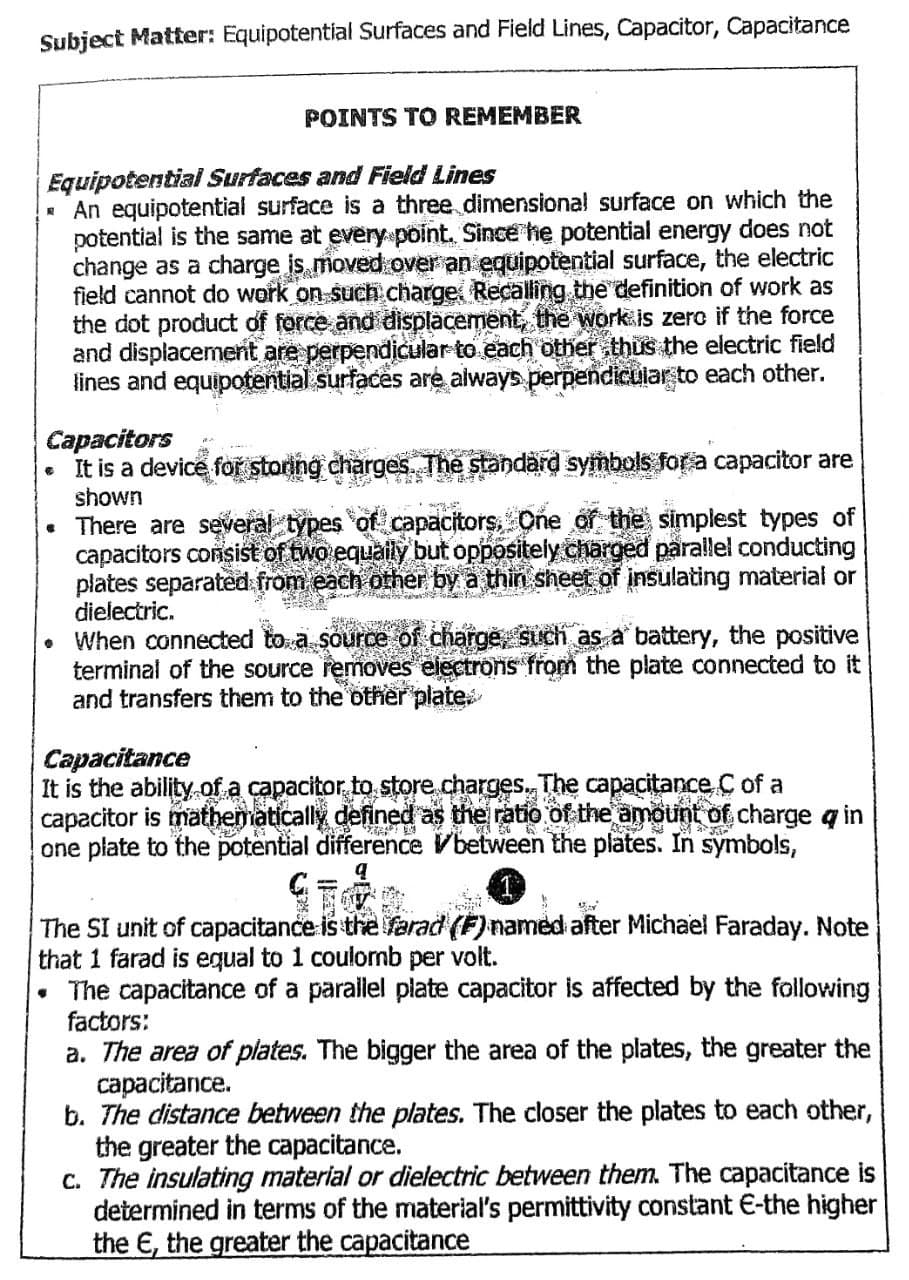
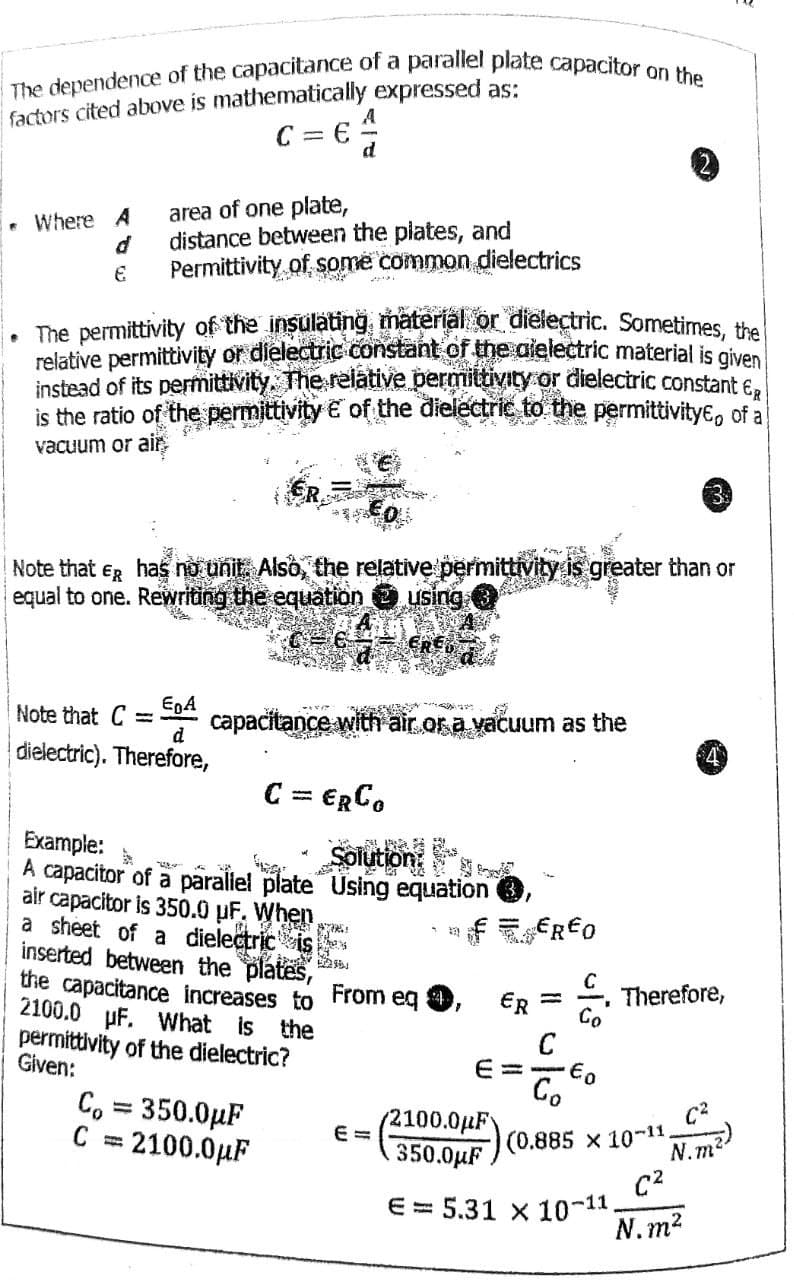
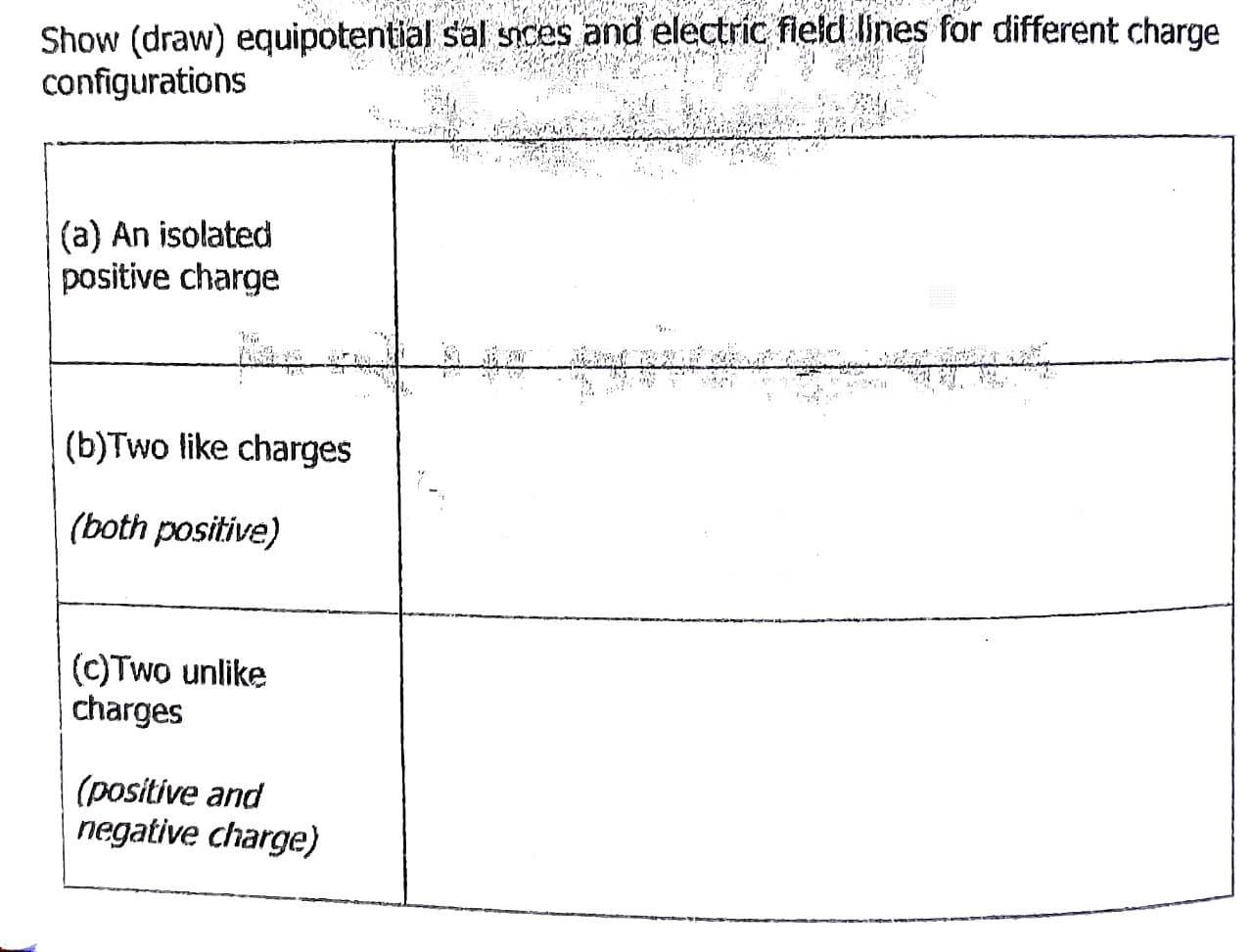
Subject Matter: Equipotential Surfaces and Field Lines, Capacitor, Capacitance POINTS TO REMEMBER Equipotential Surfaces and Field Lines An equipotential surface is a three dimensional surface on which the potential is the same at every point. Since he potential energy does not change as a charge is moved over an equipotential surface, the electric field cannot do work on such charged Recalling the definition of work as the dot product of force and displacement, the work is zero if the force and displacement are perpendicular to each other ,thus the electric field lines and equipotential surfaces are always perpendicular to each other. Capacitors . It is a device for storing charges. The standard symbols for a capacitor are shown There are several types of capacitors, One of the simplest types of capacitors consist of two equally but oppositely charged parallel conducting plates separated from each other by a thin sheet of insulating material or dielectric. When connected to a source of charge, such as a battery, the positive terminal of the source removes electrons from the plate connected to it and transfers them to the other plate. Capacitance It is the ability of a capacitor to store charges. The capacitance C of a capacitor is mathematically defined as the ratio of the amount of charge q in one plate to the potential difference V/between the plates. In symbols, The SI unit of capacitance is the farad (F) named after Michael Faraday. Note that 1 farad is equal to 1 coulomb per volt. . The capacitance of a parallel plate capacitor is affected by the following factors: a. The area of plates. The bigger the area of the plates, the greater the capacitance. b. The distance between the plates. The closer the plates to each other, the greater the capacitance. C. The insulating material or dielectric between them. The capacitance is determined in terms of the material's permittivity constant E-the higher the E, the greater the capacitanceThe dependence of the capacitance of a parallel plate capacitor on the factors cited above is mathematically expressed as: C = 6- . Where A area of one plate, distance between the plates, and Permittivity of some common dielectrics The permittivity of the insulating material or dielectric. Sometimes, the relative permittivity or dielectric constant of the alelectric material is given instead of its permittivity. The relative permittivity or dielectric constant ER is the ratio of the permittivity & of the dielectric to the permittivityE, of a vacuum or air Note that ER has no unit. Also, the relative permittivity is greater than or equal to one. Rewriting the equation @ using 3 Note that C = SOA d capacitance with air or a vacuum as the dielectric). Therefore, C = ERCo Example: " Solution: A capacitor of a parallel plate Using equation @, air capacitor is 350.0 pF. When a sheet of a dielectric is 1 OFFERED inserted between the plates, the capacitance increases to From eg ER - Therefore, 2100.0 UF. What is the permittivity of the dielectric? C Given: 6 = Ep Co = 350.0uF Co 2100.0ALF C2 C = 2100.OF E = 350.OuF (0.885 x 10⁻¹¹ N. m2) Cz E = 5.31 x 10⁻¹¹ N. m2Show (draw) equipotential sal sices and electric field lines for different charge configurations (a) An isolated positive charge (b)Two like charges (both positive) (c)Two unlike charges (positive and negative charge)
Step by Step Solution
There are 3 Steps involved in it

Get step-by-step solutions from verified subject matter experts
 Study Help