







Question: general please help Th. When you last indulged in a bar of rich chocolate, a cup of hot cocos, a piece of chocolate cake, or
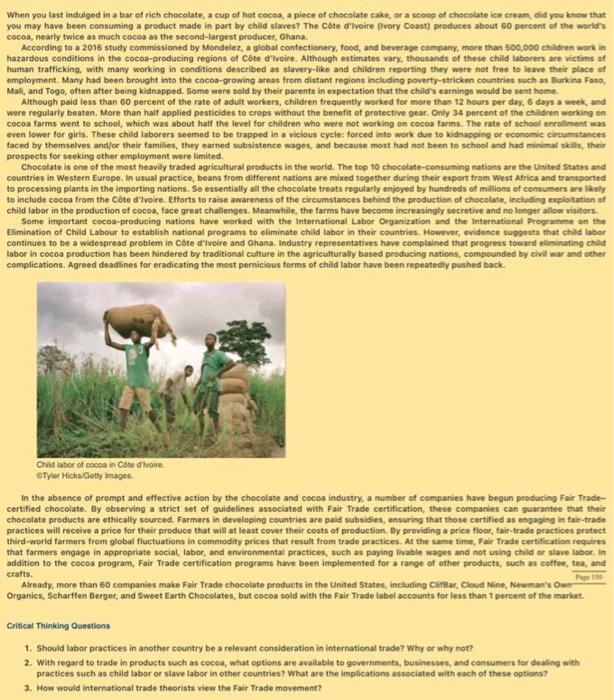
Th. When you last indulged in a bar of rich chocolate, a cup of hot cocos, a piece of chocolate cake, or a scoop of chocolate ice cream, did yoe knew that you may have been censuming a product made in part by child slaves? The Cobte d'lvoire (ivory Ceast) produces about 60 percent of the world's cocoa, nearly twice as much cocoa as the secend-largest producer, Ohana. According to a 2016 study commissioned by Mondelez, a global confectionery, food, and beverage company, more than 500,000 children work in hazardous conditions in the cocoa-producing regions of Cbte d'lvoire. Although estimates vary, thousands of these child laborers are victims of human traffieking. with many working in conditions described as slavery-like and children reporting they were not free to leave their place of employment. Many had been brought into the cocoa-growing areas from distant regions including poverty-stricken countries such as Murkina Faso, Mall, and Togo, often after being kidnapped. Some were sold by their parents in expectation that the child's earnings would be sent home. Although paid less than 60 percent of the rate of adult workers, children frequently worked for more than 12 hours per day, 6 days a week, and were regularly beaten. More than half applied pesticides to crops without the benefit of protective gear. Only 34 percent of the children werking on cocoa farms went to school, which was about half the level for children who were not working on cocoa farms. The rate ef school enrolliment was even lower for girls. These child laborers seemed to be trapped in a vicious cycle: forced into work due to kidnapping or economic circumstances faced by themselves and/or their tamilies, they earned subsistence wages, and because most had not been to school and had minimal skills, their prospects for seeking other employment were limited. Chocolate is one of the most heavily traded agricultural products in the world, The top 10 chocolate-consuming nations are the United States and countries in Western Europe. In usual practice, beans from different nations are mixed together during their expert from West Atrica and transported to processing plants in the importing nations. So essentially all the chocolate treats regularly enjoyed by hundreds of millions of consumers are likely to include cocoa from the Cobte divoire. Etforts to raise awareness of the circumstances behind the production of chocolate, including esploitation of child labor in the production of cocos, face great challenges. Meamwhile, the farms have become increasingly secretive and no lenger allow visitors. Some important cocoa-producing nations have worked with the International Labor Organization and the International Programme on the Elimination of Child Labour to establish national programs to oliminate child labor in their countries. However, evidence sugpests that child laber continues to be a widespread problem in Cote d'lvoire and Ghana. Industry representatives have complained that progress toward eliminating child Iabor in cocoa production has been hindered by traditional culture in the agriculturally based producing nations, compounded by civil war and ether complications. Agreed deadlines for eradicating the most pernicious forms of child labor have been repeatedly pushed back. otyer Hicka/Getty mages. In the absence of prompt and effective action by the chocolate and cocoa industry, a number of companies have begun producing Fair Tradecertified chocolate. By observing a strict set of guidelines asseclated with Fair Trade certification, these companies can guarantee that their chocolate preducts are ethically sourced. Farmers in developing countries are paid subsidies, ensuring that those certified as engaging in tair-trade practices will receive a price for their produce that will at least cover their costs of production. By providing a price floor, fair-trade practices protect third-world farmers from global fluctuations in commodity prices that result from trade practices. At the same time, Fair Trade certification requires that farmers engage in appropriate social, labor, and envirenmental practices, such as paying fivable wages and not using child or alave labor, in addition to the cocos program, Fair Trade certification programs have been implemented for a range of other products, such as colfee, tea, and crafts. Already, more than 60 companies make Fair Trade chocolate products in the United States, including ClitBar, Cloud Nine, Newman's Own Organics, Scharffen Berger, and Sweet Earth Chocelates, but cocea sold with the Fair Trade label aceounts for less than 1 percent of the market. Critical Thinking Questions 1. Should labor practices in another country be a relevant consideration in international trade? Why or why not? 2. With regard to trade in products such as cocoa, what options are available to governments, businesses, and consumers fer dealing with practices such as child labor or slave labor in other countries? What are the implications associated with each of these options? 3. How would international trade theorists view the Fair Trade movement
Step by Step Solution
There are 3 Steps involved in it

Get step-by-step solutions from verified subject matter experts
 Study Help