







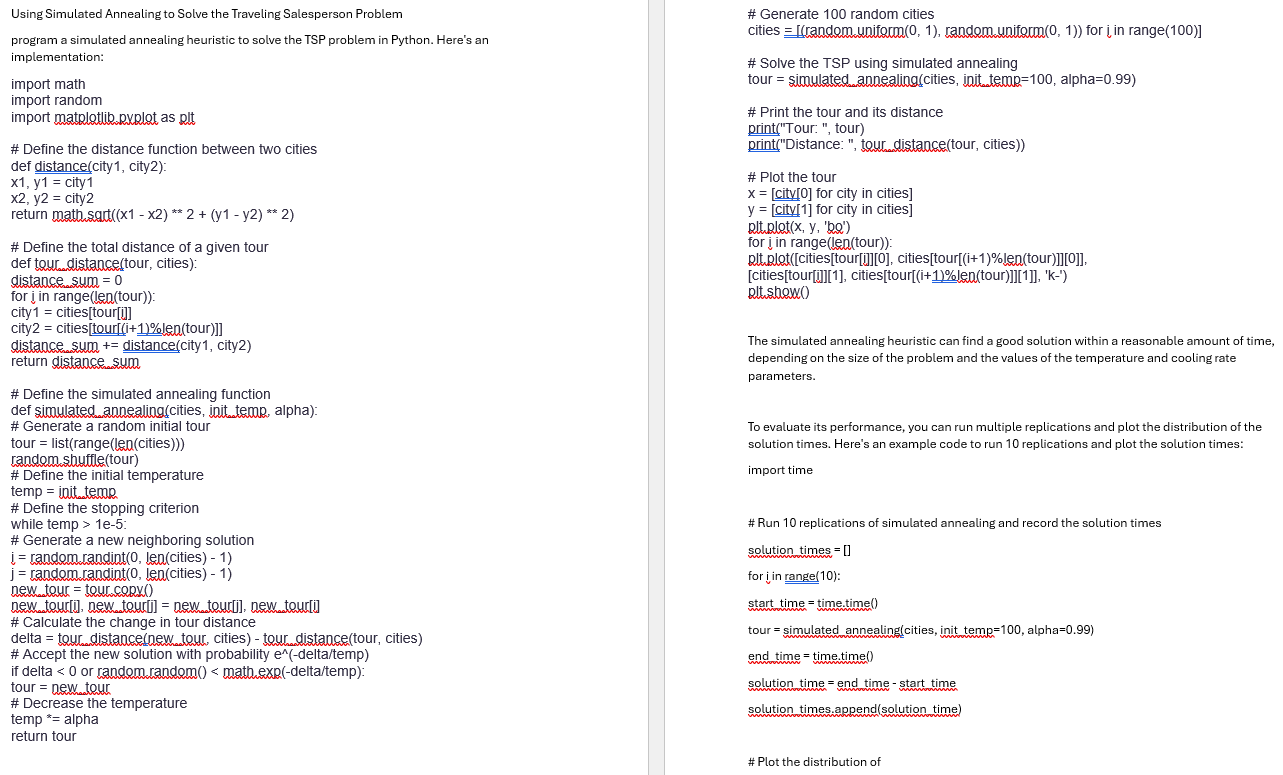
Question: # Generate 1 0 0 random cities cities = [ ( random . uniform ( 0 , 1 ) , random.uniform ( 0 , 1
# Generate random cities
cities randomuniform random.uniform for i in range
# Solve the TSP using simulated annealing
tour simulated annealingcities jnitatemp alpha
# Print the tour and its distance
printTour: tour
printDistance: tournadistancetour cities
# Plot the tour
xcity for city in cities
y city for city in cities
pltwlotx ybu
for in rangeleptour:
pltplotcitiestouri citiestourilentour
citiestouri citiestourilentourk
Qlt show
The simulated annealing heuristic can find a good solution within a reasonable amount of time,
depending on the size of the problem and the values of the temperature and cooling rate
parameters.
To evaluate its performance, you can run multiple replications and plot the distribution of the
solution times. Here's an example code to run replications and plot the solution times:
import time
# Run replications of simulated annealing and record the solution times
solution times
for i in range:
start time time. time
tour simulated annealingcities init temp alpha
end time time.time
solution time end time start time
solution times.appendsolution time
# Plot the distribution of
Could you mathematically model this code and write it in GAMS, then explain the code step by step? DON'T ask artificial intelligence because I can understand from its answer that you asked it and artificial intelligence solves this wrong. There are a lot of errors in the code.
Step by Step Solution
There are 3 Steps involved in it
1 Expert Approved Answer
Step: 1 Unlock

Question Has Been Solved by an Expert!
Get step-by-step solutions from verified subject matter experts
Step: 2 Unlock
Step: 3 Unlock
 Study Help