







Question: given the above information, i am having a hard time calculating direct labour. also during the year they made 39 batches of skinny bar. Exhibit
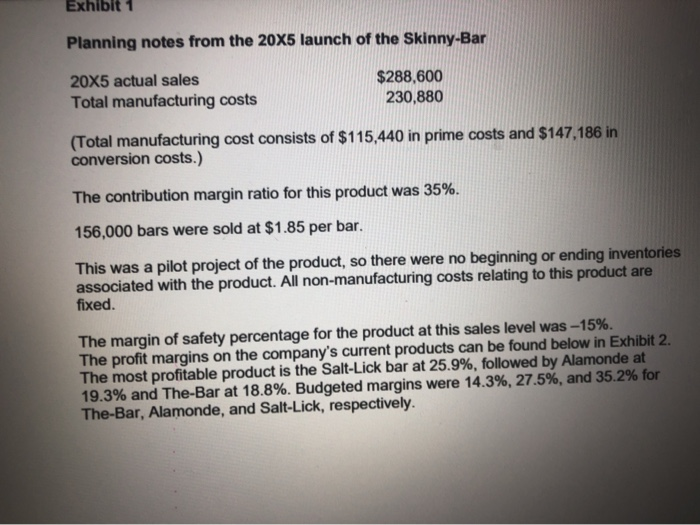
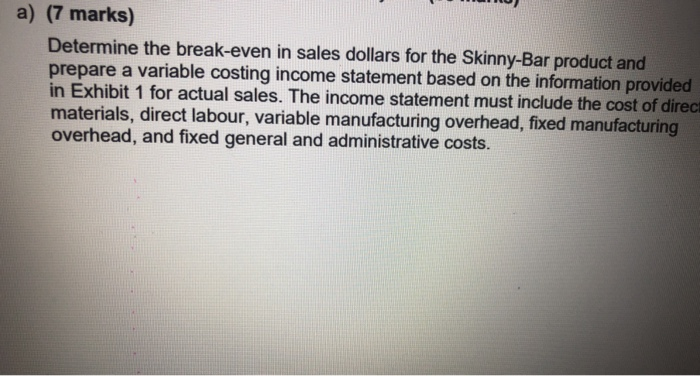
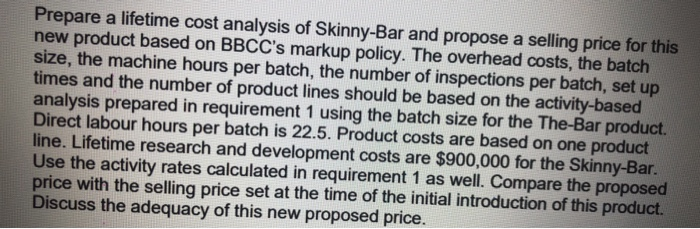
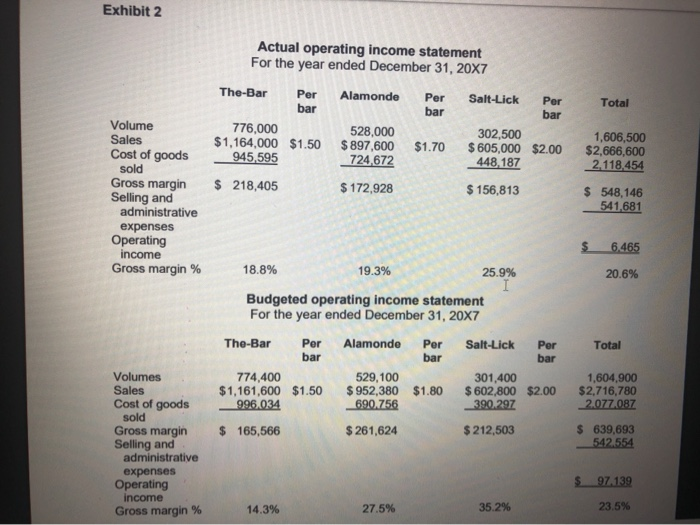
Exhibit 1 Planning notes from the 20x5 launch of the Skinny-Bar 20X5 actual sales Total manufacturing costs $288,600 230,880 (Total manufacturing cost consists of $115,440 in prime costs and $147,186 in conversion costs.) The contribution margin ratio for this product was 35%. 156,000 bars were sold at $1.85 per bar. This was a pilot project of the product, so there were no beginning or ending inventories associated with the product. All non-manufacturing costs relating to this product are fixed. The margin of safety percentage for the product at this sales level was -15%. The profit margins on the company's current products can be found below in Exhibit 2. The most profitable product is the Salt-Lick bar at 25.9%, followed by Alamonde at 19.3% and The-Bar at 18.8%. Budgeted margins were 14.3%, 27.5%, and 35.2% for The-Bar, Alamonde, and Salt-Lick, respectively. a) (7 marks) Determine the break-even in sales dollars for the Skinny-Bar product and prepare a variable costing income statement based on the information provided in Exhibit 1 for actual sales. The income statement must include the cost of direc materials, direct labour, variable manufacturing overhead, fixed manufacturing overhead, and fixed general and administrative costs. Prepare a lifetime cost analysis of Skinny-Bar and propose a selling price for this new product based on BBCC's markup policy. The overhead costs, the batch size, the machine hours per batch, the number of inspections per batch, set up times and the number of product lines should be based on the activity-based analysis prepared in requirement 1 using the batch size for the The-Bar product. Direct labour hours per batch is 22.5. Product costs are based on one product line. Lifetime research and development costs are $900,000 for the Skinny-Bar. Use the activity rates calculated in requirement 1 as well. Compare the proposed price with the selling price set at the time of the initial introduction of this product. Discuss the adequacy of this new proposed price. Exhibit 2 Actual operating income statement For the year ended December 31, 20X7 The-Bar Per Alamonde Per Salt-Lick Per bar bar bar 776,000 528,000 302,500 $1,164,000 $1.50 $ 897,600 $1.70 $ 605,000 $2.00 945,595 724,672 448.187 Total 1,606,500 $2,666,600 2.118,454 $ 218,405 $ 172,928 $ 156,813 Volume Sales Cost of goods sold Gross margin Selling and administrative expenses Operating income Gross margin % $ 548,146 541681 6.465 18.8% 19.3% 25.9% 20.6% I Total Budgeted operating income statement For the year ended December 31, 20X7 The-Bar Per Alamonde Per Salt-Lick Per bar bar bar 774,400 529,100 301,400 $1,161,600 $1.50 $ 952,380 $1.80 $ 602,800 $2.00 996.034 690.756 390.297 $ 165,566 $ 261,624 $ 212,503 1,604,900 $2,716,780 2077,087 Volumes Sales Cost of goods sold Gross margin Selling and administrative expenses Operating income Gross margin % $ 639,693 542.554 97139 14.3% 27.5% 35.2% 23.5% Exhibit 1 Planning notes from the 20x5 launch of the Skinny-Bar 20X5 actual sales Total manufacturing costs $288,600 230,880 (Total manufacturing cost consists of $115,440 in prime costs and $147,186 in conversion costs.) The contribution margin ratio for this product was 35%. 156,000 bars were sold at $1.85 per bar. This was a pilot project of the product, so there were no beginning or ending inventories associated with the product. All non-manufacturing costs relating to this product are fixed. The margin of safety percentage for the product at this sales level was -15%. The profit margins on the company's current products can be found below in Exhibit 2. The most profitable product is the Salt-Lick bar at 25.9%, followed by Alamonde at 19.3% and The-Bar at 18.8%. Budgeted margins were 14.3%, 27.5%, and 35.2% for The-Bar, Alamonde, and Salt-Lick, respectively. a) (7 marks) Determine the break-even in sales dollars for the Skinny-Bar product and prepare a variable costing income statement based on the information provided in Exhibit 1 for actual sales. The income statement must include the cost of direc materials, direct labour, variable manufacturing overhead, fixed manufacturing overhead, and fixed general and administrative costs. Prepare a lifetime cost analysis of Skinny-Bar and propose a selling price for this new product based on BBCC's markup policy. The overhead costs, the batch size, the machine hours per batch, the number of inspections per batch, set up times and the number of product lines should be based on the activity-based analysis prepared in requirement 1 using the batch size for the The-Bar product. Direct labour hours per batch is 22.5. Product costs are based on one product line. Lifetime research and development costs are $900,000 for the Skinny-Bar. Use the activity rates calculated in requirement 1 as well. Compare the proposed price with the selling price set at the time of the initial introduction of this product. Discuss the adequacy of this new proposed price. Exhibit 2 Actual operating income statement For the year ended December 31, 20X7 The-Bar Per Alamonde Per Salt-Lick Per bar bar bar 776,000 528,000 302,500 $1,164,000 $1.50 $ 897,600 $1.70 $ 605,000 $2.00 945,595 724,672 448.187 Total 1,606,500 $2,666,600 2.118,454 $ 218,405 $ 172,928 $ 156,813 Volume Sales Cost of goods sold Gross margin Selling and administrative expenses Operating income Gross margin % $ 548,146 541681 6.465 18.8% 19.3% 25.9% 20.6% I Total Budgeted operating income statement For the year ended December 31, 20X7 The-Bar Per Alamonde Per Salt-Lick Per bar bar bar 774,400 529,100 301,400 $1,161,600 $1.50 $ 952,380 $1.80 $ 602,800 $2.00 996.034 690.756 390.297 $ 165,566 $ 261,624 $ 212,503 1,604,900 $2,716,780 2077,087 Volumes Sales Cost of goods sold Gross margin Selling and administrative expenses Operating income Gross margin % $ 639,693 542.554 97139 14.3% 27.5% 35.2% 23.5%
Step by Step Solution
There are 3 Steps involved in it

Get step-by-step solutions from verified subject matter experts
 Study Help