







Question: Homework help needed for NPV problem. Chart and pictures are attached below. Net Investment Straight Line Final year adjustments Sale of old Assets Terminal Value
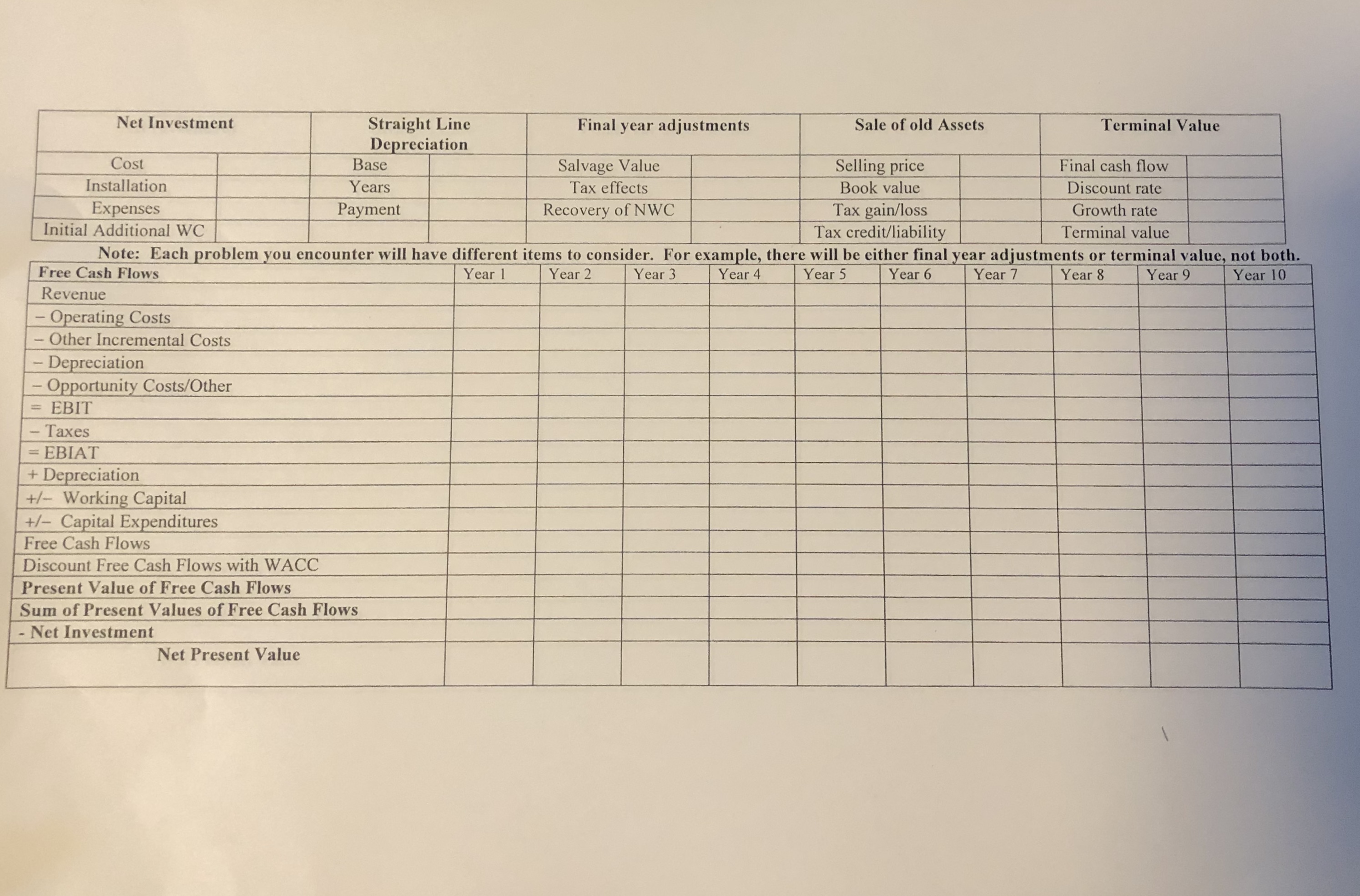
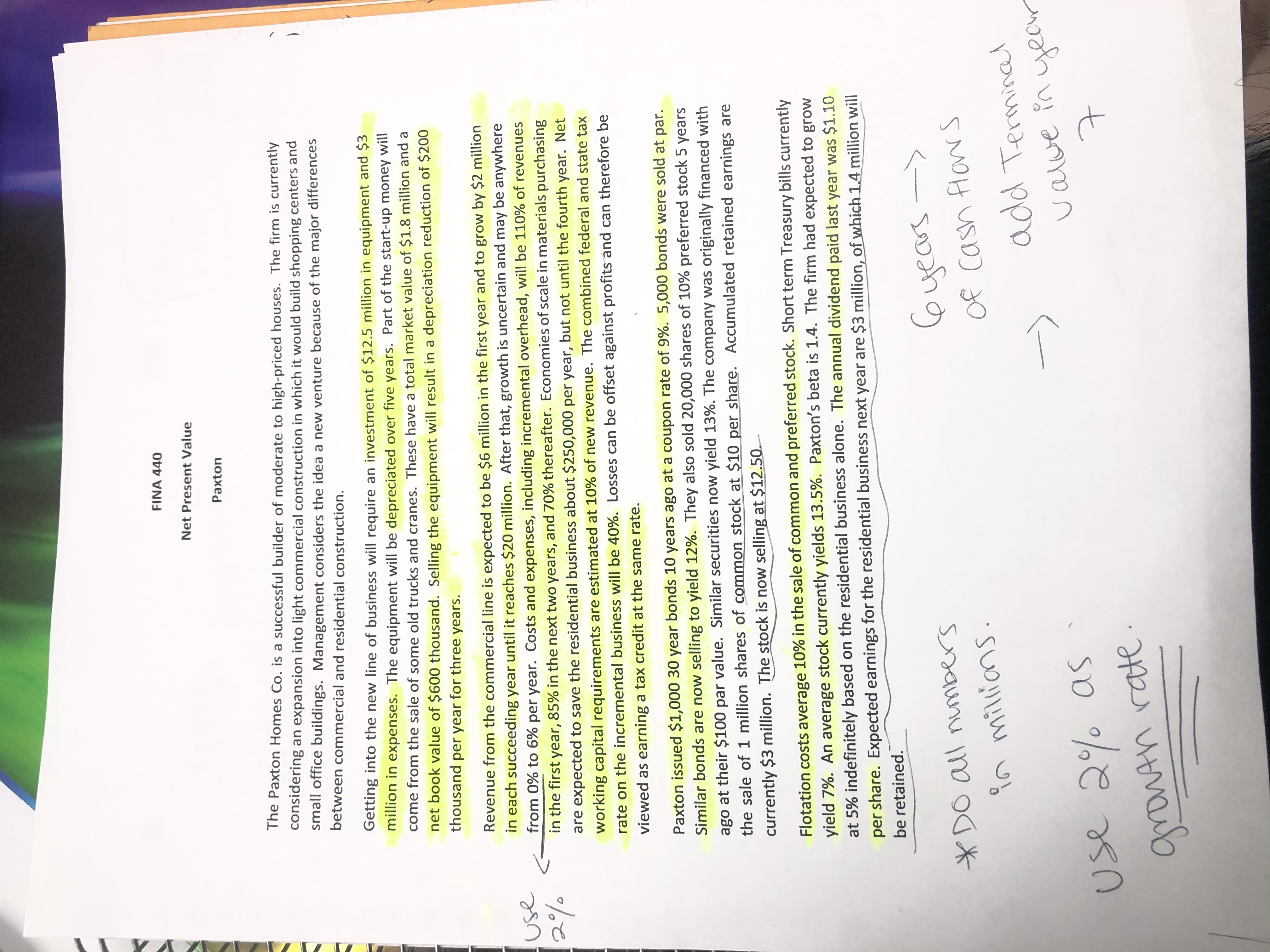
Homework help needed for NPV problem. Chart and pictures are attached below.
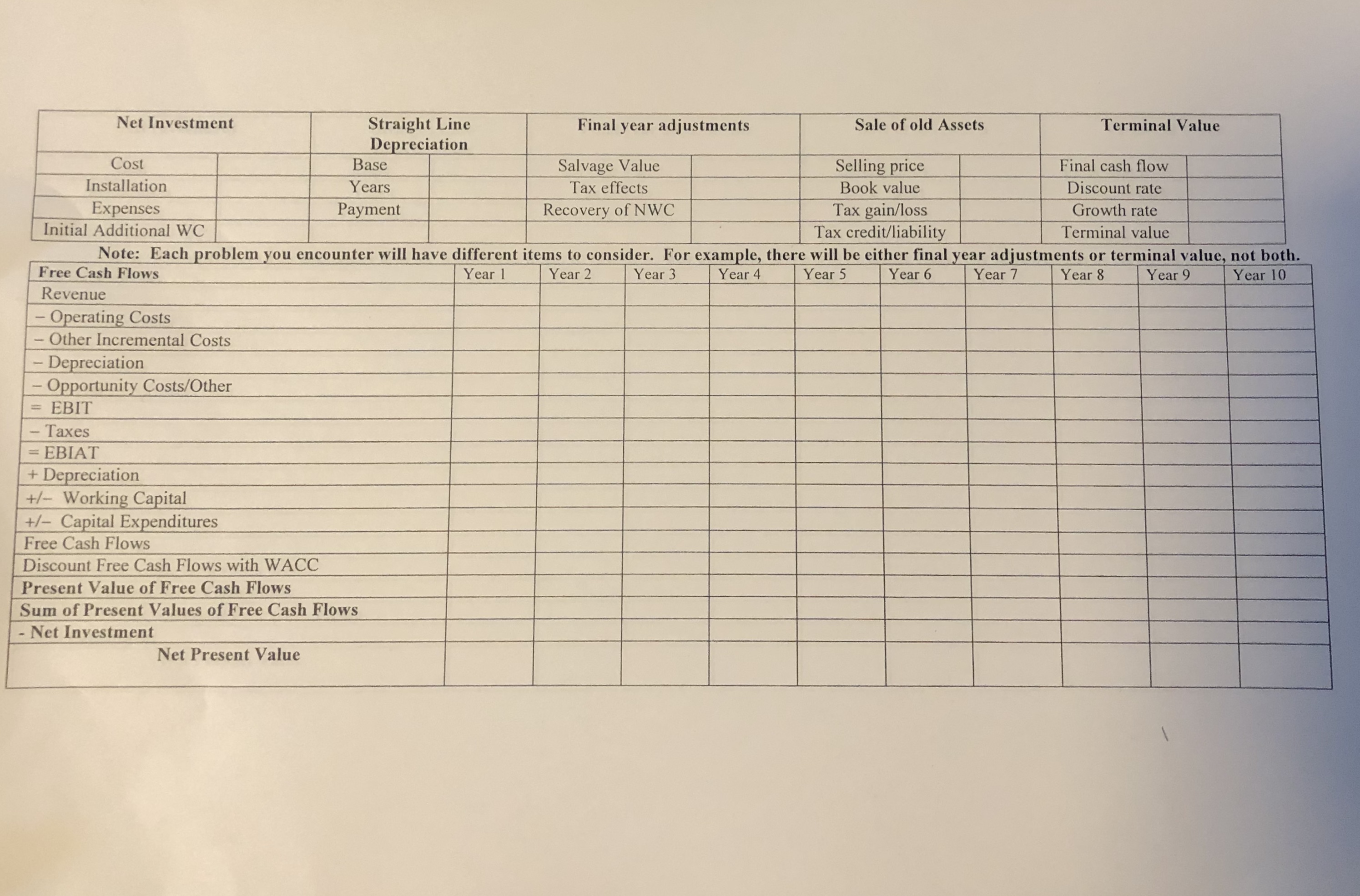
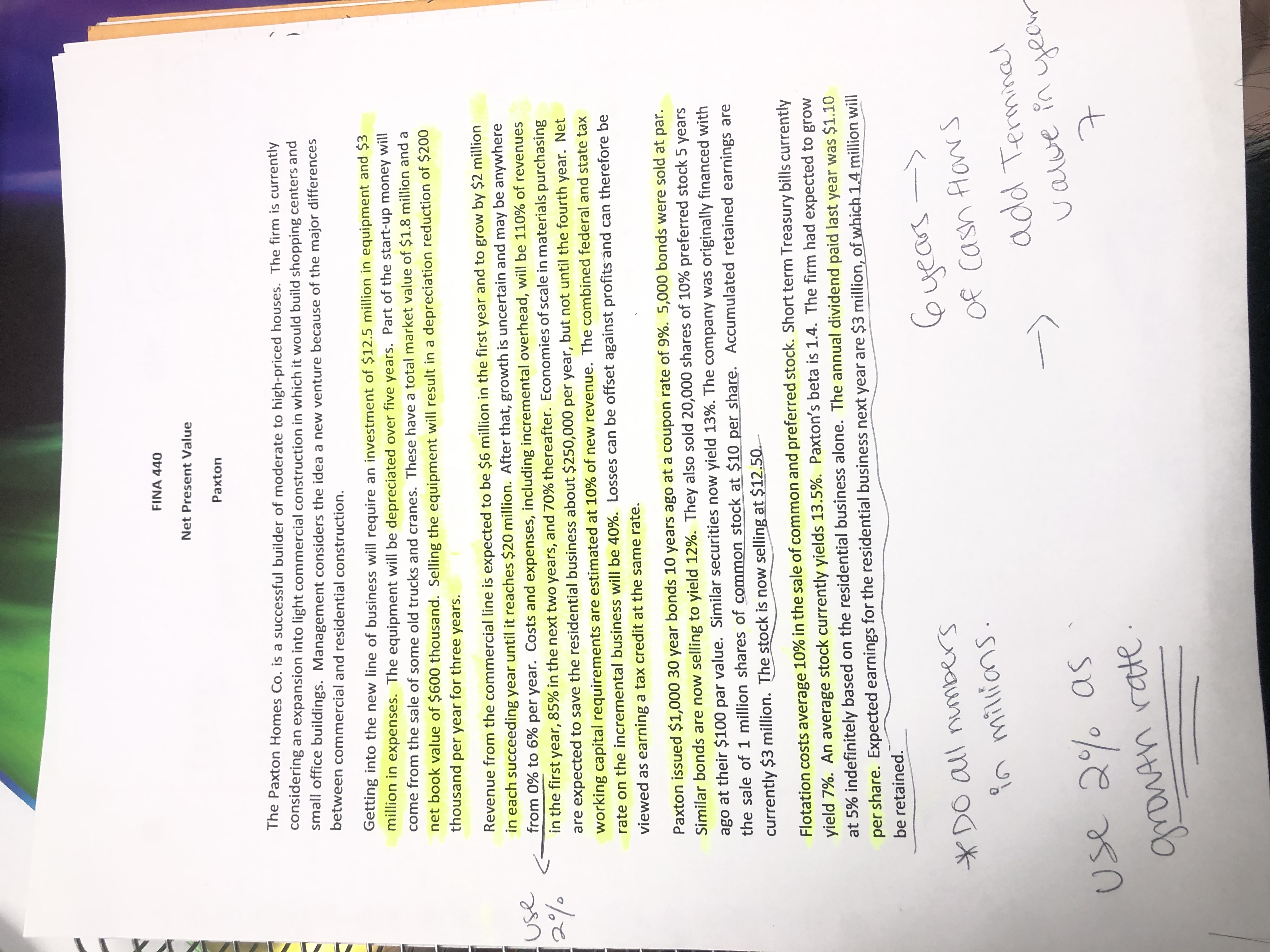
Net Investment Straight Line Final year adjustments Sale of old Assets Terminal Value Depreciation Cost Base Salvage Value Selling price Final cash flow Installation Years Tax effects Book value Discount rate Expenses Payment Recovery of NWC Tax gain/loss Growth rate Initial Additional WC Tax credit/liability Terminal value Note: Each problem you encounter will have different items to consider. For example, there will be either final year adjustments or terminal value, not both. Free Cash Flows Year 1 Year 2 Year 3 Year 4 Year 5 Year 6 Year 7 Year 8 Year 9 Year 10 Revenue - Operating Costs - Other Incremental Costs - Depreciation - Opportunity Costs/Other = EBIT - Taxes = EBIAT + Depreciation +/- Working Capital +/- Capital Expenditures Free Cash Flows Discount Free Cash Flows with WACC Present Value of Free Cash Flows Sum of Present Values of Free Cash Flows - Net Investment Net Present ValueFINA 440 Net Present Value Paxton The Paxton Homes Co. is a successful builder of moderate to high-priced houses. The firm is currently considering an expansion into light commercial construction in which it would build shopping centers and small office buildings. Management considers the idea a new venture because of the major differences between commercial and residential construction. Getting into the new line of business will require an investment of $12.5 million in equipment and $3 million in expenses. The equipment will be depreciated over five years. Part of the start-up money will come from the sale of some old trucks and cranes. These have a total market value of $1.8 million and a net book value of $600 thousand. Selling the equipment will result in a depreciation reduction of $200 thousand per year for three years. Revenue from the commercial line is expected to be $6 million in the first year and to grow by $2 million use in each succeeding year until it reaches $20 million. After that, growth is uncertain and may be anywhere 2% from 0% to 6% per year. Costs and expenses, including incremental overhead, will be 110% of revenues in the first year, 85% in the next two years, and 70% thereafter. Economies of scale in materials purchasing are expected to save the residential business about $250,000 per year, but not until the fourth year. Net working capital requirements are estimated at 10% of new revenue. The combined federal and state tax rate on the incremental business will be 40%. Losses can be offset against profits and can therefore be viewed as earning a tax credit at the same rate. Paxton issued $1,000 30 year bonds 10 years ago at a coupon rate of 9%. 5,000 bonds were sold at par. Similar bonds are now selling to yield 12%. They also sold 20,000 shares of 10% preferred stock 5 years ago at their $100 par value. Similar securities now yield 13%. The company was originally financed with the sale of 1 million shares of common stock at $10 per share. Accumulated retained earnings are currently $3 million. The stock is now selling at $12.50. Flotation costs average 10% in the sale of common and preferred stock. Short term Treasury bills currently yield 7%. An average stock currently yields 13.5%. Paxton's beta is 1.4. The firm had expected to grow at 5% indefinitely based on the residential business alone. The annual dividend paid last year was $1.10 per share. Expected earnings for the residential business next year are $3 million, of which 1.4 million will be retained. * Do all numbers 6 years - > in millions . of cash flows - ) add Terminal Use 2% as value in year growth rate
Step by Step Solution
There are 3 Steps involved in it

Get step-by-step solutions from verified subject matter experts
 Study Help