







Question: How did we come up with this answer? (Question and Final Answer are INCLUDED) 8. a. Using EV approach: EV(A) = 230, EV(B) = 224
How did we come up with this answer? (Question and Final Answer are INCLUDED)
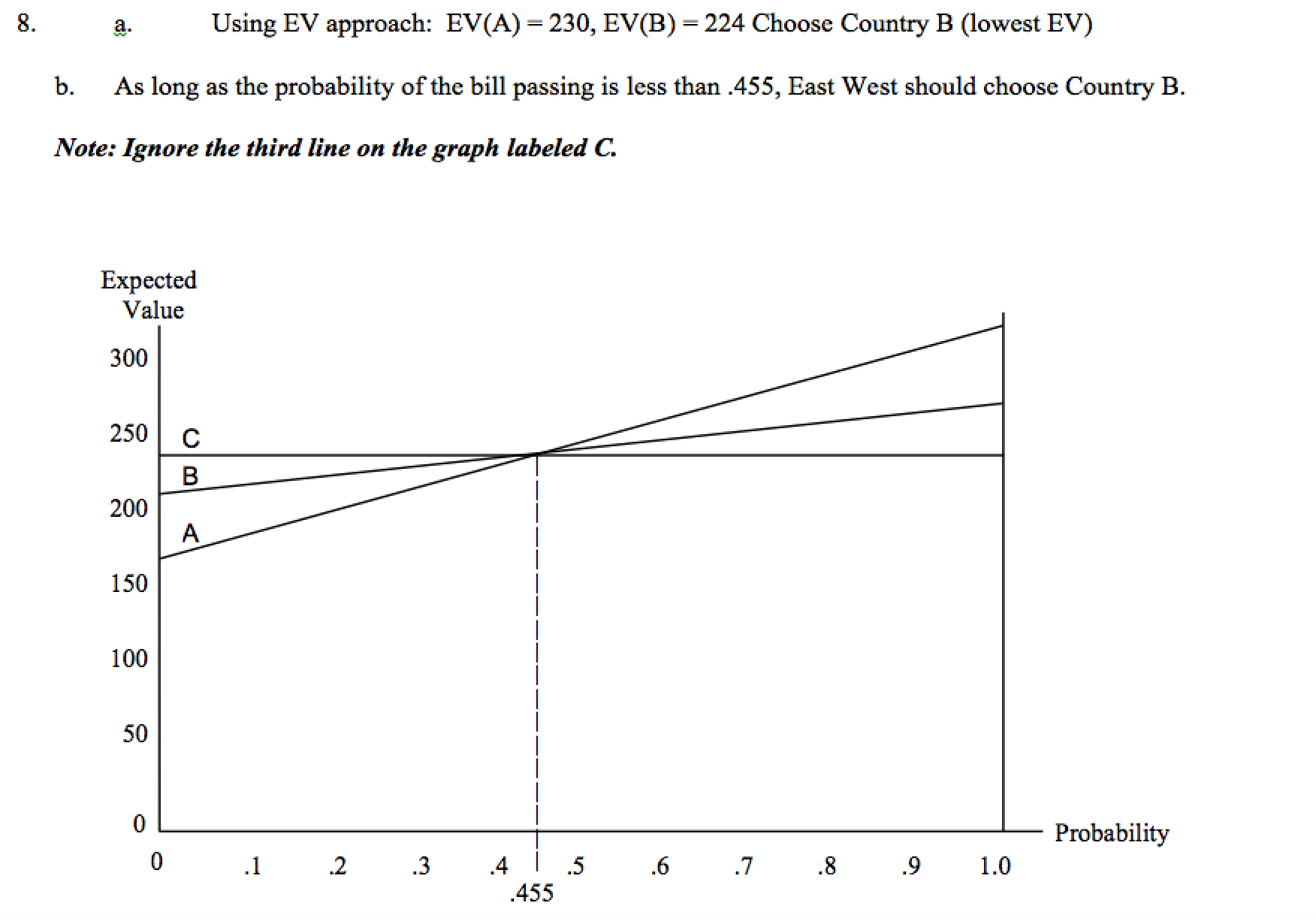
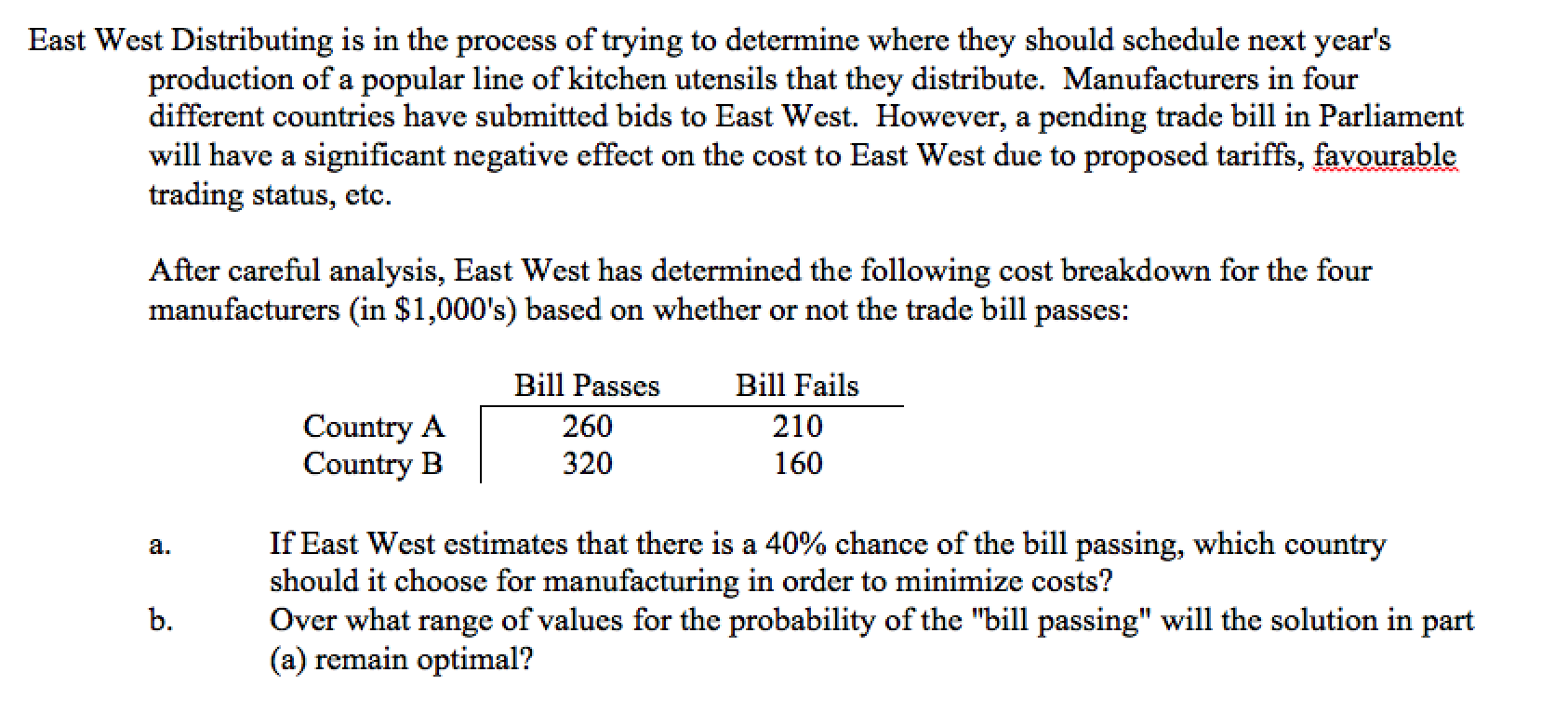
8. a. Using EV approach: EV(A) = 230, EV(B) = 224 Choose Country B (lowest EV) b. As long as the probability of the bill passing is less than .455, East West should choose Country B. Note: Ignore the third line on the graph labeled C. Expected Value 300 250 C B 200 A 150 100 50 0 0 .1 Probability .2 .3 .4 .5 .6 7 .8 .9 1.0 .455East West Distributing is in the process of trying to determine where they should schedule next year's production of a popular line of kitchen utensils that they distribute. Manufacturers in four different countries have submitted bids to East West. However, a pending trade bill in Parliament will have a signicant negative effect on the cost to East 1West due to proposed tariffs, favourable trading status, etc. Aer carell analysis, East West has determined the following cost breakdown for the four manufacturers (in $1,000's) based on whether or not the trade bill passes: Bill Passes Bill Fails Country A 260 210 Country B 320 160 a. If East West estimates that there is a 4D% chance of the bill passing, which country should it choose for manufacturing in order to minimize costs? b. Over what range of values for the probability of the "bill passing" will the solution in part (a) remain optimal
Step by Step Solution
There are 3 Steps involved in it

Get step-by-step solutions from verified subject matter experts
 Study Help