







Question: Please solve it accordingly. Please solve for the Work Plan Project Plan Project overview Aims The aim of the PROJECT is for you to demonstrate
Please solve it accordingly.
Please solve for the Work Plan
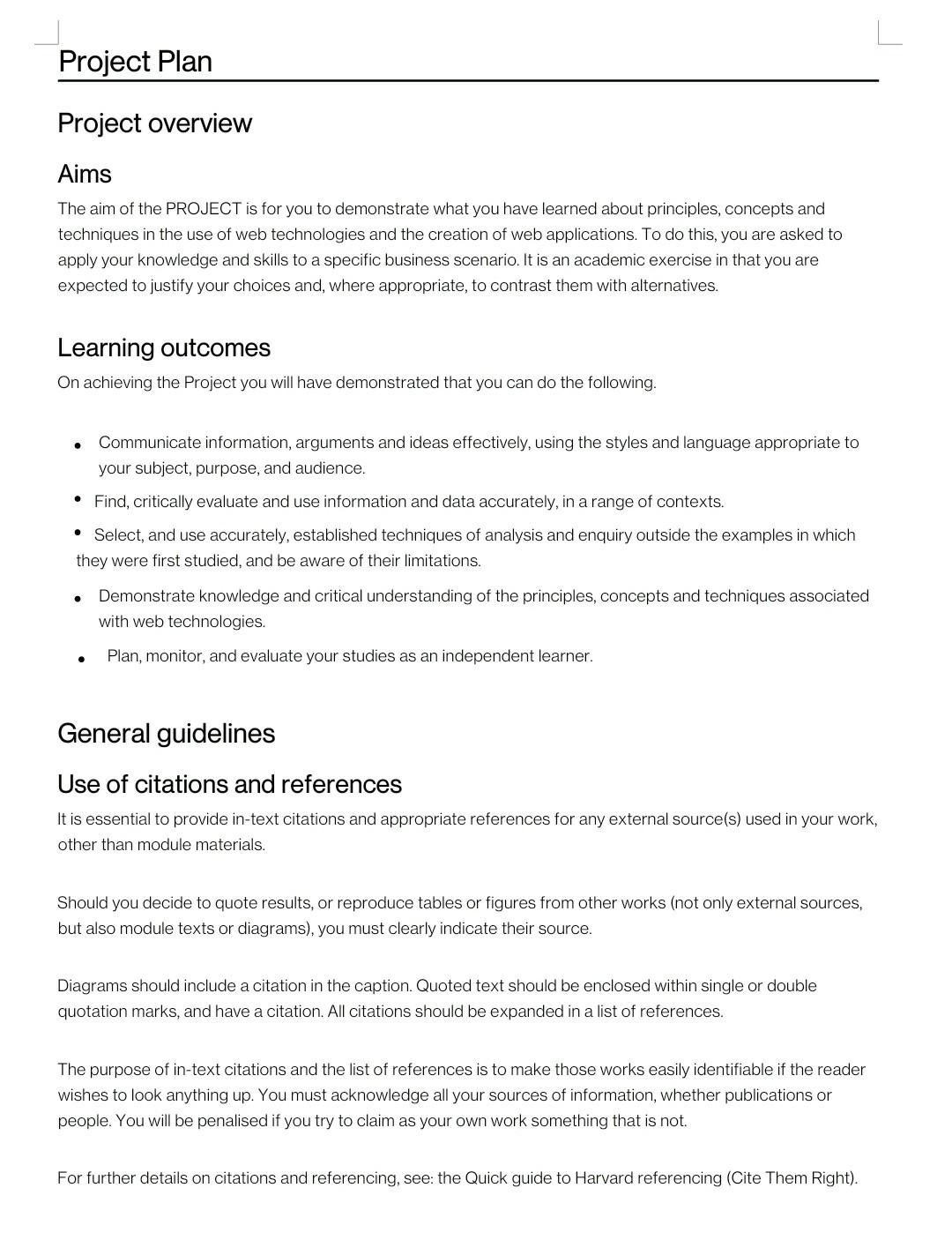
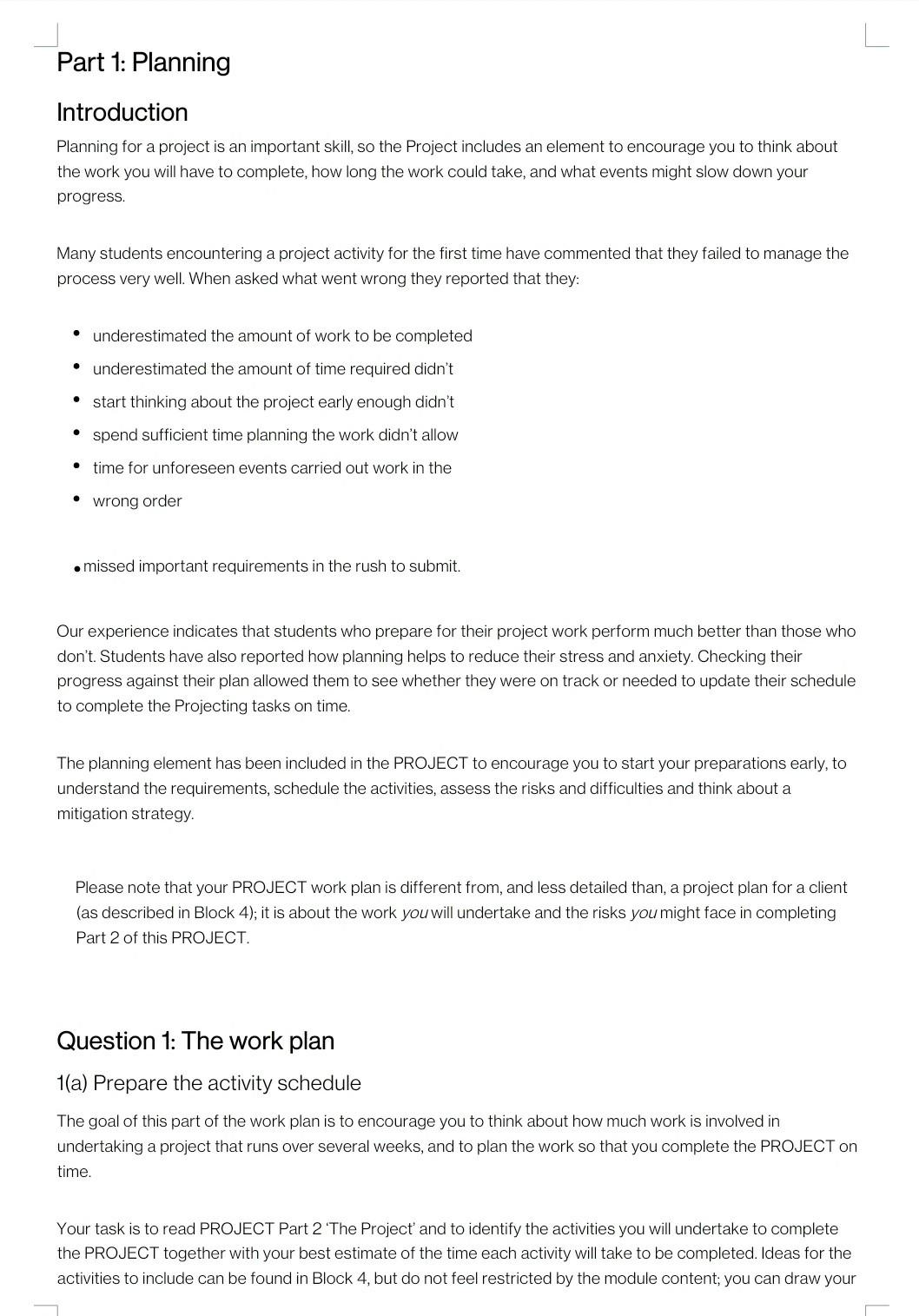
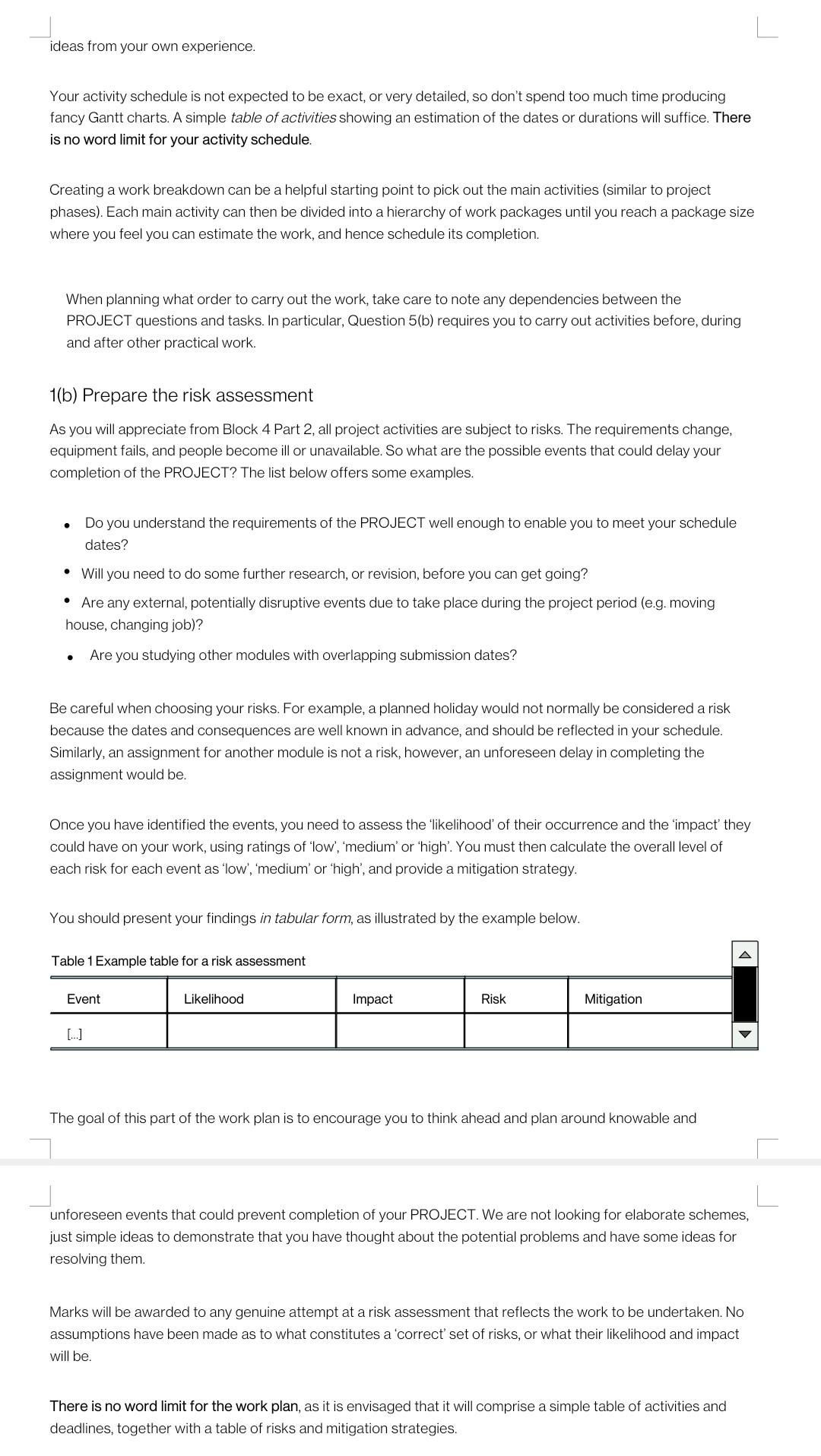
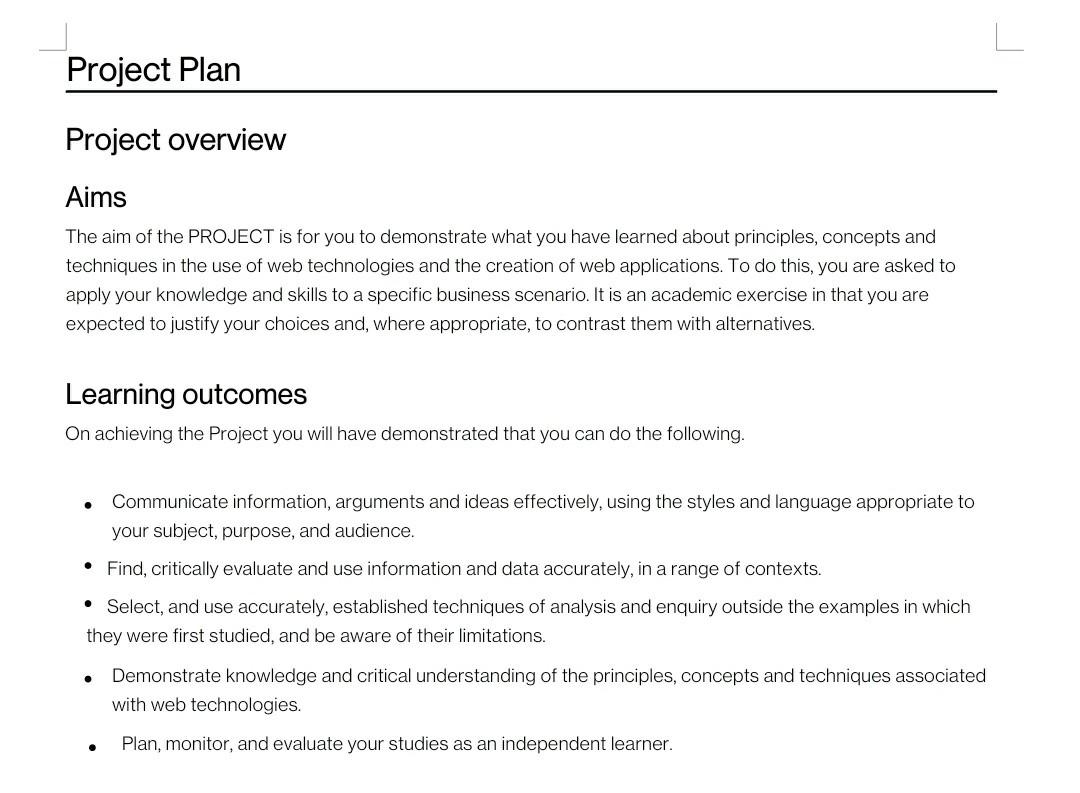
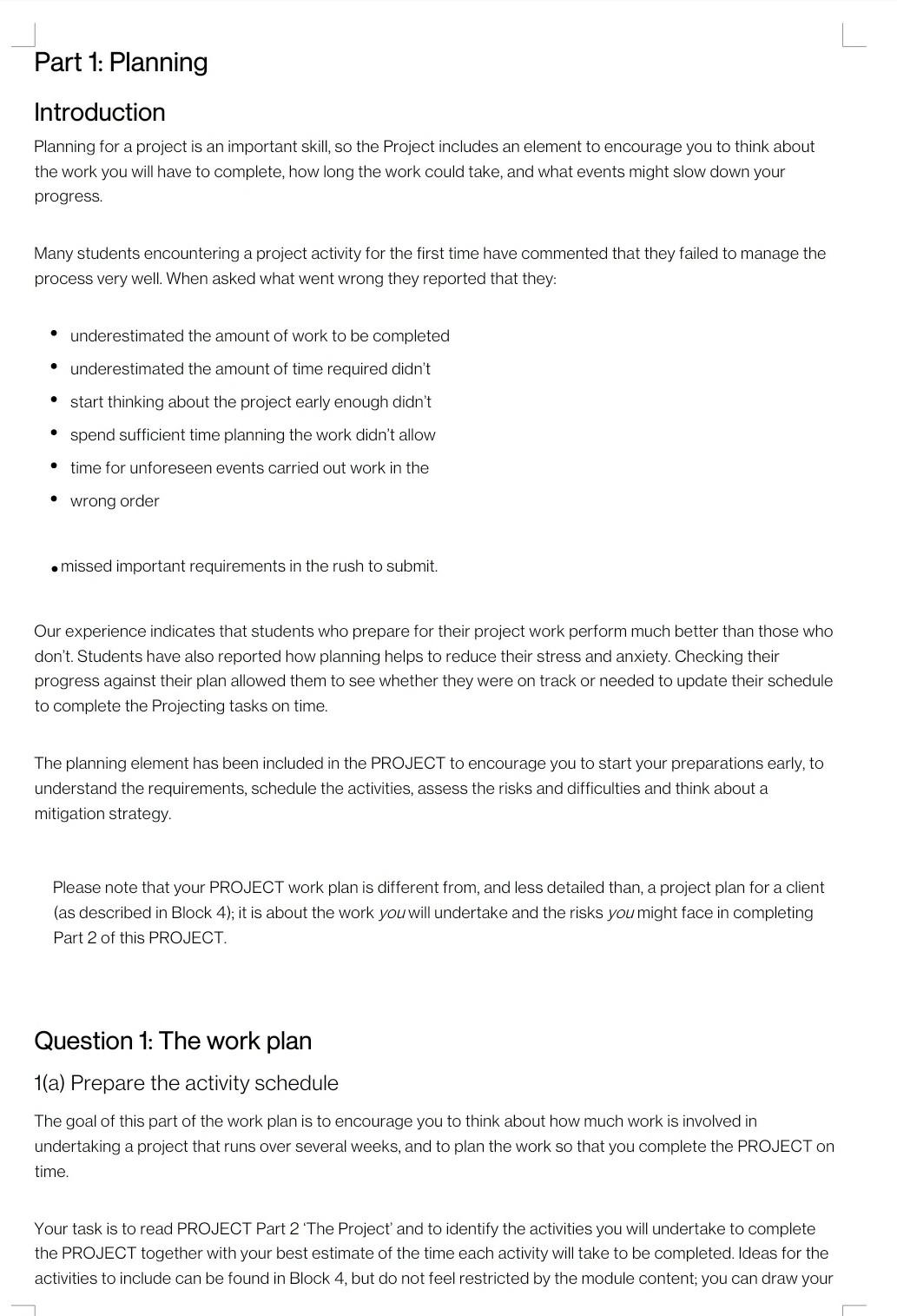
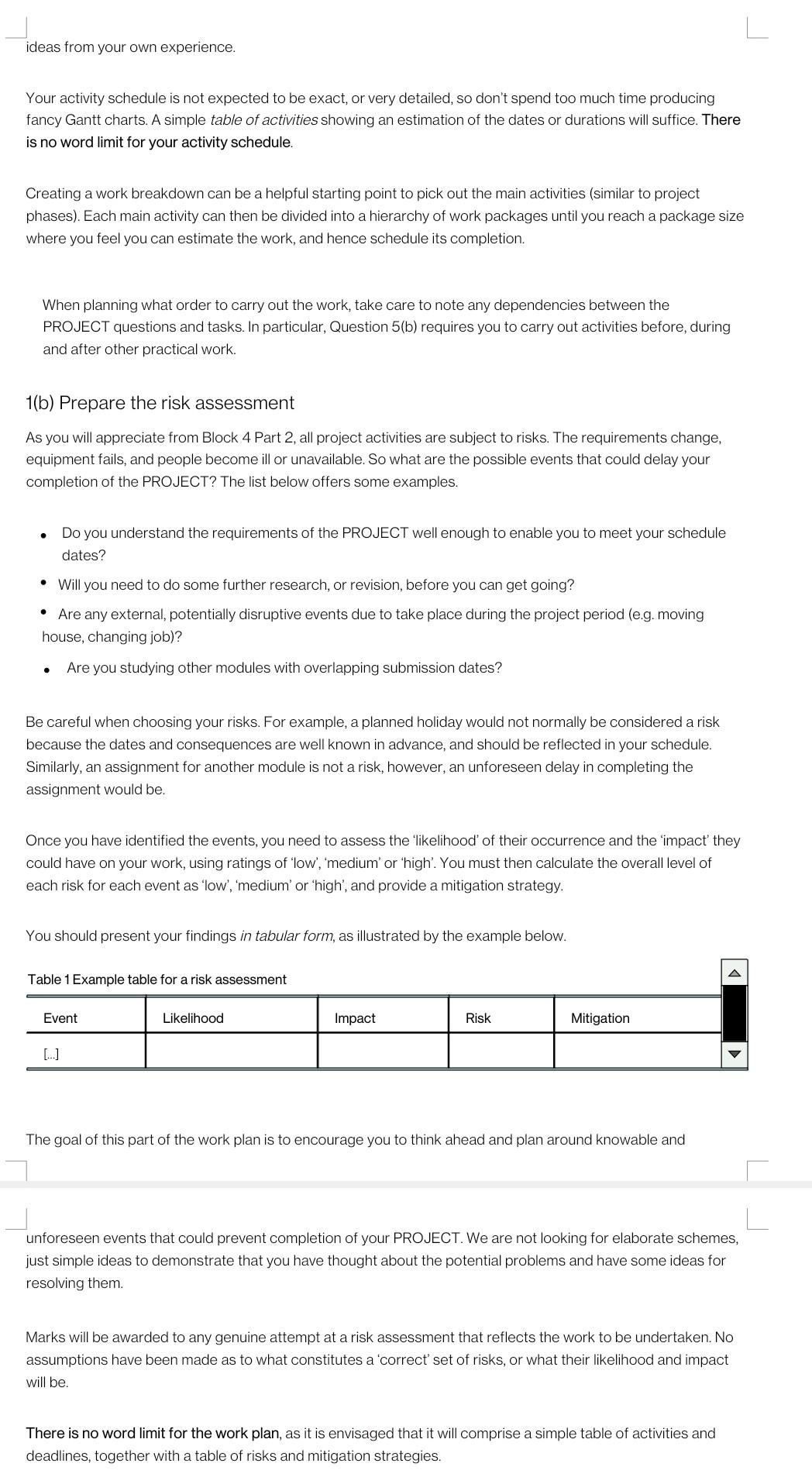
Project Plan Project overview Aims The aim of the PROJECT is for you to demonstrate what you have learned about principles, concepts and techniques in the use of web technologies and the creation of web applications. To do this, you are asked to apply your knowledge and skills to a specific business scenario. It is an academic exercise in that you are expected to justify your choices and, where appropriate, to contrast them with alternatives. Learning outcomes On achieving the Project you will have demonstrated that you can do the following. . Communicate information, arguments and ideas effectively, using the styles and language appropriate to your subject, purpose, and audience. Find, critically evaluate and use information and data accurately, in a range of contexts. Select, and use accurately, established techniques of analysis and enquiry outside the examples in which they were first studied, and be aware of their limitations. . Demonstrate knowledge and critical understanding of the principles, concepts and techniques associated with web technologies. Plan, monitor, and evaluate your studies as an independent learner. General guidelines Use of citations and references It is essential to provide in-text citations and appropriate references for any external source(s) used in your work, other than module materials. Should you decide to quote results, or reproduce tables or figures from other works (not only external sources, but also module texts or diagrams), you must clearly indicate their source. Diagrams should include a citation in the caption. Quoted text should be enclosed within single or double quotation marks, and have a citation. All citations should be expanded in a list of references. The purpose of in-text citations and the list of references is to make those works easily identifiable if the reader wishes to look anything up. You must acknowledge all your sources of information, whether publications or people. You will be penalised if you try to claim as your own work something that is not. For further details on citations and referencing, see: the Quick guide to Harvard referencing (Cite Them Right). Part 1: Planning Introduction Planning for a project is an important skill, so the Project includes an element to encourage you to think about the work you will have to complete, how long the work could take, and what events might slow down your progress. Many students encountering a project activity for the first time have commented that they failed to manage the process very well. When asked what went wrong they reported that they: underestimated the amount of work to be completed underestimated the amount of time required didn't start thinking about the project early enough didn't spend sufficient time planning the work didn't allow time for unforeseen events carried out work in the wrong order . missed important requirements in the rush to submit. Our experience indicates that students who prepare for their project work perform much better than those who don't. Students have also reported how planning helps to reduce their stress and anxiety. Checking their progress against their plan allowed them to see whether they were on track or needed to update their schedule to complete the Projecting tasks on time. The planning element has been included in the PROJECT to encourage you to start your preparations early, to understand the requirements, schedule the activities, assess the risks and difficulties and think about a mitigation strategy. Please note that your PROJECT work plan is different from, and less detailed than, a project plan for a client (as described in Block 4); it is about the work you will undertake and the risks you might face in completing Part 2 of this PROJECT. Question 1: The work plan 1(a) Prepare the activity schedule The goal of this part of the work plan is to encourage you to think about how much work is involved in undertaking a project that runs over several weeks, and to plan the work so that you complete the PROJECT on time. Your task is to read PROJECT Part 2 'The Project and to identify the activities you will undertake complete the PROJECT together with your best estimate of the time each activity will take to be completed. Ideas for the activities to include can be found in Block 4, but do not feel restricted by the module content; you can draw your ideas from your own experience. Your activity schedule is not expected to be exact, or very detailed, so don't spend too much time producing fancy Gantt charts. A simple table of activities showing an estimation of the dates or durations will suffice. There is no word limit for your activity schedule. Creating a work breakdown can be a helpful starting point to pick out the main activities (similar to project phases). Each main activity can then be divided into a hierarchy of work packages until you reach a package size where you feel you can estimate the work, and hence schedule its completion. When planning what order to carry out the work, take care to note any dependencies between the PROJECT questions and tasks. In particular, Question 5(b) requires you to carry out activities before, during and after other practical work. 1(b) Prepare the risk assessment As you will appreciate from Block 4 Part 2, all project activities are subject to risks. The requirements change, equipment fails, and people become ill or unavailable. So what are the possible events that could delay your completion of the PROJECT? The list below offers some examples. Do you understand the requirements of the PROJECT well enough to enable you to meet your schedule dates? . Will you need to do some further research, or revision, before you can get going? Are any external, potentially disruptive events due to take place during the project period (e.g. moving house, changing job)? Are you studying other modules with overlapping submission dates? Be careful when choosing your risks. For example, a planned holiday would not normally be considered a risk because the dates and consequences are well known in advance, and should be reflected in your schedule. Similarly, an assignment for another module is not a risk, however, an unforeseen delay in completing the assignment would be. Once you have identified the events, you need to assess the likelihood' of their occurrence and the impact they could have on your work, using ratings of 'low', 'medium' or 'high'. You must then calculate the overall level of each risk for each event as 'low', 'medium' or 'high', and provide a mitigation strategy. You should present your findings in tabular form, as illustrated by the example below. Table 1 Example table for a risk assessment Event Likelihood Impact Risk Mitigation [...] The goal of this part of the work plan is to encourage you to think ahead and plan around knowable and unforeseen events that could prevent completion of your PROJECT. We are not looking for elaborate schemes, just simple ideas to demonstrate that you have thought about the potential problems and have some ideas for resolving them. Marks will be awarded to any genuine attempt at a risk assessment that reflects the work to be undertaken. No assumptions have been made as to what constitutes a 'correct set of risks, or what their likelihood and impact will be. There is no word limit for the work plan, as it is envisaged that it will comprise a simple table of activities and deadlines, together with a table of risks and mitigation strategies. Project Plan Project overview Aims The aim of the PROJECT is for you to demonstrate what you have learned about principles, concepts and techniques in the use of web technologies and the creation of web applications. To do this, you are asked to apply your knowledge and skills to a specific business scenario. It is an academic exercise in that you are expected to justify your choices and, where appropriate, to contrast them with alternatives. Learning outcomes On achieving the Project you will have demonstrated that you can do the following. . Communicate information, arguments and ideas effectively, using the styles and language appropriate to your subject, purpose, and audience. Find, critically evaluate and use information and data accurately, in a range of contexts. Select, and use accurately, established techniques of analysis and enquiry outside the examples in which they were first studied, and be aware of their limitations. . Demonstrate knowledge and critical understanding of the principles, concepts and techniques associated with web technologies. Plan, monitor, and evaluate your studies as an independent learner. Part 1: Planning Introduction Planning for a project is an important skill, so the Project includes an element to encourage you to think about the work you will have to complete, how long the work could take, and what events might slow down your progress. Many students encountering a project activity for the first time have commented that they failed to manage the process very well. When asked what went wrong they reported that they: underestimated the amount of work to be completed underestimated the amount of time required didn't start thinking about the project early enough didn't spend sufficient time planning the work didn't allow time for unforeseen events carried out work in the wrong order . missed important requirements in the rush to submit. Our experience indicates that students who prepare for their project work perform much better than those who don't. Students have also reported how planning helps to reduce their stress and anxiety. Checking their progress against their plan allowed them to see whether they were on track or needed to update their schedule to complete the Projecting tasks on time. The planning element has been included in the PROJECT to encourage you to start your preparations early, to understand the requirements, schedule the activities, assess the risks and difficulties and think about a mitigation strategy. Please note that your PROJECT work plan is different from, and less detailed than, a project plan for a client (as described in Block 4); it is about the work you will undertake and the risks you might face in completing Part 2 of this PROJECT. Question 1: The work plan 1(a) Prepare the activity schedule The goal of this part of the work plan is to encourage you to think about how much work is involved in undertaking a project that runs over several weeks, and to plan the work so that you complete the PROJECT on time. Your task is to read PROJECT Part 2 'The Project and to identify the activities you will undertake to complete the PROJECT together with your best estimate of the time each activity will take to be completed. Ideas for the activities to include can be found in Block 4, but do not feel restricted by the module content; you can draw your ideas from your own experience. Your activity schedule is not expected to be exact, very detailed, so don't spend too much time producing fancy Gantt charts. A simple table of activities showing an estimation of the dates or durations will suffice. There is no word limit for your activity schedule. Creating a work breakdown can be a helpful starting point to pick out the main activities (similar to project phases). Each main activity can then be divided into a hierarchy of work packages until you reach a package size where you feel you can estimate the work, and hence schedule its completion. When planning what order to carry out the work, take care to note any dependencies between the PROJECT questions and tasks. In particular, Question 5(b) requires you to carry out activities before, during and after other practical work. 1(b) Prepare the risk assessment As you will appreciate from Block 4 Part 2, all project activities are subject to risks. The requirements change, equipment fails, and people become ill or unavailable. So what are the possible events that could delay your completion of the PROJECT? The list below offers some examples. Do you understand the requirements of the PROJECT well enough to enable you to meet your schedule dates? Will you need to do some further research, or revision, before you can get going? Are any external, potentially disruptive events due to take place during the project period (e.g. moving house, changing job)? Are you studying other modules with overlapping submission dates? Be careful when choosing your risks. For example, a planned holiday would not normally be considered a risk because the dates and consequences are well known in advance, and should be reflected in your schedule. Similarly, an assignment for another module is not a risk, however, an unforeseen delay in completing the assignment would be. Once you have identified the events, you need to assess the likelihood' of their occurrence and the impact they could have on your work, using ratings of 'low', 'medium' or 'high'. You must then calculate the overall level of each risk for each event as 'low', 'medium' or 'high', and provide a mitigation strategy, You should present your findings in tabular form, as illustrated by the example below. Table 1 Example table for a risk assessment Event Likelihood Impact Risk Mitigation [...] The goal of this part of the work plan is to encourage you to think ahead and plan around knowable and unforeseen events that could prevent completion of your PROJECT. We are not looking for elaborate schemes, just simple ideas to demonstrate that you have thought about the potential problems and have some ideas for resolving them. Marks will be awarded to any genuine attempt at a risk assessment that reflects the work to be undertaken. No assumptions have been made as to what constitutes a 'correct set of risks, or what their likelihood and impact will be. There is no word limit for the work plan, as it is envisaged that it will comprise a simple table of activities and deadlines, together with a table of risks and mitigation strategies. Project Plan Project overview Aims The aim of the PROJECT is for you to demonstrate what you have learned about principles, concepts and techniques in the use of web technologies and the creation of web applications. To do this, you are asked to apply your knowledge and skills to a specific business scenario. It is an academic exercise in that you are expected to justify your choices and, where appropriate, to contrast them with alternatives. Learning outcomes On achieving the Project you will have demonstrated that you can do the following. . Communicate information, arguments and ideas effectively, using the styles and language appropriate to your subject, purpose, and audience. Find, critically evaluate and use information and data accurately, in a range of contexts. Select, and use accurately, established techniques of analysis and enquiry outside the examples in which they were first studied, and be aware of their limitations. . Demonstrate knowledge and critical understanding of the principles, concepts and techniques associated with web technologies. Plan, monitor, and evaluate your studies as an independent learner. General guidelines Use of citations and references It is essential to provide in-text citations and appropriate references for any external source(s) used in your work, other than module materials. Should you decide to quote results, or reproduce tables or figures from other works (not only external sources, but also module texts or diagrams), you must clearly indicate their source. Diagrams should include a citation in the caption. Quoted text should be enclosed within single or double quotation marks, and have a citation. All citations should be expanded in a list of references. The purpose of in-text citations and the list of references is to make those works easily identifiable if the reader wishes to look anything up. You must acknowledge all your sources of information, whether publications or people. You will be penalised if you try to claim as your own work something that is not. For further details on citations and referencing, see: the Quick guide to Harvard referencing (Cite Them Right). Part 1: Planning Introduction Planning for a project is an important skill, so the Project includes an element to encourage you to think about the work you will have to complete, how long the work could take, and what events might slow down your progress. Many students encountering a project activity for the first time have commented that they failed to manage the process very well. When asked what went wrong they reported that they: underestimated the amount of work to be completed underestimated the amount of time required didn't start thinking about the project early enough didn't spend sufficient time planning the work didn't allow time for unforeseen events carried out work in the wrong order . missed important requirements in the rush to submit. Our experience indicates that students who prepare for their project work perform much better than those who don't. Students have also reported how planning helps to reduce their stress and anxiety. Checking their progress against their plan allowed them to see whether they were on track or needed to update their schedule to complete the Projecting tasks on time. The planning element has been included in the PROJECT to encourage you to start your preparations early, to understand the requirements, schedule the activities, assess the risks and difficulties and think about a mitigation strategy. Please note that your PROJECT work plan is different from, and less detailed than, a project plan for a client (as described in Block 4); it is about the work you will undertake and the risks you might face in completing Part 2 of this PROJECT. Question 1: The work plan 1(a) Prepare the activity schedule The goal of this part of the work plan is to encourage you to think about how much work is involved in undertaking a project that runs over several weeks, and to plan the work so that you complete the PROJECT on time. Your task is to read PROJECT Part 2 'The Project and to identify the activities you will undertake complete the PROJECT together with your best estimate of the time each activity will take to be completed. Ideas for the activities to include can be found in Block 4, but do not feel restricted by the module content; you can draw your ideas from your own experience. Your activity schedule is not expected to be exact, or very detailed, so don't spend too much time producing fancy Gantt charts. A simple table of activities showing an estimation of the dates or durations will suffice. There is no word limit for your activity schedule. Creating a work breakdown can be a helpful starting point to pick out the main activities (similar to project phases). Each main activity can then be divided into a hierarchy of work packages until you reach a package size where you feel you can estimate the work, and hence schedule its completion. When planning what order to carry out the work, take care to note any dependencies between the PROJECT questions and tasks. In particular, Question 5(b) requires you to carry out activities before, during and after other practical work. 1(b) Prepare the risk assessment As you will appreciate from Block 4 Part 2, all project activities are subject to risks. The requirements change, equipment fails, and people become ill or unavailable. So what are the possible events that could delay your completion of the PROJECT? The list below offers some examples. Do you understand the requirements of the PROJECT well enough to enable you to meet your schedule dates? . Will you need to do some further research, or revision, before you can get going? Are any external, potentially disruptive events due to take place during the project period (e.g. moving house, changing job)? Are you studying other modules with overlapping submission dates? Be careful when choosing your risks. For example, a planned holiday would not normally be considered a risk because the dates and consequences are well known in advance, and should be reflected in your schedule. Similarly, an assignment for another module is not a risk, however, an unforeseen delay in completing the assignment would be. Once you have identified the events, you need to assess the likelihood' of their occurrence and the impact they could have on your work, using ratings of 'low', 'medium' or 'high'. You must then calculate the overall level of each risk for each event as 'low', 'medium' or 'high', and provide a mitigation strategy. You should present your findings in tabular form, as illustrated by the example below. Table 1 Example table for a risk assessment Event Likelihood Impact Risk Mitigation [...] The goal of this part of the work plan is to encourage you to think ahead and plan around knowable and unforeseen events that could prevent completion of your PROJECT. We are not looking for elaborate schemes, just simple ideas to demonstrate that you have thought about the potential problems and have some ideas for resolving them. Marks will be awarded to any genuine attempt at a risk assessment that reflects the work to be undertaken. No assumptions have been made as to what constitutes a 'correct set of risks, or what their likelihood and impact will be. There is no word limit for the work plan, as it is envisaged that it will comprise a simple table of activities and deadlines, together with a table of risks and mitigation strategies. Project Plan Project overview Aims The aim of the PROJECT is for you to demonstrate what you have learned about principles, concepts and techniques in the use of web technologies and the creation of web applications. To do this, you are asked to apply your knowledge and skills to a specific business scenario. It is an academic exercise in that you are expected to justify your choices and, where appropriate, to contrast them with alternatives. Learning outcomes On achieving the Project you will have demonstrated that you can do the following. . Communicate information, arguments and ideas effectively, using the styles and language appropriate to your subject, purpose, and audience. Find, critically evaluate and use information and data accurately, in a range of contexts. Select, and use accurately, established techniques of analysis and enquiry outside the examples in which they were first studied, and be aware of their limitations. . Demonstrate knowledge and critical understanding of the principles, concepts and techniques associated with web technologies. Plan, monitor, and evaluate your studies as an independent learner. Part 1: Planning Introduction Planning for a project is an important skill, so the Project includes an element to encourage you to think about the work you will have to complete, how long the work could take, and what events might slow down your progress. Many students encountering a project activity for the first time have commented that they failed to manage the process very well. When asked what went wrong they reported that they: underestimated the amount of work to be completed underestimated the amount of time required didn't start thinking about the project early enough didn't spend sufficient time planning the work didn't allow time for unforeseen events carried out work in the wrong order . missed important requirements in the rush to submit. Our experience indicates that students who prepare for their project work perform much better than those who don't. Students have also reported how planning helps to reduce their stress and anxiety. Checking their progress against their plan allowed them to see whether they were on track or needed to update their schedule to complete the Projecting tasks on time. The planning element has been included in the PROJECT to encourage you to start your preparations early, to understand the requirements, schedule the activities, assess the risks and difficulties and think about a mitigation strategy. Please note that your PROJECT work plan is different from, and less detailed than, a project plan for a client (as described in Block 4); it is about the work you will undertake and the risks you might face in completing Part 2 of this PROJECT. Question 1: The work plan 1(a) Prepare the activity schedule The goal of this part of the work plan is to encourage you to think about how much work is involved in undertaking a project that runs over several weeks, and to plan the work so that you complete the PROJECT on time. Your task is to read PROJECT Part 2 'The Project and to identify the activities you will undertake to complete the PROJECT together with your best estimate of the time each activity will take to be completed. Ideas for the activities to include can be found in Block 4, but do not feel restricted by the module content; you can draw your ideas from your own experience. Your activity schedule is not expected to be exact, very detailed, so don't spend too much time producing fancy Gantt charts. A simple table of activities showing an estimation of the dates or durations will suffice. There is no word limit for your activity schedule. Creating a work breakdown can be a helpful starting point to pick out the main activities (similar to project phases). Each main activity can then be divided into a hierarchy of work packages until you reach a package size where you feel you can estimate the work, and hence schedule its completion. When planning what order to carry out the work, take care to note any dependencies between the PROJECT questions and tasks. In particular, Question 5(b) requires you to carry out activities before, during and after other practical work. 1(b) Prepare the risk assessment As you will appreciate from Block 4 Part 2, all project activities are subject to risks. The requirements change, equipment fails, and people become ill or unavailable. So what are the possible events that could delay your completion of the PROJECT? The list below offers some examples. Do you understand the requirements of the PROJECT well enough to enable you to meet your schedule dates? Will you need to do some further research, or revision, before you can get going? Are any external, potentially disruptive events due to take place during the project period (e.g. moving house, changing job)? Are you studying other modules with overlapping submission dates? Be careful when choosing your risks. For example, a planned holiday would not normally be considered a risk because the dates and consequences are well known in advance, and should be reflected in your schedule. Similarly, an assignment for another module is not a risk, however, an unforeseen delay in completing the assignment would be. Once you have identified the events, you need to assess the likelihood' of their occurrence and the impact they could have on your work, using ratings of 'low', 'medium' or 'high'. You must then calculate the overall level of each risk for each event as 'low', 'medium' or 'high', and provide a mitigation strategy, You should present your findings in tabular form, as illustrated by the example below. Table 1 Example table for a risk assessment Event Likelihood Impact Risk Mitigation [...] The goal of this part of the work plan is to encourage you to think ahead and plan around knowable and unforeseen events that could prevent completion of your PROJECT. We are not looking for elaborate schemes, just simple ideas to demonstrate that you have thought about the potential problems and have some ideas for resolving them. Marks will be awarded to any genuine attempt at a risk assessment that reflects the work to be undertaken. No assumptions have been made as to what constitutes a 'correct set of risks, or what their likelihood and impact will be. There is no word limit for the work plan, as it is envisaged that it will comprise a simple table of activities and deadlines, together with a table of risks and mitigation strategiesStep by Step Solution
There are 3 Steps involved in it
1 Expert Approved Answer
Step: 1 Unlock

Question Has Been Solved by an Expert!
Get step-by-step solutions from verified subject matter experts
Step: 2 Unlock
Step: 3 Unlock
 Study Help