







Question: i am going to do presentation soon. my question is Huaweis competitive strategy emphasises R&D and the development of innovative capabilities. What are the advantages
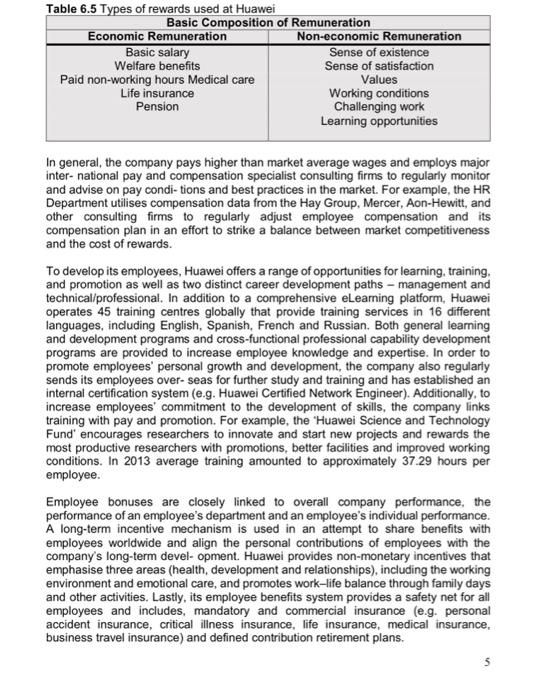
In general, the company pays higher than market average wages and employs major inter- national pay and compensation specialist consulting firms to regularly monitor and advise on pay condi- tions and best practices in the market. For example, the HR Department utilises compensation data from the Hay Group, Mercer, Aon-Hewitt, and other consulting firms to regularly adjust employee compensation and its compensation plan in an effort to strike a balance between market competitiveness and the cost of rewards. To develop its employees, Huawei offers a range of opportunities for learning, training. and promotion as well as two distinct career development paths - management and technical/professional. In addition to a comprehensive eLeaming platform, Huawei operates 45 training centres globally that provide training services in 16 different languages, including English, Spanish, French and Russian. Both general learning and development programs and cross-functional professional capability development programs are provided to increase employee knowledge and expertise. In order to promote employees' personal growth and development, the company also regularly sends its employees over- seas for further study and training and has established an internal certification system (e.g. Huawei Certified Network Engineer). Additionally, to increase employees' commitment to the development of skills, the company links training with pay and promotion. For example, the 'Huawei Science and Technology Fund' encourages researchers to innovate and start new projects and rewards the most productive researchers with promotions, better facilities and improved working conditions. In 2013 average training amounted to approximately 37.29 hours per employee. Employee bonuses are closely linked to overall company performance, the performance of an employee's department and an employee's individual performance. A long-term incentive mechanism is used in an attempt to share benefits with employees worldwide and align the personal contributions of employees with the company's long-term devel- opment. Huawei provides non-monetary incentives that emphasise three areas (health, development and relationships), including the working environment and emotional care, and promotes work-life balance through family days and other activities. Lastly, its employee benefits system provides a safety net for all employees and includes, mandatory and commercial insurance (e.g. personal accident insurance, critical illness insurance, life insurance, medical insurance, business travel insurance) and defined contribution retirement plans. 5
Step by Step Solution
There are 3 Steps involved in it

Get step-by-step solutions from verified subject matter experts
 Study Help