Question: I need help answering these questions. 1. Define the Problem: Describe the type of case and what problem(s) or issue(s) should be the focus for
I need help answering these questions.
1. Define the Problem: Describe the type of case and what problem(s) or issue(s) should be the focus for your analysis.
2.List any outside concepts that can be applied: Write down any principles, frameworks or theories that can be applied to this case.
3. List relevant qualitative data: evidence related to or based on the quality or character of something.
4.List relevant quantitative data: evidence related to or based on the amount or number of something.
5.Describe the results of your analysis: What evidence have you accumulated that supports one interpretation over another.
6.Describe alternative actions: List and prioritize possible recommendations or actions that come out of your analysis.
7.Describe your preferred action plan: Write a clear statement of what you would recommend including short, medium and long-term steps to be carried out.
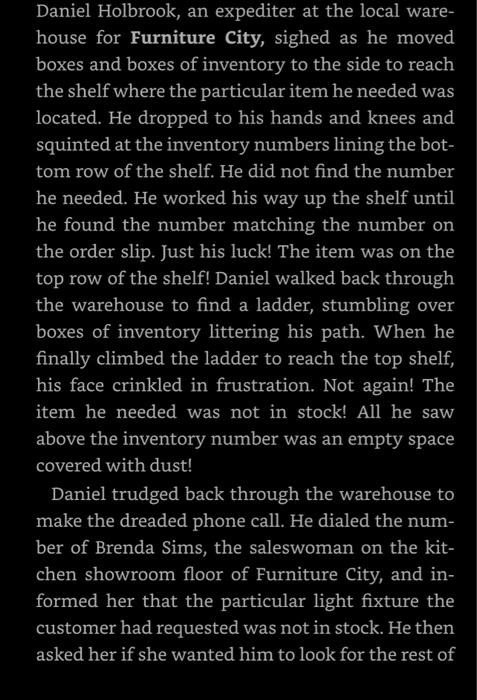
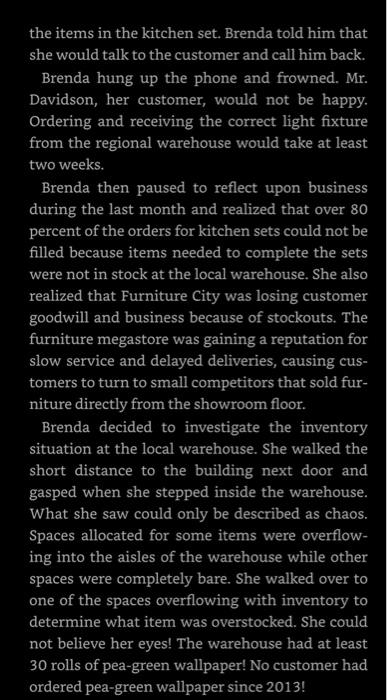
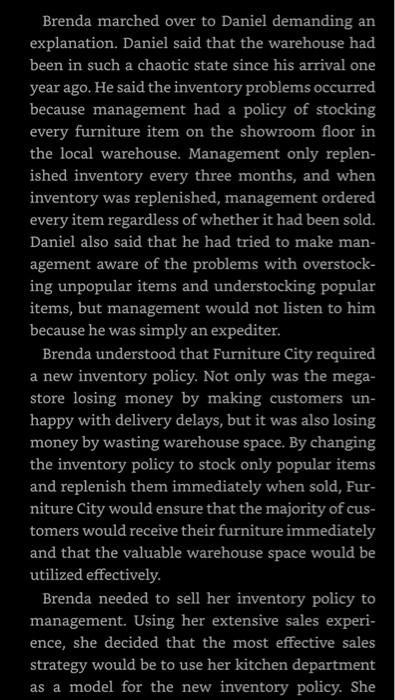
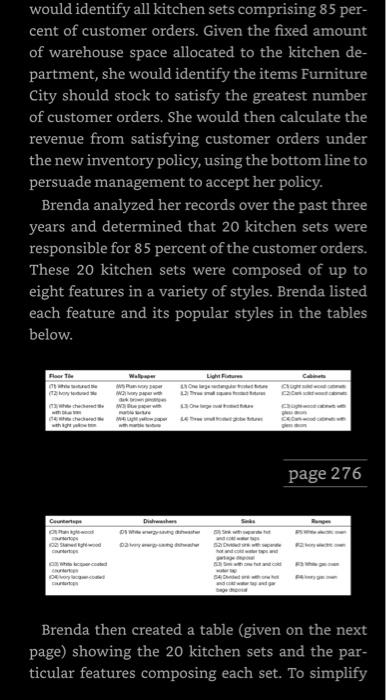
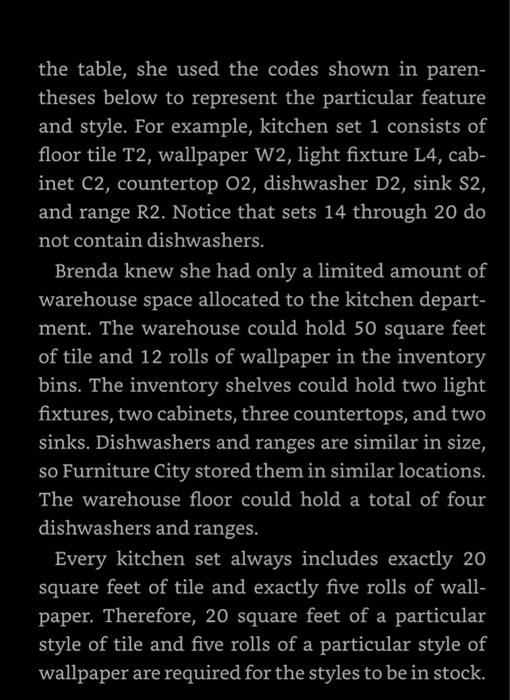
Daniel Holbrook, an expediter at the local ware- house for Furniture City, sighed as he moved boxes and boxes of inventory to the side to reach the shelf where the particular item he needed was located. He dropped to his hands and knees and squinted at the inventory numbers lining the bot- tom row of the shelf. He did not find the number he needed. He worked his way up the shelf until he found the number matching the number on the order slip. Just his luck! The item was on the top row of the shelf! Daniel walked back through the warehouse to find a ladder, stumbling over boxes of inventory littering his path. When he finally climbed the ladder to reach the top shelf, his face crinkled in frustration. Not again! The item he needed was not in stock! All he saw above the inventory number was an empty space covered with dust! Daniel trudged back through the warehouse to make the dreaded phone call. He dialed the num- ber of Brenda Sims, the saleswoman on the kit- chen showroom floor of Furniture City, and in- formed her that the particular light fixture the customer had requested was not in stock. He then asked her if she wanted him to look for the rest of the items in the kitchen set. Brenda told him that she would talk to the customer and call him back. Brenda hung up the phone and frowned. Mr. Davidson, her customer, would not be happy. Ordering and receiving the correct light fixture from the regional warehouse would take at least two weeks. Brenda then paused to reflect upon business during the last month and realized that over 80 percent of the orders for kitchen sets could not be filled because items needed to complete the sets were not in stock at the local warehouse. She also realized that Furniture City was losing customer goodwill and business because of stockouts. The furniture megastore was gaining a reputation for slow service and delayed deliveries, causing cus- tomers to turn to small competitors that sold fur- niture directly from the showroom floor. Brenda decided to investigate the inventory situation at the local warehouse. She walked the short distance to the building next door and gasped when she stepped inside the warehouse. What she saw could only be described as chaos. Spaces allocated for some items were overflow- ing into the aisles of the warehouse while other spaces were completely bare. She walked over to one of the spaces overflowing with inventory to determine what item was overstocked. She could not believe her eyes! The warehouse at least 30 rolls of pea-green wallpaper! No customer had ordered pea-green wallpaper since 2013! Brenda marched over to Daniel demanding an explanation. Daniel said that the warehouse had been in such a chaotic state since his arrival one year ago. He said the inventory problems occurred because management had a policy of stocking every furniture item on the showroom floor in the local warehouse. Management only replen- ished inventory every three months, and when inventory was replenished, management ordered every item regardless of whether it had been sold. Daniel also said that he had tried to make man- agement aware of the problems with overstock- ing unpopular items and understocking popular items, but management would not listen to him because he was simply an expediter. Brenda understood that Furniture City required a new inventory policy. Not only was the mega- store losing money by making customers un- happy with delivery delays, but it was also losing money by wasting warehouse space. By changing the inventory policy to stock only popular items and replenish them immediately when sold, Fur- niture City would ensure that the majority of cus- tomers would receive their furniture immediately and that the valuable warehouse space would be utilized effectively. Brenda needed to sell her inventory policy to management. Using her extensive sales experi- ence, she decided that the most effective sales strategy would be to use her kitchen department as a model for the new inventory policy. She would identify all kitchen sets comprising 85 per- cent of customer orders. Given the fixed amount of warehouse space allocated to the kitchen de- partment, she would identify the items Furniture City should stock to satisfy the greatest number of customer orders. She would then calculate the revenue from satisfying customer orders under the new inventory policy, using the bottom line to persuade management to accept her policy. Brenda analyzed her records over the past three years and determined that 20 kitchen sets were responsible for 85 percent of the customer orders. These 20 kitchen sets were composed of up to eight features in a variety of styles. Brenda listed each feature and its popular styles in the tables below. For The LI Powe NO which w page 276 Cura Dishers an herche Stutto Brenda then created a table (given on the next page) showing the 20 kitchen sets and the par- ticular features composing each set. To simplify the table, she used the codes shown in paren- theses below to represent the particular feature and style. For example, kitchen set 1 consists of floor tile T2, wallpaper W2, light fixture L4, cab- inet C2, countertop 02, dishwasher D2, sink S2, and range R2. Notice that sets 14 through 20 do not contain dishwashers. Brenda knew she had only a limited amount of warehouse space allocated to the kitchen depart- ment. The warehouse could hold 50 square feet of tile and 12 rolls of wallpaper in the inventory bins. The inventory shelves could hold two light fixtures, two cabinets, three countertops, and two sinks. Dishwashers and ranges are similar in size, so Furniture City stored them in similar locations. The warehouse floor could hold a total of four dishwashers and ranges. Every kitchen set always includes exactly 20 square feet of tile and exactly five rolls of wall- paper. Therefore, 20 square feet of a particular style of tile and five rolls of a particular style of wallpaper are required for the styles to be in stock









 Study Help