







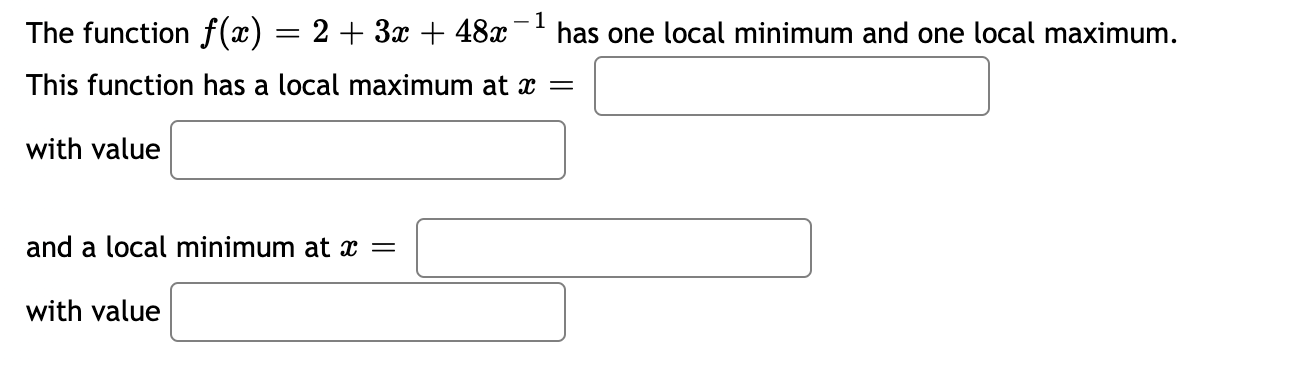
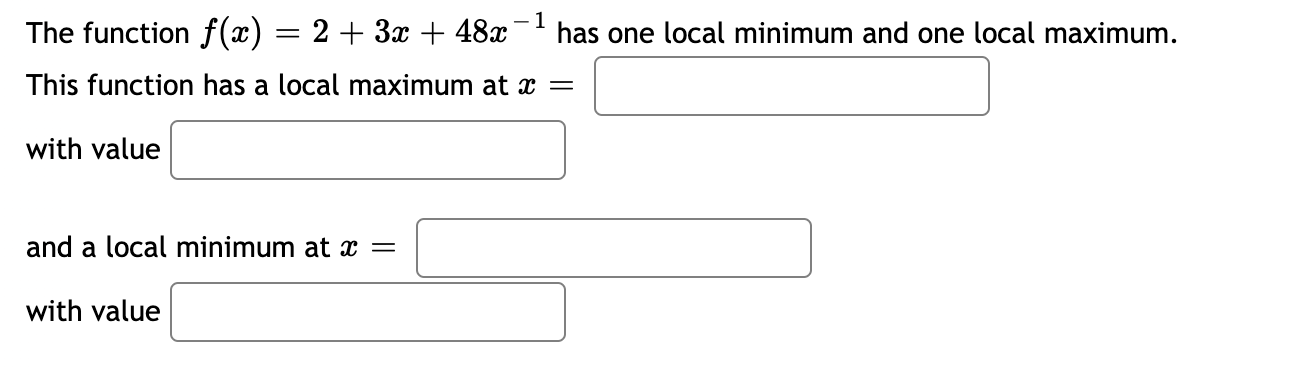
Question: I need help with these problems, please explain. Thank you. The function at) = 2 + 3x + 483':1 has one local minimum and one

![= :] A company that produces cell phones has a cost function](https://s3.amazonaws.com/si.experts.images/answers/2024/06/66765d50b3678_16866765d509338c.jpg)
I need help with these problems, please explain. Thank you.

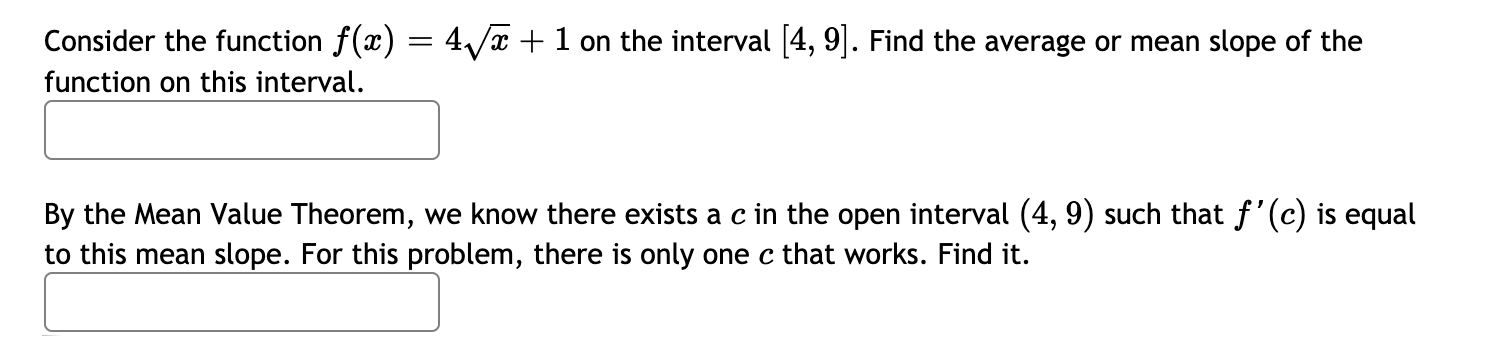
![m) = 4J5 + 1 on the interval [4, 9]. Find the](https://s3.amazonaws.com/si.experts.images/answers/2024/06/66765d52972de_17066765d5280fbd.jpg)
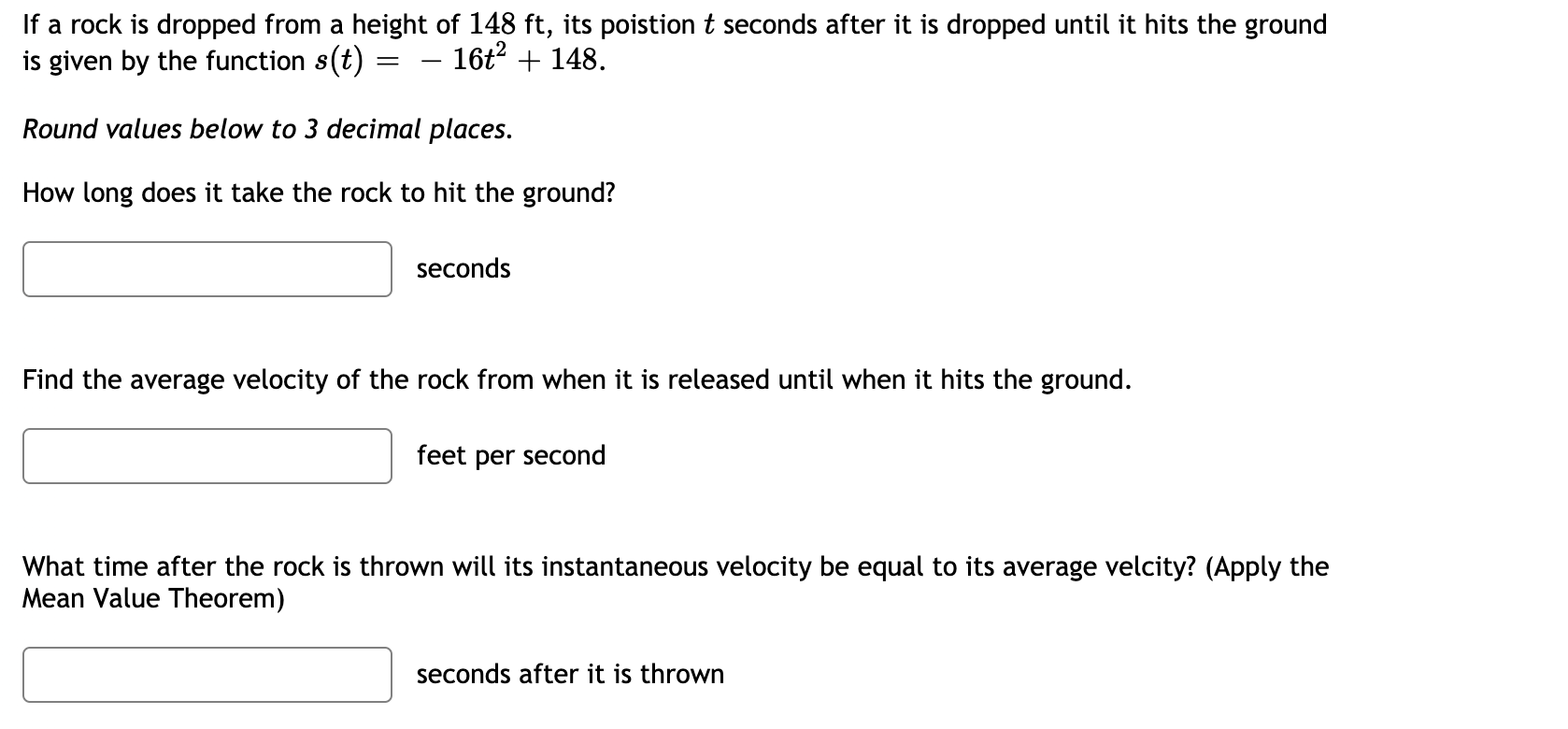
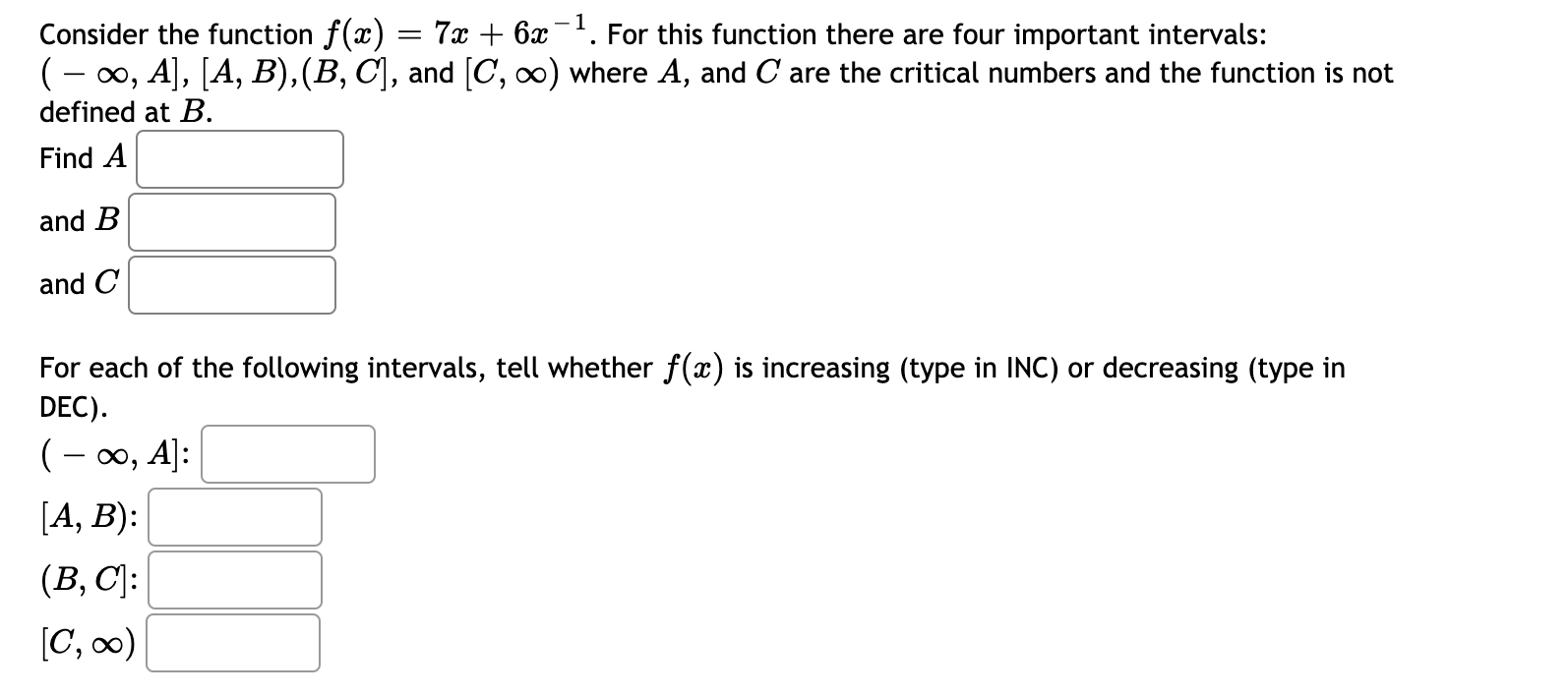
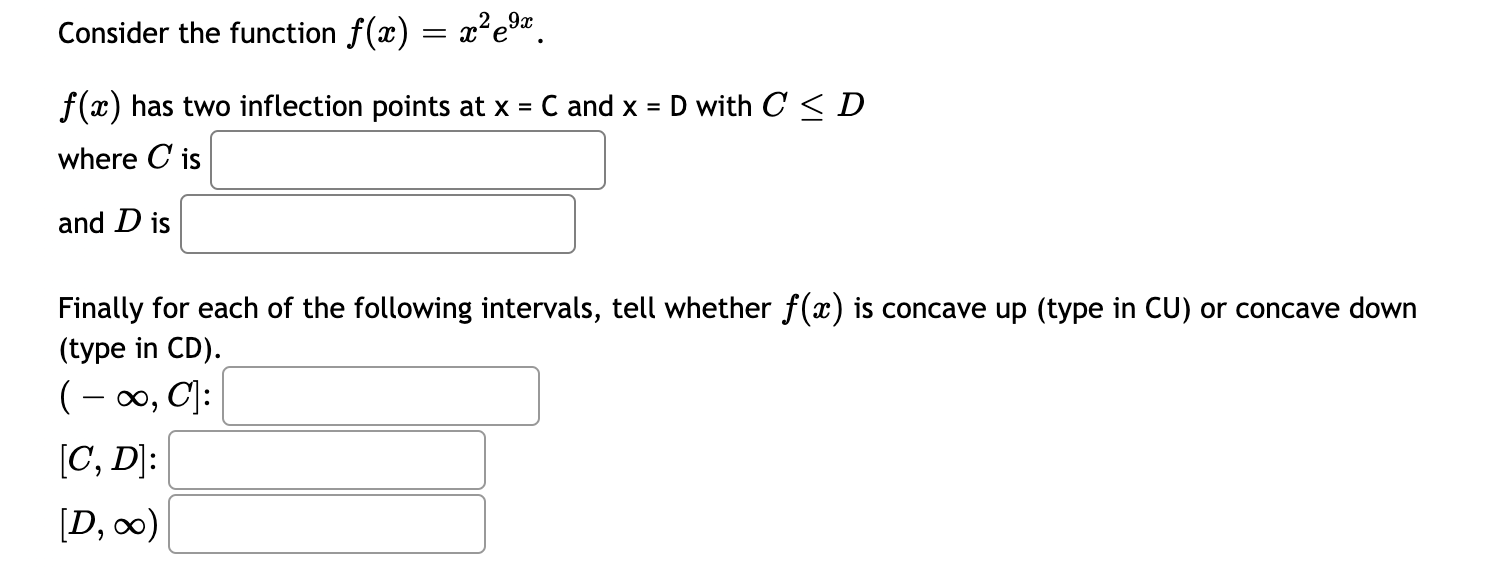
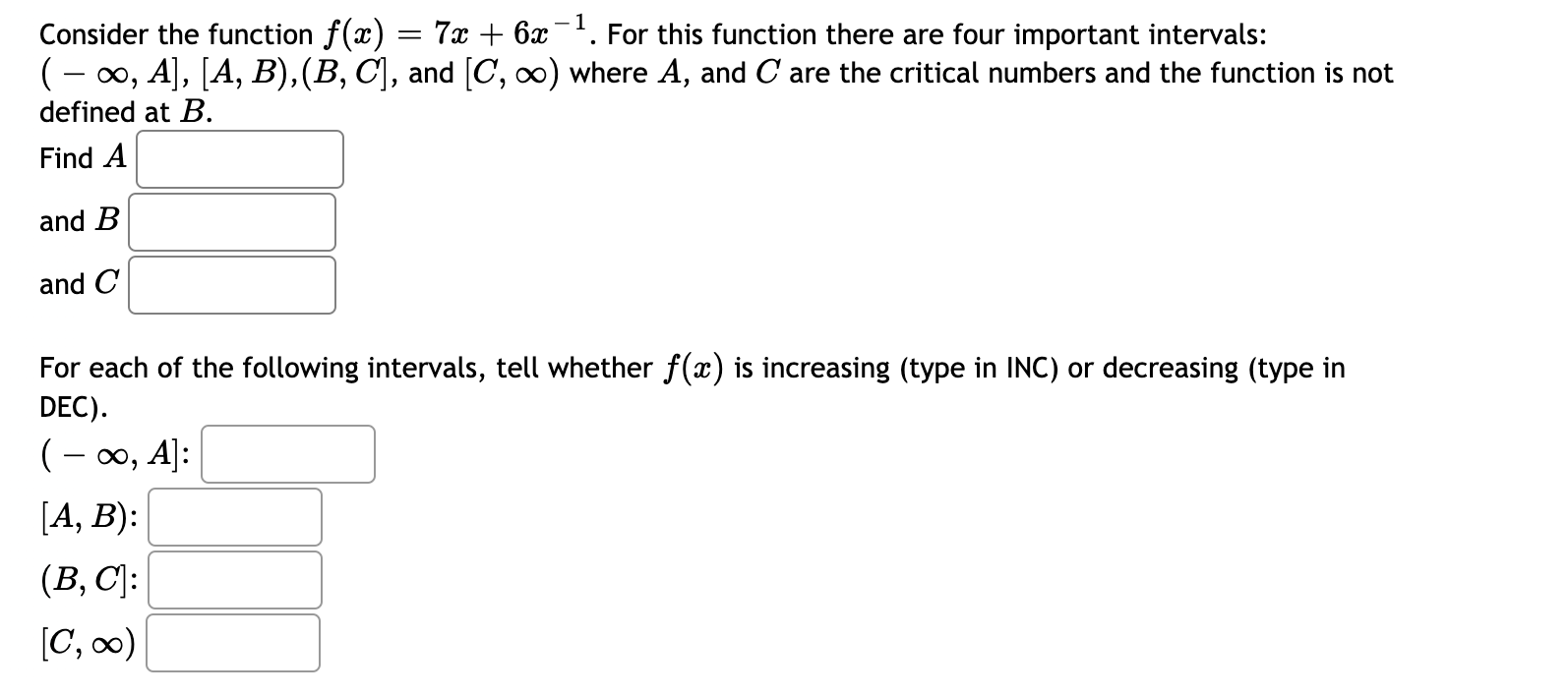
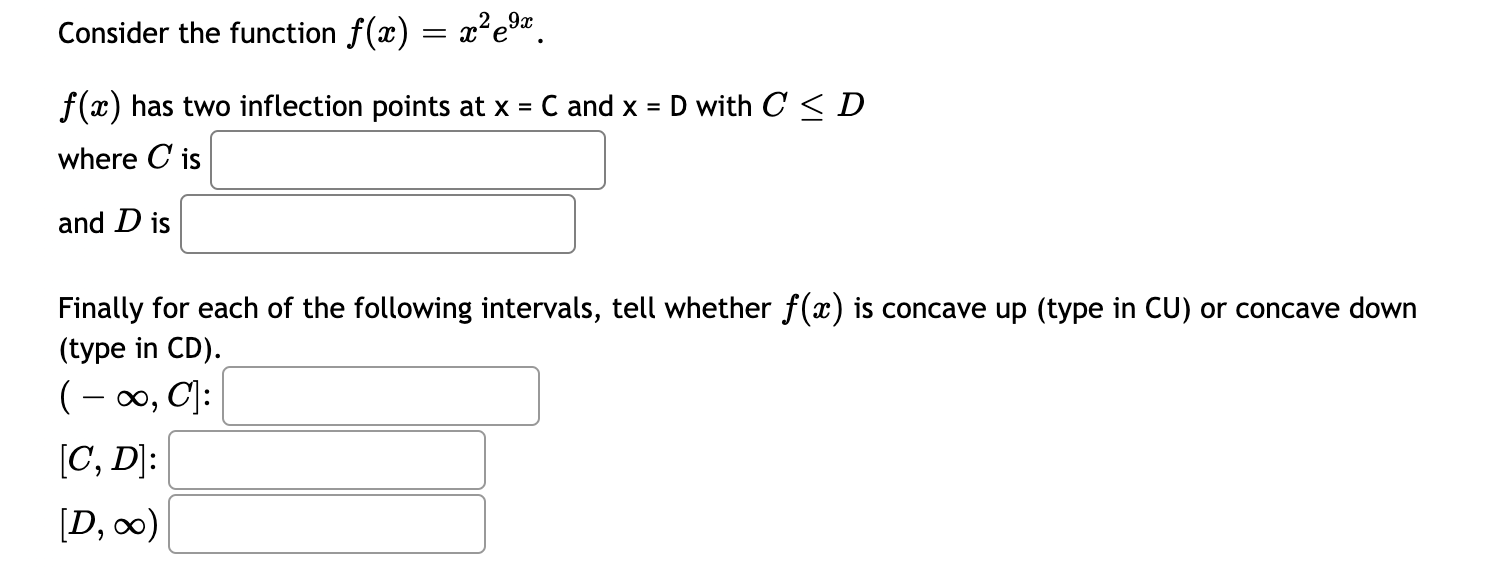
The function at) = 2 + 3x + 483':1 has one local minimum and one local maximum. This function has a local maximum at :0 = :] A company that produces cell phones has a cost function of C' = 12:):2 89$ + 13129, where C is the cost in dollars and so is the number of cell phones produced (in thousands). How many units of cell phone (in thousands) minimizes the cost function? a: = thousand phones produced will minimize C Consider the function m) = 4J5 + 1 on the interval [4, 9]. Find the average or mean slope of the function on this interval. By the Mean Value Theorem, we know there exists a c in the open interval (4, 9) such that f ' (c) is equal to this mean slope. For this problem, there is only one c that works. Find it. If a rock is dropped from a height of 148 ft, its poistion t seconds after it is dropped until it hits the ground is given by the function s(t) = 16132 + 148. Round values below to 3 decimal places. How long does it take the rock to hit the ground? Find the average velocity of the rock from when it is released until when it hits the ground. [ ] feet per second What time after the rock is thrown will its instantaneous velocity be equal to its average velcity? (Apply the Mean Value Theorem) :] seconds after it is thrown Consider the function f(x) = 7ac + 6ac . For this function there are four important intervals: ( - 0o, A], [A, B), (B, C], and [C, co) where A, and C are the critical numbers and the function is not defined at B. Find A and B and C For each of the following intervals, tell whether f() is increasing (type in INC) or decreasing (type in DEC). ( - 00, A]: [A, B): (B, C]: [C, 0.Consider the function f(x) = x2ex f(x) has two inflection points at x = C and x = D with C
Step by Step Solution
There are 3 Steps involved in it

Get step-by-step solutions from verified subject matter experts
 Study Help