Question: If you put wrong answer, I will dislike 7 times The emergence of smart manufacturing using IoT and cobots will necessitate an integrated approach to
If you put wrong answer, I will dislike 7 times
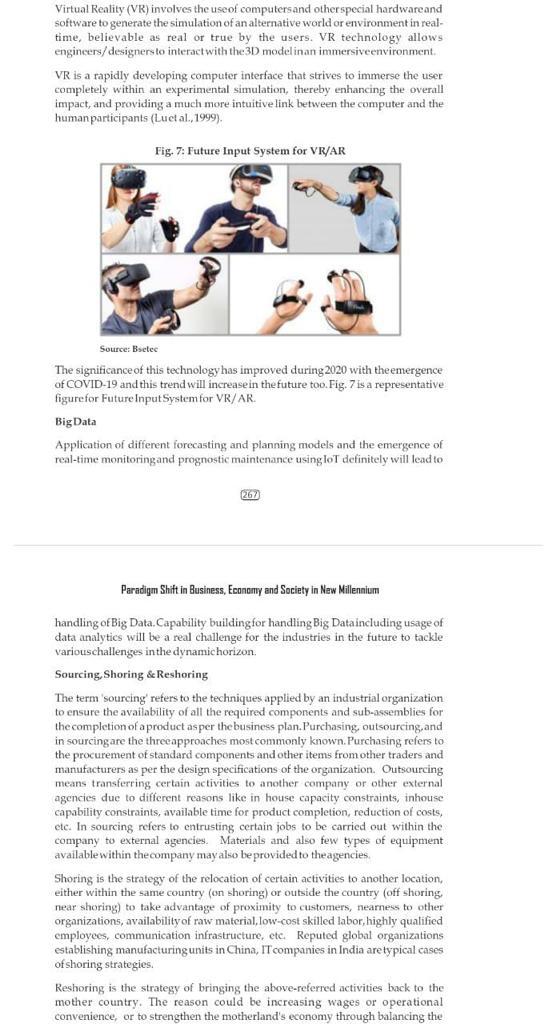
The emergence of smart manufacturing using IoT and cobots will necessitate an integrated approach to cybersecurity framework to protect all connected equipment. Edgecomputing Edge computing represents data analysis very near to the source of data, or at the "edge", related equipment itself. Data will not be transferred to a centralized processing center. This way data processing becomes faster which will facilitate next-gen manufacturing technologies possible. This will be the core feature of IoT in future manufacturingorganizations. Artificial Intelligence (AI) Artificial Intelligence denotes the capability of a computer system to recognize trends and deduce logical conclusions and support us to take correct decisions. AI has a very significant role in Product Design, Market forecasting, Production, Quality Assurance, Inventory Management, Preventivemaintenance, etc. Machine Learning Machine learning is training computers to visually recognize different solid objects. A lot of research is going onin this direction. Days are not far off when a camera pointed towards a listed solid component would be able to tell us everything aboutthe designspecifications of thatcomponent, itsinventory status, itsassembly procedure,etc. Blockchain Block chain technology will be another advancement in future industrial organization because of itshigh-security data storagefeature especially regarding financial transactions and operations in manufacturing. RemoteSynchronous Field Maintenance Breakdown ofcritical equipment in the production lineis the greatest threat faced by industries. Predictive analytics and prognostic maintenance are techniques against this threat. Thisshift froma reactionary modeto apredictive model using the Internet of Things is expected to play a very significant role in the industrial sector through transforming different businessoperations in thecoming decades. Augmented Reality (AR) and Virtual Reality (VR) 266 Paradigm Shift in Business, Economy and Society in New Millennium AR and VR are recent developments inassistive technology which enables service engineers to evaluate the field problems throughremote monitoringusing VRand AR-enabled devices. Augmented Reality (AR) is defined as a real-time direct or indirect view of a physical real-world environment that has been enhanced/ augmented by adding virtual computer-generated information to it' (Azuma et al., 2001). Virtual Reality (VR) involves the use of computersand otherspecial hardwareand software to generate the simulation of an alternative world or environment in realtime, believable as real or true by the users. VR technology allows engineers/designersto interactwith the 3D modelinan immersiveenvironment. VR is a rapidly developing computer interface that strives to immerse the user completely within an experimental simulation, thereby enhancing the overall impact, and providing a much more intuitive link between the computer and the humanparticipants (Luetal., 1999). Virtual Reality (VR) involves the useof computersand other special hardwareand software to generate the simulation of an alternative world or environment in realtime, believable as real or true by the users. VR technology allows engineers/designersto interact with the3 3D model inan immersiveenvironment. VR is a rapidly developing computer interface that strives to immerse the user completely within an experimental simulation, thereby enhancing the overall impact, and providing a much more intuitive link between the computer and the humanparticipants (Luet al. 1999). Fig. 7: Future Input System for VR/AR Source: Bsetec The significance of this technology has improved during 2020 with theemergence of COVID-19 and this trend will increase in the future too. Fig. 7 is a representative figurefor Future InputSystem for VR/AR. BigData Application of different forecasting and planning models and the emergence of real-time monitoringand prognostic maintenance using IoT definitely will lead to 267 Paradigm Shift in Business, Econemy and Society in Naw Millennium handling of Big Data.Capability buildingfor handling Big Dataincluding usage of data analytics will be a real challenge for the industries in the future to tackle variouschallenges in the dynamichorizon. Sourcing, Shoring \& Reshoring The term 'sourcing' refers to the techniques applied by an industrial organization to ensure the availability of all the required components and sub-assemblies for the completion of a product as per the business plan. Purchasing, outsourcing, and in sourcingare the three approaches most commonly known. Purchasing refers to the procurement of standard components and other items from other traders and means transferring certain activities to another company or other external agencies due to different reasons like in house capacity constraints, inhouse capability constraints, available time for product completion, reduction of costs, etc. In sourcing refers to entrusting certain jobs to be carried out within the company to external agencies. Materials and also few types of equipment. availablewithin the company mayalso beprovided to the agencies: Shoring is the strategy of the relocation of certain activities to another location, either within the same country (on shoring) or outside the country (off shoring, near shoring) to take advantage of proximity to customers, nearness to other organizations, availability of raw material, low-cost skilled labor, highly qualified employees, communication infrastructure, etc, Reputed global organizations establishing manufacturing units in China, IT companies in India aretypical cases of shoring strategies. Reshoring is the strategy of bringing the above-referred activities back to the mother country. The reason could be increasing wages or operational convenience, or to strengthen the motherland's economy through balancing the The emergence of smart manufacturing using IoT and cobots will necessitate an integrated approach to cybersecurity framework to protect all connected equipment. Edgecomputing Edge computing represents data analysis very near to the source of data, or at the "edge", related equipment itself. Data will not be transferred to a centralized processing center. This way data processing becomes faster which will facilitate next-gen manufacturing technologies possible. This will be the core feature of IoT in future manufacturingorganizations. Artificial Intelligence (AI) Artificial Intelligence denotes the capability of a computer system to recognize trends and deduce logical conclusions and support us to take correct decisions. AI has a very significant role in Product Design, Market forecasting, Production, Quality Assurance, Inventory Management, Preventivemaintenance, etc. Machine Learning Machine learning is training computers to visually recognize different solid objects. A lot of research is going onin this direction. Days are not far off when a camera pointed towards a listed solid component would be able to tell us everything aboutthe designspecifications of thatcomponent, itsinventory status, itsassembly procedure,etc. Blockchain Block chain technology will be another advancement in future industrial organization because of itshigh-security data storagefeature especially regarding financial transactions and operations in manufacturing. RemoteSynchronous Field Maintenance Breakdown ofcritical equipment in the production lineis the greatest threat faced by industries. Predictive analytics and prognostic maintenance are techniques against this threat. Thisshift froma reactionary modeto apredictive model using the Internet of Things is expected to play a very significant role in the industrial sector through transforming different businessoperations in thecoming decades. Augmented Reality (AR) and Virtual Reality (VR) 266 Paradigm Shift in Business, Economy and Society in New Millennium AR and VR are recent developments inassistive technology which enables service engineers to evaluate the field problems throughremote monitoringusing VRand AR-enabled devices. Augmented Reality (AR) is defined as a real-time direct or indirect view of a physical real-world environment that has been enhanced/ augmented by adding virtual computer-generated information to it' (Azuma et al., 2001). Virtual Reality (VR) involves the use of computersand otherspecial hardwareand software to generate the simulation of an alternative world or environment in realtime, believable as real or true by the users. VR technology allows engineers/designersto interactwith the 3D modelinan immersiveenvironment. VR is a rapidly developing computer interface that strives to immerse the user completely within an experimental simulation, thereby enhancing the overall impact, and providing a much more intuitive link between the computer and the humanparticipants (Luetal., 1999). Virtual Reality (VR) involves the useof computersand other special hardwareand software to generate the simulation of an alternative world or environment in realtime, believable as real or true by the users. VR technology allows engineers/designersto interact with the3 3D model inan immersiveenvironment. VR is a rapidly developing computer interface that strives to immerse the user completely within an experimental simulation, thereby enhancing the overall impact, and providing a much more intuitive link between the computer and the humanparticipants (Luet al. 1999). Fig. 7: Future Input System for VR/AR Source: Bsetec The significance of this technology has improved during 2020 with theemergence of COVID-19 and this trend will increase in the future too. Fig. 7 is a representative figurefor Future InputSystem for VR/AR. BigData Application of different forecasting and planning models and the emergence of real-time monitoringand prognostic maintenance using IoT definitely will lead to 267 Paradigm Shift in Business, Econemy and Society in Naw Millennium handling of Big Data.Capability buildingfor handling Big Dataincluding usage of data analytics will be a real challenge for the industries in the future to tackle variouschallenges in the dynamichorizon. Sourcing, Shoring \& Reshoring The term 'sourcing' refers to the techniques applied by an industrial organization to ensure the availability of all the required components and sub-assemblies for the completion of a product as per the business plan. Purchasing, outsourcing, and in sourcingare the three approaches most commonly known. Purchasing refers to the procurement of standard components and other items from other traders and means transferring certain activities to another company or other external agencies due to different reasons like in house capacity constraints, inhouse capability constraints, available time for product completion, reduction of costs, etc. In sourcing refers to entrusting certain jobs to be carried out within the company to external agencies. Materials and also few types of equipment. availablewithin the company mayalso beprovided to the agencies: Shoring is the strategy of the relocation of certain activities to another location, either within the same country (on shoring) or outside the country (off shoring, near shoring) to take advantage of proximity to customers, nearness to other organizations, availability of raw material, low-cost skilled labor, highly qualified employees, communication infrastructure, etc, Reputed global organizations establishing manufacturing units in China, IT companies in India aretypical cases of shoring strategies. Reshoring is the strategy of bringing the above-referred activities back to the mother country. The reason could be increasing wages or operational convenience, or to strengthen the motherland's economy through balancing the









 Study Help