







Question: I'm Union team. please help! PERPOSAL FOR CHANGES TO THE AGREEMENT OF THE DIAMOND CASINO Article 2. The amounts deducted in accordance with article 2.01
I'm Union team. please help!
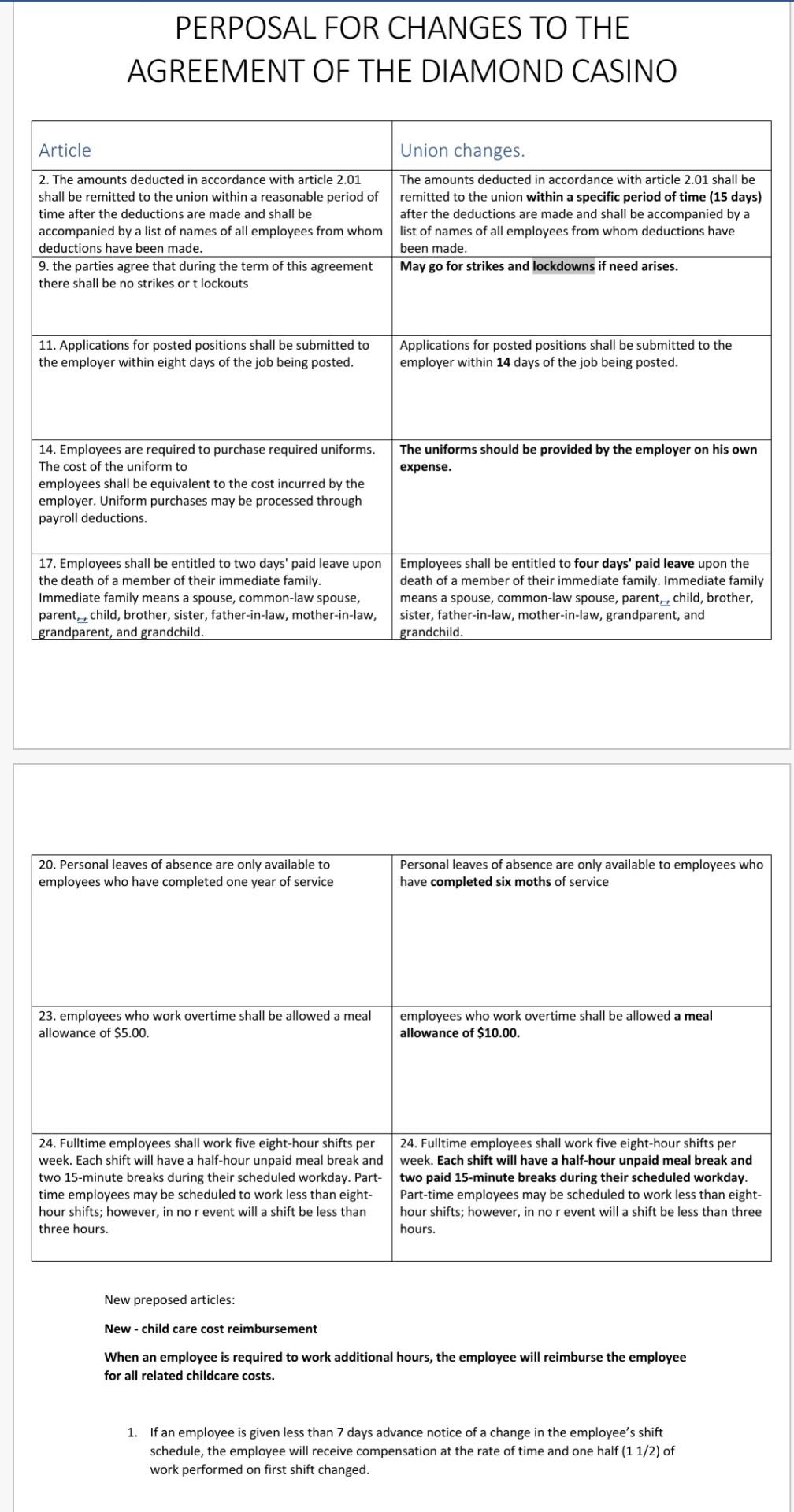
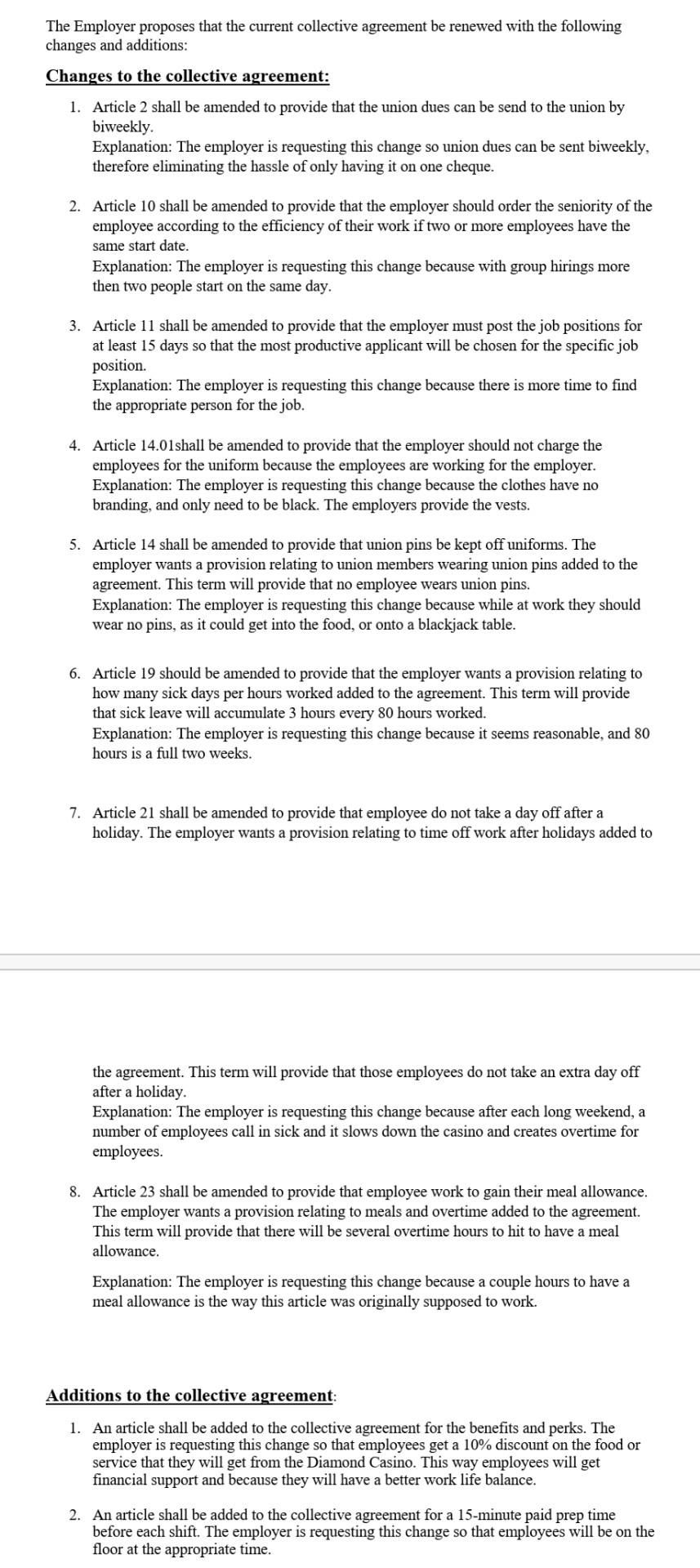
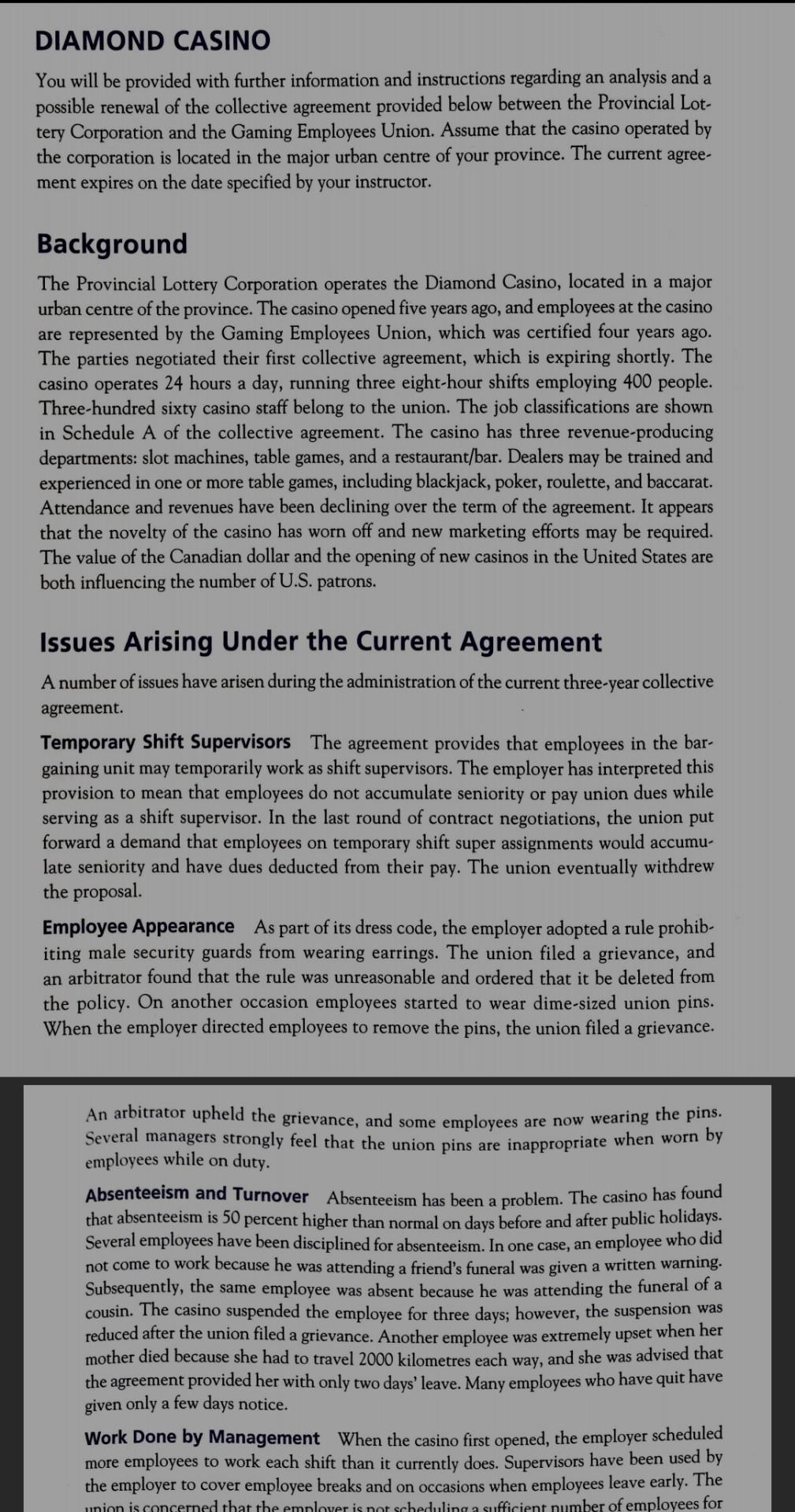
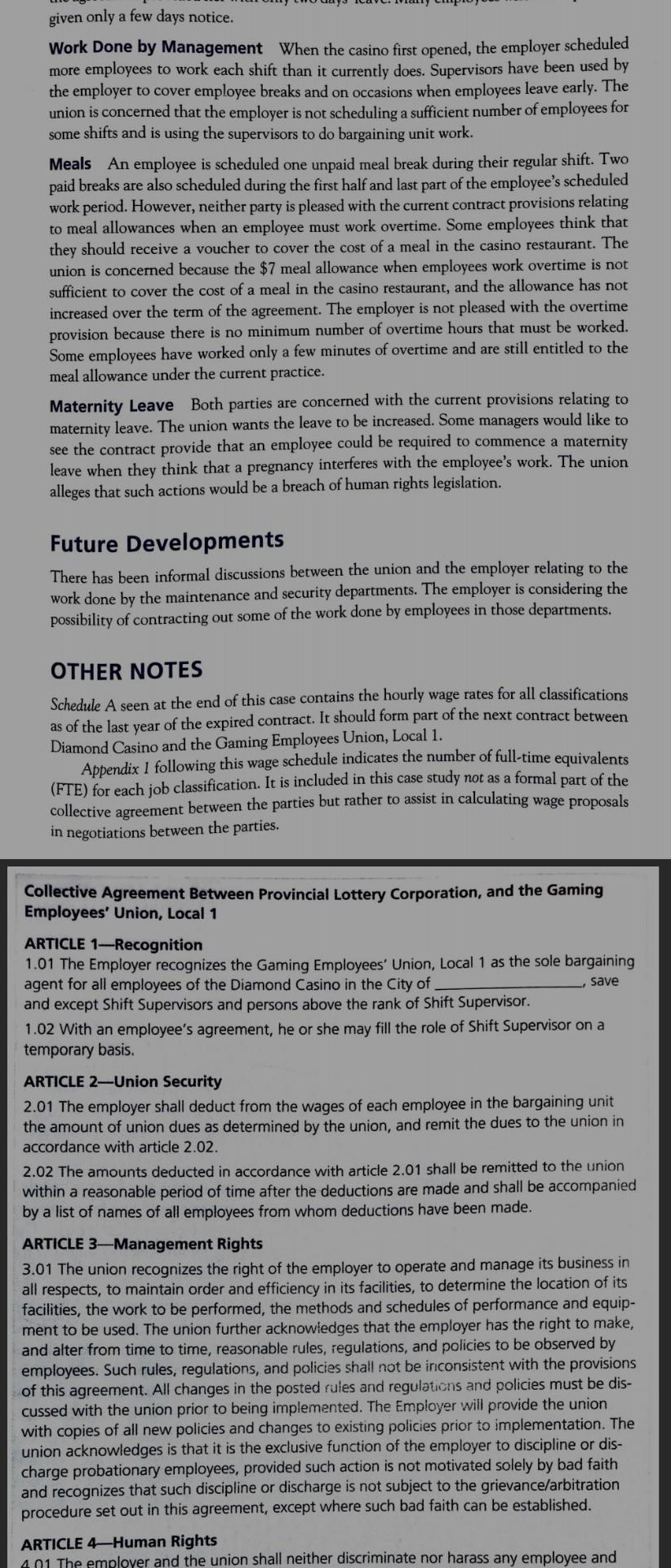
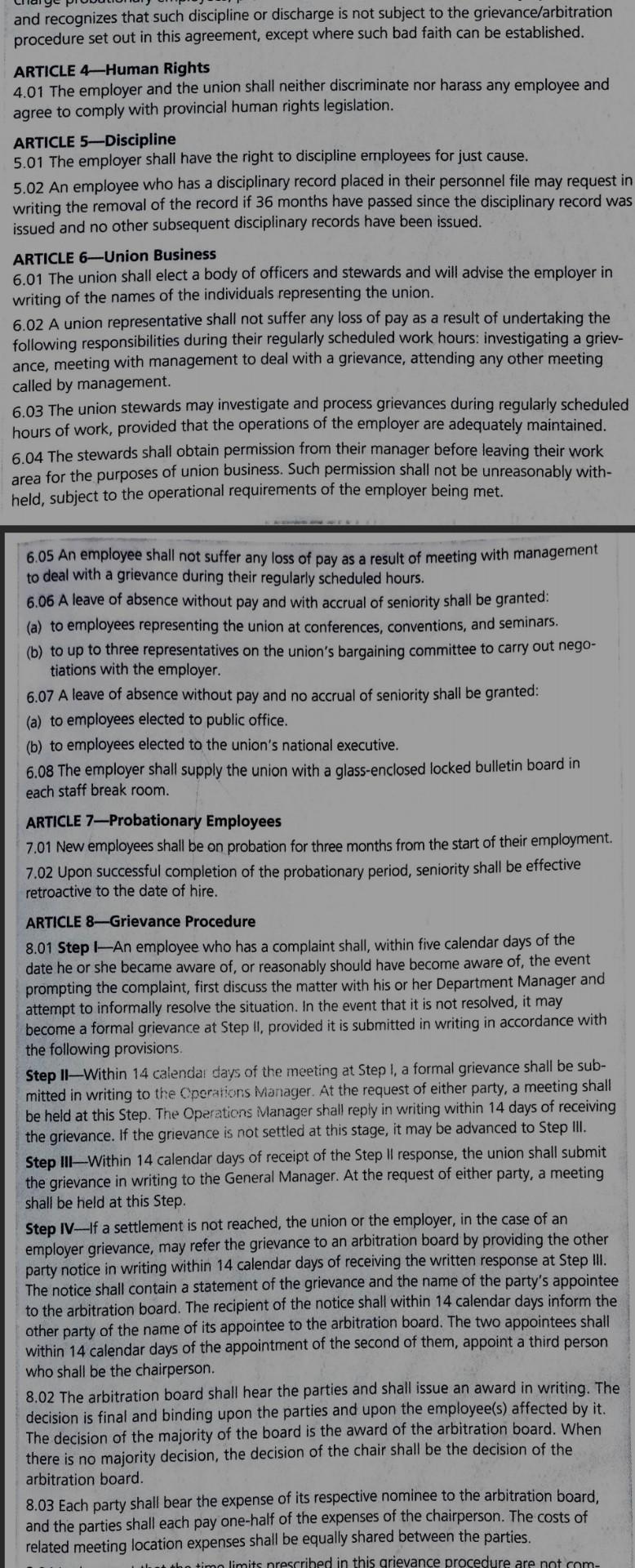
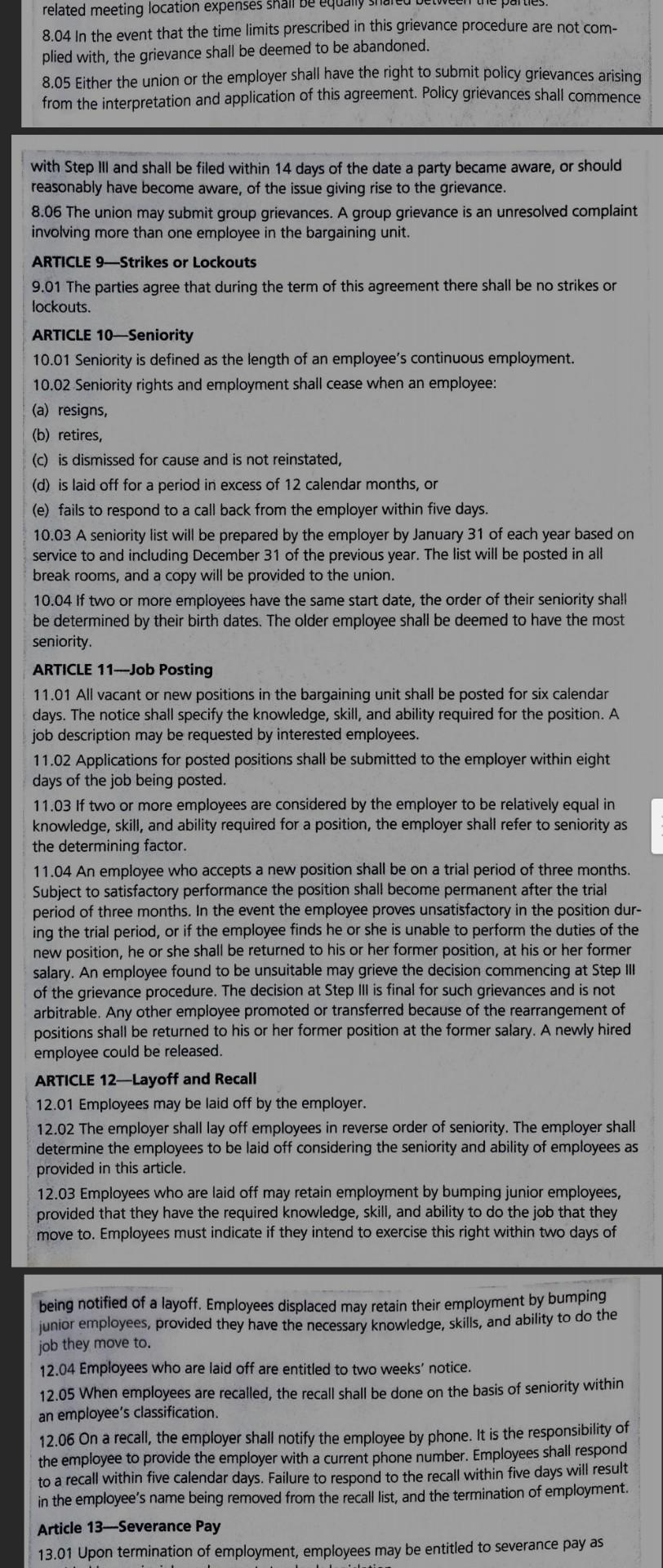
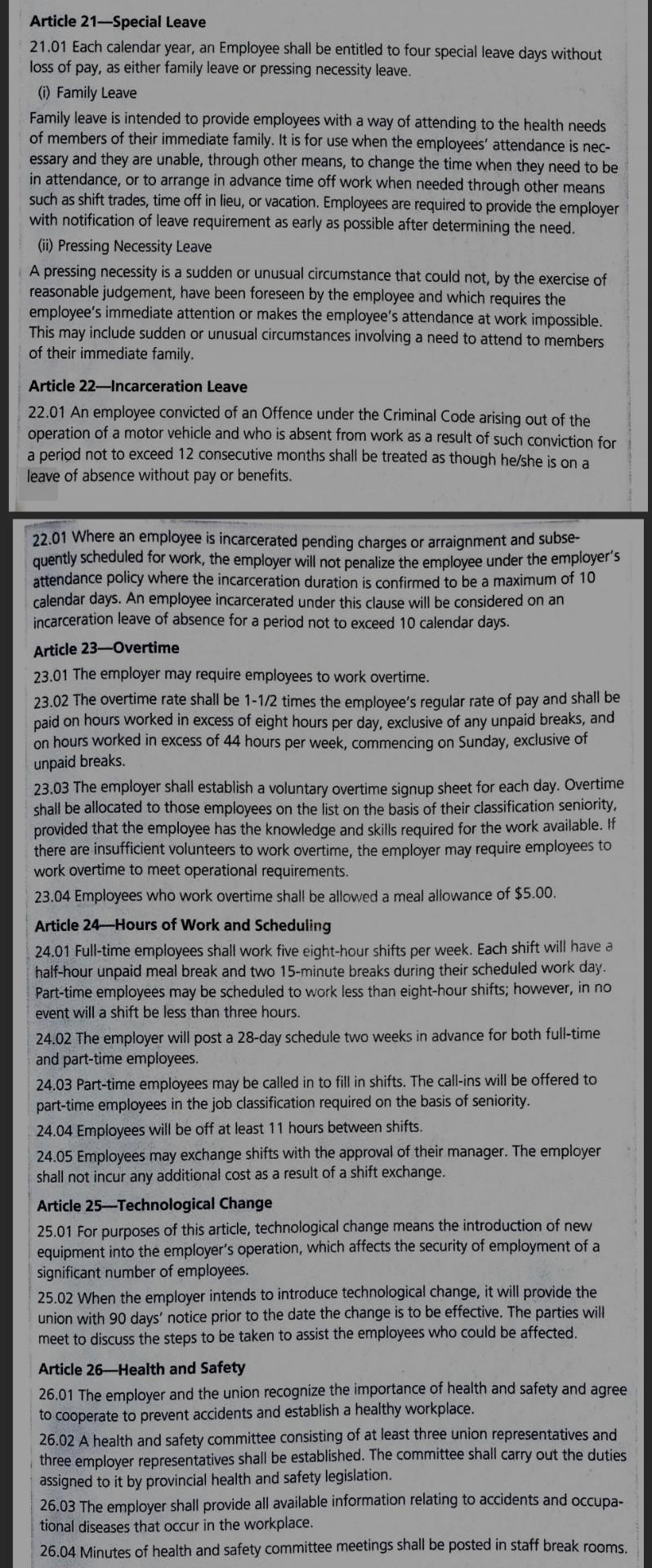
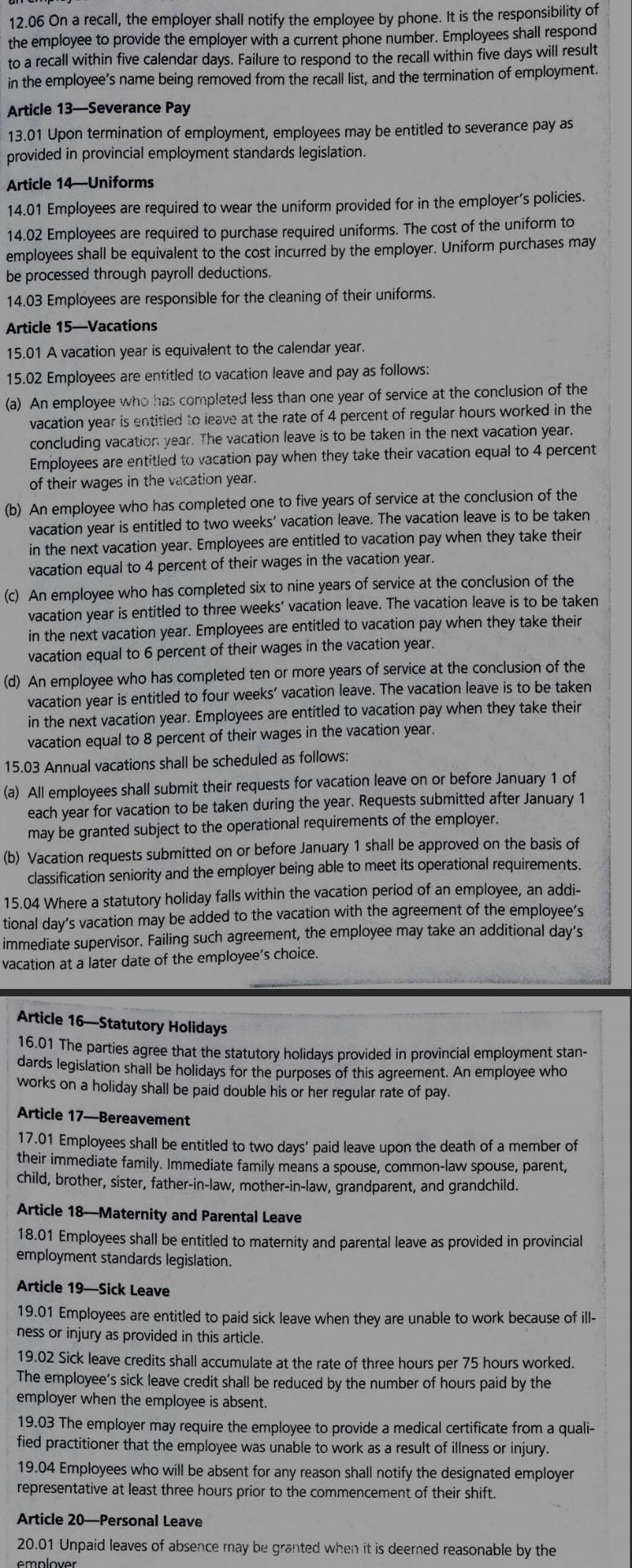
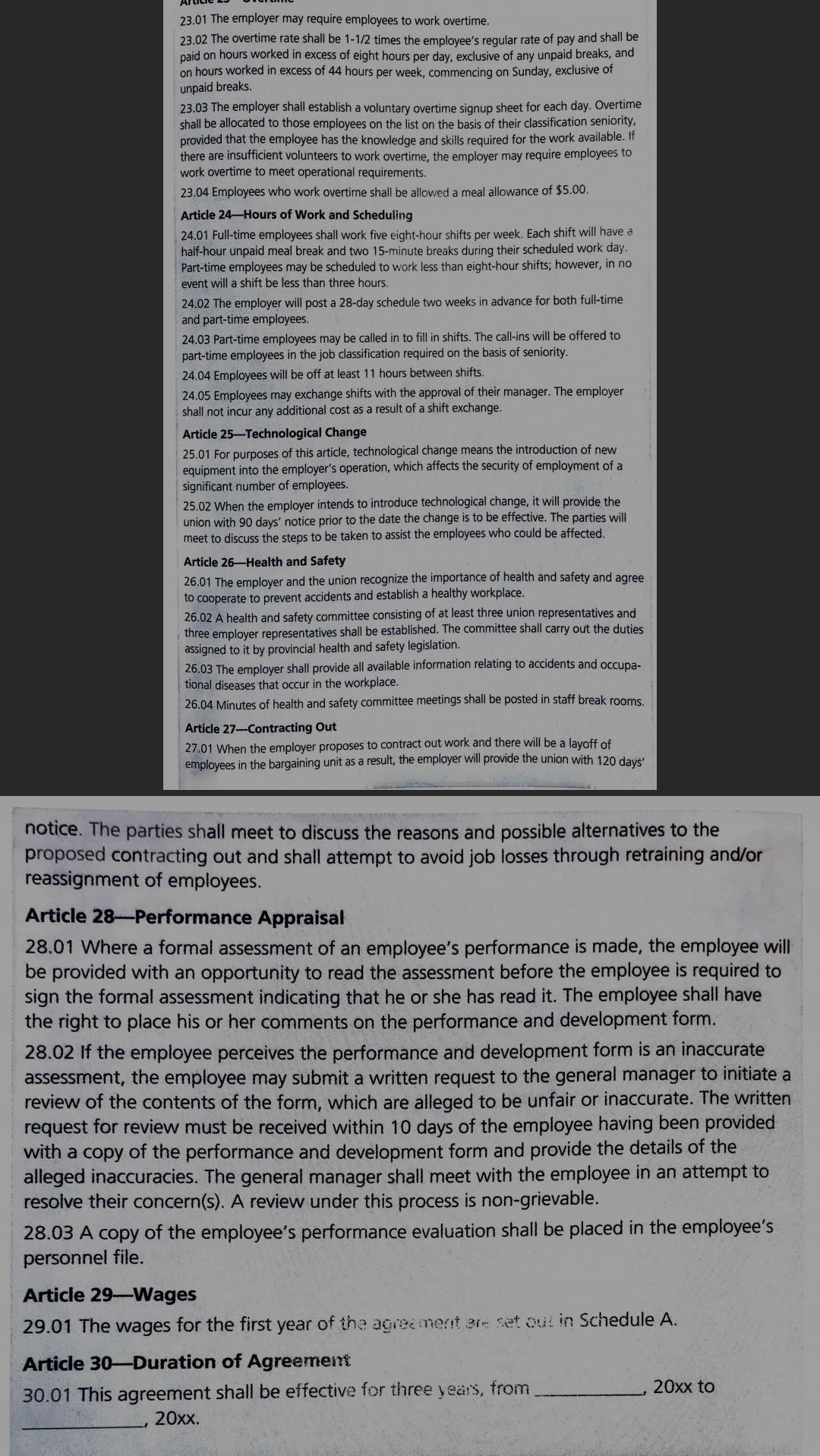
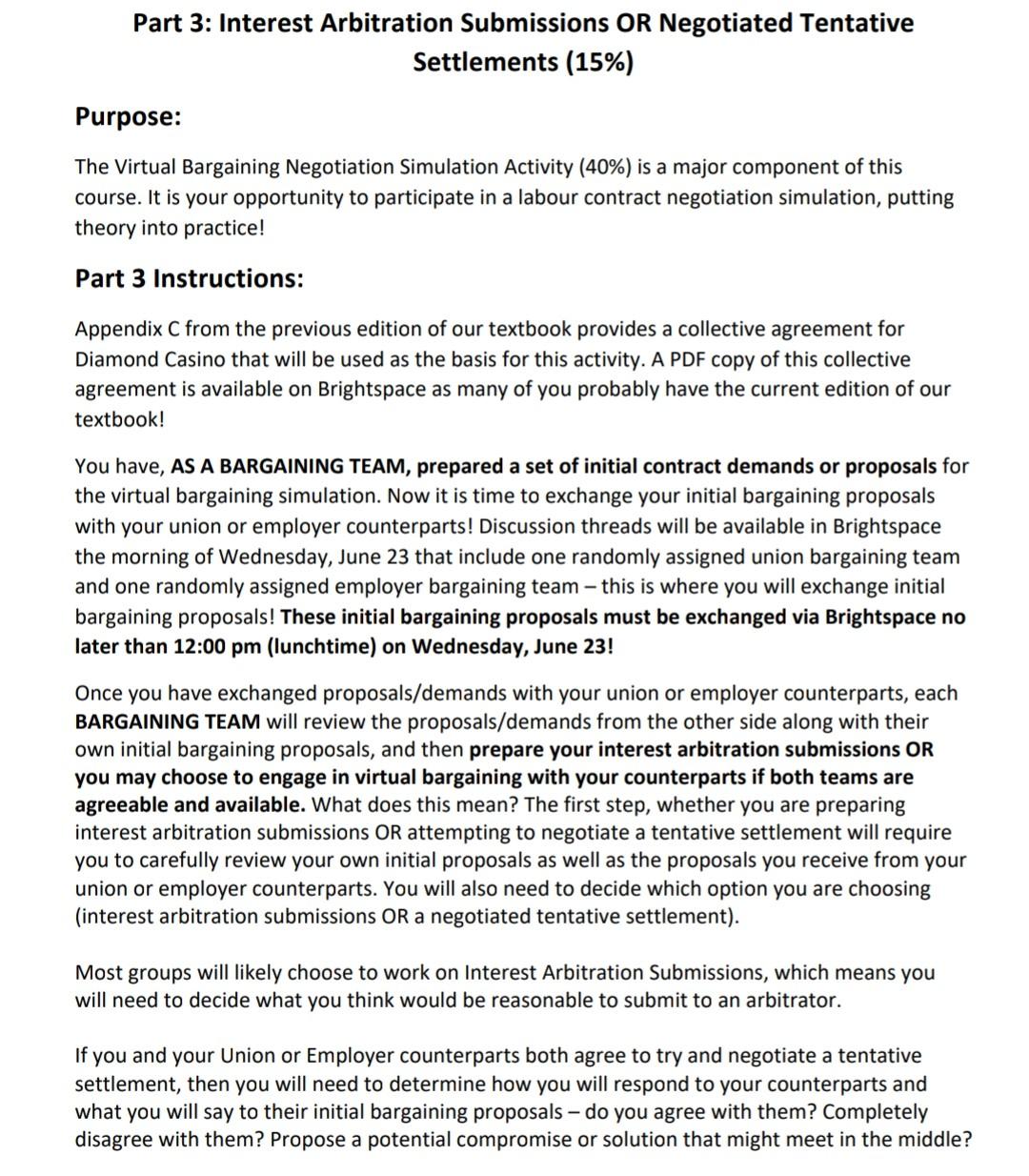
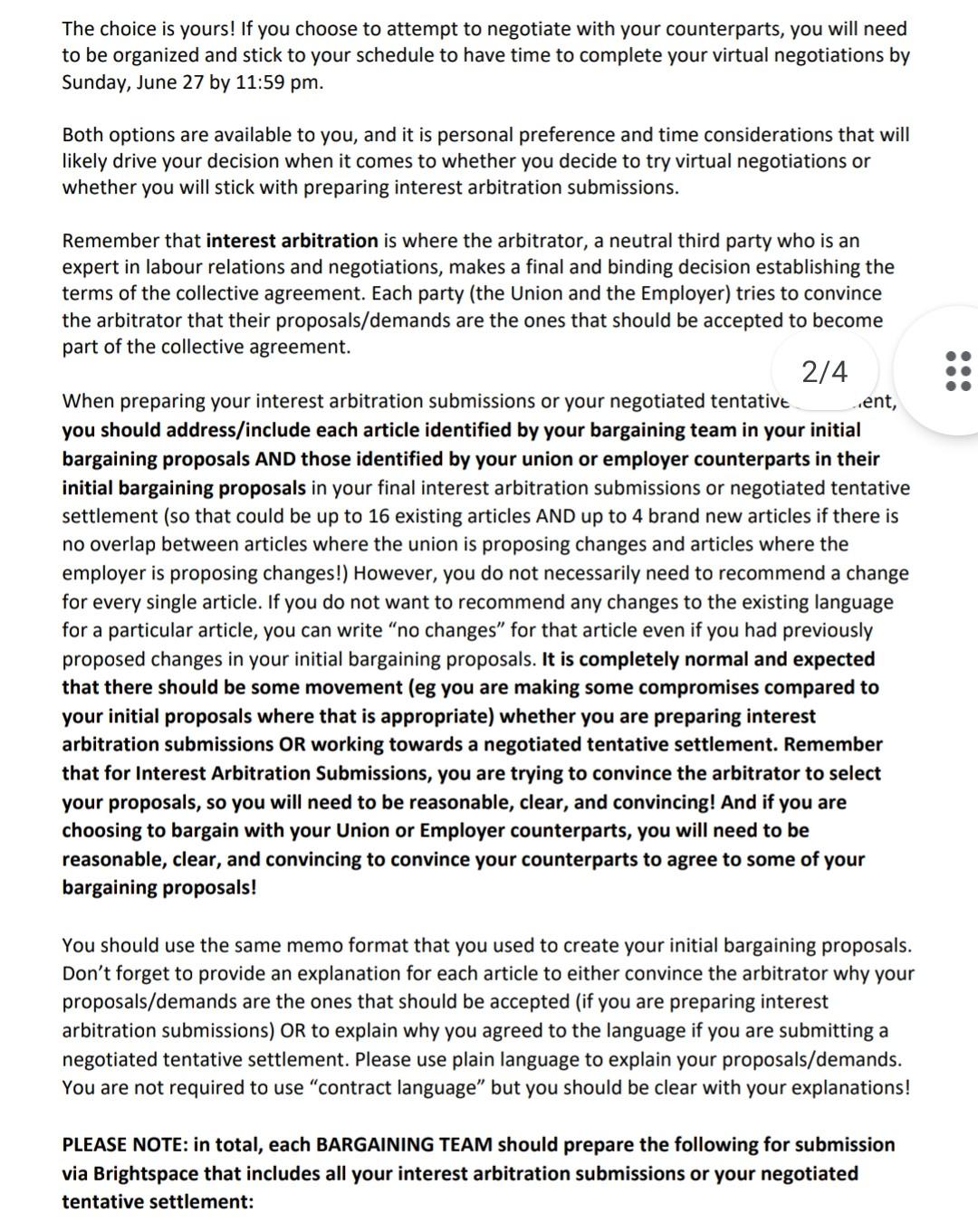
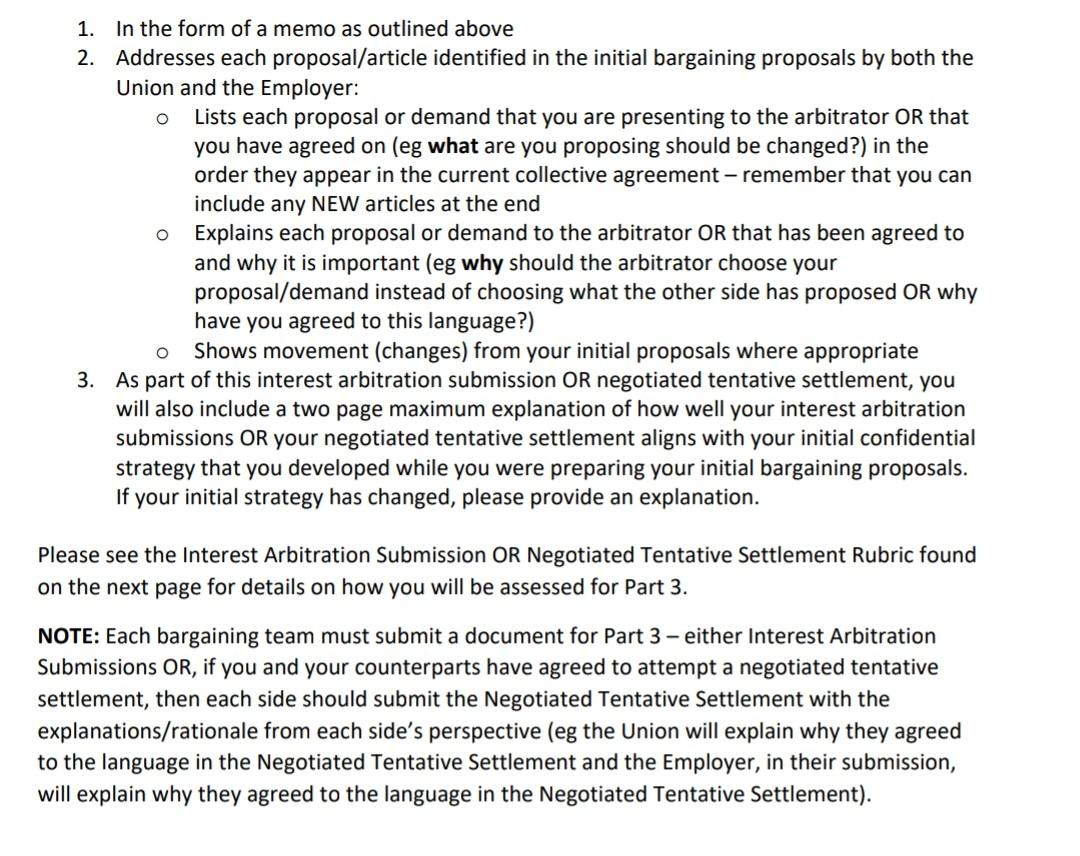
PERPOSAL FOR CHANGES TO THE AGREEMENT OF THE DIAMOND CASINO Article 2. The amounts deducted in accordance with article 2.01 shall be remitted to the union within a reasonable period of time after the deductions are made and shall be accompanied by a list of names of all employees from whom deductions have been made. 9. the parties agree that during the term of this agreement there shall be no strikes or t lockouts Union changes. The amounts deducted in accordance with article 2.01 shall be remitted to the union within a specific period of time (15 days) after the deductions are made and shall be accompanied by a list of names of all employees from whom deductions have been made. May go for strikes and lockdowns if need arises. 11. Applications for posted positions shall be submitted the employer within eight days of the job being posted. Applications for posted positions shall be submitted to the employer within 14 days of the job being posted. The uniforms should be provided by the employer on his own expense. 14. Employees are required to purchase required uniforms. The cost of the uniform to employees shall be equivalent to the cost incurred by the employer. Uniform purchases may be processed through payroll deductions. 17. Employees shall be entitled to two days' paid leave upon the death of a member of their immediate family. Immediate family means a spouse, common-law spouse, parent, child, brother, sister, father-in-law, mother-in-law, grandparent, and grandchild. Employees shall be entitled to four days' paid leave upon the death of a member of their immediate family. Immediate family means a spouse, common-law spouse, parent, child, brother, sister, father-in-law, mother-in-law, grandparent, and grandchild. 20. Personal leaves of absence are only available to employees who have completed one year of service Personal leaves of absence are only available to employees who have completed six moths of service 23. employees who work overtime shall be allowed a meal allowance of $5.00. employees who work overtime shall be allowed a meal allowance of $10.00. 24. Fulltime employees shall work five eight-hour shifts per 24. Fulltime employees shall work five eight-hour shifts per week. Each shift will have a half-hour unpaid meal break and week. Each shift will have a half-hour unpaid meal break and two 15-minute breaks during their scheduled workday. Part- two paid 15-minute breaks during their scheduled workday. time employees may be scheduled to work less than eight- Part-time employees may be scheduled to work less than eight- hour shifts; however, in no r event will a shift be less than hour shifts; however, in no r event will a shift be less than three three hours. hours. New preposed articles: New - child care cost reimbursement When an employee is required to work additional hours, the employee will reimburse the employee for all related childcare costs. 1. If an employee is given less than 7 days advance notice of a change in the employee's shift schedule, the employee will receive compensation at the rate of time and one half (1 1/2) of work performed on first shift changed. The Employer proposes that the current collective agreement be renewed with the following changes and additions: Changes to the collective agreement: 1. Article 2 shall be amended to provide that the union dues can be send to the union by biweekly. Explanation: The employer is requesting this change so union dues can be sent biweekly, therefore eliminating the hassle of only having it on one cheque. 2. Article 10 shall be amended to provide that the employer should order the seniority of the employee according to the efficiency of their work if two or more employees have the same start date. Explanation: The employer is requesting this change because with group hirings more then two people start on the same day. 3. Article 11 shall be amended to provide that the employer must post the job positions for at least 15 days so that the most productive applicant will be chosen for the specific job position. Explanation: The employer is requesting this change because there is more time to find the appropriate person for the job. 4. Article 14.01shall be amended to provide that the employer should not charge the employees for the uniform because the employees are working for the employer. Explanation: The employer is requesting this change because the clothes have no branding, and only need to be black. The employers provide the vests. 5. Article 14 shall be amended to provide that union pins be kept off uniforms. The employer wants a provision relating to union members wearing union pins added to the agreement. This term will provide that no employee wears union pins. Explanation: The employer is requesting this change because while at work they should wear no pins, as it could get into the food, or onto a blackjack table. 6. Article 19 should be amended to provide that the employer wants a provision relating to how many sick days per hours worked added to the agreement. This term will provide that sick leave will accumulate 3 hours every 80 hours worked. Explanation: The employer is requesting this change because it seems reasonable, and 80 hours is a full two weeks. 7. Article 21 shall be amended to provide that employee do not take a day off after a holiday. The employer wants a provision relating to time off work after holidays added to the agreement. This term will provide that those employees do not take an extra day off after a holiday Explanation: The employer is requesting this change because after each long weekend, a number of employees call in sick and it slows down the casino and creates overtime for employees. 8. Article 23 shall be amended to provide that employee work to gain their meal allowance. The employer wants a provision relating to meals and overtime added to the agreement. This term will provide that there will be several overtime hours to hit to have a meal allowance. Explanation: The employer is requesting this change because a couple hours to have a meal allowance is the way this article was originally supposed to work. Additions to the collective agreement: 1. An article shall be added to the collective agreement for the benefits and perks. The employer is requesting this change so that employees get a 10% discount on the food or service that they will get from the Diamond Casino. This way employees will get financial support and because they will have a better work life balance. 2. An article shall be added to the collective agreement for a 15-minute paid prep time before each shift. The employer is requesting this change so that employees will be on the floor at the appropriate time. DIAMOND CASINO You will be provided with further information and instructions regarding an analysis and a possible renewal of the collective agreement provided below between the Provincial Lot- tery Corporation and the Gaming Employees Union. Assume that the casino operated by the corporation is located in the major urban centre of your province. The current agree- ment expires on the date specified by your instructor. Background The Provincial Lottery Corporation operates the Diamond Casino, located in a major urban centre of the province. The casino opened five years ago, and employees at the casino are represented by the Gaming Employees Union, which was certified four years ago. The parties negotiated their first collective agreement, which is expiring shortly. The casino operates 24 hours a day, running three eight-hour shifts employing 400 people. Three-hundred sixty casino staff belong to the union. The job classifications are shown in Schedule A of the collective agreement. The casino has three revenue-producing departments: slot machines, table games, and a restaurant/bar. Dealers may be trained and experienced in one or more table games, including blackjack, poker, roulette, and baccarat. Attendance and revenues have been declining over the term of the agreement. It appears that the novelty of the casino has worn off and new marketing efforts may be required. The value of the Canadian dollar and the opening of new casinos in the United States are both influencing the number of U.S. patrons. Issues Arising Under the Current Agreement A number of issues have arisen during the administration of the current three-year collective agreement. Temporary Shift Supervisors The agreement provides that employees in the bar- gaining unit may temporarily work as shift supervisors. The employer has interpreted this provision to mean that employees do not accumulate seniority or pay union dues while serving as a shift supervisor. In the last round of contract negotiations, the union put forward a demand that employees on temporary shift super assignments would accumu- late seniority and have dues deducted from their pay. The union eventually withdrew the proposal. Employee Appearance As part of its dress code, the employer adopted a rule prohib- iting male security guards from wearing earrings. The union filed a grievance, and an arbitrator found that the rule was unreasonable and ordered that it be deleted from the policy. On another occasion employees started to wear dime-sized union pins. When the employer directed employees to remove the pins, the union filed a grievance. An arbitrator upheld the grievance, and some employees are now wearing the pins, Several managers strongly feel that the union pins are inappropriate when worn by employees while on duty. Absenteeism and Turnover Absenteeism has been a problem. The casino has found that absenteeism is 50 percent higher than normal on days before and after public holidays. Several employees have been disciplined for absenteeism. In one case, an employee who did not come to work because he was attending a friend's funeral was given a written warning. Subsequently, the same employee was absent because he was attending the funeral of a cousin. The casino suspended the employee for three days; however, the suspension was reduced after the union filed a grievance. Another employee was extremely upset when her mother died because she had to travel 2000 kilometres each way, and she was advised that the agreement provided her with only two days' leave. Many employees who have quit have given only a few days notice. Work Done by Management When the casino first opened, the employer scheduled more employees to work each shift than it currently does. Supervisors have been used by the employer to cover employee breaks and on occasions when employees leave early. The union is concerned that the employer is not scheduling a sufficient number of employees for given only a few days notice. Work Done by Management When the casino first opened, the employer scheduled more employees to work each shift than it currently does. Supervisors have been used by the employer to cover employee breaks and on occasions when employees leave early. The union is concerned that the employer is not scheduling a sufficient number of employees for some shifts and is using the supervisors to do bargaining unit work. Meals An employee is scheduled one unpaid meal break during their regular shift. Two paid breaks are also scheduled during the first half and last part of the employee's scheduled work period. However, neither party is pleased with the current contract provisions relating to meal allowances when an employee must work overtime. Some employees think that they should receive a voucher to cover the cost a meal in the casino restaurant. The union is concerned because the $7 meal allowance when employees work overtime is not sufficient to cover the cost of a meal in the casino restaurant, and the allowance has not increased over the term of the agreement. The employer is not pleased with the overtime provision because there is no minimum number of overtime hours that must be worked. Some employees have worked only a few minutes of overtime and are still entitled to the meal allowance under the current practice. Maternity Leave Both parties are concerned with the current provisions relating to maternity leave. The union wants the leave to be increased. Some managers would like to see the contract provide that an employee could be required to commence a maternity leave when they think that a pregnancy interferes with the employee's work. The union alleges that such actions would be a breach of human rights legislation. Future Developments There has been informal discussions between the union and the employer relating to the work done by the maintenance and security departments. The employer is considering the possibility of contracting out some of the work done by employees in those departments. OTHER NOTES Schedule A seen at the end of this case contains the hourly wage rates for all classifications as of the last year of the expired contract. It should form part the next contract between Diamond Casino and the Gaming Employees Union, Local 1. Appendix 1 following this wage schedule indicates the number of full-time equivalents (FTE) for each job classification. It is included in this case study not as a formal part of the collective agreement between the parties but rather to assist in calculating wage proposals in negotiations between the parties. Collective Agreement Between Provincial Lottery Corporation, and the Gaming Employees' Union, Local 1 ARTICLE 1-Recognition 1.01 The Employer recognizes the Gaming Employees' Union, Local 1 as the sole bargaining agent for all employees of the Diamond Casino in the City of save and except Shift Supervisors and persons above the rank of Shift Supervisor. 1.02 With an employee's agreement, he or she may fill the role of Shift Supervisor on a temporary basis. ARTICLE 2-Union Security 2.01 The employer shall deduct from the wages of each employee in the bargaining unit the amount of union dues as determined by the union, and remit the dues to the union in accordance with article 2.02. 2.02 The amounts deducted in accordance with article 2.01 shall be remitted to the union within a reasonable period of time after the deductions are made and shall be accompanied by a list of names of all employees from whom deductions have been made. ARTICLE 3Management Rights 3.01 The union recognizes the right of the employer to operate and manage its business in all respects, to maintain order and efficiency in its facilities, to determine the location of its facilities, the work to be performed, the methods and schedules of performance and equip- ment to be used. The union further acknowledges that the employer has the right to make, and alter from time to time, reasonable rules, regulations, and policies to be observed by employees. Such rules, regulations, and policies shall not be inconsistent with the provisions of this agreement. All changes in the posted rules and regulations and policies must be dis- cussed with the union prior to being implemented. The Employer will provide the union with copies of all new policies and changes to existing policies prior to implementation. The union acknowledges is that it is the exclusive function of the employer to discipline or dis- charge probationary employees, provided such action is not motivated solely by bad faith and recognizes that such discipline or discharge is not subject to the grievance/arbitration procedure set out in this agreement, except where such bad faith can be established. ARTICLE 4-Human Rights 401 The employer and the union shall neither discriminate nor harass any employee and and recognizes that such discipline or discharge is not subject to the grievance/arbitration procedure set out in this agreement, except where such bad faith can be established. ARTICLE 4-Human Rights 4.01 The employer and the union shall neither discriminate nor harass any employee and agree to comply with provincial human rights legislation. ARTICLE 5-Discipline 5.01 The employer shall have the right to discipline employees for just cause. 5.02 An employee who has a disciplinary record placed in their personnel file may request in writing the removal of the record if 36 months have passed since the disciplinary record was issued and no other subsequent disciplinary records have been issued. ARTICLE 6-Union Business 6.01 The union shall elect a body of officers and stewards and will advise the employer in writing of the names of the individuals representing the union. 6.02 A union representative shall not suffer any loss of pay as a result of undertaking the following responsibilities during their regularly scheduled work hours: investigating a griev- ance, meeting with management to deal with a grievance, attending any other meeting called by management. 6.03 The union stewards may investigate and process grievances during regularly scheduled hours of work, provided that the operations of the employer are adequately maintained. 6.04 The stewards shall obtain permission from their manager before leaving their work area for the purposes of union business. Such permission shall not be unreasonably with- held, subject to the operational requirements of the employer being met. 6.05 An employee shall not suffer any loss of pay as a result of meeting with management to deal with a grievance during their regularly scheduled hours. 6.06 A leave of absence without pay and with accrual of seniority shall be granted: (a) to employees representing the union at conferences, conventions, and seminars. (b) to up to three representatives on the union's bargaining committee to carry out nego- tiations with the employer. 6.07 A leave of absence without pay and no accrual of seniority shall be granted: (a) to employees elected to public office. (b) to employees elected to the union's national executive. 6.08 The employer shall supply the union with a glass-enclosed locked bulletin board in each staff break room. ARTICLE 7-Probationary Employees 7.01 New employees shall be on probation for three months from the start of their employment 7.02 Upon successful completion of the probationary period, seniority shall be effective retroactive to the date of hire. ARTICLE 8-Grievance Procedure 8.01 Step -An employee who has a complaint shall, within five calendar days of the date he or she became aware of, or reasonably should have become aware of the event prompting the complaint, first discuss the matter with his or her Department Manager and attempt to informally resolve the situation. In the event that it is not resolved, it may become a formal grievance at Step II, provided it is submitted in writing in accordance with the following provisions. Step 11Within 14 calendar days of the meeting at Step I, a formal grievance shall be sub- mitted in writing to the Cporations Manager. At the request of either party, a meeting shall be held at this Step. The Operations Manager shall reply in writing within 14 days of receiving the grievance. If the grievance is not settled at this stage, it may be advanced to Step III. Step III-Within 14 calendar days of receipt of the Step Il response, the union shall submit the grievance in writing to the General Manager. At the request of either party, a meeting shall be held at this Step. Step IV-If a settlement is not reached, the union or the employer, in the case of an employer grievance, may refer the grievance to an arbitration board by providing the other party notice in writing within 14 calendar days of receiving the written response at Step III. The notice shall contain a statement of the grievance and the name of the party's appointee to the arbitration board. The recipient of the notice shall within 14 calendar days inform the other party of the name of its appointee to the arbitration board. The two appointees shall within 14 calendar days of the appointment of the second of them, appoint a third person who shall be the chairperson. 8.02 The arbitration board shall hear the parties and shall issue an award in writing. The decision is final and binding upon the parties and upon the employee(s) affected by it. The decision of the majority of the board is the award of the arbitration board. When there is no majority decision, the decision of the chair shall be the decision of the arbitration board. 8.03 Each party shall bear the expense of its respective nominee to the arbitration board, and the parties shall each pay one-half of the expenses of the chairperson. The costs of related meeting location expenses shall be equally shared between the parties. the time limits prescribed in this grievance procedure are not com- related meeting location expenses shall be equally 8.04 In the event that the time limits prescribed in this grievance procedure are not com- plied with, the grievance shall be deemed to be abandoned. 8.05 Either the union or the employer shall have the right to submit policy grievances arising from the interpretation and application of this agreement. Policy grievances shall commence with Step III and shall be filed within 14 days of the date a party became aware, or should reasonably have become aware of the issue giving rise to the grievance. 8.06 The union may submit group grievances. A group grievance is an unresolved complaint involving more than one employee in the bargaining unit. ARTICLE 9Strikes or Lockouts 9.01 The parties agree that during the term of this agreement there shall be no strikes or lockouts. ARTICLE 10Seniority 10.01 Seniority is defined as the length of an employee's continuous employment. 10.02 Seniority rights and employment shall cease when an employee: (a) resigns, (b) retires, (c) is dismissed for cause and is not reinstated, (d) is laid off for a period in excess of 12 calendar months, or (e) fails to respond to a call back from the employer within five days. 10.03 A seniority list will be prepared by the employer by January 31 of each year based on service to and including December 31 of the previous year. The list will be posted in all break rooms, and a copy will be provided to the union. 10.04 If two or more employees have the same start date, the order of their seniority shall be determined by their birth dates. The older employee shall be deemed to have the most seniority ARTICLE 11--Job Posting 11.01 All vacant or new positions in the bargaining unit shall be posted for six calendar days. The notice shall specify the knowledge, skill, and ability required for the position. A job description may be requested by interested employees. 11.02 Applications for posted positions shall be submitted to the employer within eight days of the job being posted. 11.03 If two or more employees are considered by the employer to be relatively equal in knowledge, skill, and ability required for a position, the employer shall refer to seniority as the determining factor. 11.04 An employee who accepts a new position shall be on a trial period of three months. Subject to satisfactory performance the position shall become permanent after the trial period of three months. In the event the employee proves unsatisfactory in the position dur- ing the trial period, or if the employee finds he or she is unable to perform the duties of the new position, he or she shall be returned to his or her former position, at his or her former salary. An employee found to be unsuitable may grieve the decision commencing at Step III of the grievance procedure. The decision at Step III is final for such grievances and is not arbitrable. Any other employee promoted or transferred because of the rearrangement of positions shall be returned to his or her former position at the former salary. A newly hired employee could be released. ARTICLE 12-Layoff and Recall 12.01 Employees may be laid off by the employer. 12.02 The employer shall lay off employees in reverse order of seniority. The employer shall determine the employees to be laid off considering the seniority and ability of employees as provided in this article. 12.03 Employees who are laid off may retain employment by bumping junior employees, provided that they have the required knowledge, skill, and ability to do the job that they move to. Employees must indicate if they intend to exercise this right within two days of being notified of a layoff. Employees displaced may retain their employment by bumping junior employees, provided they have the necessary knowledge, skills, and ability to do the job they move to. 12.04 Employees who are laid off are entitled to two weeks' notice. 12.05 When employees are recalled, the recall shall be done on the basis of seniority within an employee's classification. 12.06 On a recall, the employer shall notify the employee by phone. It is the responsibility of the employee to provide the employer with a current phone number. Employees shall respond to a recall within five calendar days. Failure to respond to the recall within five days will result in the employee's name being removed from the recall list, and the termination of employment. Article 13-Severance Pay 13.01 Upon termination of employment, employees may be entitled to severance pay as Article 21-Special Leave 21.01 Each calendar year, an Employee shall be entitled to four special leave days without loss of pay, as either family leave or pressing necessity leave. (1) Family Leave Family leave is intended to provide employees with a way of attending to the health needs of members of their immediate family. It is for use when the employees' attendance is nec- essary and they are unable, through other means, to change the time when they need to be in attendance, or to arrange in advance time off work when needed through other means such as shift trades, time off in lieu, or vacation. Employees are required to provide the employer with notification of leave requirement as early as possible after determining the need. (ii) Pressing Necessity Leave A pressing necessity is a sudden or unusual circumstance that could not, by the exercise of reasonable judgement, have been foreseen by the employee and which requires the employee's immediate attention or makes the employee's attendance at work impossible. This may include sudden or unusual circumstances involving a need to attend to members of their immediate family. Article 22-Incarceration Leave 22.01 An employee convicted of an Offence under the Criminal Code arising out of the operation of a motor vehicle and who is absent from work as a result of such conviction for a period not to exceed 12 consecutive months shall be treated as though he/she is on a leave of absence without pay or benefits. 22.01 Where an employee is incarcerated pending charges or arraignment and subse- quently scheduled for work, the employer will not penalize the employee under the employer's attendance policy where the incarceration duration is confirmed to be a maximum of 10 calendar days. An employee incarcerated under this clause will be considered on an incarceration leave of absence for a period not to exceed 10 calendar days. Article 23-Overtime 23.01 The employer may require employees to work overtime. 23.02 The overtime rate shall be 1-1/2 times the employee's regular rate of pay and shall be paid on hours worked in excess of eight hours per day, exclusive of any unpaid breaks, and on hours worked in excess of 44 hours per week, commencing on Sunday, exclusive of unpaid breaks. 23.03 The employer shall establish a voluntary overtime signup sheet for each day. Overtime shall be allocated to those employees on the list on the basis of their classification seniority, provided that the employee has the knowledge and skills required for the work available. If there are insufficient volunteers to work overtime, the employer may require employees to work overtime to meet operational requirements. 23.04 Employees who work overtime shall be allowed a meal allowance of $5.00 Article 24-Hours of Work and Scheduling 24.01 Full-time employees shall work five eight-hour shifts per week. Each shift will have a half-hour unpaid meal break and two 15-minute breaks during their scheduled work day. Part-time employees may be scheduled to work less than eight-hour shifts; however, in no event will a shift be less than three hours. 24.02 The employer will post a 28-day schedule two weeks in advance for both full-time and part-time employees. 24.03 Part-time employees may be called in to fill in shifts. The call-ins will be offered to part-time employees in the job classification required on the basis of seniority. 24.04 Employees will be off at least 11 hours between shifts. 24.05 Employees may exchange shifts with the approval of their manager. The employer shall not incur any additional cost as a result of a shift exchange. Article 25-Technological Change 25.01 For purposes of this article, technological change means the introduction of new equipment into the employer's operation, which affects the security of employment of a significant number of employees. 25.02 When the employer intends to introduce technological change, it will provide the union with 90 days' notice prior to the date the change is to be effective. The parties will meet to discuss the steps to be taken to assist the employees who could be affected. Article 26-Health and Safety 26.01 The employer and the union recognize the importance of health and safety and agree to cooperate to prevent accidents and establish a healthy workplace. 26.02 A health and safety committee consisting of at least three union representatives and three employer representatives shall be established. The committee shall carry out the duties assigned to it by provincial health and safety legislation. 26.03 The employer shall provide all available information relating to accidents and occupa- tional diseases that occur in the workplace. 26.04 Minutes of health and safety committee meetings shall be posted in staff break rooms. 12.06 On a recall, the employer shall notify the employee by phone. It is the responsibility of the employee to provide the employer with a current phone number. Employees shall respond to a recall within five calendar days. Failure to respond to the recall within five days will result in the employee's name being removed from the recall list, and the termination of employment. Article 13-Severance Pay 13.01 Upon termination of employment, employees may be entitled to severance pay as provided in provincial employment standards legislation. Article 14-Uniforms 14.01 Employees are required to wear the uniform provided for in the employer's policies. 14.02 Employees are required to purchase required uniforms. The cost of the uniform to employees shall be equivalent to the cost incurred by the employer. Uniform purchases may be processed through payroll deductions. 14.03 Employees are responsible for the cleaning of their uniforms. Article 15-Vacations 15.01 A vacation year is equivalent to the calendar year. 15.02 Employees are entitled to vacation leave and pay as follows: (a) An employee who has completed less than one year of service at the conclusion of the vacation year is entitled to leave at the rate of 4 percent of regular hours worked in the concluding vacatior year. The vacation leave is to be taken in the next vacation year. Employees are entitled to vacation pay when they take their vacation equal to 4 percent of their wages in the vacation year. (b) An employee who has completed one to five years of service at the conclusion of the vacation year is entitled to two weeks' vacation leave. The vacation leave is to be taken in the next vacation year. Employees are entitled to vacation pay when they take their vacation equal to 4 percent of their wages in the vacation year. (c) An employee who has completed six to nine years of service at the conclusion of the vacation year is entitled to three weeks' vacation leave. The vacation leave is to be taken in the next vacation year. Employees are entitled to vacation pay when they take their vacation equal to 6 percent of their wages in the vacation year. (d) An employee who has completed ten or more years of service at the conclusion of the vacation year is entitled to four weeks' vacation leave. The vacation leave is to be taken in the next vacation year. Employees are entitled to vacation pay when they take their vacation equal to 8 percent of their wages in the vacation year. 15.03 Annual vacations shall be scheduled as follows: (a) All employees shall submit their requests for vacation leave on or before January 1 of each year for vacation to be taken during the year. Requests submitted after January 1 may be granted subject to the operational requirements of the employer. (b) Vacation requests submitted on or before January 1 shall be approved on the basis of classification seniority and the employer being able to meet its operational requirements. 15.04 Where a statutory holiday falls within the vacation period of an employee, an addi- tional day's vacation may be added to the vacation with the agreement of the employee's immediate supervisor. Failing such agreement, the employee may take an additional day's vacation at a later date of the employee's choice. Article 16-Statutory Holidays 16.01 The parties agree that the statutory holidays provided in provincial employment stan- dards legislation shall be holidays for the purposes of this agreement. An employee who works on a holiday shall be paid double his or her regular rate of pay. Article 17-Bereavement 17.01 Employees shall be entitled to two days' paid leave upon the death of a member of their immediate family. Immediate family means a spouse, common-law spouse, parent, child, brother, sister, father-in-law, mother-in-law, grandparent, and grandchild. Article 18-Maternity and Parental Leave 18.01 Employees shall be entitled to maternity and parental leave as provided in provincial employment standards legislation. Article 19Sick Leave 19.01 Employees are entitled to paid sick leave when they are unable to work because of ill- ness or injury as provided in this article. 19.02 Sick leave credits shall accumulate at the rate of three hours per 75 hours worked. The employee's sick leave credit shall be reduced by the number of hours paid by the employer when the employee is absent. 19.03 The employer may require the employee to provide a medical certificate from a quali- fied practitioner that the employee was unable to work as a result of illness or injury. 19.04 Employees who will be absent for any reason shall notify the designated employer representative at least three hours prior to the commencement of their shift. Article 20Personal Leave 20.01 Unpaid leaves of absence may be granted when it is deerned reasonable by the employer 23.01 The employer may require employees to work overtime. 23.02 The overtime rate shall be 1-1/2 times the employee's regular rate of pay and shall be paid on hours worked in excess of eight hours per day, exclusive of any unpaid breaks, and on hours worked in excess of 44 hours per week, commencing on Sunday, exclusive of unpaid breaks. 23.03 The employer shall establish a voluntary overtime signup sheet for each day. Overtime shall be allocated to those employees on the list on the basis of their classification seniority, provided that the employee has the knowledge and skills required for the work available. If there are insufficient volunteers to work overtime, the employer may require employees to work overtime to meet operational requirements. 23.04 Employees who work overtime shall be allowed a meal allowance of $5.00 Article 24-Hours of Work and Scheduling 24.01 Full-time employees shall work five eight-hour shifts per week. Each shift will have a half-hour unpaid meal break and two 15-minute breaks during their scheduled work day. Part-time employees may be scheduled to work less than eight-hour shifts; however, in no event will a shift be less than three hours. 24.02 The employer will post a 28-day schedule two weeks in advance for both full-time and part-time employees. 24.03 Part-time employees may be called in to fill in shifts. The call-ins will be offered to part-time employees in the job classification required on the basis of seniority. 24.04 Employees will be off at least 11 hours between shifts. 24.05 Employees may exchange shifts with the approval of their manager. The employer shall not incur any additional cost as a result of a shift exchange. Article 25Technological Change 25.01 For purposes of this article, technological change means the introduction of new equipment into the employer's operation, which affects the security of employment of a significant number of employees. 25.02 When the employer intends to introduce technological change, it will provide the union with 90 days' notice prior to the date the change is to be effective. The parties will meet to discuss the steps to be taken to assist the employees who could be affected. Article 26-Health and Safety 26.01 The employer and the union recognize the importance of health and safety and agree to cooperate to prevent accidents and establish a healthy workplace. 26.02 A health and safety committee consisting of at least three union representatives and three employer representatives shall be established. The committee shall carry out the duties assigned to it by provincial health and safety legislation. 26.03 The employer shall provide all available information relating to accidents occupa- tional diseases that occur in the workplace. 26.04 Minutes of health and safety committee meetings shall be posted in staff break rooms. Article 27-Contracting Out 27.01 When the employer proposes to contract out work and there will be a layoff of employees in the bargaining unit as a result, the employer will provide the union with 120 days' notice. The parties shall meet to discuss the reasons and possible alternatives to the proposed contracting out and shall attempt to avoid job losses through retraining and/or reassignment of employees. Article 28Performance Appraisal 28.01 Where a formal assessment of an employee's performance is made, the employee will be provided with an opportunity to read the assessment before the employee is required to sign the formal assessment indicating that he or she has read it. The employee shall have the right to place his or her comments on the performance and development form. 28.02 If the employee perceives the performance and development form is an inaccurate assessment, the employee may submit a written request to the general manager to initiate a review of the contents of the form, which are alleged to be unfair or inaccurate. The written request for review must be received within 10 days of the employee having been provided with a copy of the performance and development form and provide the details of the alleged inaccuracies. The general manager shall meet with the employee in an attempt to resolve their concern(s). A review under this process is non-grievable. 28.03 A copy of the employee's performance evaluation shall be placed in the employee's personnel file. Article 29Wages 29.01 The wages for the first year of the agreement - set out in Schedule A. Article 30Duration of Agreement 30.01 This agreement shall be effective for three years, from 20xx to 20xx. Part 3: Interest Arbitration Submissions OR Negotiated Tentative Settlements (15%) Purpose: The Virtual Bargaining Negotiation Simulation Activity (40%) is a major component of this course. It is your opportunity to participate in a labour contract negotiation simulation, putting theory into practice! Part 3 Instructions: Appendix C from the previous edition of our textbook provides a collective agreement for Diamond Casino that will be used as the basis for this activity. A PDF copy of this collective agreement is available on Brightspace as many of you probably have the current edition of our textbook! You have, AS A BARGAINING TEAM, prepared a set of initial contract demands or proposals for the virtual bargaining simulation. Now it is time to exchange your initial bargaining proposals with your union or employer counterparts! Discussion threads will be available in Brightspace the morning of Wednesday, June 23 that include one randomly assigned union bargaining team and one randomly assigned employer bargaining team - this is where you will exchange initial bargaining proposals! These initial bargaining proposals must be exchanged via Brightspace no later than 12:00 pm (lunchtime) on Wednesday, June 23! Once you have exchanged proposals/demands with your union or employer counterparts, each BARGAINING TEAM will review the proposals/demands from the other side along with their own initial bargaining proposals, and then prepare your interest arbitration submissions OR you may choose to engage in virtual bargaining with your counterparts if both teams are agreeable and available. What does this mean? The first step, whether you are preparing interest arbitration submissions OR attempting to negotiate a tentative settlement will require you to carefully review your own initial proposals as well as the proposals you receive from your union or employer counterparts. You will also need to decide which option you are choosing (interest arbitration submissions OR a negotiated tentative settlement). Most groups will likely choose to work on Interest Arbitration Submissions, which means you will need to decide what you think would be reasonable to submit to an arbitrator. If you and your Union or Employer counterparts both agree to try and negotiate a tentative settlement, then you will need to determine how you will respond to your counterparts and what you will say to their initial bargaining proposals - do you agree with them? Completely disagree with them? Propose a potential compromise or solution that might meet in the middle? The choice is yours! If you choose to attempt to negotiate with your counterparts, you will need to be organized and stick to your schedule to have time to complete your virtual negotiations by Sunday, June 27 by 11:59 pm. Both options are available to you, and it is personal preference and time considerations that will likely drive your decision when it comes to whether you decide to try virtual negotiations or whether you will stick with preparing interest arbitration submissions. Remember that interest arbitration is where the arbitrator, a neutral third party who is an expert in labour relations and negotiations, makes a final and binding decision establishing the terms of the collective agreement. Each party (the Union and the Employer) tries to convince the arbitrator that their proposals/demands are the ones that should be accepted to become part of the collective agreement. 2/4 When preparing your interest arbitration submissions or your negotiated tentative ent, you should address/include each article identified by your bargaining team in your initial bargaining proposals AND those identified by your union or employer counterparts in their initial bargaining proposals in your final interest arbitration submissions or negotiated tentative settlement (so that could be up to 16 existing articles AND up to 4 brand new articles if there is no overlap between articles where the union is proposing changes and articles where the employer is proposing changes!) However, you do not necessarily need to recommend a change for every single article. If you do not want to recommend any changes to the existing language for a particular article, you can write "no changes for that article even if you had previously proposed changes in your initial bargaining proposals. It is completely normal and expected that there should be some movement (eg you are making some compromises compared to your initial proposals where that is appropriate) whether you are preparing interest arbitration submissions OR working towards a negotiated tentative settlement. Remember that for Interest Arbitration Submissions, you are trying to convince the arbitrator to select your proposals, so you will need to be reasonable, clear, and convincing! And if you are choosing to bargain with your Union or Employer counterparts, you will need to be reasonable, clear, and convincing to convince your counterparts to agree to some of your bargaining proposals! You should use the same memo format that you used to create your initial bargaining proposals. Don't forget to provide an explanation for each article to either convince the arbitrator why your proposals/demands are the ones that should be accepted (if you are preparing interest arbitration submissions) OR to explain why you agreed to the language if you are submitting a negotiated tentative settlement. Please use plain language to explain your proposals/demands. You are not required to use "contract language but you should be clear with your explanations! PLEASE NOTE: in total, each BARGAINING TEAM should prepare the following for submission via Brightspace that includes all your interest arbitration submissions or your negotiated tentative settlement: o O 1. In the form of a memo as outlined above 2. Addresses each proposal/article identified in the initial bargaining proposals by both the Union and the Employer: Lists each proposal or demand that you are presenting to the arbitrator OR that you have agreed on (eg what are you proposing should be changed?) in the order they appear in the current collective agreement - remember that you can include any NEW articles at the end Explains each proposal or demand to the arbitrator OR that has been agreed to and why it is important (eg why should the arbitrator choose your proposal/demand instead of choosing what the other side has proposed OR why have you agreed to this language?) Shows movement (changes) from your initial proposals where appropriate 3. As part of this interest arbitration submission OR negotiated tentative settlement, you will also include a two page maximum explanation of how well your interest arbitration submissions OR your negotiated tentative settlement aligns with your initial confidential strategy that you developed while you were preparing your initial bargaining proposals. If your initial strategy has changed, please provide an explanation. o Please see the Interest Arbitration Submission OR Negotiated Tentative Settlement Rubric found on the next page for details on how you will be assessed for Part 3. NOTE: Each bargaining team must submit a document for Part 3 - either Interest Arbitration Submissions Or, if you and your counterparts have agreed to attempt a negotiated tentative settlement, then each side should submit the Negotiated Tentative Settlement with the explanations/rationale from each side's perspective (eg the Union will explain why they agreed to the language in the Negotiated Tentative Settlement and the Employer, in their submission, will explain why they agreed to the language in the Negotiated Tentative Settlement)Step by Step Solution
There are 3 Steps involved in it
1 Expert Approved Answer
Step: 1 Unlock

Question Has Been Solved by an Expert!
Get step-by-step solutions from verified subject matter experts
Step: 2 Unlock
Step: 3 Unlock
 Study Help