







Question: IMPORTANT NOTES: PLEASE WRITE A PARAGRAPH FOR EACH QUESTION. WRITE IN YOUR OWN WORDS AND DON'T WRITE SIMILAR TO OTHER POSTS! Description: Implementing ERP at
IMPORTANT NOTES:
PLEASE WRITE A PARAGRAPH FOR EACH QUESTION. WRITE IN YOUR OWN WORDS AND DON'T WRITE SIMILAR TO OTHER POSTS!
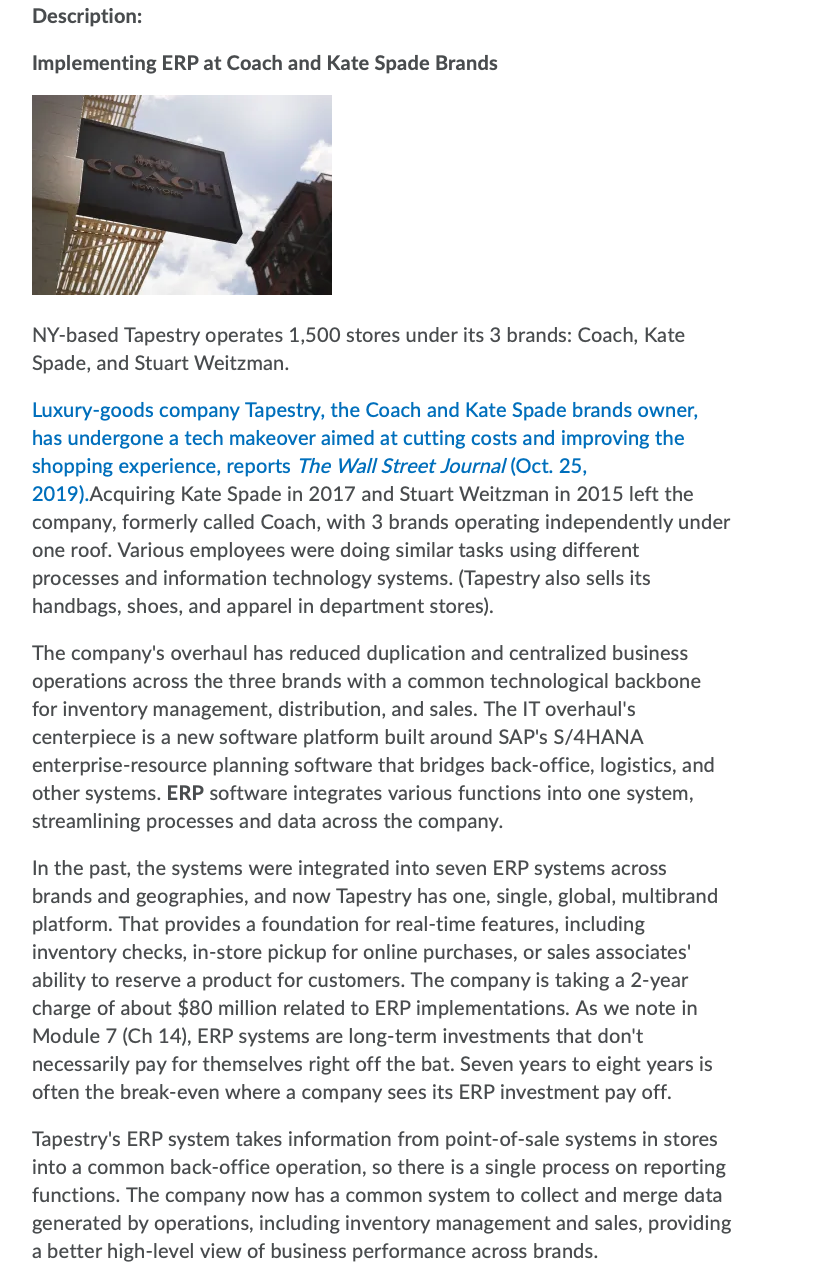
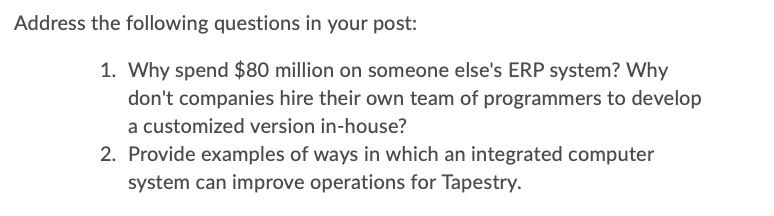
Description: Implementing ERP at Coach and Kate Spade Brands NY-based Tapestry operates 1,500 stores under its 3 brands: Coach, Kate Spade, and Stuart Weitzman. Luxury-goods company Tapestry, the Coach and Kate Spade brands owner, has undergone a tech makeover aimed at cutting costs and improving the shopping experience, reports The Wall Street Journal (Oct. 25, 2019).Acquiring Kate Spade in 2017 and Stuart Weitzman in 2015 left the company, formerly called Coach, with 3 brands operating independently under one roof. Various employees were doing similar tasks using different processes and information technology systems. (Tapestry also sells its handbags, shoes, and apparel in department stores). The company's overhaul has reduced duplication and centralized business operations across the three brands with a common technological backbone for inventory management, distribution, and sales. The IT overhaul's centerpiece is a new software platform built around SAP's S/4HANA enterprise-resource planning software that bridges back-office, logistics, and other systems. ERP software integrates various functions into one system, streamlining processes and data across the company. In the past, the systems were integrated into seven ERP systems across brands and geographies, and now Tapestry has one, single, global, multibrand platform. That provides a foundation for real-time features, including inventory checks, in-store pickup for online purchases, or sales associates' ability to reserve a product for customers. The company is taking a 2-year charge of about $80 million related to ERP implementations. As we note in Module 7 (Ch 14), ERP systems are long-term investments that don't necessarily pay for themselves right off the bat. Seven years to eight years is often the break-even where a company sees its ERP investment pay off. Tapestry's ERP system takes information from point-of-sale systems in stores into a common back-office operation, so there is a single process on reporting functions. The company now has a common system to collect and merge data generated by operations, including inventory management and sales, providing a better high-level view of business performance across brands. Address the following questions in your post: 1. Why spend $80 million on someone else's ERP system? Why don't companies hire their own team of programmers to develop a customized version in-house? 2. Provide examples of ways in which an integrated computer system can improve operations for TapestryStep by Step Solution
There are 3 Steps involved in it
1 Expert Approved Answer
Step: 1 Unlock

Question Has Been Solved by an Expert!
Get step-by-step solutions from verified subject matter experts
Step: 2 Unlock
Step: 3 Unlock
 Study Help