







Question: In creating solutions for business problems using predictive analytics, it is important to consider the following in identifying the right statistical analysis to perform: A)
In creating solutions for business problems using predictive analytics, it is important to consider the following in identifying the right statistical analysis to perform:
A) Whether the variables (relevant for statistical analysis) are (1) dependent or independent, (2) qualitative or quantitative, and (3) the total number of variables.
B) Whether the variables (relevant for statistical analysis) are (1) dependent or independent and (2) qualitative or quantitative
C) Whether the variables (relevant for statistical analysis) are (1) dependent or independent and the total number of variables.
D) Whether the variables (relevant for statistical analysis) are (1) qualitative or quantitative and (2) the total number of variables.
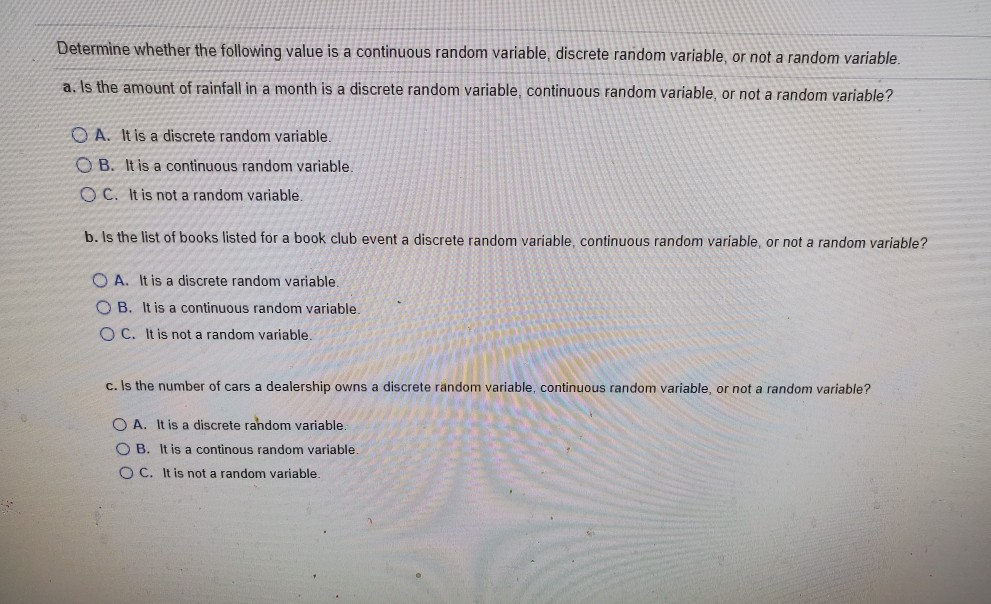
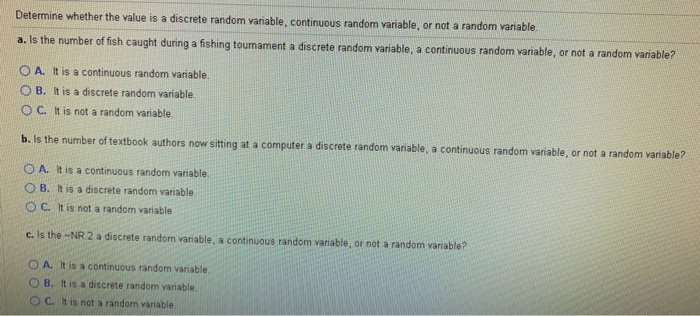
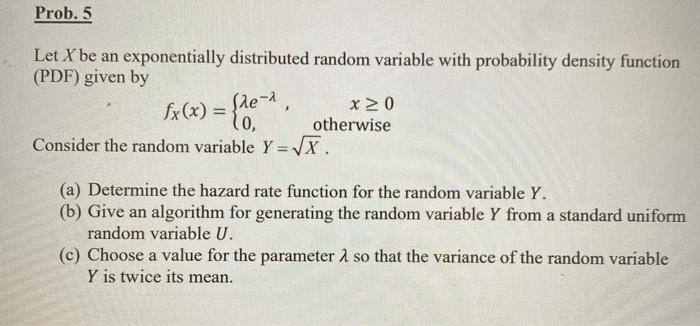
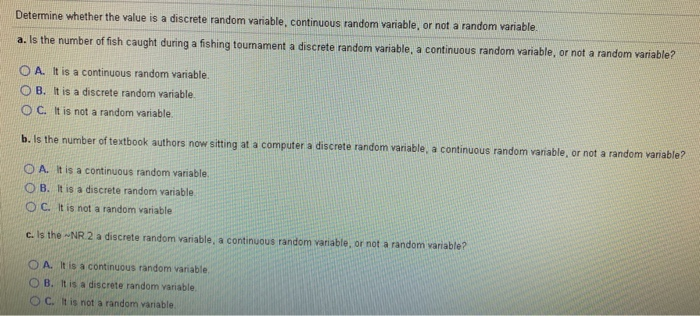
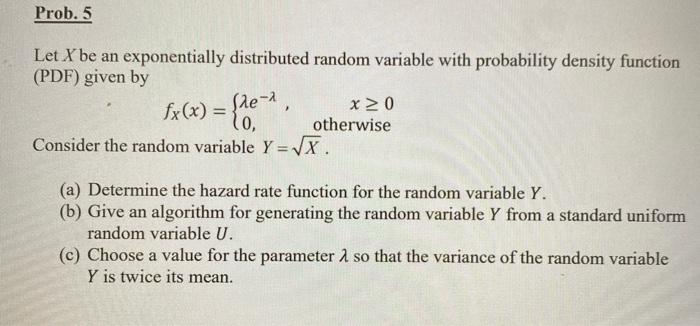
Determine whether the following value is a continuous random variable, discrete random variable, or not a random variable. a. Is the amount of rainfall in a month is a discrete random variable, continuous random variable, or not a random variable? O A. It is a discrete random variable. O B. It is a continuous random variable. O C. It is not a random variable. b. Is the list of books listed for a book club event a discrete random variable, continuous random variable, or not a random variable? O A. It is a discrete random variable. O B. It is a continuous random variable. O C. It is not a random variable. c. Is the number of cars a dealership owns a discrete random variable, continuous random variable, or not a random variable? O A. It is a discrete random variable. O B. It is a continous random variable. O C. It is not a random variable.Determine whether the value is a discrete random variable, continuous random variable, or not a random variable. a. Is the number of fish caught during a fishing tournament a discrete random variable, a continuous random variable, or not a random variable? A. It is a continuous random variable. B. It is a discrete random variable C. It is not a random variable b. Is the number of textbook authors now sitting at a computer a discrete random variable, a continuous random variable, or not a random variable? O A. It is a continuous random variable. O B. It is a discrete random variable O C. It is not a random variable c. Is the ~NR 2 a discrete random variable, a continuous random variable, or not a random variable? O A. It is a continuous random variable, O B. It is a discrete random variable O C. It is not a random variableProb. 5 Let X be an exponentially distributed random variable with probability density function (PDF) given by Sie-2 fx (x) = 10, x 2 0 otherwise Consider the random variable Y = VX . (a) Determine the hazard rate function for the random variable Y. (b) Give an algorithm for generating the random variable Y from a standard uniform random variable U. (c) Choose a value for the parameter 1 so that the variance of the random variable Y is twice its mean
Step by Step Solution
There are 3 Steps involved in it

Get step-by-step solutions from verified subject matter experts
 Study Help