



Question: In the circuit given below, R= 21 22. Determine the node voltages. 300 V 1 R eztomheducation.com/hm.tpx The equation at node 1 is 40.62
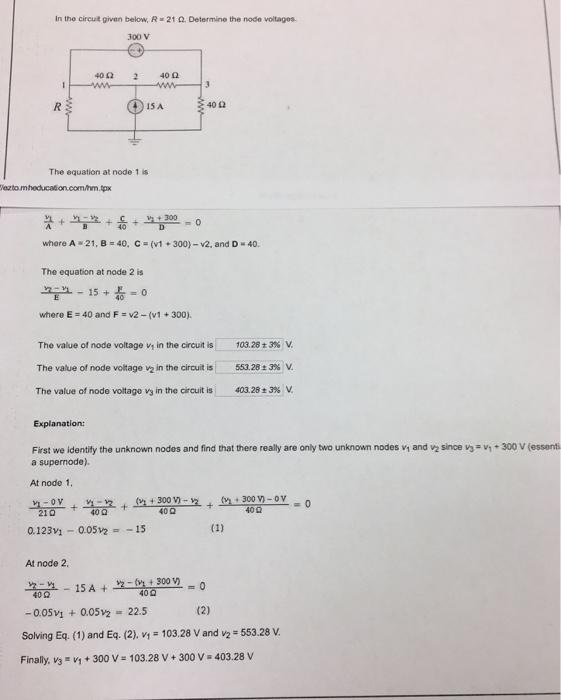
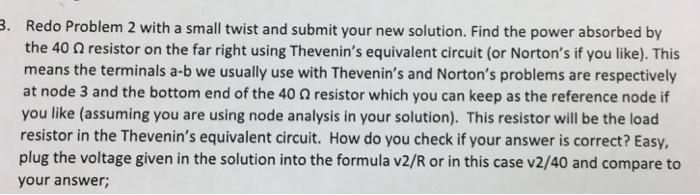
In the circuit given below, R= 21 22. Determine the node voltages. 300 V 1 R eztomheducation.com/hm.tpx The equation at node 1 is 40.62 www V-OV 210 0.123v1 -2 2 - At node 2. 40 + 4) 15 A + where A = 21, B-40, C= (v1+300)-v2, and D = 40. 40 2 www + The equation at node 2 is 2-15-0 where E = 40 and Fv2-(v1 + 300). +300 D The value of node voltage v in the circuit is The value of node voltage v in the circuit is The value of node voltage vs in the circuit is -0 + 4002 0.05-15 Explanation: First we identify the unknown nodes and find that there really are only two unknown nodes v and 2 since 1300 V (essenti a supernode). At node 1. 3 40 (2 15 A+(+300 v 400 (+300 V)-12 + ( +300 V)-V 400 400 (1) 103.28 3% V. 553.283% V. 403.28 3% V 3. Redo Problem 2 with a small twist and submit your new solution. Find the power absorbed by the 400 resistor on the far right using Thevenin's equivalent circuit (or Norton's if you like). This means the terminals a-b we usually use with Thevenin's and Norton's problems are respectively at node 3 and the bottom end of the 40 2 resistor which you can keep as the reference node if you like (assuming you are using node analysis in your solution). This resistor will be the load resistor in the Thevenin's equivalent circuit. How do you check if your answer is correct? Easy, plug the voltage given in the solution into the formula v2/R or in this case v2/40 and compare to your answer;
Step by Step Solution
3.32 Rating (152 Votes )
There are 3 Steps involved in it
212 V 21 V 21 Suce V and V there is ideal voltage source hence apply supernade a... View full answer

Get step-by-step solutions from verified subject matter experts