







Question: In the experimental setup in the figure, one-dimensional diffusion is aimed based on time (t) and x (cm) variables. The saturated glucose solution (red) diffuses
In the experimental setup in the figure, one-dimensional diffusion is aimed based on time (t) and x (cm) variables. The saturated glucose solution (red) diffuses into the liquid (water) by removing the barrier. Diffusion starts from 1 point. Dissolved saturated The concentration of the solution is 1.2 g / ml. When the diffusion reaches the midpoint (point 2) at t = 30 seconds, samples are taken from 1 and 2 points (x = 20). The concentrations of these samples are 1 g / ml and 0.1 g / ml, respectively. When the diffusion reaches the end of the system (point 3) at t = 75 sec, samples are taken from 1 and 3 points. The concentrations of these samples are 0.6 g / ml and 0.03 g / ml, respectively. a) Calculate the experimental diffusion coefficient using the values given for two different t times. For this, you can use the following Error Function Values table. b) Calculate the percentage of error since it is known that the theoretical diffusion coefficient is 6.4 cm2 / sec using the Wilke-Chang equation.
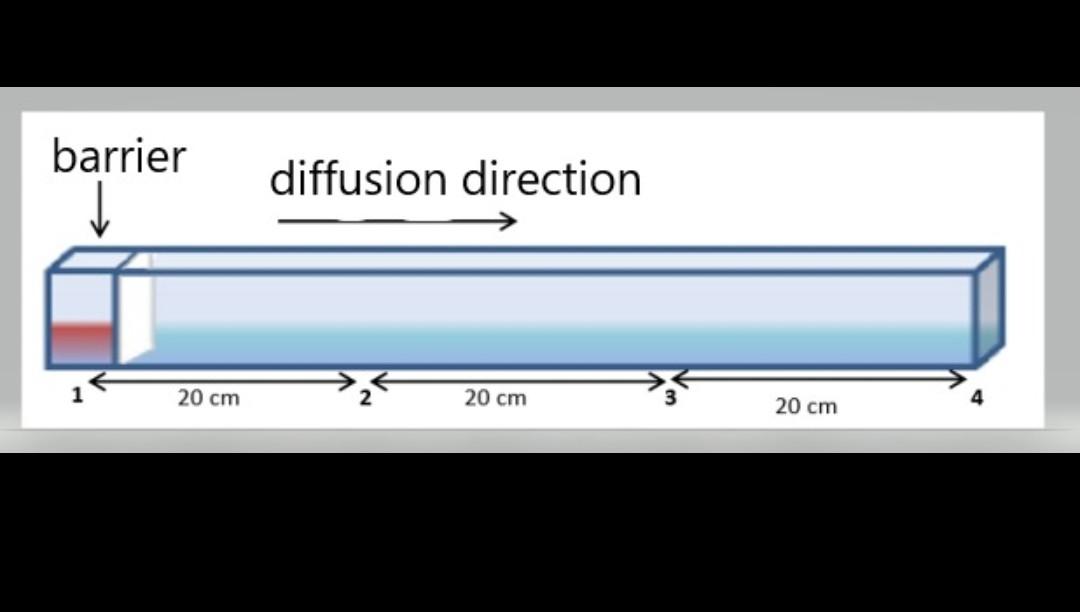
In the experimental setup in the figure, one-dimensional diffusion is aimed based on time (t) and x (cm) variables. The saturated glucose solution (red) diffuses into the liquid (water) by removing the barrier. Diffusion starts from 1 point. Dissolved saturated The concentration of the solution is 1.2 g / ml. When the diffusion reaches the midpoint (point 2) at t = 30 seconds, samples are taken from 1 and 2 points (x = 20). The concentrations of these samples are 1 g / ml and 0.1 g / ml, respectively. When the diffusion reaches the end of the system (point 3) at t = 75 sec, samples are taken from 1 and 3 points. The concentrations of these samples are 0.6 g / ml and 0.03 g / ml, respectively. a) Calculate the experimental diffusion coefficient using the values given for two different t times. For this, you can use the following Error Function Values table. b) Calculate the percentage of error since it is known that the theoretical diffusion coefficient is 6.4 cm2 / sec using the Wilke-Chang equation.
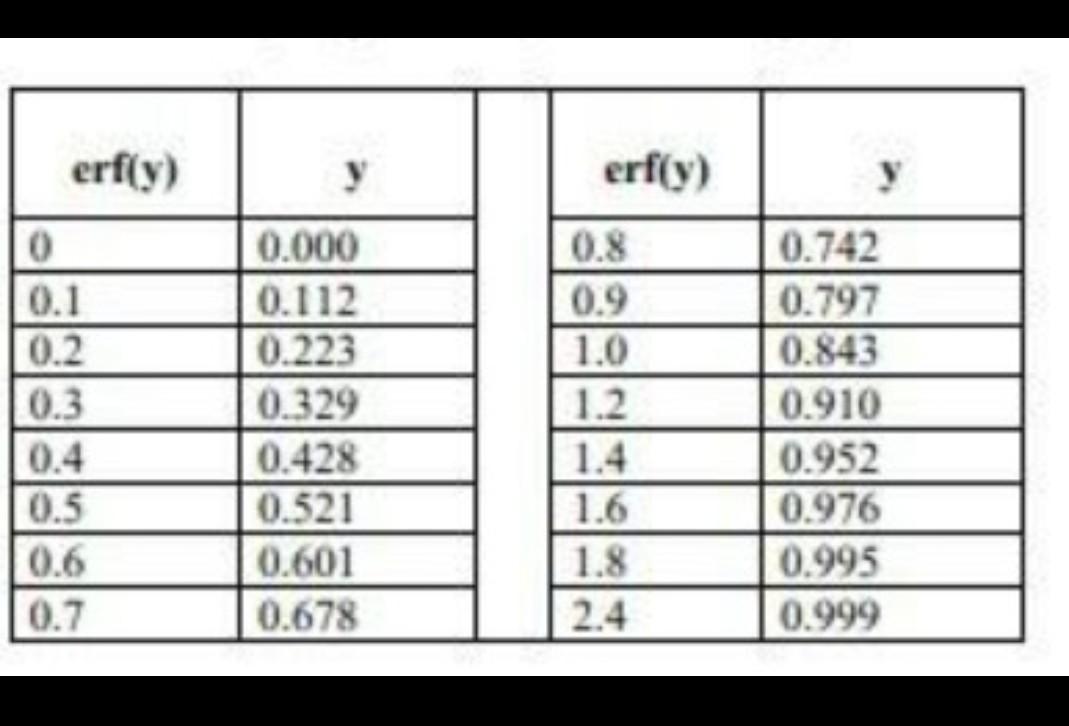
barrier diffusion direction 20 cm 20 cm 20 cm erf(y) y erf(y) y 0.1 0.2 0.3 0.4 0.5 0.6 0.7 0.000 0.112 0.223 0.329 0.428 0.521 0.601 0.678 0.8 0.9 1.0 1.2 1.4 1.6 1.8 2.4 0.742 0.797 0.843 0.910 0.952 0.976 0.995 0.999
Step by Step Solution
There are 3 Steps involved in it

Get step-by-step solutions from verified subject matter experts
 Study Help